Cagrilintide Dosing Guide: Protocols & Results (2026)
Evidence-based cagrilintide dosing guide covering titration protocols, CagriSema clinical data, and amylin analog research for weight management.

Cagrilintide (development code NN9838 / AM833) is Novo Nordisk's long-acting amylin analog currently under investigation for chronic weight management. As one half of the CagriSema combination — paired with semaglutide 2.4 mg — it represents a fundamentally new approach to obesity pharmacotherapy by targeting the amylin signaling pathway alongside GLP-1 receptor agonism.
This dosing guide consolidates published clinical trial data, titration protocols, and safety information from peer-reviewed sources. Cagrilintide is not FDA-approved and remains investigational as of February 2026. All dosing information is derived from published clinical research and is intended for educational purposes only.
Quick Reference: Clinical Dosing
| Parameter | Detail |
|---|---|
| Compound | Cagrilintide (NN9838 / AM833) |
| Class | Long-acting acylated amylin analog |
| Route | Subcutaneous injection (SC) |
| Frequency | Once weekly |
| Maintenance Dose | 2.4 mg/week (REDEFINE program) |
| Dose Range Studied | 0.3 mg – 4.5 mg/week (phase 2) |
| Titration Period | 16 weeks to reach 2.4 mg |
| Half-Life | ~160 hours (~7 days) |
| Storage | Refrigerated 2–8°C; lyophilized powder at room temperature |
| Injection Sites | Abdomen, thigh, or upper arm |
| Status | Investigational — not FDA-approved |
How Cagrilintide Works
Cagrilintide is a long-acting analog of human amylin, a 37-amino-acid peptide hormone co-secreted with insulin from pancreatic β-cells in response to food intake. Native amylin has a half-life of only ~15 minutes, making it impractical for therapeutic use. Cagrilintide was engineered with fatty acid acylation to dramatically extend its duration of action, enabling once-weekly dosing with a half-life of approximately 160 hours.
Amylin Receptor Signaling
Cagrilintide exerts its effects primarily through amylin receptors 1 and 3 (AMY1R and AMY3R) in the brain. These receptors are heterodimers composed of the calcitonin receptor (CTR) combined with receptor activity-modifying proteins (RAMPs). Recent research has confirmed that cagrilintide's weight-lowering effects are mediated specifically through brain AMY1R and AMY3R signaling, distinguishing it from older amylin-based therapies like pramlintide.
Key Mechanisms of Action
- Central satiety signaling: Cagrilintide activates amylin receptors in the area postrema and nucleus of the solitary tract in the brainstem, promoting feelings of fullness and reducing food intake
- Gastric emptying: Slows the rate of gastric emptying, prolonging post-meal satiety and reducing glucose excursions
- Glucagon suppression: Inhibits postprandial glucagon secretion, contributing to improved glycemic control
- Reward pathway modulation: Emerging evidence suggests amylin signaling influences hedonic (pleasure-based) eating behavior through pathways in the ventral tegmental area and nucleus accumbens
- Complementary to GLP-1: Amylin and GLP-1 receptor agonism target overlapping but distinct neural circuits for appetite regulation, providing a strong biological rationale for the CagriSema combination
The complementary nature of amylin and GLP-1 signaling is central to the CagriSema strategy. While both pathways reduce appetite and slow gastric emptying, they engage different receptor populations and brain regions — creating an additive effect on weight loss that exceeds what either agent achieves alone.

Ready to Buy? Compare Prices
Best current prices from verified vendors with COA testing.
Certified Pep · 10mg · $12.80/mgCOA ✓
EZ Peptides · 10mg · $4.80/mgCOA ✓
The Peptide Brief
Weekly price drops, new research, and vendor deals — straight to your inbox.
No spam. Unsubscribe anytime.
Protocol & Titration
Phase 3 REDEFINE Dose Escalation Schedule
The REDEFINE clinical trial program uses a structured 16-week titration to minimize gastrointestinal side effects and optimize tolerability. Both the cagrilintide and semaglutide components of CagriSema follow parallel dose escalation schedules:
| Week | Cagrilintide Dose | Semaglutide Dose (CagriSema) | Notes |
|---|---|---|---|
| 1–4 | 0.25 mg | 0.25 mg | Initiation phase |
| 5–8 | 0.5 mg | 0.5 mg | First escalation |
| 9–12 | 1.0 mg | 1.0 mg | Mid-titration |
| 13–16 | 1.7 mg | 1.7 mg | Pre-maintenance |
| 17+ | 2.4 mg | 2.4 mg | Maintenance dose |
Phase 2 Doses Investigated
The earlier phase 2 dose-finding trial (Lau et al., Lancet 2021) evaluated a broader dose range of cagrilintide monotherapy: 0.3 mg, 0.6 mg, 1.2 mg, 2.4 mg, and 4.5 mg administered once weekly for 26 weeks. All active doses achieved statistically significant weight loss vs. placebo, with a clear dose-response relationship observed up to 4.5 mg.
Administration Protocol
- Timing: Inject on the same day each week at any time of day, with or without food
- Injection technique: Standard subcutaneous injection — clean the site, pinch skin, inject at a 45–90° angle
- Site rotation: Rotate between abdomen, thigh, and upper arm to minimize injection-site reactions
- Missed dose: If a dose is missed by ≤3 days, administer as soon as possible and resume the regular schedule. If >3 days late, skip the missed dose and resume on the next scheduled day
Clinical Trial Results
Phase 2 Monotherapy (Lau et al., 2021)
The pivotal phase 2 trial enrolled 706 adults with overweight or obesity (BMI ≥30, or ≥27 with comorbidities) across 57 sites in 10 countries. Key results at 26 weeks:
| Dose | Mean Weight Loss (%) | ≥5% Weight Loss | ≥10% Weight Loss |
|---|---|---|---|
| Placebo | −1.0% | 16% | 5% |
| Cagrilintide 0.3 mg | −3.0% | 33% | 12% |
| Cagrilintide 0.6 mg | −4.0% | 39% | 17% |
| Cagrilintide 1.2 mg | −6.0% | 53% | 27% |
| Cagrilintide 2.4 mg | −9.1% | 67% | 42% |
| Cagrilintide 4.5 mg | −10.8% | 75% | 51% |
| Liraglutide 3.0 mg (active control) | −9.0% | 67% | 38% |
The 2.4 mg and 4.5 mg doses produced weight loss comparable to or exceeding liraglutide 3.0 mg (the then-standard GLP-1 RA for obesity), establishing cagrilintide as a potent standalone anti-obesity agent.
Phase 3 REDEFINE 1 — CagriSema in Obesity (2025)
The landmark REDEFINE 1 trial (NCT05567796) evaluated CagriSema 2.4/2.4 mg vs. placebo in adults with overweight or obesity without type 2 diabetes over 68 weeks. Published in The New England Journal of Medicine in June 2025:
- Mean body weight reduction: 22.7% with CagriSema vs. 2.1% with placebo
- ≥20% weight loss: Achieved by 60% of CagriSema participants
- ≥30% weight loss: Achieved by 23% of CagriSema participants
- Significant improvements in systolic blood pressure, waist circumference, and lipid parameters
- Both co-primary endpoints met with high statistical significance
Phase 3 REDEFINE 2 — CagriSema in T2D (2025)
The parallel REDEFINE 2 trial evaluated CagriSema in adults with overweight/obesity and type 2 diabetes:
- Significant body weight reductions vs. placebo
- Improvements in glycemic control (HbA1c)
- Results consistent with phase 2 data in the T2D population
Phase 2 CagriSema in T2D (Frias et al., 2023)
An earlier phase 2 trial comparing CagriSema 2.4/2.4 mg vs. semaglutide 2.4 mg alone vs. cagrilintide 2.4 mg alone in adults with T2D over 32 weeks showed CagriSema produced superior weight loss and glycemic improvement compared to either monotherapy, supporting the additive mechanism hypothesis.
Reconstitution Guide
Note: In clinical trials, cagrilintide is delivered via Novo Nordisk's prefilled pen injection device. The following reconstitution guidance applies to research-grade lyophilized cagrilintide powder commonly available from peptide suppliers.

Materials Needed
- Cagrilintide lyophilized powder (typically 5 mg or 10 mg vials)
- Bacteriostatic water (BAC water) for injection
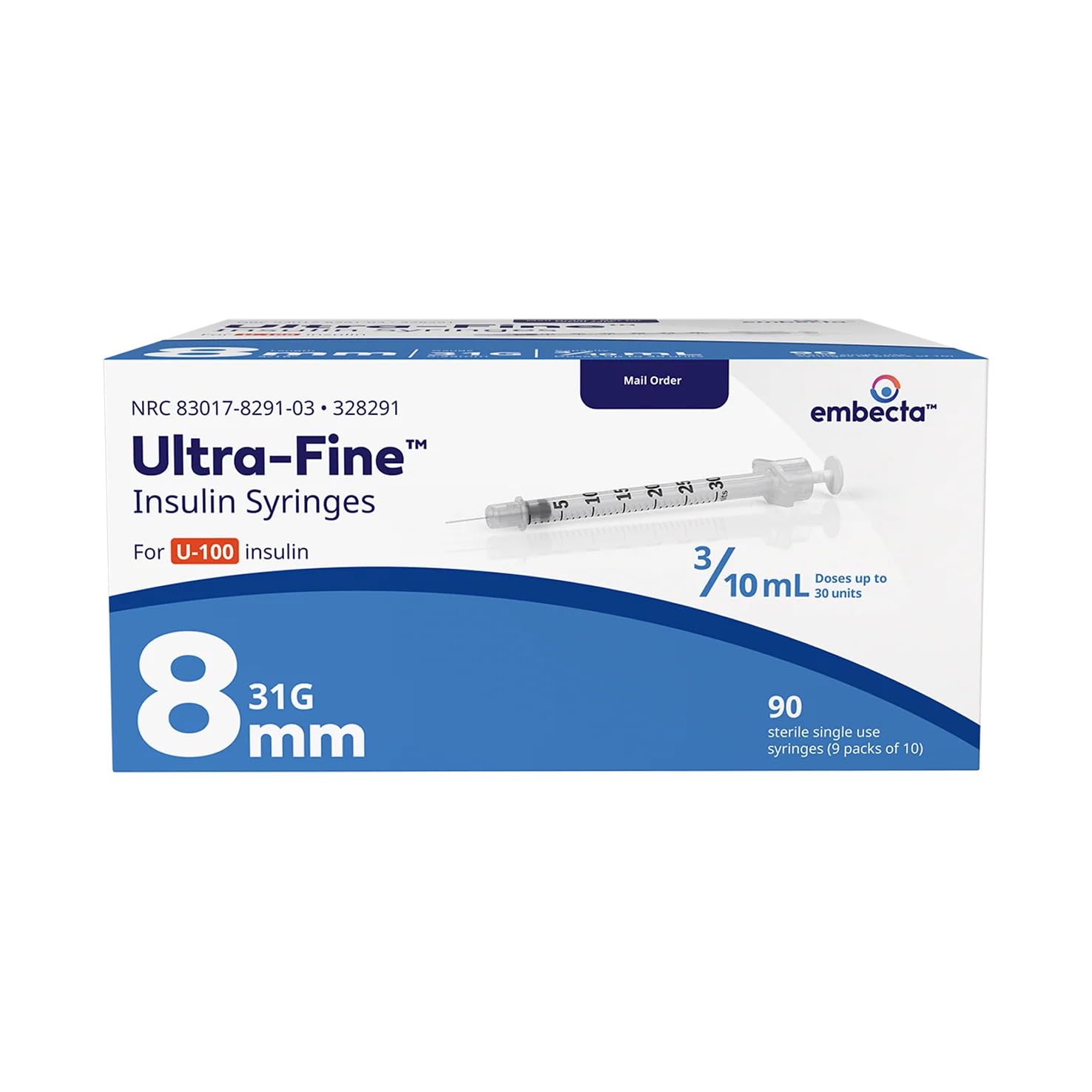
- Insulin syringes (0.5 mL or 1.0 mL, 29–31 gauge)
- Alcohol swabs
- Sharps container
Reconstitution Steps
- Calculate volume: For a 5 mg vial, adding 2.0 mL BAC water yields a concentration of 2.5 mg/mL (each 0.1 mL = 0.25 mg)
- Prepare: Clean the vial stopper and BAC water vial with alcohol swabs
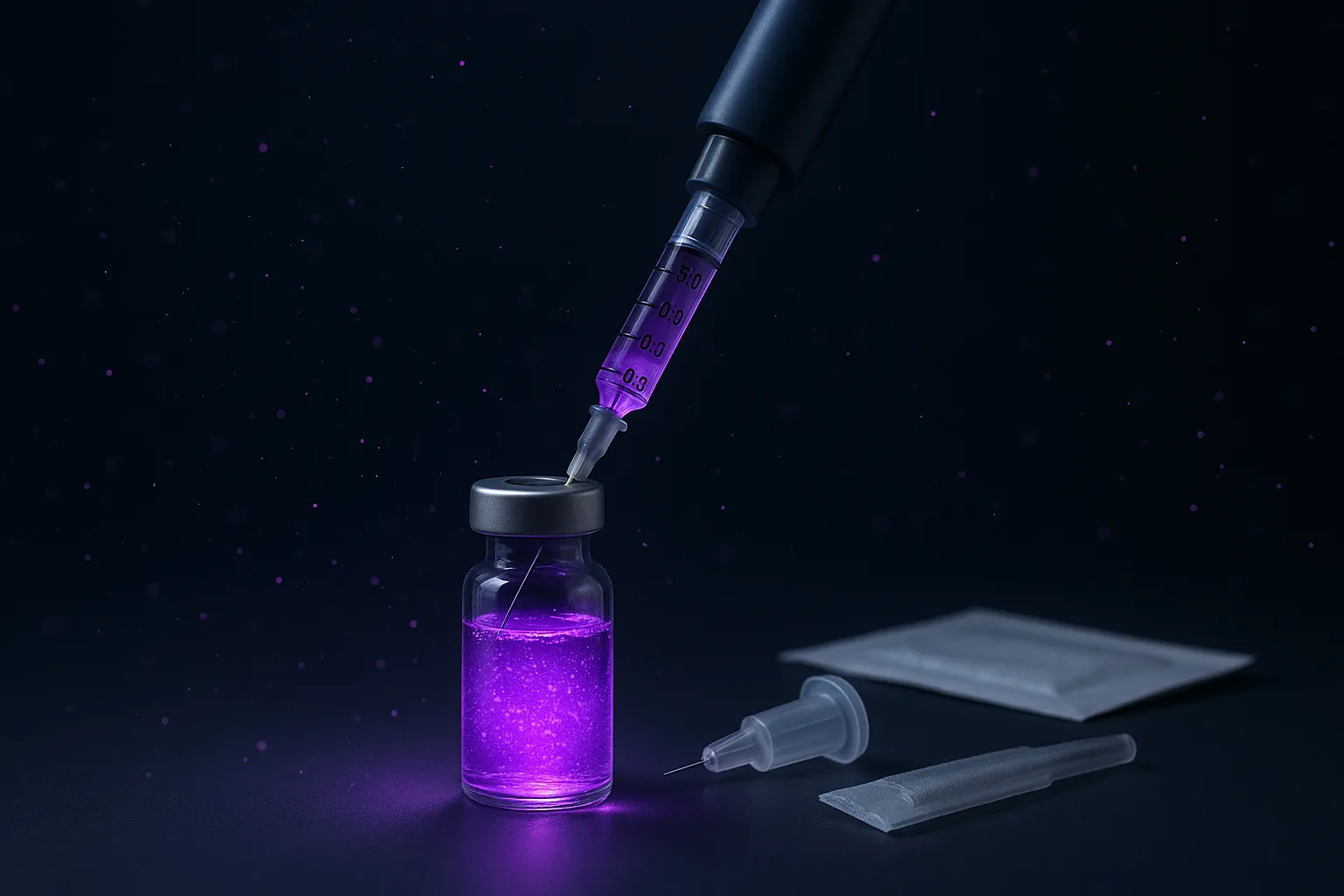
- Add water: Draw the calculated volume of BAC water and inject slowly into the vial, directing the stream against the glass wall — never directly onto the powder
- Dissolve: Gently swirl the vial until the powder is fully dissolved. Do not shake vigorously
- Inspect: The solution should be clear and colorless. Discard if cloudy or particulate matter is visible
- Store: Refrigerate reconstituted solution at 2–8°C. Use within 28 days
Example Dosing Volumes (5 mg vial reconstituted with 2.0 mL BAC water)
| Weekly Dose | Volume to Inject |
|---|---|
| 0.25 mg | 0.10 mL (10 units) |
| 0.5 mg | 0.20 mL (20 units) |
| 1.0 mg | 0.40 mL (40 units) |
| 1.7 mg | 0.68 mL (68 units) |
| 2.4 mg | 0.96 mL (96 units) |
Side Effects & Safety
Common Adverse Effects
Gastrointestinal events are the predominant side effects, consistent with both amylin analogs and GLP-1 receptor agonists:
| Side Effect | Incidence (Cagrilintide 2.4 mg) | Notes |
|---|---|---|
| Nausea | 25–40% | Most common; typically mild-moderate, peaks during dose escalation |
| Diarrhea | 10–20% | Usually transient |
| Constipation | 8–15% | May alternate with diarrhea |
| Vomiting | 5–15% | More frequent at higher doses |
| Injection site reactions | 5–10% | Erythema, pruritus at injection site; generally mild |
| Abdominal pain | 5–10% | Typically resolves with continued dosing |
| Decreased appetite | 5–12% | Related to mechanism of action |
Important Safety Considerations
- Dose titration is essential: The 16-week escalation protocol significantly reduces GI adverse event rates compared to starting at full dose
- Discontinuation rates: In phase 2, treatment discontinuation due to adverse events was low (3–7% across cagrilintide dose groups)
- Pancreatitis: As with GLP-1 RA therapies, pancreatitis is a theoretical concern; cases were rare in clinical trials but patients should be monitored
- Gallbladder events: Cholelithiasis has been reported, consistent with rapid weight loss
- Not studied in pregnancy: Cagrilintide should not be used during pregnancy or breastfeeding
- Thyroid C-cell tumors: Preclinical findings with GLP-1 RAs prompted monitoring, though the relevance to amylin analogs is uncertain
Stacking — CagriSema (Cagrilintide + Semaglutide)
The CagriSema combination represents the most significant application of cagrilintide and the primary focus of Novo Nordisk's clinical development program. The rationale for combining these two agents is grounded in their complementary mechanisms:
Why the Combination Works
| Pathway | Cagrilintide (Amylin) | Semaglutide (GLP-1) |
|---|---|---|
| Primary receptors | AMY1R, AMY3R | GLP-1R |
| Brain regions | Area postrema, NTS, VTA | Hypothalamus, NTS, VTA |
| Satiety | ✓ | ✓ |
| Gastric emptying | ✓ (slows) | ✓ (slows) |
| Glucagon suppression | ✓ (postprandial) | ✓ (glucose-dependent) |
| Insulin secretion | — | ✓ (glucose-dependent) |
| Hedonic eating | ✓ (emerging data) | ✓ |
Clinical Performance Comparison
| Metric (68 weeks) | CagriSema 2.4/2.4 mg | Semaglutide 2.4 mg alone | Placebo |
|---|---|---|---|
| Mean weight loss | 22.7% | ~15–17% | ~2% |
| ≥20% weight loss | 60% | ~30–35% | — |
| ≥30% weight loss | 23% | ~10% | — |
The 22.7% mean weight loss observed with CagriSema in REDEFINE 1 represents a substantial advance over semaglutide 2.4 mg monotherapy, which typically produces 15–17% weight loss in similar populations. Notably, 60% of participants achieved ≥20% weight loss — a threshold historically associated with bariatric surgery outcomes.
Practical Considerations for Researchers
- Both components follow the same 4-week step titration schedule
- In clinical trials, CagriSema is co-formulated in a single prefilled pen
- For research purposes, cagrilintide and semaglutide may be administered as separate injections at different sites on the same day
- The GI side effect profile of the combination is similar to semaglutide monotherapy, suggesting the titration protocol effectively manages tolerability
Frequently Asked Questions
What is the standard clinical dose of cagrilintide? In phase 3 REDEFINE trials, the target maintenance dose is 2.4 mg administered once weekly via subcutaneous injection, reached after a 16-week dose escalation starting at 0.25 mg.
How much weight loss does cagrilintide produce? As monotherapy, cagrilintide 4.5 mg produced 10.8% mean body weight loss at 26 weeks in phase 2. Combined with semaglutide 2.4 mg (CagriSema), the REDEFINE 1 phase 3 trial demonstrated 22.7% mean weight loss at 68 weeks.
What is CagriSema? CagriSema is Novo Nordisk's investigational once-weekly combination of cagrilintide 2.4 mg and semaglutide 2.4 mg. It targets both amylin and GLP-1 receptor pathways for enhanced weight loss.
Is cagrilintide FDA-approved? No. As of February 2026, cagrilintide remains investigational and has not received FDA approval as monotherapy or in the CagriSema combination. Novo Nordisk's REDEFINE phase 3 program is ongoing.
What are the most common side effects? Gastrointestinal effects including nausea, diarrhea, constipation, and vomiting are the most frequently reported. These are typically mild to moderate and diminish with proper dose titration.
How is cagrilintide different from pramlintide (Symlin)? Pramlintide is a first-generation amylin analog requiring twice- or thrice-daily injections. Cagrilintide is engineered with fatty acid acylation for a ~160-hour half-life, enabling once-weekly dosing and producing substantially greater weight loss.
Can cagrilintide be used with tirzepatide? This combination has not been studied in clinical trials. Both agents slow gastric emptying, and combining them without clinical data could increase GI adverse event risk. CagriSema (cagrilintide + semaglutide) is the only clinically validated combination.
How long does it take to see results? In clinical trials, meaningful weight loss typically becomes apparent by weeks 8–12 as doses escalate. Maximum effects are observed at 40–68 weeks of continuous treatment at maintenance dose.
Related Guides
- Semaglutide Dosing Guide — GLP-1 receptor agonist protocols and clinical data
- Tirzepatide Dosing Guide — Dual GIP/GLP-1 agonist research
- Retatrutide Dosing Guide — Triple agonist (GIP/GLP-1/glucagon) protocols
- Tesofensine Dosing Guide — Central appetite suppressant research
- Peptide Reconstitution Guide — Complete guide to reconstituting lyophilized peptides
References
-
Lau DCW, Erichsen L, Francisco AM, et al. Once-weekly cagrilintide for weight management in people with overweight and obesity: a multicentre, randomised, double-blind, placebo-controlled and active-controlled, dose-finding phase 2 trial. Lancet. 2021;398(10317):2160-2172. PMID: 34798060
-
Frias JP, Deenadayalan S, Erichsen L, et al. Efficacy and safety of co-administered once-weekly cagrilintide 2.4 mg with once-weekly semaglutide 2.4 mg in type 2 diabetes: a multicentre, randomised, double-blind, active-controlled, phase 2 trial. Lancet. 2023;402(10403):720-730. PMID: 37364590
-
Trevisan C, Giarrizzo M, Engström Ruud L. Cagrilintide: A Long-Acting Amylin Analog for the Treatment of Obesity. Cardiol Rev. 2024;32(1):59-64. PMID: 36883831
-
Aronne LJ, Sattar N, Horn DB, et al. Coadministered Cagrilintide and Semaglutide in Adults with Overweight or Obesity (REDEFINE 1). N Engl J Med. 2025. PMID: 40544433
-
Lingvay I, Capehorn MS, Garvey WT, et al. Cagrilintide-Semaglutide in Adults with Overweight or Obesity and Type 2 Diabetes (REDEFINE 2). N Engl J Med. 2025. PMID: 40544432