Follistatin-344 Dosing Guide & Protocols (2026)
Complete Follistatin-344 dosing guide with protocols, cycle lengths, reconstitution steps, and verified research data for myostatin inhibition.

Follistatin-344 is one of the most discussed peptides in the muscle-building research community — and for good reason. As a potent natural antagonist of myostatin, the body's primary brake on skeletal muscle growth, Follistatin-344 has demonstrated remarkable effects on lean mass in every animal model tested, from mice to nonhuman primates. This guide compiles community dosing protocols, verified research data, reconstitution instructions, and safety considerations into a single reference.
Disclaimer: Follistatin-344 is a research peptide. It is not approved for human use by any regulatory agency. The dosing information below is compiled from community reports and allometric extrapolation of animal data — not from controlled human clinical trials. This content is for educational purposes only.
Quick Reference: Community Dosing
| Parameter | Detail |
|---|---|
| Typical Dose | 100 mcg/day (loading) · 100 mcg EOD (maintenance) |
| Route | Subcutaneous injection |
| Loading Phase | 100 mcg/day for 10 days |
| Maintenance Phase | 100 mcg every other day for 20 days |
| Total Cycle | 30 days |
| Time Off Between Cycles | 4–8 weeks |
| Reconstitution | 1 mL bacteriostatic water per 1 mg vial |
| Storage (lyophilized) | -20°C long-term · 2–8°C short-term |
| Storage (reconstituted) | 2–8°C · use within 14–21 days |
| Injection Timing | Morning, or post-workout |
Important: These values are compiled from community self-reports and are not clinically validated. Individual responses vary significantly.
How Follistatin-344 Works
Myostatin (also called GDF-8) is a member of the TGF-β superfamily of signaling proteins. It is produced primarily by skeletal muscle cells and functions as a powerful negative regulator of muscle growth. When myostatin binds to its receptor — activin receptor type IIB (ActRIIB) — it triggers a Smad2/3 signaling cascade that suppresses satellite cell proliferation, reduces protein synthesis, and ultimately limits how large muscles can grow.
Follistatin is an endogenous glycoprotein that the body naturally produces to regulate TGF-β family members. It works by physically binding to myostatin (and related ligands like activin A) and preventing them from reaching their receptors. This mechanism is elegantly simple: follistatin wraps around myostatin in a nearly irreversible embrace, neutralizing it before it can signal.
The FS344 isoform is particularly relevant for muscle research. The follistatin gene produces several splice variants. FS344 refers to the full 344-amino-acid mRNA transcript that, after post-translational processing (removal of the signal peptide and partial C-terminal domain), yields the mature circulating protein known as FS315. This long isoform was specifically chosen for clinical gene therapy trials because it has lower affinity for activins compared to the short isoform (FS288), meaning it is more selective for myostatin and carries less risk of disrupting FSH and reproductive signaling.
The result of blocking myostatin is dramatic. In animal models, follistatin overexpression has consistently produced muscle mass increases of 15–30% above controls, with effects on both muscle fiber hypertrophy (larger fibers) and hyperplasia (more fibers) depending on the model and delivery method.

Key Pathway Summary
- Myostatin is secreted by muscle cells → binds ActRIIB receptors → activates Smad2/3 → suppresses muscle growth
- Follistatin-344 (FS315) intercepts myostatin before receptor binding → neutralizes signal → removes the growth brake
- Follistatin also binds activin A, a secondary growth-limiting ligand → additional anabolic effect
- Net result: enhanced protein synthesis, increased satellite cell activation, greater lean mass
Interested in Follistatin-344?
View detailed research info, mechanism of action, and vendor availability.
The Peptide Brief
Weekly price drops, new research, and vendor deals — straight to your inbox.
No spam. Unsubscribe anytime.
Protocol & Cycling
Community protocols for Follistatin-344 tend to follow a loading-and-maintenance structure, reflecting the peptide's relatively short half-life and the logic of saturating myostatin binding sites before stepping down to a sustaining dose.
Loading Phase (Days 1–10)
| Day | Dose | Route | Timing |
|---|---|---|---|
| 1–10 | 100 mcg | Subcutaneous | Morning or post-workout |
The loading phase uses daily injections to rapidly build circulating follistatin levels. Some community members report using doses up to 200 mcg/day during loading, though this is less common and carries greater unknown risk.
Maintenance Phase (Days 11–30)
| Day | Dose | Route | Timing |
|---|---|---|---|
| 11–30 | 100 mcg EOD | Subcutaneous | Morning or post-workout |
After loading, the frequency drops to every other day. The rationale is that once myostatin pathways are sufficiently suppressed, less frequent dosing maintains the effect without excessive peptide consumption.
Cycle Structure
- On-cycle: 30 days total (10 loading + 20 maintenance)
- Off-cycle: 4–8 weeks minimum
- Cycles per year: 3–4 maximum in most community protocols
The off-period serves two purposes: it allows the body's myostatin/follistatin axis to re-equilibrate, and it provides a safety window to monitor for any emerging side effects. Some researchers use shorter 10-day-only cycles at higher doses (100–200 mcg/day), followed by 30 days off. There is no consensus on which approach is superior.
Injection Site Rotation
Subcutaneous injection sites should be rotated to minimize irritation. Common sites include:
- Abdominal fat (most popular — 2 inches from the navel)
- Anterior thigh
- Upper arm (deltoid area)
Clinical & Research Context
Unlike many research peptides, Follistatin-344 has an unusually robust body of preclinical and even early clinical evidence:
Mouse studies (2008): Haidet et al. demonstrated that a single administration of AAV-delivered follistatin-344 produced sustained skeletal muscle mass increases of over 20% in both normal and dystrophic mice, with effects lasting more than 2 years. Crucially, FS344 outperformed all other myostatin inhibitors tested in this head-to-head comparison (PMID: 18334646).
Nonhuman primate studies (2009): Kota et al. showed that AAV1-delivered FS344 increased muscle size and strength in cynomolgus macaques with long-term transgene expression, no adverse immune response, and no effect on reproductive hormones. This study was pivotal in establishing the safety profile that enabled human trials (PMID: 20368179).
Porcine model (2017): Transgenic pigs expressing human follistatin-344 showed significantly increased skeletal muscle mass due to myofiber hypertrophy, confirming cross-species efficacy in a large-animal model closer to human physiology (PMID: 27787698).
Human clinical trial — Becker Muscular Dystrophy (2015): In a landmark Phase 1/2a trial, Mendell et al. delivered AAV1.CMV.FS344 via direct intramuscular injection to patients with Becker muscular dystrophy. Patients showed improved distance on the 6-minute walk test, with no serious adverse events and no changes in reproductive hormones. This remains the only human clinical data involving follistatin-344 (PMID: 25322757).
Allometric Scaling Note
Community peptide doses (100 mcg/day subcutaneous) are extrapolated from these gene-therapy studies, which used viral vector delivery — a fundamentally different administration method that produces sustained local expression rather than transient systemic levels. Direct subcutaneous injection of recombinant follistatin has a much shorter half-life (estimated hours, not weeks), which means the pharmacokinetics are entirely different. This is the major caveat underlying all community dosing protocols.
Reconstitution Guide

Follistatin-344 is supplied as a lyophilized (freeze-dried) powder, typically in 1 mg vials. Proper reconstitution is critical — the protein is fragile and can be damaged by rough handling.
Step-by-Step
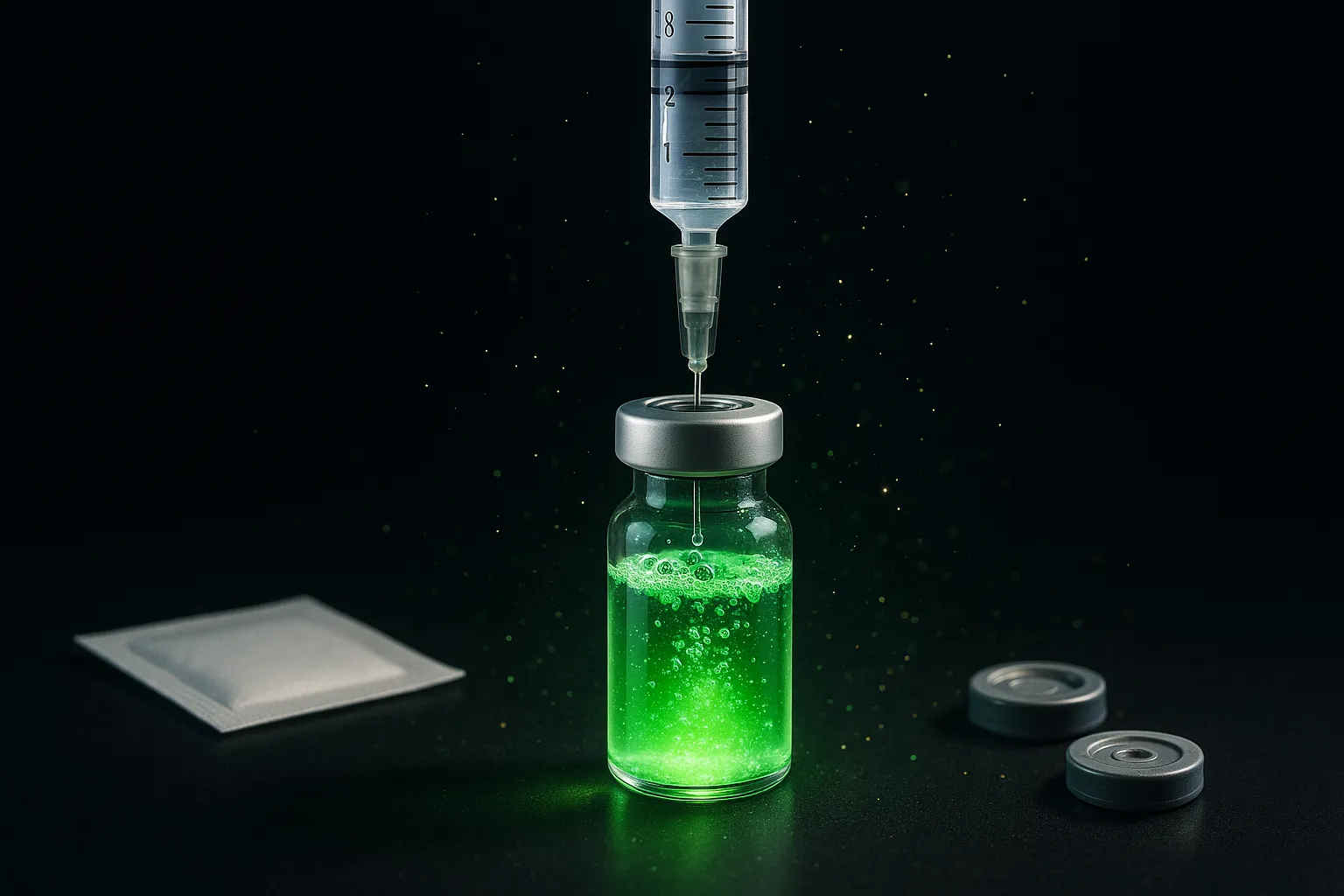
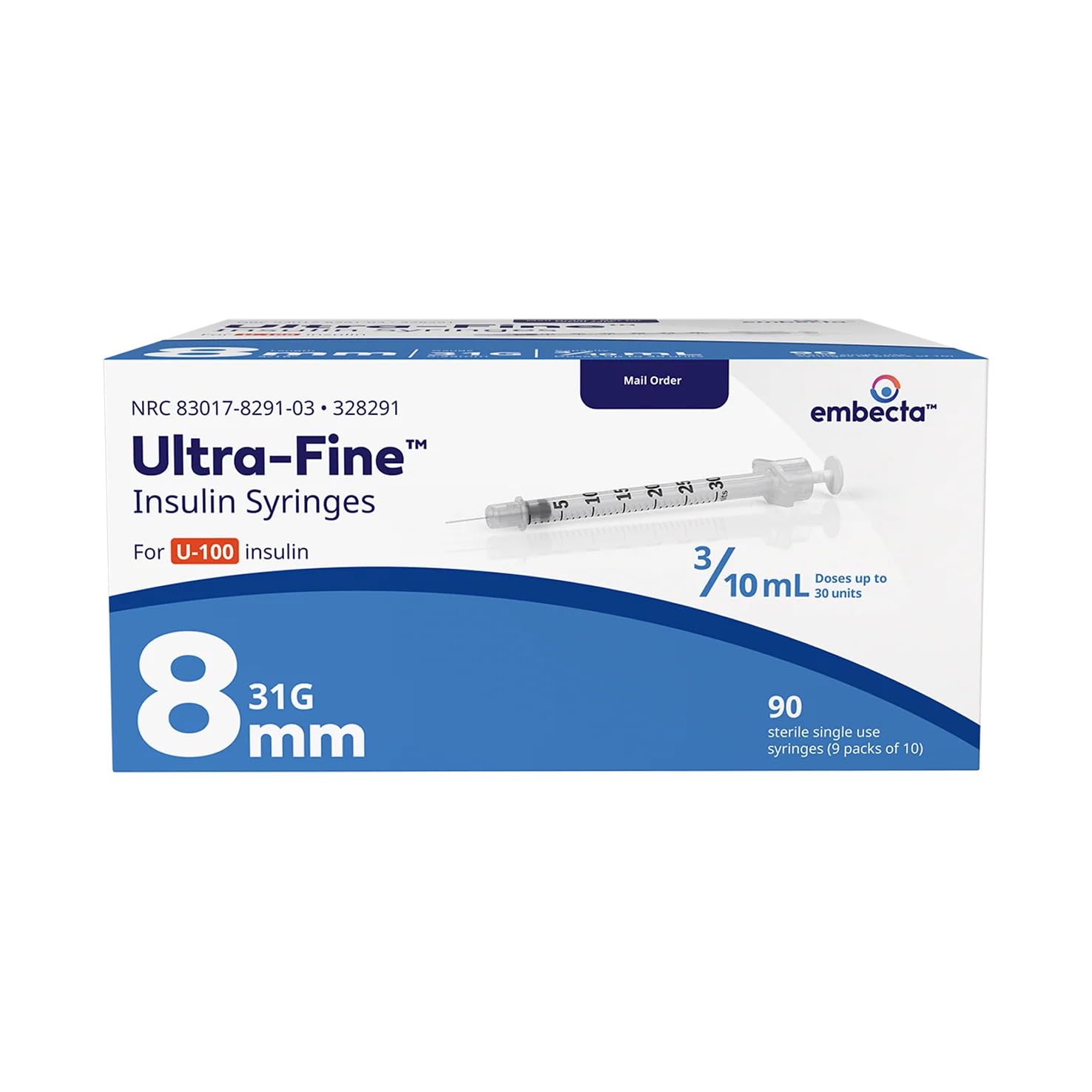
- Gather supplies: Bacteriostatic water (BAC water), alcohol swabs, insulin syringes (1 mL / 100 unit)
- Clean both vial tops with alcohol swabs and let them air dry
- Draw 1 mL of BAC water into the syringe
- Inject slowly down the glass wall of the Follistatin-344 vial — aim the stream at the side, not directly onto the powder cake
- Let the water absorb for 30–60 seconds without touching the vial
- Swirl gently in slow circular motions — never shake
- Wait until the solution is completely clear (may take 2–5 minutes)
- Label the vial with the date and concentration
Resulting Concentration
| Vial Size | BAC Water | Concentration | 100 mcg = |
|---|---|---|---|
| 1 mg | 1 mL | 1,000 mcg/mL | 0.1 mL (10 IU) |
| 1 mg | 2 mL | 500 mcg/mL | 0.2 mL (20 IU) |
Storage After Reconstitution
- Refrigerate at 2–8°C immediately
- Do not freeze reconstituted solution
- Use within 14–21 days
- Discard if the solution becomes cloudy or contains particles
Side Effects & Safety
Follistatin-344 is generally described as well-tolerated in both animal research and limited human clinical data. However, several considerations apply:
Reported Side Effects (Community)
- Injection site reactions: Redness, swelling, or itching at the injection site (most common)
- Transient fatigue: Some users report mild fatigue in the first 2–3 days
- Joint stiffness: Occasionally reported, typically mild and self-limiting
- Elevated appetite: Consistent with increased metabolic demand from muscle growth signaling
Theoretical Concerns
- Reproductive effects: Follistatin is involved in FSH regulation. The FS344/FS315 isoform was specifically chosen for research because it has lower potency for FSH suppression than FS288, but some theoretical risk remains. In the Mendell clinical trial, no changes in reproductive hormones were observed.
- Off-target TGF-β modulation: Follistatin binds multiple TGF-β ligands beyond myostatin. Long-term consequences of broad TGF-β suppression are not well characterized.
- Tendon/ligament adaptation lag: Rapid muscle growth without proportional connective tissue strengthening may increase injury risk. This is a general concern with all potent anabolic agents.
- Oncologic considerations: TGF-β signaling plays complex roles in tumor suppression and promotion. No carcinogenic effects have been observed in animal studies, but long-term human data does not exist.
Who Should Avoid Follistatin-344
- Individuals with active cancers or history of hormone-sensitive cancers
- Pregnant or breastfeeding individuals
- Those with autoimmune conditions (TGF-β pathway involvement)
- Anyone under 18
Stacking
Community researchers frequently combine Follistatin-344 with other peptides targeting complementary pathways. The logic is to amplify muscle growth through multiple mechanisms simultaneously.
Common Stacking Combinations
| Stack Partner | Rationale | Timing |
|---|---|---|
| Ipamorelin + CJC-1295 DAC | GH secretagogue stack to boost growth hormone and IGF-1 | Taken alongside FS-344 cycle |
| IGF-1 LR3 | Direct IGF-1 receptor activation for satellite cell proliferation | Often used during loading phase |
| MK-677 (Ibutamoren) | Oral GH secretagogue for sustained GH elevation | Can run through entire FS-344 cycle and beyond |
| BPC-157 | Connective tissue support to offset rapid muscle growth | Recommended throughout cycle |
| TB-500 | Systemic tissue repair and recovery | Alternating with FS-344 injections |
Stacking Notes
- There is no clinical data validating any of these combinations
- Start with Follistatin-344 alone for at least one cycle before adding stack partners
- Monitor subjective response carefully when combining multiple compounds
- BPC-157 and TB-500 are particularly popular as protective additions, helping tendons and ligaments adapt to increased muscular loading
Frequently Asked Questions
What is the typical Follistatin-344 dose?
Community protocols most commonly reference 100 mcg per day via subcutaneous injection during a loading phase, dropping to 100 mcg every other day for maintenance. These figures derive from allometric scaling of animal research — no human clinical dosing standard exists.
How long should a Follistatin-344 cycle last?
Most community protocols describe cycles of 10–30 days. A common approach is a 10-day loading phase followed by 20 days of maintenance dosing, totaling a 30-day cycle with 4–8 weeks off between cycles.
Does Follistatin-344 need to be refrigerated?
Yes. Lyophilized (unreconstituted) Follistatin-344 should be stored at -20°C for long-term or 2–8°C for short-term. Once reconstituted with bacteriostatic water, it must be refrigerated at 2–8°C and used within 14–21 days.
Can Follistatin-344 be stacked with other peptides?
Researchers commonly pair Follistatin-344 with growth hormone secretagogues like Ipamorelin or CJC-1295, or with IGF-1 LR3. These combinations target complementary anabolic pathways. No clinical data validates stacking protocols.
What are the side effects of Follistatin-344?
Reported side effects in community logs include injection-site irritation, mild fatigue, and transient joint stiffness. Because follistatin also interacts with activins and FSH, theoretical reproductive concerns exist, though the FS344 isoform has lower FSH-suppressing activity than FS288.
How do I reconstitute Follistatin-344?
Add 1 mL of bacteriostatic water to a typical 1 mg vial by directing the stream down the glass wall — never spray directly onto the peptide cake. Swirl gently until dissolved. This yields a concentration of 1,000 mcg/mL (100 mcg per 0.1 mL/10 units on an insulin syringe).
Is Follistatin-344 the same as Follistatin-315?
Follistatin-344 refers to the gene/mRNA containing 344 amino acids. After post-translational processing (signal peptide removal), the mature circulating protein is 315 amino acids long, called FS315. They refer to the same isoform at different stages.
Is Follistatin-344 approved for human use?
No. Follistatin-344 is not approved by the FDA or any regulatory body for human use. It is available as a research chemical only. All dosing information is derived from preclinical research and community self-experimentation.
Related Guides
- BPC-157 Dosing Guide — The go-to healing peptide, commonly stacked with FS-344 for connective tissue support
- TB-500 Dosing Guide — Systemic repair peptide that pairs well during muscle-building cycles
- IGF-1 LR3 Dosing Guide — Direct growth factor for satellite cell activation
- CJC-1295 + Ipamorelin Guide — GH secretagogue stack frequently combined with FS-344
References
- Lee SJ, McPherron AC. Regulation of myostatin activity and muscle growth. Proc Natl Acad Sci USA. 2001;98(16):9306-9311. PMID: 11459935
- Amthor H, Nicholas G, McKinnell I, et al. Follistatin complexes Myostatin and antagonises Myostatin-mediated inhibition of myogenesis. Dev Biol. 2004;270(1):19-30. PMID: 15136138
- Nakatani M, Takehara Y, Sugino H, et al. Transgenic expression of a myostatin inhibitor derived from follistatin increases skeletal muscle mass and ameliorates dystrophic pathology in mdx mice. FASEB J. 2008;22(2):477-487. PMID: 17893249
- Haidet AM, Rizo L, Handy C, et al. Long-term enhancement of skeletal muscle mass and strength by single gene administration of myostatin inhibitors. Proc Natl Acad Sci USA. 2008;105(11):4318-4322. PMID: 18334646
- Rodino-Klapac LR, Haidet AM, Kota J, et al. Inhibition of myostatin with emphasis on follistatin as a therapy for muscle disease. Neuromuscul Disord. 2009;19(3):239-249. PMID: 19208403
- Kota J, Handy CR, Haidet AM, et al. Follistatin gene delivery enhances muscle growth and strength in nonhuman primates. Sci Transl Med. 2009;1(6):6ra15. PMID: 20368179
- Lee SJ, Lee YS, Zimmers TA, et al. Regulation of muscle mass by follistatin and activins. Mol Endocrinol. 2010;24(10):1998-2008. PMID: 20810712
- Mendell JR, Sahenk Z, Malik V, et al. A phase 1/2a follistatin gene therapy trial for Becker muscular dystrophy. Mol Ther. 2015;23(1):192-201. PMID: 25322757
- Guo T, Jou W, Chanturiya T, et al. The transgenic expression of human follistatin-344 increases skeletal muscle mass in pigs. Transgenic Res. 2017;26(1):25-36. PMID: 27787698