Semaglutide went off patent this year in eight countries covering roughly a third of the world's adults living with obesity, and prices in those markets fell by up to 90% within weeks. Canada became the first G7 country to authorise a generic version on April 29, 2026. India's patent lapsed on March 20 and more than forty generic brands followed.
None of that touches the United States. The core US molecule patent runs into December 2031, and the secondary estate around it runs later still. The gap between those two facts is the whole story, and it is the reason the query "when will semaglutide go generic" keeps climbing while the answer for American buyers stays the same.
Research-context information only. This article reports on published regulatory filings, company disclosures and price data. Nothing here is medical or legal advice. Semaglutide, tirzepatide and liraglutide are FDA-approved as prescription medicines; research-use-only material sold by peptide vendors is not FDA-approved for human use and has not been evaluated for safety, purity or potency in that channel. Consult a licensed physician for personal medical decisions.
The first wave hit eight markets, not one
IQVIA groups the 2026 expiries into a first wave of eight markets: Canada, Brazil, China, India, Mexico, Turkey, Saudi Arabia and South Africa. Regulatory treatment differs by country — Canada and Saudi Arabia handle the copies as small-molecule generics, while Brazil, India and South Africa route them through biosimilar-style pathways, and China and Turkey use mixed classifications. The commercial effect is the same in every case: multiple approved competitors against a single incumbent.
The scale of the queue is the part that gets underestimated. More than seventy integrated pharmaceutical companies are pursuing marketing authorisation for semaglutide somewhere in the world, with another seventy-plus contract manufacturers able to supply the active ingredient. Roughly 80% of that development activity sits in China and India. At least seventeen Chinese generic candidates were in Phase 3 as of mid-2026.
Canada's entry was an accident of paperwork rather than the expiry of a full patent term. Novo Nordisk stopped paying maintenance fees on Canadian patent CA 2601784 after October 2018; the reinstatement window closed on August 31, 2020, with the outstanding amount reported at CAD 450 including the late charge. The company has since said the lapse was a deliberate global IP decision rather than an error. Whatever the intent, data exclusivity ended on January 4, 2026, Health Canada issued the first Notice of Compliance to Dr. Reddy's Laboratories on April 29, Apotex followed on May 1, and both had commercial product on the market by May 14-15.
What the prices actually came down to
India moved furthest and fastest. Branded monthly cost had run roughly 10,000-16,000 rupees. Post-expiry generics landed as low as 1,290 rupees — multi-dose vials near $14 a month and disposable pens near $19 by IQVIA's tracking, a discount of up to 90%. Sun Pharmaceutical priced a weekly injection near 750 rupees. Novo Nordisk responded by cutting its own branded pricing in the market by up to 48%.
Canada's fall was more orderly because it is partly regulated. Once three generic injectables reach the market, Canadian pricing rules drive the reference down toward 35% of brand — a 65% cut. Apotex published a wholesale price of $78.14 for a four-week supply against $240.48 for the branded product, and reported Costco pharmacy shelf pricing through the summer ran $88-99 per pen depending on province.
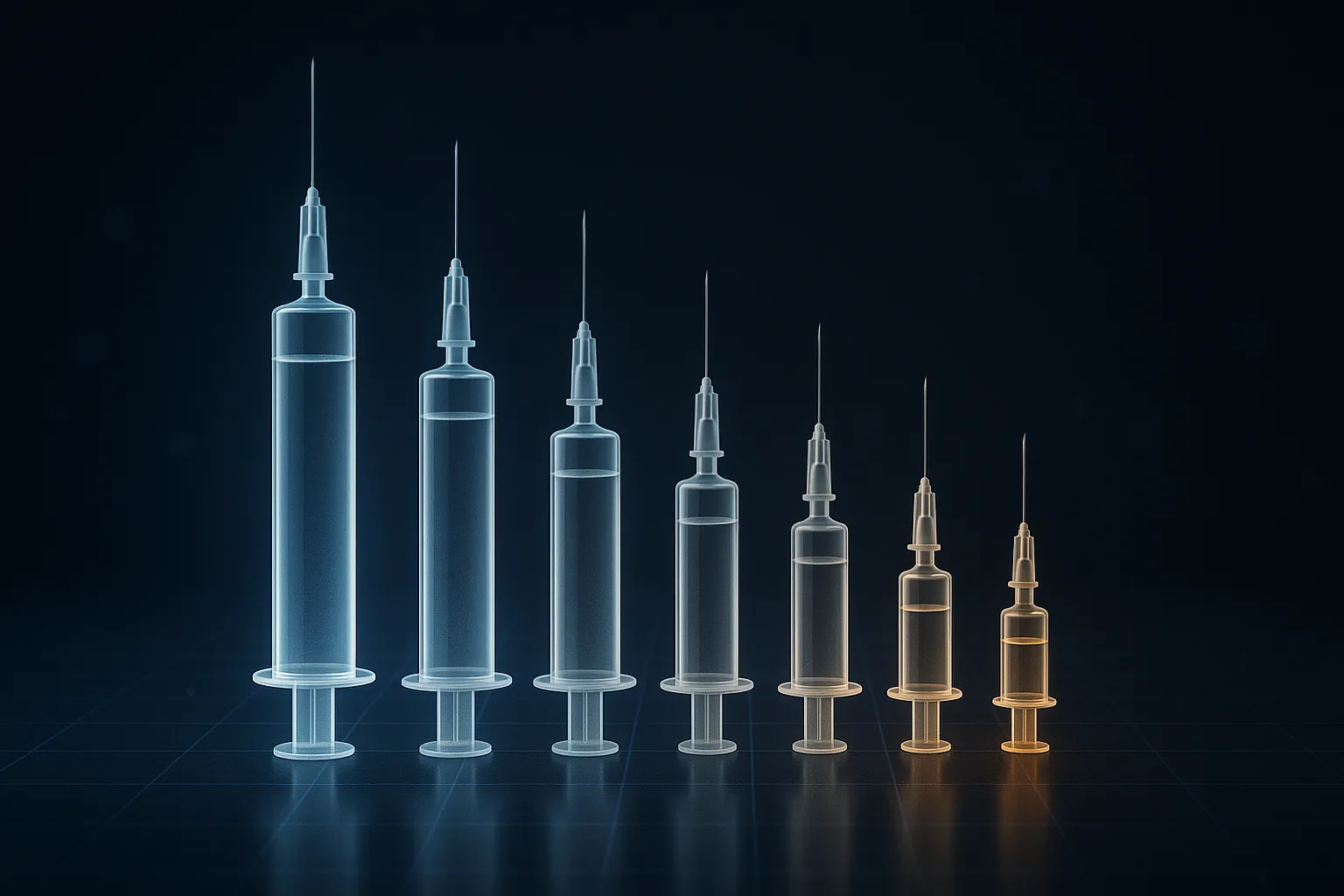
Two things follow from those numbers. First, the branded price was never a manufacturing constraint — it was an exclusivity rent, and it collapsed the moment competitors were legally allowed to exist. Second, the floor is a long way further down still. Barber and colleagues, publishing in JAMA Network Open in 2024 (PMID 38536176), estimated a sustainable cost-based price for injectable semaglutide — production plus a reasonable profit margin — at roughly $0.89 per month, against global prices at the time of $95-353. Even India's $14 generic is more than an order of magnitude above the estimated cost of goods.
Why the US is in the last wave, not the first
US Patent 8,129,343 covers the semaglutide molecule itself. Its twenty-year term from filing would have run out in March 2026 — the same month India's did. Patent term adjustment, which compensates for examination delay, and patent term extension, which compensates for regulatory review time, together pushed it into December 2031. That is the single largest reason the US is out of step with the rest of the first wave.
Behind the compound patent sits a much deeper estate. Method-of-use patents claiming specific therapeutic applications extend into 2033 and can block a generic unless it is filed with a "skinny label" that carves out the protected indication. Device patents on the injector pens run into the late 2030s; Novo Nordisk has more than twenty patents listed against the injectable product, many of them covering delivery hardware rather than the peptide. Analysts modelling US entry generally land on 2032 with a tail of litigation.
The FDA has been building the technical scaffolding regardless. On July 28, 2026 the agency published seventeen revised draft product-specific guidances covering peptide drug products including semaglutide, tirzepatide and liraglutide, and withdrew its 2021 guidance on synthetic peptides referencing recombinant listed drugs. We covered that release and what it demands of a generic filing in FDA maps the generic path for semaglutide and tirzepatide. A product-specific guidance is a roadmap, not a key — it tells a filer what data to bring when the patent window finally opens.
One GLP-1 has already cleared the whole gauntlet in the US. Generic liraglutide was approved against the diabetes reference product in December 2024 and against the weight-management reference product in August 2025, making it the first GLP-1 receptor agonist to face genuine US generic competition. For readers looking for the post-exclusivity version of this class already live domestically, liraglutide is the only example so far.
What this changes for a US buyer today
Practically: nothing about supply, and a fair amount about expectations.
Personal importation of a foreign-approved GLP-1 is not a lawful retail channel here, and the FDA has acted repeatedly against operations routing foreign or unapproved product to US customers. A Canadian pharmacy price of $88 is a real number in Canada and not an available one in Ohio. The options available to US readers are unchanged: a prescription for branded product, or a telehealth pathway. Separately, a research-use-only peptide market exists and is tracked below — sold and labeled for research use, not as a substitute for the approved drug.
What the international data does change is the reference point. Anyone who has been told that GLP-1 pricing reflects the cost of making a complex peptide now has eight markets' worth of evidence otherwise. It also sets a rough expectation for what US pricing does after 2031-2032 — relevant context for anyone weighing a long-term branded commitment against a shorter one.
For the research-peptide market, per-mg pricing, vendor COA documentation and current stock are tracked live on the semaglutide vendor comparison and tirzepatide vendor comparison pages, and active vendor codes are consolidated on the deals page. Our semaglutide buying guide covers what a COA does and does not certify, which is the part of the decision the price tables cannot answer.