Research-context information only. Liraglutide is the active ingredient in FDA-approved products for type 2 diabetes and chronic weight management; research-peptide and compounded forms are not FDA-approved and are sold for research purposes only. Protocols, doses, and reactions reported below come from clinical trials and community sources. This article reports what has been documented, not what should be done. Consult a licensed physician for personal medical decisions.
This guide covers documented per-mg pricing, which vial size matches the SCALE titration schedule, how to read a liraglutide COA (and why the palmitoyl modification matters), and red flags that distinguish legitimate suppliers. For dosing itself, see the liraglutide dosing guide.
This is not a ranked vendor list — for that, see our Best Liraglutide Vendors comparison. This guide describes how vendor evaluation is typically performed.
Understanding Liraglutide Pricing
Liraglutide is sold as a lyophilized powder in sealed glass vials. Three things drive your per-mg cost: vial size (bigger = cheaper per mg), vendor markup, and whether the COA verifies both the 31-residue sequence and the palmitoyl-glutamic acid modification at Lys26.
Current Market Pricing (2026)
Vial Size
Typical Price Range
Price Per mg
Best For
5mg
$35-55
$7-11/mg
Tolerance testing during titration
15mg
$55-95
$3.65-6.35/mg
Mid-titration (1.2-1.8 mg/day)
30mg
$80-160
$2.70-5.30/mg
Full 3mg/day SCALE protocol — best value
30mg × 5 (kit)
$360-700
$2.40-4.65/mg
Extended cycles
The pattern is clear: 30mg vials are the most-cited size for cost efficiency. 5mg vials carry 2-3x the per-mg cost. Daily dosing burns through liraglutide faster than once-weekly GLP-1s, so total monthly spend is higher than semaglutide despite lower per-mg pricing.
Cost Per Month at SCALE Titration Doses
Daily Dose
Days at Dose
Monthly Cost (30mg single)
Monthly Cost (kit)
0.6 mg/day (week 1)
18 mg/month
$48-96
$43-84
1.2 mg/day (week 2)
36 mg/month
$96-192
$86-168
1.8 mg/day (week 3)
54 mg/month
$144-288
$130-252
2.4 mg/day (week 4)
72 mg/month
$192-384
$173-336
3.0 mg/day (maintenance)
90 mg/month
$240-480
$216-420
For current vendor-specific pricing with exact $/mg breakdowns, see our Best Liraglutide Vendors comparison.
How to Verify Liraglutide Quality
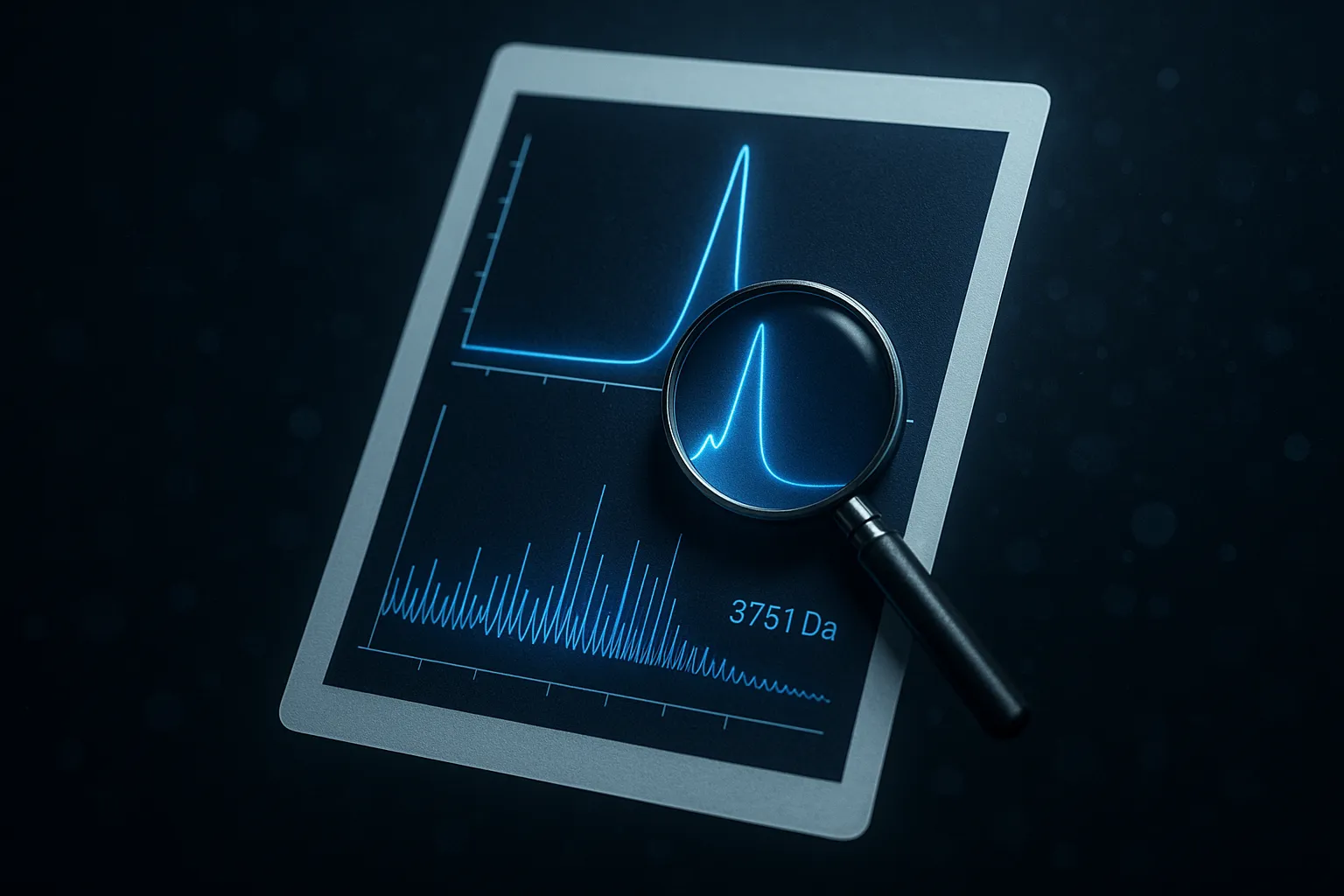
Liraglutide is a 31-amino-acid GLP-1 analog with a palmitoyl-glutamic acid spacer at Lys26 — that fatty acid modification is what gives liraglutide its 13-hour half-life (vs ~2 minutes for native GLP-1). Without mass spec at 3,751 Da, distinguishing real liraglutide from cheaper unmodified GLP-1 fragments isn't possible.
What a COA (Certificate of Analysis) Should Include
Identity Confirmation
Mass spectrometry confirming 3,751 Da for liraglutide
Amino acid sequence verification — 31 residues with palmitoyl-glutamic acid at Lys26
The modification check is the single most important test for liraglutide
Purity Testing
HPLC purity at 98%+
Single dominant peak on the chromatogram, minimal secondary peaks
Water content (Karl Fischer) under 8%
Contamination Testing
Endotoxin levels
Residual solvent analysis (acetonitrile, TFA)
Heavy metals screening
How to Verify a COA Is Legitimate
Reputable testing lab — Janoshik Analytical, MZ Biolabs, and Colmaric Analyticals are the most-cited labs in community discussions. Vendors offering only "in-house testing" are commonly distrusted.
Lab-website verification — Janoshik COAs carry a task number that can be looked up directly at janoshik.com. Vendors that won't provide a verifiable task number have failed basic disclosure.
Recent date — COAs older than 6 months may not represent the current batch.
Batch match — The batch/lot number on the COA should match what's printed on the vial.
3,751 Da mass confirmation — Mass spec showing significantly lower weight indicates either a truncated peptide or unmodified GLP-1 (which has no palmitoyl chain and degrades within minutes).
Red Flags to Avoid
No COA available
Only in-house testing — self-reported purity numbers without independent verification
Prices below $2/mg across every size — almost certainly substituted with a cheaper unmodified GLP-1 fragment
COA without mass spec — HPLC alone cannot confirm the palmitoyl modification
Vendor can't explain the lipid modification — a legitimate supplier knows why liraglutide costs more to synthesize than native GLP-1
Liraglutide reconstituted with bacteriostatic water and refrigerated is documented stable for roughly 28 days in published peptide-stability data. With sterile water (no preservative), the window collapses to ~24 hours. Daily dosing creates a tight constraint:
Solution: A 30mg vial reconstituted at a time aligns with the SCALE 3mg/day protocol — 10 days per vial means each batch is fully used inside the stability window with margin.
Vial Size by Protocol
Tolerance testing (week 1, 0.6 mg/day):
A 5mg vial is the smallest unit cited for the first 1-2 weeks
8 days of supply at the 0.6 mg starting dose
Common for buyers titrating slowly to assess GI side effects
Mid-titration (weeks 2-4, 1.2-2.4 mg/day):
A 15mg or 30mg vial depending on dose escalation pace
30mg becomes the most efficient size once daily dose exceeds 1.8 mg
Maintenance (3 mg/day, the SCALE Phase 3 dose):
30mg vials — exactly 10 days at 3 mg/day, well inside stability window
3-4 vials per month at this dose
Kit pricing (5× 30mg) drops per-mg cost by 10-15% but commits to a long supply
Buying Multiple Smaller vs One Large Kit
Factor
Multiple 30mg Singles
Kit (5× 30mg)
Cost per mg
Higher ($2.70-5.30/mg)
Lower ($2.40-4.65/mg)
Freshness
Same (lyophilized storage equivalent)
Same
Flexibility
Can pause between purchases
Committed to full supply
Storage
Easier (smaller volumes)
Requires fridge space
Shipping
More frequent orders
Single shipment
Common community pattern: 1-2× 30mg singles to validate source and complete tolerance titration, with kit purchases reserved for confirmed responders running 3+ months of maintenance.
Why Liraglutide Costs More Per Month Than Semaglutide
A common question in community discussions: why does liraglutide run $240-480/month when semaglutide runs $80-150? Two reasons:
1. Daily vs weekly dosing. Liraglutide's 13-hour half-life requires once-daily injection at 3 mg/day. Semaglutide's ~7-day half-life allows once-weekly injection at typical research doses (1-2 mg/week, ~4-8 mg/month). That's a 10-20x difference in monthly mass even though per-mg pricing is similar.
2. Same per-mg, very different monthly mass. Per-mg pricing is comparable ($2.70-5.30/mg liraglutide vs $3-8/mg semaglutide), but liraglutide's daily dosing means buyers consume 90mg/month at full dose vs ~5-8mg/month for semaglutide.
For buyers prioritizing monthly cost, semaglutide and tirzepatide have eclipsed liraglutide on the research market. Liraglutide remains relevant where the shorter half-life is preferred (e.g., easier dose titration, faster discontinuation if adverse events occur, more rapid response to dose changes).
Vendor Evaluation Methodology
When comparing liraglutide vendors, three weighted factors:
Price Competitiveness (40%)
Normalize to cost per milligram. A vendor selling 30mg at $100 ($3.33/mg) scores higher than one selling 15mg at $80 ($5.33/mg), all else equal.
COA & Testing (30%)
Verify that COAs are:
From recognized third-party labs (Janoshik, MZ Biolabs, Colmaric)
Recent (within 6 months)
Verifiable on the lab's website
Include mass spec confirming the 3,751 Da molecular weight
Reputation (30%)
Community feedback, shipping reliability, customer service responsiveness, and business track record.
Shipping and Storage
What Order Arrival Typically Looks Like
Lyophilized liraglutide arrives as a white or off-white powder cake in a sealed glass vial:
Vial integrity — no cracks, intact rubber seal, aluminum cap secure
Powder appearance — solid cake or loose powder, NOT liquid or discolored
Labeling — batch/lot, mg content, "for research use only"
Cold pack — most reputable vendors include cold packs in summer months
No COA-verified vendor currently stocks Liraglutide. We list vetted, recommended sources only, and none carry it right now. See live availability and alternatives.
Bac Water Made for Peptides50% off
Don't risk a $300 peptide on generic bac water.
Most cloudy reconstitutions trace back to one thing — and it isn't the peptide. Sterile, non-pyrogenic, 0.9% benzyl alcohol — formulated for peptide reconstitution, not repackaged from generic stock.
✓ 0.9% benzyl alcohol✓ Made for peptides✓ 30 mL multi-dose
Liraglutide is the active ingredient in FDA-approved products for type 2 diabetes and chronic weight management. Research-grade liraglutide is sold by peptide vendors for laboratory use only, labeled 'not for human consumption.' Purchasing research peptides is legal in most US jurisdictions, but you are not buying an FDA-regulated drug at this tier.
How much does liraglutide cost per month?
At the SCALE Phase 3 protocol of 3mg/day, monthly use runs ~90mg. Research-vendor 30mg vials cost $80-160 each, so a month at full dose runs $240-480. The branded prescription product runs roughly $1,300/month, so research-grade is 65-80% cheaper.
What vial size should I buy?
30mg vials are the most-cited size. At 3mg/day, a 30mg vial lasts 10 days. 5mg and 15mg vials are documented as poor value — typically 50-100% higher per-mg cost than 30mg. Smaller starter vials are sometimes purchased only for tolerance testing during the SCALE titration.
What purity should I look for in liraglutide?
Third-party HPLC at 98%+ purity, plus mass spec confirming the 3,751 Da molecular weight. Liraglutide is a 31-residue peptide with a glutamic acid spacer and a palmitoyl fatty acid chain at Lys26 — the fatty acid modification is what extends half-life from ~2 minutes (native GLP-1) to ~13 hours and is also what's hardest to synthesize correctly.
Can I get liraglutide from a compounding pharmacy?
Compounding semaglutide and tirzepatide expanded during 2022-2024 shortages, but liraglutide compounding has been more limited. As of 2026, the FDA has restricted GLP-1 compounding through proposed 503B exclusions. Some telehealth clinics still ship compounded liraglutide; verify the supply chain before purchasing.
This article is for educational and informational purposes only. It is not medical advice and should not be used to diagnose, treat, or prevent any condition. Consult a licensed healthcare provider before using any peptide.