Hexarelin has a unique results profile: the strongest acute GH pulse of any GHRP, measurable cardiac improvements within 90 minutes, but a desensitization curve that limits effective cycle duration. Understanding this timeline is critical for designing an effective protocol.
Research-context information only.Hexarelin is a research peptide. Protocols, doses, and reactions reported below come from published research and self-reported community sources. This article reports what has been documented, not what should be done. Consult a licensed physician for personal medical decisions.
This guide covers what to expect at each stage, including the desensitization pattern that shapes how most people use hexarelin. Based on published clinical data and commonly reported user experiences.
Hexarelin operates through two parallel mechanisms on different timescales:
GH-axis pathway (GHS-R1a): Triggers the largest GH pulse of any GHRP within 15-30 minutes. Also raises ACTH, cortisol, and prolactin. This pathway shows desensitization with repeated dosing (Rahim et al., 1999)
Cardiac pathway (CD36): Directly binds cardiomyocytes and endothelial cells, producing GH-independent improvements in cardiac output and cardioprotection (Bodart et al., 2002). This pathway appears more resistant to desensitization
This dual-mechanism architecture means hexarelin's results timeline has two tracks: a GH track that diminishes over weeks, and a cardiac track that may persist with continued use.
Day 1 - Week 1: Peak GH Response
What the research shows:
GH peaks within 15-30 minutes of subcutaneous injection, higher than any other GHRP at equivalent doses (Dickson et al., 1995)
Cardiac output, LVEF, and cardiac index increase within 90 minutes, lasting up to 90 minutes post-dose in human surgical patients (Broglio et al., 2002)
Cortisol and prolactin also rise transiently, returning to baseline within 1-2 hours (Arvat et al., 1997)
What users commonly report:
Strong injection-site warmth and flushing (more pronounced than GHRP-2 or GHRP-6)
Moderate hunger increase (less than GHRP-6, similar to GHRP-2)
Noticeable energy or "alertness" in the hour post-injection
Realistic expectation: Week 1 is when hexarelin is at its strongest. Every GH pulse is maximum amplitude. Enjoy it — this response will diminish with continued use. The hunger and flushing confirm pharmacological activity.
2mg · sold research-use-only · we may earn a commission
Weeks 2-4: GH Attenuation Begins
What the research shows:
By week 4, GH response to hexarelin decreased significantly compared to baseline in a 16-week study (Rahim et al., 1999)
The attenuation is partial (approximately 50% reduction), not complete loss
In children, despite GH-response desensitization, growth velocity improvements persisted (Laron et al., 1996)
Chronic hexarelin did not interfere with GHRH-mediated GH release — the desensitization is specific to the ghrelin receptor pathway (Buscher et al., 1997)
What users commonly report:
GH-related effects (flushing, energy surge) becoming less intense per injection
Hunger response stabilizing or diminishing
Improved sleep quality establishing
Early body composition changes becoming noticeable (weeks 3-4)
Water retention stabilizing
Recovery from training improving
Some users notice the injection "feeling" less potent — this reflects the measured GH attenuation
Realistic expectation: This is the transition period. You are still getting meaningful GH release — but less than week 1. The downstream IGF-1 elevation continues supporting body composition changes. Many users end their hexarelin cycle at week 4-6 for this reason.
Months 1-2: Steady State (If Continuing)
What the research shows:
At week 16 of continuous dosing, GH response remained attenuated but not abolished (Rahim et al., 1999)
Anti-fibrotic effects of chronic hexarelin accumulate in hypertensive models — cardiac remodeling is reduced with sustained treatment (McDonald et al., 2012)
A single oral dose of hexarelin post-MI protected cardiac function over subsequent weeks (Mao et al., 2014)
What users commonly report:
Visible body composition changes — reduced fat, improved muscle definition
GH-related side effects (flushing, tingling) largely resolved
Sustained improvement in sleep and recovery
Reduced acute response per injection but maintained general well-being benefits
Some users switch to every-other-day dosing to partially restore per-dose GH amplitude
Realistic expectation: If you continue past week 4, you are getting approximately 50% of the initial GH response per injection. This may still be clinically meaningful — the children's growth data suggests it is. The cardiac CD36-mediated effects continue independently of GH desensitization.
Recovery Phase (After Stopping)
What the research shows:
4 weeks after discontinuation, GH response recovered significantly compared to week 16 values and was not significantly different from baseline (Rahim et al., 2000)
The desensitization does not impair GHRH-mediated GH release — only the hexarelin/ghrelin receptor pathway is affected
What users commonly report:
GH-mediated effects (water retention, flushing) resolve within days of stopping
Body composition gains from the cycle are maintained if training and diet continue
Sleep quality may temporarily decrease before normalizing
Full response restoration if restarting after a 4-week break
Recommended cycling pattern: 4-8 weeks on, 4 weeks off. This preserves the full GH response for each cycle while allowing the cardiac benefits to accumulate across multiple cycles.
Bac Water Made for Peptides
Don't risk a $300 peptide on generic bac water.
Most cloudy reconstitutions trace back to one thing — and it isn't the peptide. Sterile, non-pyrogenic, 0.9% benzyl alcohol — formulated for peptide reconstitution, not repackaged from generic stock.
✓ 0.9% benzyl alcohol✓ Made for peptides✓ 30 mL multi-dose
Concurrent use of compounds that suppress GH release
When to Adjust Protocol
Signs it is working:
Strong flushing and hunger response in week 1 (confirms pharmacological activity)
Improved sleep within 1-2 weeks
Water retention in first 1-3 weeks
Body composition changes by weeks 4-6
Signs of desensitization:
Markedly reduced flushing and hunger per injection after week 2-3
Less noticeable "energy surge" post-injection
Consider this normal and expected — not a sign of bad peptide
When to stop the cycle:
Planned endpoint (4-8 weeks)
Minimal perceived effect per injection (desensitization ceiling reached)
Side effects that don't resolve with dose reduction
What Hexarelin Will NOT Do
It will not maintain peak GH response indefinitely. Desensitization is built into hexarelin's pharmacology.
It will not replace cardiac medications. Despite impressive data, hexarelin is not approved for any cardiac condition.
It will not work well as a long continuous cycle. 4-8 weeks with breaks is the evidence-based approach.
It will not produce identical results to exogenous GH. The ceiling is your pituitary's capacity, which desensitization further limits over time.
Frequently Asked Questions
How quickly does hexarelin work?
Hexarelin produces the strongest GH pulse of any GHRP within 15-30 minutes of injection. Cardiac function improvements (increased LVEF) occur within 90 minutes. Body composition changes require 4-8 weeks of consistent dosing.
When does hexarelin desensitization start?
GH response attenuation begins around week 2-3 and becomes significant by week 4 of continuous twice-daily dosing. The reduction is approximately 50% of initial response. It fully reverses within 4 weeks of stopping.
How long should a hexarelin cycle last?
Most protocols run 4-8 weeks due to the desensitization issue. Shorter high-intensity cycles (4-6 weeks) followed by 4-week breaks preserve the full GH response. Some users find 8-week cycles acceptable since desensitization is partial, not complete.
Does hexarelin's cardiac benefit desensitize too?
Available evidence suggests the cardiac effects (CD36-mediated) do not desensitize in the same way as the GH response, since they operate through a different receptor system. However, this has not been specifically studied in long-term protocols.
Research Supplies for Hexarelin
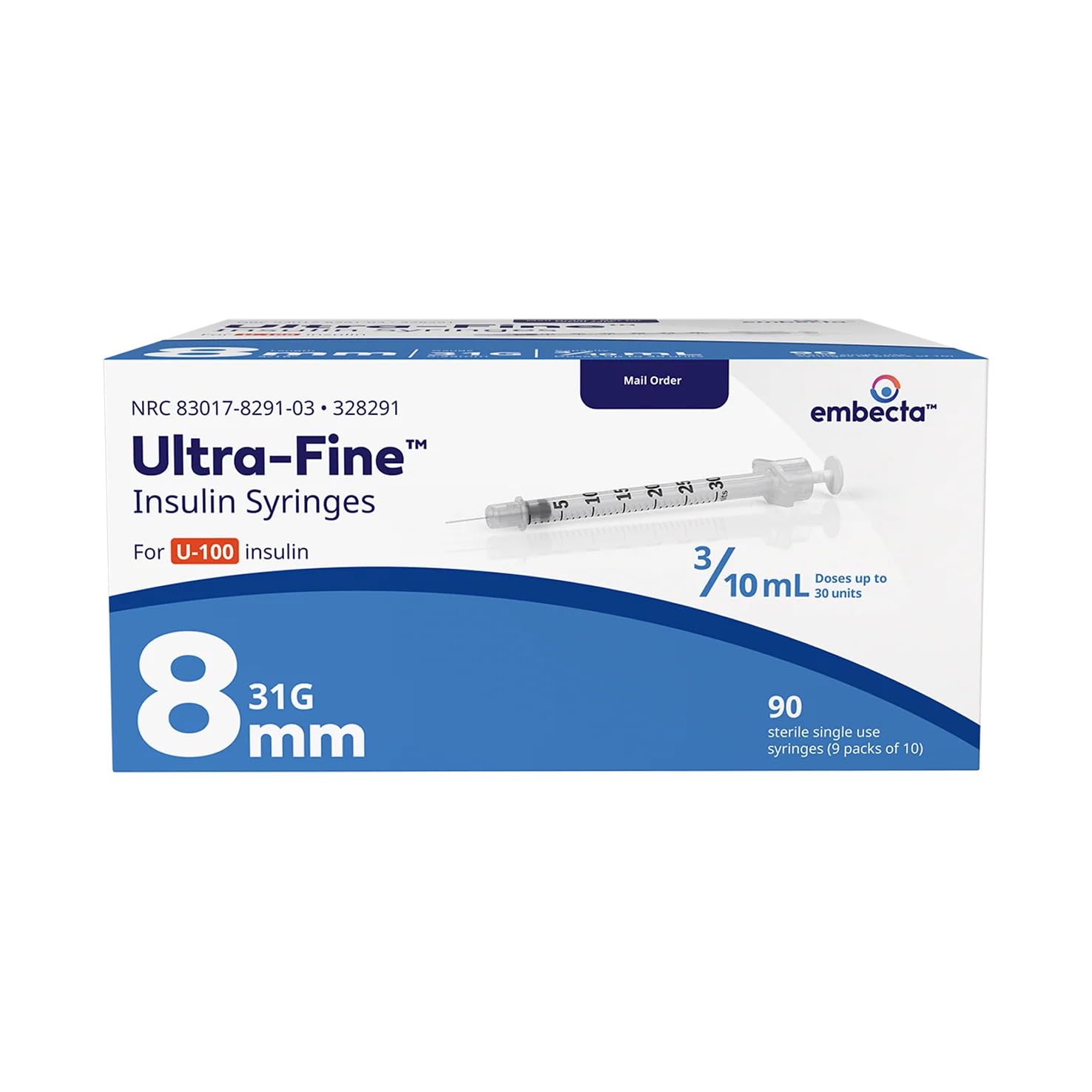
Hand-picked storage, injection, and recovery supplies paired with Hexarelin protocols.