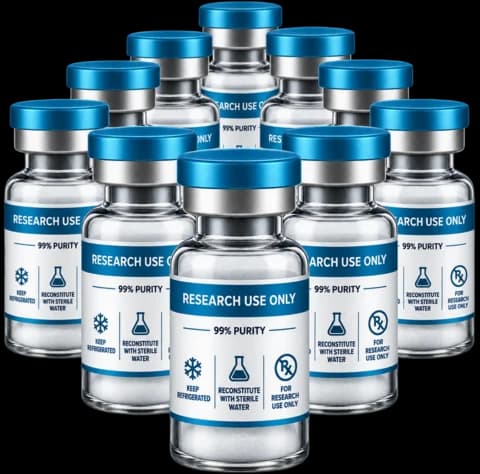
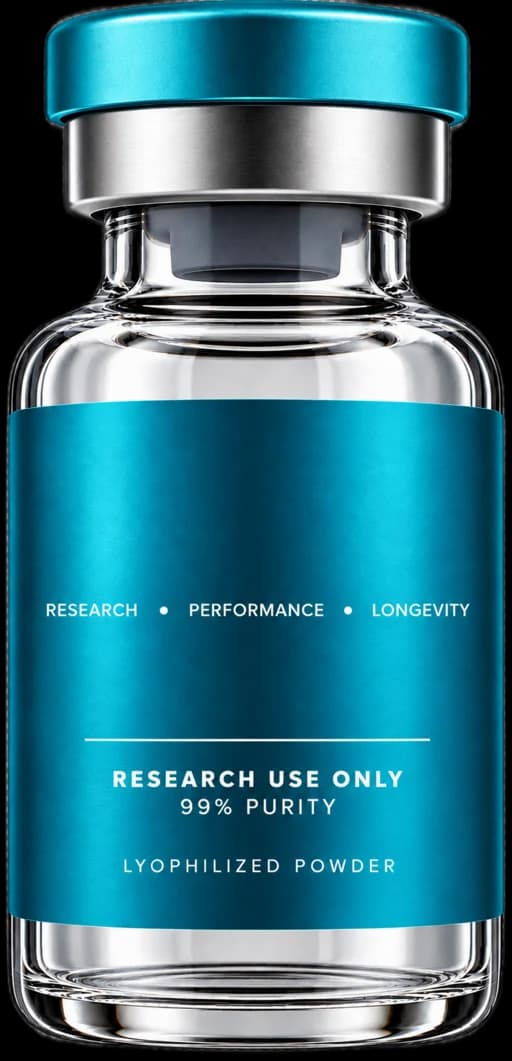
IGF-1 LR3 is the long-acting insulin-like growth factor analog that bodybuilders reach for when they want direct muscle-cell signaling without the side effects of full HGH cycles. Half-life is 20-30 hours versus roughly 10 minutes for native IGF-1 — which is exactly why vendor quality and reconstitution matter so much. A mishandled vial is a dead vial.
This guide covers what you should actually pay per milligram, why 1mg is the only sensible vial size for most protocols, how to verify a COA for a 70-amino-acid modified protein, and the reconstitution traps that silently destroy half the market's product. IGF-1 LR3 is not a simple peptide — it's a folded protein, and that changes everything about how you buy it.
This is not a ranked vendor list — for that, see our Best IGF-1 LR3 Vendors comparison. This guide teaches you how to evaluate any vendor yourself.
Why IGF-1 LR3 Is Worth Buying Carefully
IGF-1 LR3 is a modified version of native human IGF-1 with an arginine substitution at position 3 and a 13-amino-acid N-terminal extension. Those two changes do two things: they prevent binding to IGFBP (the carrier proteins that normally inactivate free IGF-1), and they extend half-life from minutes to roughly 24 hours. The result is a growth factor that stays bioactive long enough to produce measurable anabolic signaling.
In practice, bodybuilders use IGF-1 LR3 post-workout at 40-80 mcg/day to drive satellite-cell activation, muscle hyperplasia, and nutrient partitioning. The compound is especially useful for breaking through plateaus on lean mass and improving recovery. Unlike CJC-1295 or ipamorelin, which work upstream by stimulating the pituitary, IGF-1 LR3 acts directly on muscle tissue.
But here's the catch: IGF-1 LR3 is a 7,649 Da protein that folds into a specific 3D structure. Denature it — with the wrong solvent, excess heat, or freeze-thaw cycles — and you have biologically inactive powder that still weighs 1mg on a lab scale. A COA showing 98% purity only confirms the molecule exists. It does not confirm the protein is still folded correctly.
This is why sourcing matters more for IGF-1 LR3 than for almost any other research peptide on the market.
Understanding IGF-1 LR3 Pricing
IGF-1 LR3 is sold as lyophilized powder in sealed glass vials. Three factors move price: vial size (1mg is overwhelmingly the most common), manufacturer sourcing (US-synthesized recombinant protein is more expensive than overseas), and whether the vendor invests in third-party COAs and cold-chain shipping.
Current Market Pricing (2026)
| Vial Size | Typical Price Range | Price Per mg | Best For |
|---|---|---|---|
| 100 mcg | $25-45 | $250-450/mg | Trial vial only |
| 500 mcg | $40-80 | $80-160/mg | Short protocols, tolerance |
| 1 mg | $50-120 | $50-120/mg | Standard — best value |
The pattern is clear: 1mg vials are not just the cheapest per mg — they're often the only sensible purchase. The 100mcg trial vial exists for one reason: testing for injection-site reactions or hypoglycemia before committing. If you already know you tolerate IGF-1 LR3, go straight to 1mg.
Which vendor is cheapest changes — check current IGF-1 LR3 vendors and live per-mg pricing ↓ rather than trusting a figure quoted here. 1mg vials are consistently the better value regardless of who is cheapest that week.
Cost Per Week at Common Doses
| Daily Dose | Vial Duration (1mg) | Monthly Cost (1mg vial) |
|---|---|---|
| 20 mcg/day | 50 days | $30-72/month |
| 40 mcg/day | 25 days | $60-144/month |
| 60 mcg/day | 16 days | $94-225/month |
| 80 mcg/day | 12 days | $125-300/month |
For current vendor-specific pricing with exact $/mg breakdowns, see our Best IGF-1 LR3 Vendors comparison.
What to Look For: COA, Purity, Storage

Because IGF-1 LR3 is a folded protein, a good vendor needs to verify identity, purity, AND structural integrity. Most vendors only do the first two. Here's what a complete COA looks like.
What a COA (Certificate of Analysis) Should Include
Identity Confirmation
- Mass spectrometry confirming the 9,111 Da molecular weight (70 amino acids total with the N-terminal extension)
- Amino acid sequence verification matching the LR3 modification (Arg at position 3, MFPAMPLSSLFVN extension)
Purity Testing
- HPLC purity — look for 98%+ purity
- The chromatogram should show a single dominant peak with minimal truncated-sequence or oxidized impurities
Contamination Testing
- Endotoxin levels (critical — this is injected intramuscular or subcutaneous)
- Residual solvent analysis
- Heavy metals screening
Protein-Specific Tests (rare but ideal)
- Circular dichroism (CD) spectroscopy confirming secondary structure
- Bioactivity assay on MCF-7 or similar IGF-1-responsive cell line
Most vendors skip the last category. If a vendor provides a bioassay, that's a strong positive signal.
How to Verify a COA Is Legitimate
-
Check the testing lab — Janoshik Analytical, MZ Biolabs, and Colmaric Analyticals are the gold standard. In-house testing is a red flag.
-
Verify on the lab's website — Janoshik COAs have a task number that can be looked up at janoshik.com. If the vendor won't provide a verifiable task number, walk away.
-
Check the date — COAs should be recent (within 6 months). IGF-1 LR3 degrades in storage even as lyophilized powder.
-
Match the batch — The batch/lot number on the COA should match your vial.
-
Demand cold-chain shipping in summer — IGF-1 LR3 ships with cold packs or dry ice from serious vendors. Room-temp shipping across three summer days is a quality concern.