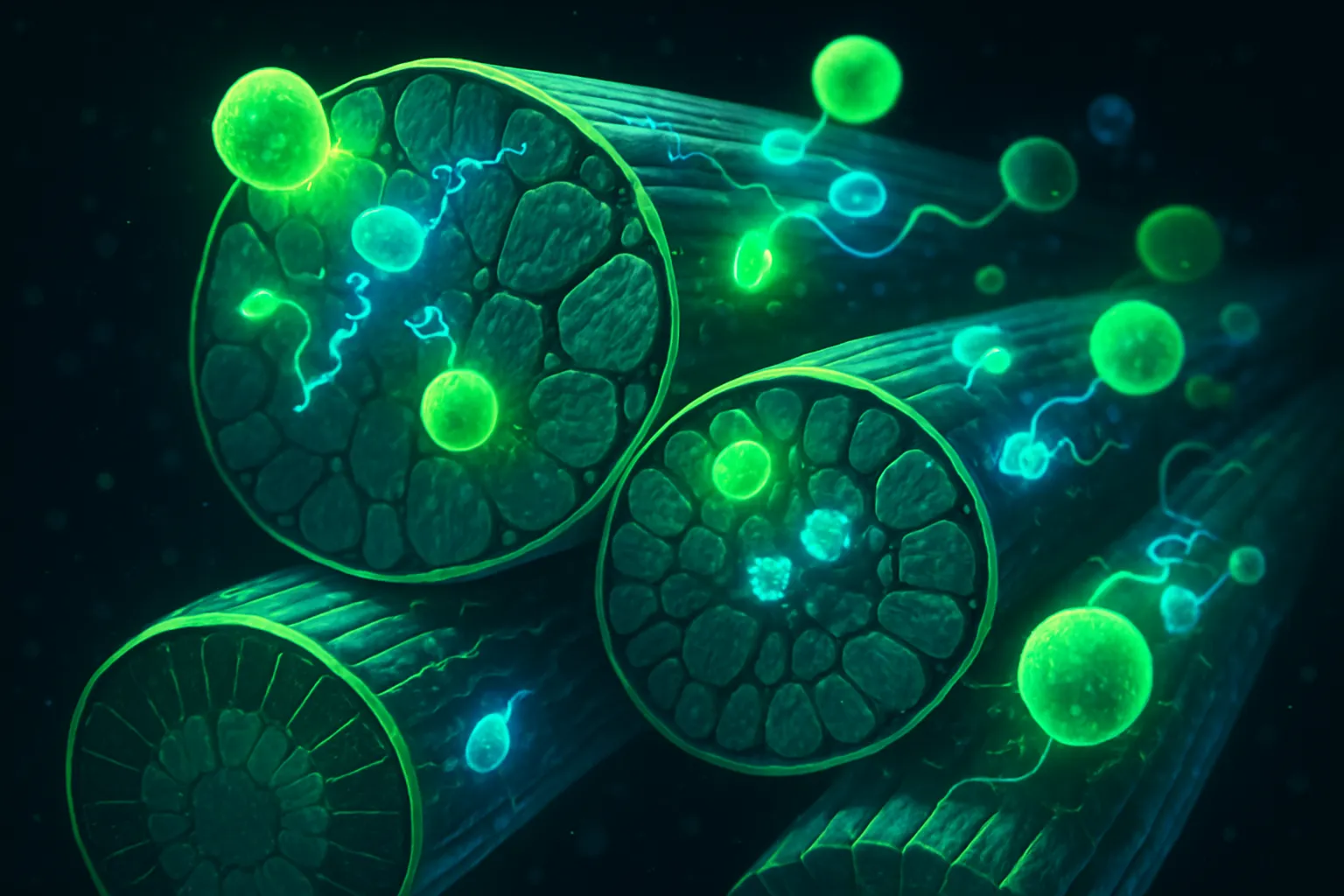
IGF-1 LR3 is a modified analog of IGF-1 with a dramatically extended half-life (20-30 hours vs minutes) and enhanced potency. It drives muscle growth through satellite cell activation and protein synthesis — mechanisms documented in human and animal models (Adams & McCue, 1998) — but carries meaningful risks including hypoglycemia. For a full breakdown of what this peptide does, see our IGF-1 LR3 benefits guide. This is not medical advice.
Research-context information only. IGF-1 LR3 is a research peptide. Protocols, doses, and reactions reported below come from published research and self-reported community sources. This article reports what has been documented, not what should be done. Consult a licensed physician for personal medical decisions.
IGF-1 LR3 Dosing Table
Match your vial size below — reconstitution and dose math update automatically.
| Dose | Syringe units | mL volume | Schedule |
|---|---|---|---|
| 20 mcg | 2 units | 0.02 mL | Daily IM (10-on/4-off)Starter |
| 50 mcg | 5 units | 0.05 mL | Daily IM (10-on/4-off)Standard |
| 100 mcg | 10 units | 0.1 mL | Daily IM (split bilateral)Advanced |
Math assumes U-100 insulin syringes (1 mL = 100 units). Verify your syringe matches before injecting. Round half-units to the nearest visible mark.
Quick Reference: Standard Protocol
| Parameter | Detail |
|---|---|
| Dose | 50 mcg per injection |
| Route | Subcutaneous or intramuscular |
| Timing | AM |
| Frequency | 10 days in a row |
| Cycle | 10 days on, 4 weeks off |
| Vial size | 1 mg |
| Reconstitution | 1 mL BAC water (1,000 mcg/mL) |
| Community-documented draw | 5 units on insulin syringe |
| Storage | Refrigerate, use within 28 days |
Draw volumes reflect community-documented reconstitution protocols, not a recommended dosing schedule.
For GH secretagogue comparisons, see our MK-677 dosing guide and Ipamorelin dosing guide.
Cycling Details
The standard protocol is 10 consecutive days of daily injections, followed by 4 weeks off. This short, aggressive cycle is designed to maximize anabolic stimulus while minimizing risks from prolonged IGF-1 elevation.
Community protocols describe keeping fast-acting carbohydrates available — hypoglycemia is the most immediate risk. Community sources warn against injecting before sleep. Documented protocols describe starting at 20 mcg for the first 2-3 days to assess tolerance, then increasing to 50 mcg if well-tolerated.
Enhanced Protocol (Community)
Some advanced users run longer cycles or higher doses:
- 4-6 week cycle: 20-50 mcg daily, 4-6 weeks off (less common, higher risk)
- Bilateral IM split: 40-80 mcg/day split between muscle groups post-workout
- Training-day only: 50 mcg on training days (4-5x/week) for 4 weeks
The standard 10-day on / 4-week off protocol is the most commonly documented starting point in community sources.
Routes of Administration

Subcutaneous: Abdomen or love handles. Provides systemic IGF-1 LR3 distribution. Consistent absorption, easier injection.
Intramuscular: Biceps, deltoids, quads — inject into muscles trained that day. Preferred in bodybuilding communities for theoretical local growth enhancement, though site-specific effects are debated.

Reconstitution Quick Reference
| Vial Size | BAC Water | Concentration | 50 mcg Dose |
|---|---|---|---|
| 1 mg | 1 mL | 1,000 mcg/mL | 5 units |
Math: 1,000 mcg / 1 mL = 1,000 mcg/mL. 50 mcg / 1,000 = 0.05 mL = 5 units. Swirl gently — IGF-1 LR3 is fragile. Some protocols use 0.6% acetic acid instead of BAC water for improved stability. Refrigerate, use within 28 days.
For step-by-step reconstitution instructions, see the BPC-157 reconstitution guide — same general technique applies.