L-Carnitine Benefits: Faster Recovery, Less Fatigue
The strongest L-carnitine evidence is exercise recovery and fatigue — not fat burning. See what trials actually show, including the modest weight effect.
L-carnitine has one of the largest human evidence bases of any compound covered on this site, and the honest reading of that evidence reorders its popular reputation. The strongest, most replicated benefit is exercise recovery — reduced markers of muscle damage and faster return of strength after hard training — followed by reduced fatigue in older and clinically tired populations. The fat-loss reputation that sells the most product is the weakest part of the file: real, but small, and strongest in people who were deficient or older to begin with.
This article leads each benefit with the evidence rather than the claim, and keeps trial data and community reports separated. The order moves from strongest to most modest: recovery first, then fatigue, then the brain-specific acetyl form, then the much-discussed but smaller weight effect.
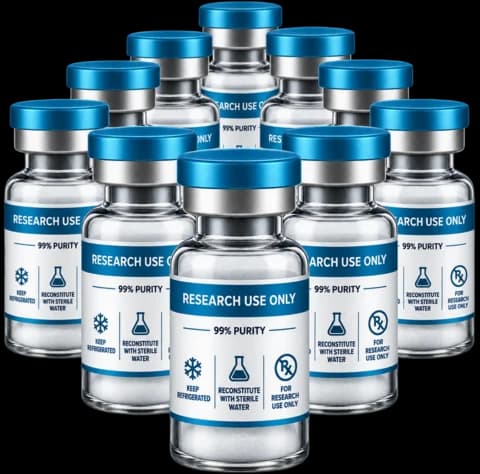
Research-context information only. L-carnitine is an amino-acid-derived compound the body synthesizes and obtains from food; it is also sold as a dietary supplement and as research-grade injectable solution labeled for research use. The findings reported below come from published clinical trials and self-reported community sources. This article reports what has been documented, not what should be done. Consult a licensed physician for personal medical decisions.
How L-Carnitine Works
L-Carnitine is built by the body from the amino acids lysine and methionine, and its defining job is the carnitine shuttle. Long-chain fatty acids cannot cross the inner mitochondrial membrane on their own; L-carnitine binds them and ferries them across so they can undergo beta-oxidation — the process that turns fat into ATP. Without adequate carnitine, fatty-acid fuel cannot reach the furnace.
That single mechanism explains the spread of studied benefits. Tissues that burn a lot of fatty acids — skeletal muscle, the heart — are where carnitine status matters most, which is why the evidence concentrates on exercise recovery, fatigue, and metabolic endpoints. The acetylated form, ALCAR, adds a second trick: it crosses the blood-brain barrier and donates acetyl groups, which is why the brain-specific research uses ALCAR specifically rather than the base form.
Exercise Recovery — The Strongest Signal
The most replicated benefit is faster, cleaner recovery from hard training. Volek's 2002 crossover study (PMID 11788381) gave resistance-trained men 2 g/day of L-carnitine L-tartrate (LCLT) and reported that exercise-induced rises in markers of muscle disruption — creatine kinase, myoglobin, and purine-catabolism products — were significantly attenuated after a demanding squat protocol, with MRI showing less muscle tissue disruption.
That early signal has held up. A 2021 randomized, double-blind, placebo-controlled trial (PMID 34684429) supplemented L-carnitine tartrate for five weeks and reported improved perceived recovery, lower soreness, reduced serum creatine kinase, and blunted strength loss after an exercise challenge — across both sexes and a 21-65 age range. A 2020 systematic review and meta-analysis (PMID 32154768) pooled the randomized trials and concluded L-carnitine supplementation reduces markers of exercise-induced muscle damage. This is the benefit with the most consistent trial support.
Ready to buy? The single research-grade, COA-checked L-Carnitine source we track:
5000mg · sold research-use-only · we may earn a commission
Reduced Fatigue
Beyond the gym, L-carnitine has a solid fatigue-reduction signal in populations that are tired for metabolic or age-related reasons. Malaguarnera's 2007 randomized controlled trial (PMID 18065594) gave 2 g/day of L-carnitine to centenarians reporting fatigue after slight exertion and reported reductions in both physical and mental fatigue, alongside improved cognitive scores, over the treatment period. The same research group has reported fatigue reductions in other tired populations, including chronic-fatigue and hepatic-encephalopathy cohorts.
The mechanistic logic fits: where fatty-acid fuel delivery is the bottleneck, restoring carnitine status improves the cell's ability to generate energy. Community reports cluster around a subtler "less drained" sensation rather than a stimulant-like lift — consistent with a fuel-logistics effect rather than a central stimulant. The trial-grade fatigue evidence is strongest in older and clinically fatigued groups; it is weaker and less consistent in healthy young people who already have normal carnitine stores.
Cognition and Mood — The Acetyl Form
The brain-specific benefits belong to acetyl-L-carnitine (ALCAR), the form that crosses the blood-brain barrier. Veronese's 2018 systematic review and meta-analysis (PMID 29076953) pooled randomized trials of ALCAR for depressive symptoms and reported a significant reduction versus placebo — a meaningful pooled effect, though the analysis flagged high heterogeneity between studies. The centenarian trial above (PMID 18065594) additionally reported improved cognitive-function scores alongside its fatigue findings.
The honest framing is "promising but mixed." The depression signal is real in the pooled data but the underlying trials vary in quality and population, and ALCAR is not an established antidepressant. Community sources commonly describe ALCAR for focus and mental clarity, but that anecdotal use runs ahead of the trial evidence, which centers on depressive symptoms and age-related cognitive decline rather than cognitive enhancement in healthy adults.
Fat Loss — Real but Modest, and Who It's Studied In
This is the benefit most often oversold. A 2016 meta-analysis of nine randomized trials (Pooyandjoo, PMID 27335245; n = 911) reported that carnitine groups lost a mean of 1.33 kg more than controls — a statistically significant but small effect — and the meta-regression found the weight advantage shrank the longer supplementation continued. Mechanistically a fat-shuttle compound aiding fat oxidation is plausible, but two things cap the real-world effect: oral bioavailability is only about 15%, and people with already-normal carnitine stores have little headroom to gain.
Common audience: the weight signal is strongest in older adults and in people who were carnitine-deficient or had low baseline status — not lean, young, well-fed athletes. It is best understood as a modest metabolic support, not a standalone fat-burner. Anyone expecting capsule-driven fat loss without training or a calorie deficit will be disappointed; the trial data does not support claims of dramatic body-composition change from L-carnitine alone.
Bac Water Made for Peptides
Don't risk a $300 peptide on generic bac water.
Most cloudy reconstitutions trace back to one thing — and it isn't the peptide. Sterile, non-pyrogenic, 0.9% benzyl alcohol — formulated for peptide reconstitution, not repackaged from generic stock.
✓ 0.9% benzyl alcohol✓ Made for peptides✓ 30 mL multi-dose
What is the strongest evidence-backed benefit of L-carnitine?
Exercise recovery. Volek's 2002 crossover study (PMID 11788381) reported that 2 g/day of L-carnitine L-tartrate attenuated markers of muscle disruption after resistance exercise, a 2021 randomized controlled trial (PMID 34684429) reported improved recovery and reduced fatigue over five weeks, and a 2020 meta-analysis (PMID 32154768) pooled trials showing reduced exercise-induced muscle damage markers. The strongest medical use is treating diagnosed carnitine deficiency, an FDA-recognized indication.
Is L-carnitine actually effective for fat loss?
The effect is real but modest. A 2016 meta-analysis of nine randomized trials (Pooyandjoo, PMID 27335245) reported a mean weight difference of −1.33 kg versus control, and noted the effect shrank over time. It is not a powerful standalone fat-burner in healthy young people; the signal is strongest in older or carnitine-deficient populations, and low oral bioavailability (~15%) limits how much reaches circulation.
What did trials report about acetyl-L-carnitine for mood and cognition?
Acetyl-L-carnitine (ALCAR) crosses the blood-brain barrier, which is why it is the form studied for the brain. Veronese's 2018 meta-analysis (PMID 29076953) pooled randomized trials and reported a significant reduction in depressive symptoms versus placebo, though with high heterogeneity. Malaguarnera's 2007 centenarian trial (PMID 18065594) reported reduced mental fatigue and improved cognitive scores. The signal is promising but mixed.
Volek JS, Kraemer WJ, Rubin MR, Gómez AL, Ratamess NA, Gaynor P. L-Carnitine L-tartrate supplementation favorably affects markers of recovery from exercise stress. Am J Physiol Endocrinol Metab. 2002;282(2):E474-82. PMID 11788381.
Koozehchian MS, et al. L-Carnitine Tartrate Supplementation for 5 Weeks Improves Exercise Recovery in Men and Women: A Randomized, Double-Blind, Placebo-Controlled Trial. Nutrients. 2021;13(10):3432. PMID 34684429.
Mielgo-Ayuso J, et al. The Effect of L-Carnitine Supplementation on Exercise-Induced Muscle Damage: A Systematic Review and Meta-Analysis of Randomized Clinical Trials. J Diet Suppl. 2021;18(3):255-272. PMID 32154768.
Malaguarnera M, Cammalleri L, Gargante MP, Vacante M, Colonna V, Motta M. L-Carnitine treatment reduces severity of physical and mental fatigue and increases cognitive functions in centenarians: a randomized and controlled clinical trial. Am J Clin Nutr. 2007;86(6):1738-44. PMID 18065594.
Veronese N, Stubbs B, Solmi M, et al. Acetyl-L-carnitine supplementation and the treatment of depressive symptoms: a systematic review and meta-analysis. Psychosom Med. 2018;80(2):154-159. PMID 29076953.
Pooyandjoo M, Nouhi M, Shab-Bidar S, Djafarian K, Olyaeemanesh A. The effect of (L-)carnitine on weight loss in adults: a systematic review and meta-analysis of randomized controlled trials. Obes Rev. 2016;17(10):970-976. PMID 27335245.