The single most useful thing to understand about L-carnitine timing is that it works on muscle stores, not blood levels. A dose raises plasma carnitine within hours, but the benefits — faster recovery, less fatigue — depend on building up the carnitine concentration inside muscle tissue, and that climbs slowly over weeks of consistent dosing. This is why the well-controlled trials use loading periods of three to five weeks before measuring effects, and why anyone expecting a same-week change is working from the wrong model.
This timeline reports what the published trials and community sources describe across the first week, the two-to-four-week window, and the five-to-eight-week mark, then covers the factors that move the curve and what an absent response usually means.
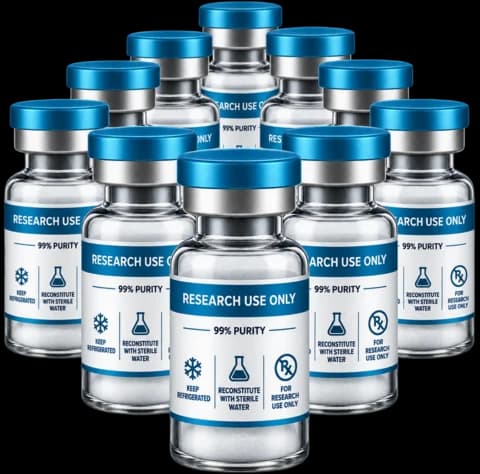
Research-context information only. L-carnitine is an amino-acid-derived compound the body synthesizes and obtains from food; it is also sold as a dietary supplement and as research-grade injectable solution labeled for research use. The timelines reported below come from published clinical trials and self-reported community sources. This article reports what has been documented, not what should be done. Consult a licensed physician for personal medical decisions.
How L-Carnitine Works (Relevant to Timing)
L-Carnitine runs the carnitine shuttle — binding long-chain fatty acids and carrying them across the inner mitochondrial membrane for beta-oxidation. The timing implication is that the rate-limiting factor is not how much carnitine is in the blood at any moment, but how much is stored inside the muscle, where the fatty-acid burning happens.
Raising muscle carnitine is slow. Skeletal muscle takes up carnitine against a concentration gradient, and the transport is gradual; published work indicates insulin helps drive carnitine into muscle, which is why several trials co-administered carbohydrate with the dose. The practical consequence is a delayed, accumulating effect — the opposite of a stimulant's immediate hit.
Week 1
In the first week, the documented pattern is largely silent. Plasma carnitine rises after dosing, but muscle stores have barely begun to climb, so the recovery and fatigue benefits the trials measured are not yet expected to appear. Volek's recovery study (PMID 11788381) deliberately used a three-week loading period before its exercise challenge — an acknowledgment that the first week is preparation, not payoff.
Community reports from the first week cluster around "nothing dramatic," sometimes with mild gastrointestinal adjustment at higher oral doses or the characteristic fishy odor that signals trimethylamine production. Self-reported community accounts of a strong same-week stimulant-like effect run counter to the mechanism and the trial design; L-carnitine is not a stimulant, and the absence of an early kick is the expected experience rather than a problem.
Ready to buy? The single research-grade, COA-checked L-Carnitine source we track:
5000mg · sold research-use-only · we may earn a commission
Weeks 2-4
This is where the trial-measured effects begin to emerge as muscle stores rise. The recovery research is built around this window: the 2021 randomized controlled trial (PMID 34684429) measured improved recovery, reduced soreness, and blunted strength loss over a five-week protocol, with the curve building through the back half. By the three-to-four-week mark, trained subjects in the recovery literature commonly showed measurable reductions in post-exercise muscle-damage markers compared to placebo.
For fatigue, the centenarian trial (PMID 18065594) dosed 2 g/day over weeks before reporting reduced physical and mental fatigue — the improvement was a treatment-period outcome, not a first-dose one. Community reports in this window describe a subtler "less drained after training" feeling rather than an energy surge, consistent with a fuel-logistics mechanism reaching enough muscle saturation to matter.
Bac Water Made for Peptides
Don't risk a $300 peptide on generic bac water.
Most cloudy reconstitutions trace back to one thing — and it isn't the peptide. Sterile, non-pyrogenic, 0.9% benzyl alcohol — formulated for peptide reconstitution, not repackaged from generic stock.
✓ 0.9% benzyl alcohol✓ Made for peptides✓ 30 mL multi-dose
By five to eight weeks, muscle carnitine stores in the trial populations are substantially elevated, and this is where the recovery and fatigue benefits are most clearly documented. The 2021 trial (PMID 34684429) explicitly concluded that supplementation beyond 35 days improved recovery and reduced fatigue across sex and age — framing the five-week-plus window as where the effect is established rather than emerging.
The metabolic and weight signal operates on its own, slower and more modest clock. The 2016 meta-analysis (Pooyandjoo, PMID 27335245) pooled trials of varying length and found a mean −1.33 kg difference versus control, but its meta-regression reported that the weight advantage shrank as supplementation continued — so the weight effect does not compound across this window the way recovery adaptations do. ALCAR's mood and cognition signals (Veronese 2018, PMID 29076953) similarly come from multi-week trials rather than rapid onset.
Factors That Affect Results
Several documented variables move the curve:
Baseline carnitine status. People who were carnitine-deficient or had low stores (older adults, some clinical groups) show larger and faster effects than well-fed young athletes whose muscle stores are already near capacity.
Route and bioavailability. Oral L-carnitine is only ~15% absorbed, so capsule protocols rely on gram-scale doses; injectable solutions bypass the gut. Lower delivered amounts slow store-building.
Carbohydrate co-ingestion. Insulin appears to assist muscle carnitine uptake, which is why several trials paired the dose with carbohydrate.
Form. LCLT dominates the recovery evidence, the base form the fatigue/metabolic evidence, and ALCAR the brain evidence — matching the form to the endpoint affects what is realistic to observe.
Training status and stimulus. The recovery benefit is measured against an exercise challenge; without hard training, there is little muscle-damage signal for carnitine to attenuate.
What If You See Nothing
A flat response is common and usually explainable rather than mysterious. The most frequent reason is timing: stopping before muscle stores have risen — under three to four weeks — falls inside the window the trials treated as loading, not measurement. The second is baseline status: someone with already-normal carnitine and a carnitine-rich diet (red meat is the main dietary source) has little headroom for supplementation to raise stores meaningfully, which is why the fat-loss and fatigue effects are weakest in healthy, well-fed young people.
The third is expectation mismatch. L-carnitine is not a stimulant and not a standalone fat-burner; the trial data does not support claims of dramatic body-composition change or an acute energy lift. Where the documented effects are real — recovery and fatigue in trained or tired populations over weeks — they are measurable but moderate. Readers wanting the underlying numbers can compare the L-carnitine benefits evidence and the dosing ranges the trials used.
Frequently Asked Questions
How long does L-carnitine take to work?
Longer than most expect, because the benefit depends on raising muscle carnitine stores, not blood levels. Muscle carnitine rises slowly over weeks of consistent dosing. The 2021 recovery trial (PMID 34684429) ran five weeks and concluded benefits beyond 35 days improved recovery and fatigue, and Volek's recovery work (PMID 11788381) used a three-week loading period before testing. Same-week effects are not the documented pattern.
Why don't I feel anything in the first few days?
L-carnitine is not a stimulant. It improves the cell's ability to shuttle fatty acids into mitochondria, and that only translates to noticeable recovery or fatigue effects once tissue stores are elevated — a multi-week process. Insulin appears to help drive carnitine into muscle, which is why several trials co-administered carbohydrate with the dose. Absence of an immediate effect is expected, not a sign the compound isn't absorbing.
What's a realistic timeline for the fatigue and weight effects?
Fatigue trials in older and clinically tired groups (Malaguarnera 2007, PMID 18065594) dosed over weeks before measuring improvement. The weight signal is modest and slow: the 2016 meta-analysis (Pooyandjoo, PMID 27335245) found a mean −1.33 kg difference across trials of varying length, and noted the effect shrank over time rather than compounding.
Volek JS, Kraemer WJ, Rubin MR, Gómez AL, Ratamess NA, Gaynor P. L-Carnitine L-tartrate supplementation favorably affects markers of recovery from exercise stress. Am J Physiol Endocrinol Metab. 2002;282(2):E474-82. PMID 11788381.
Koozehchian MS, et al. L-Carnitine Tartrate Supplementation for 5 Weeks Improves Exercise Recovery in Men and Women: A Randomized, Double-Blind, Placebo-Controlled Trial. Nutrients. 2021;13(10):3432. PMID 34684429.
Malaguarnera M, Cammalleri L, Gargante MP, Vacante M, Colonna V, Motta M. L-Carnitine treatment reduces severity of physical and mental fatigue and increases cognitive functions in centenarians: a randomized and controlled clinical trial. Am J Clin Nutr. 2007;86(6):1738-44. PMID 18065594.
Pooyandjoo M, Nouhi M, Shab-Bidar S, Djafarian K, Olyaeemanesh A. The effect of (L-)carnitine on weight loss in adults: a systematic review and meta-analysis of randomized controlled trials. Obes Rev. 2016;17(10):970-976. PMID 27335245.
Veronese N, Stubbs B, Solmi M, et al. Acetyl-L-carnitine supplementation and the treatment of depressive symptoms: a systematic review and meta-analysis. Psychosom Med. 2018;80(2):154-159. PMID 29076953.