buying-guideJune 11, 2026·5 min read

Buy L-Carnitine: Compare 2 Vendors, From $40

Compare 2 L-Carnitine vendors side by side: from $40 a vial, best value $0.01/mg. Codes save up to 15%. Vial sizes, COA status, real cost per week.

L-Carnitine buying guide

Buying L-carnitine comes down to one number most shoppers ignore: milligrams per milliliter. Research-grade injectable L-carnitine is almost always sold as a pre-dissolved solution at 500 mg/mL, so a 10 mL vial holds 5000 mg total — and that concentration, not the sticker price, is what lets you compare one vendor against another or against a bottle of capsules. This guide covers how to read the label, what a legitimate certificate of analysis should show, how to price a vial on a per-milligram basis, and the storage and shipping realities of a liquid product.

L-carnitine is one of the better-understood compounds in this catalog, with an extensive human evidence base, so the buying decision is mostly about sourcing quality rather than chasing an exotic molecule. The job here is verifying that what is on the label is what is in the vial.

Research-context information only. L-carnitine is an amino-acid-derived compound the body synthesizes and obtains from food; it is also sold as a dietary supplement and as research-grade injectable solution labeled for research use. The sourcing guidance below is commercial in nature. Products labeled for research are not intended for human consumption. Consult a licensed physician for personal medical decisions.

Understanding L-Carnitine Pricing

L-carnitine is inexpensive relative to most research compounds, which changes how to read a price tag. The source we track stocks a 10 mL vial at 500 mg/mL — 5000 mg of L-carnitine — for around $48. Converted to a per-milligram basis, that is roughly $0.01 per mg, an order of magnitude cheaper than the niche injectable peptides in this catalog.

Because L-carnitine is cheap, the temptation is to compare vials by sticker price alone, which is misleading when concentrations and volumes differ. The honest comparison is per milligram of L-carnitine: divide the price by the total milligrams in the vial (concentration × volume). A 10 mL vial at 500 mg/mL contains 5000 mg; a smaller or more dilute vial at a lower sticker price can easily cost more per milligram. The same arithmetic lets you compare an injectable vial against a bottle of capsules — though the ~15% oral bioavailability of capsules means the delivered amount differs even when the labeled milligrams match.

How to Verify L-Carnitine Quality

A certificate of analysis (COA) is the single most useful document in this category. For L-carnitine, a legitimate COA should:

  • Identify the exact form — base L-carnitine, L-carnitine L-tartrate (LCLT), or acetyl-L-carnitine (ALCAR). These are studied for different endpoints, so the label and COA should agree on which one you are buying.
  • Confirm purity by a recognized method — high-performance liquid chromatography (HPLC) is the standard analytical approach. The COA should state the method and a purity figure.
  • Match the labeled concentration — for an injectable solution, the COA's milligrams-per-milliliter should match the vial label, so the per-draw amount (1 mL = 500 mg at 500 mg/mL) is verifiable rather than assumed.
  • Be lot-specific and recent — a COA tied to the actual production lot is stronger evidence than a generic certificate reused across batches.

A vendor that publishes lot-matched, HPLC-verified COAs is demonstrating that the label is trustworthy. The absence of any COA is the clearest red flag in this market.
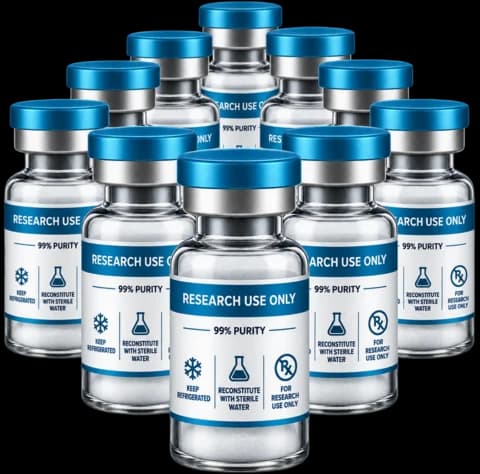
L-Carnitine research vial
Where to buy L-Carnitine
One verified, COA-tested L-Carnitine source
The verified, COA-tested source we track for L-Carnitine — shipped with a certificate of analysis. Research use only.
COA verified $0.01/mg Ion Peptide
Save 15%thepeptidecatalogat checkout
Buy at Ion Peptide — $40.00
5000mg · sold research-use-only · we may earn a commission

Choosing the Right Vial Size

The injectable solution we track ships as a single 10 mL, 5000 mg vial — a practical size given the dose ranges in the human literature. At the 500-2000 mg/day figures documented across trials, a 5000 mg vial covers a few days to roughly a week and a half of dosing depending on the amount used, so a single vial is a reasonable trial quantity and multiple vials suit longer protocols.

Concentration matters more than volume for usability. At 500 mg/mL, a 500 mg amount is a clean 1 mL draw and a 1000 mg amount is 2 mL — round numbers that make the math easy. A more dilute solution would require larger injection volumes for the same milligrams. For capsule shoppers, bottle count and per-capsule milligrams determine how long a bottle lasts; the per-milligram comparison above is the way to weigh a capsule bottle against a vial.

Vendor Evaluation Methodology

This site ranks vendors with a transparent, weighted score: price 40%, COA quality 30%, and reputation 30%, with a floor of 8.0 — if a vendor is listed as recommended, it has cleared that bar. Price rewards a competitive per-milligram cost; COA quality rewards lot-matched, method-stated certificates; reputation reflects fulfillment reliability, customer history, and standing in the research-compound community.

For standalone L-carnitine in stock, the single recommended vendor we currently track is EZ Peptides, carrying the 500 mg/mL, 10 mL (5000 mg) injectable solution. The single-vendor card below reflects that — there is one COA-checked source we track for this specific product rather than a field of competing offers.

Shipping and Storage

L-carnitine injectable solution is a liquid, which shapes both shipping and storage. As a pre-dissolved product it does not require reconstitution, but it should be protected from heat and light in transit and stored cool and dark on arrival; many research-grade solutions are kept refrigerated to preserve stability once opened. Check the vendor's stated storage guidance against the product, since it varies by formulation and preservative.

Capsule and powder forms are more shipping-tolerant and shelf-stable, trading the absorption efficiency of an injectable for convenience. Either way, ordering from a vendor that ships promptly and packs to protect a temperature-sensitive product is part of getting what the COA promised intact.

30ml bacteriostatic water vial — 0.9% benzyl alcohol multi-dose
Bac Water Made for Peptides
Don't risk a $300 peptide on generic bac water.
Most cloudy reconstitutions trace back to one thing — and it isn't the peptide. Sterile, non-pyrogenic, 0.9% benzyl alcohol — formulated for peptide reconstitution, not repackaged from generic stock.
0.9% benzyl alcohol Made for peptides 30 mL multi-dose
See why our bac water doesn't ruin peptides
30ml from $18.75 · Ships fast · Code thepeptidecatalog

Frequently Asked Questions

How much should research-grade injectable L-carnitine cost?
The source we track stocks a 10 mL vial at 500 mg/mL — 5000 mg total — for around $48. That works out to roughly $0.01 per mg of L-carnitine, which is inexpensive relative to most research compounds. Per-mg cost is the cleanest way to compare vials of different sizes and concentrations rather than comparing sticker prices directly.
What should a legitimate L-carnitine COA show?
A certificate of analysis should identify the product as L-carnitine (or the specific form, such as L-carnitine L-tartrate or acetyl-L-carnitine), confirm purity by a recognized analytical method such as HPLC, and match the labeled concentration. For an injectable solution, the COA and label should agree on the milligrams-per-milliliter figure so the per-draw amount is verifiable.
Is injectable L-carnitine better than capsules?
It depends on the goal, not on quality. Oral L-carnitine is only about 15% absorbed because intestinal transporters saturate, so injectable and intravenous forms deliver more of the labeled dose to circulation. Research vendors typically stock the injectable 500 mg/mL solution. Products labeled for research are not intended for human consumption; that labeling is standard in this market.

References

  1. Pooyandjoo M, Nouhi M, Shab-Bidar S, Djafarian K, Olyaeemanesh A. The effect of (L-)carnitine on weight loss in adults: a systematic review and meta-analysis of randomized controlled trials. Obes Rev. 2016;17(10):970-976. PMID 27335245.
  2. Volek JS, Kraemer WJ, Rubin MR, Gómez AL, Ratamess NA, Gaynor P. L-Carnitine L-tartrate supplementation favorably affects markers of recovery from exercise stress. Am J Physiol Endocrinol Metab. 2002;282(2):E474-82. PMID 11788381.