SLU-PP-332 is a synthetic small molecule — not a peptide — that activates ERRα, ERRβ, and ERRγ to mimic an aerobic exercise transcriptional program in skeletal muscle and adipose tissue. The dosing covered below is what self-experimentation communities (AnabolicMinds, Reddit, peptide podcasts) have settled on for human use, derived from mouse studies via allometric scaling. None of it has been validated in a Phase 1 human trial.
Research-context information only. SLU-PP-332 is an investigational small-molecule pan-agonist of the estrogen-related receptors (ERRα/β/γ) developed at Saint Louis University. It is not approved by the FDA and has not entered human clinical trials. Protocols and doses reported below come from published preclinical studies and self-reported community sources. This article reports what has been documented, not what should be done. Possession or use of investigational compounds outside an authorized research setting may be illegal in your jurisdiction. Consult a licensed physician for personal medical decisions.
SLU-PP-332 Oral Dosage Per Day (Direct Answer)
Community oral protocols run one 30 mg capsule or 50 mg tablet per day. The important caveat: the parent SLU-PP-332 has no published oral bioavailability — the Billon 2025 paper introducing the orally-active sibling SLU-PP-915 states the parent compound "lacks oral bioavailability." So injectable subcutaneous protocols (500–1,500 mcg/day, table below) are the only route with a documented pharmacologic rationale.
| Oral form (community) | Strength | Typical daily protocol |
|---|---|---|
| Capsule | 30 mg | 1 capsule/day (≈30 mg) |
| Tablet | 50 mg | 1 tablet/day (≈50 mg) |
No published study shows oral SLU-PP-332 reaching systemic circulation. Community reports are split between "felt nothing on capsules" and "works like cardarine" — anecdote, not pharmacology. The subcutaneous protocol below is what has any dose-scaling basis.
Quick Reference: Community Dosing Protocols
| Parameter | Common community protocol |
|---|---|
| Daily dose (low) | 500 mcg/day SC |
| Daily dose (typical) | 1 mg/day SC |
| Daily dose (high) | 1.5 mg/day SC |
| Frequency | Once daily, or split twice daily (mirrors mouse BID dosing) |
| Route | Subcutaneous injection (lyophilized vials reconstituted with bacteriostatic water) |
| Cycle length | 4–8 weeks on, 4–8 weeks off |
| Onset of subjective effect (community-reported) | 7–14 days for endurance shift; 3–4 weeks for body-composition signal |
| Storage (reconstituted) | 2–8 °C, use within 28 days |
Why Community Settled on These Doses
There is no Phase 1 trial, no pharmacokinetic study in humans, and no FDA-approved indication for SLU-PP-332. Every human dose in circulation is allometric extrapolation from the Billon 2023 mouse studies (J Biol Chem PMID 37739806; ACS Chem Biol PMID 36988910), where 25 mg/kg IP twice daily produced 12% body-weight loss and a 70% endurance gain in DIO mice over 28 days.
The standard mouse-to-human dose conversion uses body-surface-area scaling (FDA guidance: divide mouse mg/kg by 12.3 for adult human equivalent). Applied to 25 mg/kg mouse → ~2 mg/kg human → roughly 140–160 mg per day for a 75 kg adult. Community protocols sit two orders of magnitude lower than the scaled mouse dose. Two reasons community settled an order of magnitude below the math:
- Cost. Vendor pricing puts a 30 mg vial around $150. Mouse-scaled doses would burn through a vial in 12 hours.
- Caution. Without human safety data, low-dose self-experimentation is the conservative path. Reports of subjective effect at 500–1,500 mcg suggest some systemic activity even at this fraction of the scaled mouse dose, but that's anecdote, not pharmacology.
Either the community protocol is producing real ERR agonism at 1/100 the mouse-scaled equivalent, or community-reported effects are largely placebo. There is no way to distinguish without published human PK data.
Routes of Administration — What's Actually Documented
Intraperitoneal injection (mouse). This is the only route used in published studies. IP delivery in mice approximates IV systemic exposure and is not directly translatable to human dosing.
Subcutaneous injection (community). Some vendors sell SLU-PP-332 as a lyophilized powder for reconstitution, marketed for subcutaneous use. There is no published SC pharmacokinetic data.
Oral capsules and tablets (community). This is where the most contention lies. The Billon 2025 paper introducing SLU-PP-915 (PMID 41421047) describes SLU-PP-915 as an "orally active" sibling explicitly because the parent SLU-PP-332 "lacks oral bioavailability." That is a direct quote from the abstract. Oral capsules and tablets sold as SLU-PP-332 — including 50 mg tablet preparations from EZ Peptides and 30 mg capsule packs from Glacier and Dynamic Peptides — therefore have no published evidence of producing systemic ERR agonism in humans. Community reports on AnabolicMinds and Reddit are split between "I felt nothing on oral capsules" and "this works as well as cardarine."
Sublingual (community). Black Lion Research markets a sublingual SLU-PP-332 specifically to bypass the oral-absorption problem. There is no published pharmacokinetic study confirming that sublingual delivery produces the systemic concentrations seen with IP injection in mice.
Reconstitution Quick Reference (Injectable Form)
For vendors selling SLU-PP-332 as a lyophilized powder for research reconstitution (5 mg and 30 mg vials), the typical math:
SLU-PP-332 Dosing Table
Match your vial size below — reconstitution and dose math update automatically.
| Dose | Syringe units | mL volume | Schedule |
|---|---|---|---|
| 0.5 mg | 10 units | 0.1 mL | Daily SubQLow end |
| 1 mg | 20 units | 0.2 mL | Daily SubQCommon |
| 1.5 mg | 30 units | 0.3 mL | Daily SubQHigh end |
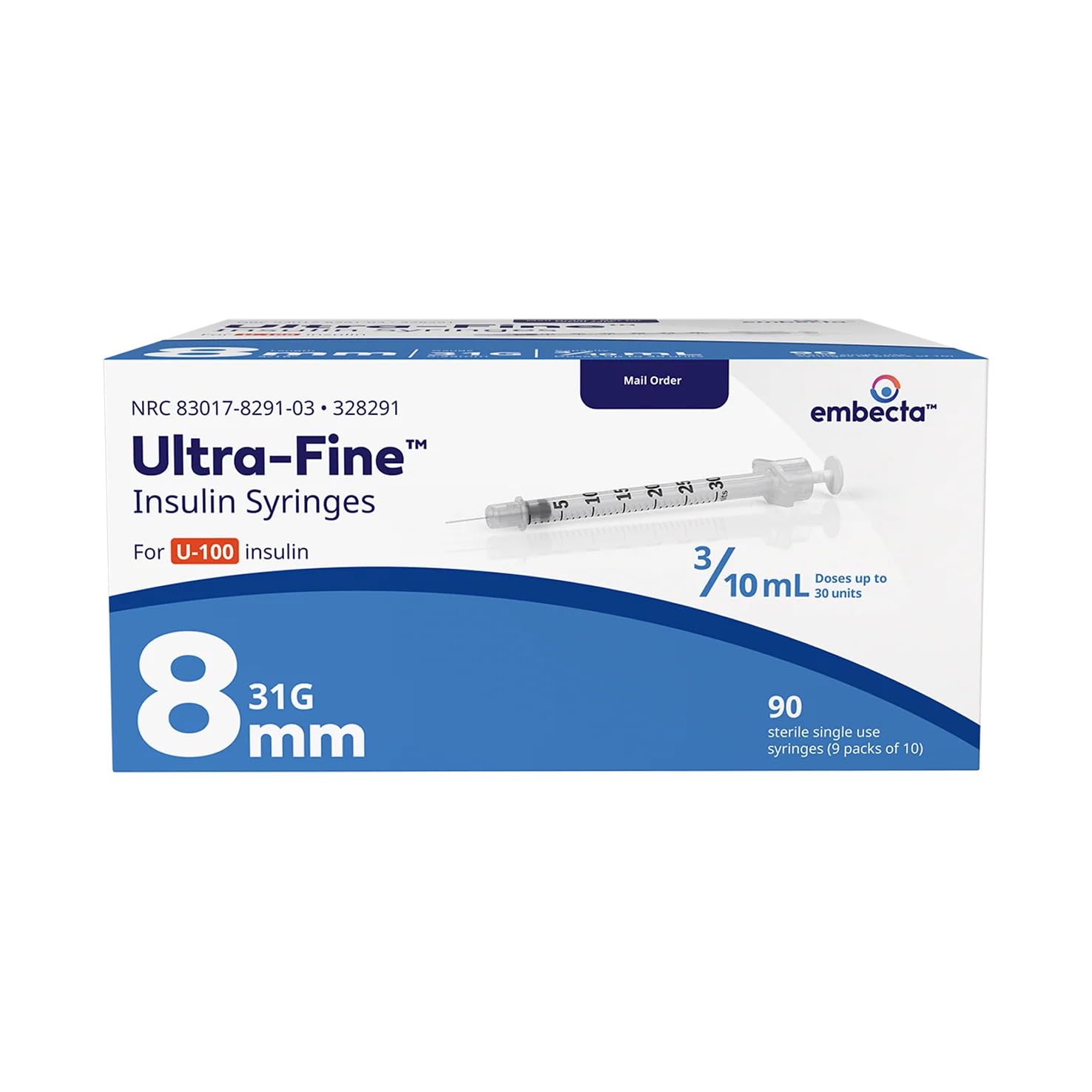
Math assumes U-100 insulin syringes (1 mL = 100 units). Verify your syringe matches before injecting. Round half-units to the nearest visible mark.
| Dose | Syringe units | mL volume | Schedule |
|---|---|---|---|
| 0.5 mg | 5 units | 0.05 mL | Daily SubQLow end |
| 1 mg | 10 units | 0.1 mL | Daily SubQCommon |
| 1.5 mg | 15 units | 0.15 mL | Daily SubQHigh end |
Math assumes U-100 insulin syringes (1 mL = 100 units). Verify your syringe matches before injecting. Round half-units to the nearest visible mark.
Standard reconstitution practice calls for gentle swirling — not shaking. Vendors typically recommend refrigerating at 2–8 °C and using within 28 days. SLU-PP-332 is more lipophilic than most research peptides and may benefit from a small amount of DMSO or ethanol co-solvent for full dissolution; vendor instructions vary.
For step-by-step reconstitution and the oral-cap vs injectable trade-off, see our SLU-PP-332 Reconstitution Guide.