
On June 24, 2026, Viking Therapeutics dosed the first subjects in a Phase 1 study of VK3019 — a new injectable weight-loss drug that skips the GLP-1 pathway entirely. It targets amylin and calcitonin receptors instead.
That makes Viking the latest company betting that the next leg of obesity drugs comes from beside GLP-1, not from stacking more onto it. Here is what the molecule is, why the mechanism matters, and which amylin peptides you can actually source today.
Research-context information only. VK3019 and the amylin compounds discussed below are investigational and not approved by the FDA. Trial details and mechanisms reported here come from company announcements and published research. This article reports what has been documented, not what should be done. Possession or use of investigational drugs outside an authorized clinical trial may be illegal in your jurisdiction. Consult a licensed physician for personal medical decisions.
What Viking Announced
Viking initiated a Phase 1 single-ascending-dose (SAD) study of VK3019 on June 24, 2026. The design is standard for a first-in-human readout: randomized, double-blind, placebo-controlled, enrolling healthy adults with a BMI of 30 or higher. VK3019 is a once-weekly subcutaneous injection.
The molecule is a dual amylin and calcitonin receptor agonist — a DACRA. In Viking's own animal models, its DACRA compounds cut food intake within the first 0–72 hours and produced up to roughly 8% body-weight reduction at 72 hours versus controls. That is preclinical, short-window data; the Phase 1 SAD study is about safety, tolerability, and pharmacokinetics in people, not efficacy.
CEO Brian Lian framed the strategic logic directly: therapies that target amylin and calcitonin receptors "may potentially be used alone or in combination with GLP-1 or dual GLP-1/GIP agonists." In other words, VK3019 is being built as both a standalone and a building block.
Viking did not give a date for when Phase 1 results will be reported. SAD studies typically read out within a few quarters, so a topline is plausible later in 2026 or early 2027.
Why the Amylin/Calcitonin Mechanism Matters
For three years the obesity race has been a GLP-1 escalation: semaglutide hit GLP-1, tirzepatide added GIP, retatrutide piled glucagon on top. Each step pushed Phase 3 weight-loss numbers higher. But every one of those drugs works through the incretin system, and that system has a ceiling — both in efficacy durability and in the nausea-driven tolerability wall.
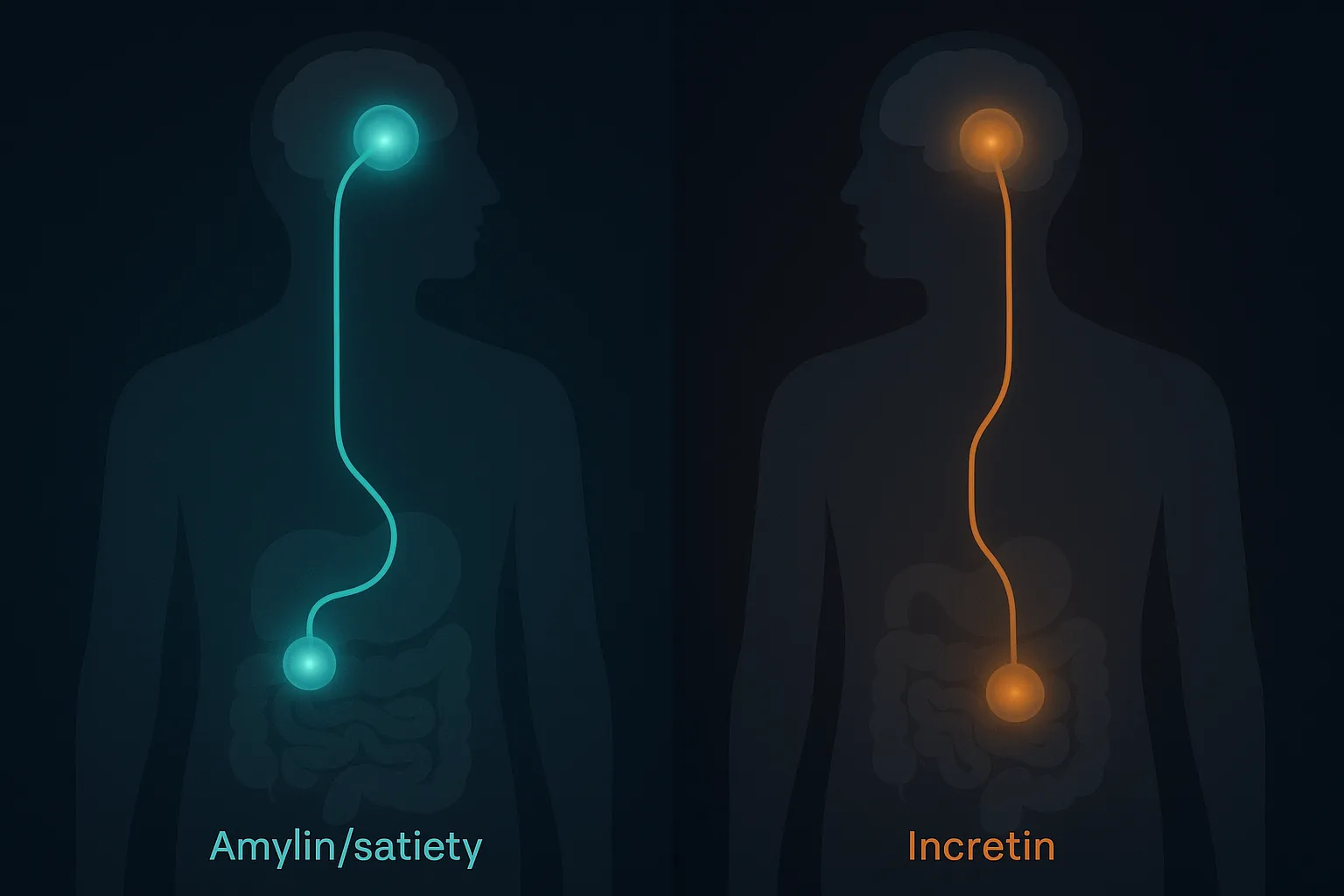
Amylin is a different lever. It is a 37-amino-acid hormone co-secreted with insulin after meals that slows gastric emptying, blunts the post-meal glucagon surge, and signals fullness to the hindbrain. A DACRA adds calcitonin-receptor activation on top, which in preclinical work is linked to better fasting glucose control and insulin sensitivity — benefits that sit alongside, not on top of, the GLP-1 mechanism.
That separation is the whole point. A non-GLP-1 mechanism opens up:
- Patients who can't tolerate GLP-1 nausea at the doses needed for big weight loss.
- Patients who plateau on GLP-1 monotherapy and need a second, additive lever.
- Combination products — amylin + GLP-1/GIP — that compound effect instead of escalating a single receptor.
The market has already validated amylin as a standalone path. Lilly's selective amylin agonist eloralintide hit 20% weight loss in Phase 2 without touching GLP-1, and Novo's petrelintide posted strong amylin-only data at ADA 2026. VK3019 is Viking's entry into that same lane — with the calcitonin twist.
What This Means for Peptide Buyers Today
VK3019 is a Phase 1 Viking compound. It is not sold by any research vendor, and won't be for years. But the read-through to what you can actually source now is real, because the amylin mechanism already has research-grade analogs available.
Vendor links below are affiliate partnerships — we may earn a commission at no added cost to you.
- Cagrilintide is the only amylin agonist widely stocked by research peptide vendors. It is the most accessible compound acting through the amylin pathway VK3019 targets, and it stacks well with semaglutide (the basis of CagriSema). Compare cagrilintide vendors and coupons for current COA-verified pricing, and see the cagrilintide dosing guide and cagrilintide vs semaglutide breakdown for context.
- Retatrutide remains the most-watched multi-receptor research peptide, with stable vendor availability. Compare retatrutide vendors.
- Semaglutide and tirzepatide are still the most accessible GLP-1 options if you want the validated mechanism today. See semaglutide buying options and the tirzepatide vendor comparison.
For the full vendor landscape and active discount codes across the obesity-peptide category, see the /deals page.