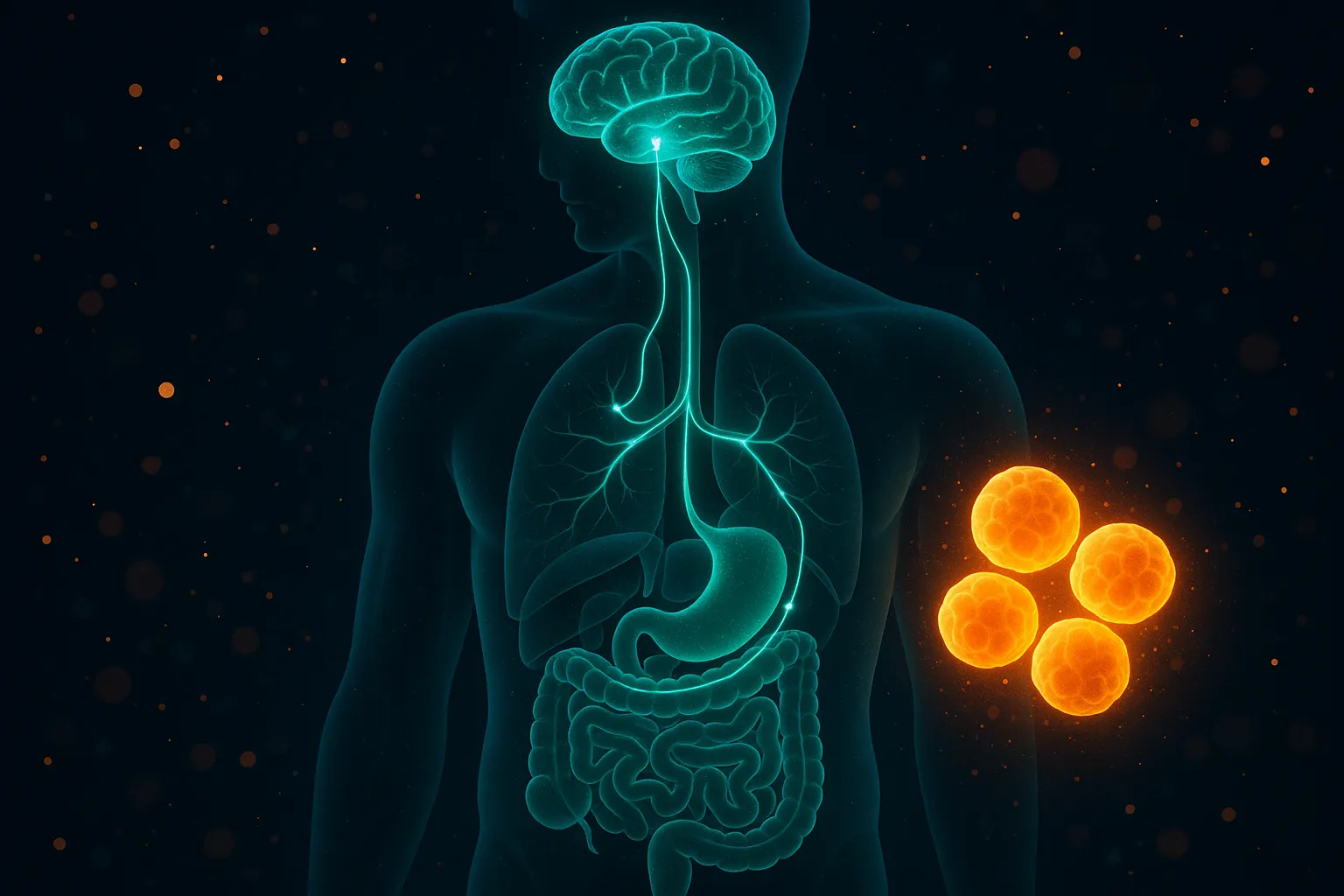
For readers searching "best peptides for fat loss," the short answer most experienced users describe in community sources is this: fat-loss peptides are not interchangeable. Some work through appetite suppression in the brain. Others target visceral fat through a growth-hormone pathway. A few attack the cellular metabolic machinery directly. The right pick depends on what's driving the body composition in the first place, and on how much published evidence the reader wants to see before starting.
Research-context information only. Compounds discussed below are research peptides and supplements; some are investigational drugs not approved by the FDA. Protocols, doses, and reactions reported come from published research and self-reported community sources. Possession or use of investigational drugs outside an authorized clinical trial may be illegal in your jurisdiction. This article reports what has been documented, not what should be done. Consult a licensed physician for personal medical decisions.
Evidence at a glance
Peptides covered below, sorted by clinical evidence strength. Each peptide also carries a parallel community-evidence grade reflecting real-world adoption. How we grade evidence.
Reduced adiposity in diet-induced obese mice; no human trials.
This guide ranks the 10 fat-loss peptides community sources most commonly describe, in the order trial-evidence strength and real-world adoption tend to rank them. Each entry explains what trial data and community usage describe in a fat-loss context, who typically chooses it, and what self-reported community outcomes look like. Dosing, titration, and bloodwork details live in the linked deep-dive guides.
The Rankings
Bac Water Made for Peptides50% off
Don't risk a $300 peptide on generic bac water.
Most cloudy reconstitutions trace back to one thing — and it isn't the peptide. Sterile, non-pyrogenic, 0.9% benzyl alcohol — formulated for peptide reconstitution, not repackaged from generic stock.
✓ 0.9% benzyl alcohol✓ Made for peptides✓ 30 mL multi-dose
1. Tirzepatide — the dual-incretin recomposition pick
Best for: users who want the largest body-weight-loss numbers reported in completed phase 3 obesity trials, who can tolerate weekly injections and a slow titration.
Tirzepatide activates two incretin receptors at once — GLP-1 (which suppresses appetite and slows gastric emptying) and GIP (which adds an insulin-sensitivity component). Trial data describe the dual mechanism as producing larger and more durable appetite reductions than GLP-1 alone, which translates downstream into larger scale-weight shifts.
The SURMOUNT-1 phase 3 trial enrolled 2,539 adults with obesity and reported mean weight reductions of 15.0% (5 mg), 19.5% (10 mg), and 22.5% (15 mg) at 72 weeks. More than half of participants on the highest dose reached 20%+ body weight loss. Body composition analysis (DXA) reported approximately two-thirds of total weight lost was fat mass, with relative preservation of lean tissue. The same ratio held in SURMOUNT-2 in a more metabolically resistant population (obesity plus type 2 diabetes), where 14.7% mean loss at 15 mg was reported alongside significant HbA1c reductions.
Community reports on tirzepatide cluster around three themes: rapid appetite reduction within the first 1-2 weeks of dose escalation, gastrointestinal side effects (nausea, constipation, occasional diarrhea) that peak during titration and ease over subsequent weeks, and consistent scale-weight loss extending well past month 3 if the dose is held. The most common community caveat is that aggressive dose escalation drives the GI symptoms and that a slower titration is what users self-report tolerating best.
2. Retatrutide — the triple agonist with the highest reported numbers
Best for: users tracking the cutting edge of obesity pharmacotherapy who accept that the strongest data is still phase 2.
Retatrutide adds glucagon receptor activation on top of the GLP-1 + GIP framework that tirzepatide pioneered. The glucagon arm is what differentiates it: published research describes glucagon as directly increasing energy expenditure and hepatic fat oxidation — mechanisms absent from GLP-1-only or dual-incretin approaches.
The phase 2 obesity trial reported 24.2% mean weight loss at 48 weeks on the 12 mg dose, with the weight-loss curve still trending downward at study end. That's the largest weight-loss percentage reported in any obesity trial published to date, though phase 2 numbers historically shrink 2-5 percentage points when replicated in larger phase 3 populations. Phase 3 SURMOUNT trials are currently underway.
Community reports on retatrutide cluster around two themes: appetite reduction comparable to or stronger than tirzepatide on dose-equivalent comparison, and a broader side-effect profile attributed to the glucagon component (more frequent reports of mild nausea early in titration, occasional reports of elevated heart rate). Sourcing is limited compared to the established compounds — the molecule is still investigational, and community sources commonly describe variable product quality at lower-tier vendors.
3. Semaglutide — the deepest safety database in the GLP-1 class
Best for: users prioritizing the longest-running clinical track record over the highest headline number.
Semaglutide is the most extensively studied fat-loss peptide on this list. It operates through a single incretin receptor (GLP-1), which is a smaller pharmacology than tirzepatide or retatrutide, but it has the largest body of phase 3 evidence and the longest follow-up data of any peptide here.
The STEP 1 trial reported 14.9% mean weight loss at 68 weeks with semaglutide 2.4 mg versus 2.4% with placebo in 1,961 adults with obesity. The STEP 5 extension reported sustained efficacy at two years, with 15.2% weight loss maintained at 104 weeks. Durability data of that depth doesn't exist for any other compound on this list. The STEP 8 head-to-head trial reported semaglutide 2.4 mg producing 15.8% weight loss versus 6.4% for liraglutide 3.0 mg over 68 weeks.
Community reports on semaglutide cluster around three themes: gradual appetite reduction across weeks 1-4 of titration, gastrointestinal side effects (occurring in roughly 44% of trial participants and consistently described in community sources at similar rates), and durable loss for users who hold the maintenance dose. The most common community caveat — and the one that consistently shows up in trial follow-ups — is the regain pattern after discontinuation. STEP 4 reported participants regained roughly two-thirds of their loss within a year of stopping.
4. Cagrilintide + Semaglutide (CagriSema) — the dual-receptor combination
Best for: users on or considering semaglutide who want a published-trial route to additional loss without stacking two GLP-1s.
Cagrilintide is a long-acting amylin analog. Amylin is a satiety hormone that operates through the area postrema in the brainstem — anatomically and pharmacologically distinct from the hypothalamic-and-vagal pathway GLP-1 uses. Combining cagrilintide with semaglutide engages two appetite-control circuits simultaneously, which is the published rationale for additive weight loss.
The REDEFINE 1 phase 3 trial reported 20.4% mean weight loss at 68 weeks with the cagrilintide-semaglutide combination versus 3.0% with placebo. Trial data describe the combination producing larger appetite reduction than either compound alone, with most of the additional benefit accumulating in the back half of the protocol.
Community reports on the cagrilintide-semaglutide combination cluster around larger early appetite reduction than semaglutide alone and a side-effect profile that broadly mirrors semaglutide's (gastrointestinal events at slightly higher frequency — 79.6% in the trial versus 39.9% on placebo, most rated mild to moderate). Cagrilintide as a standalone is far less commonly described in community sources; the combination is the documented use case.
5. Survodutide — the dual glucagon/GLP-1 with liver-specific data
Best for: users with both obesity and metabolic dysfunction-associated steatotic liver disease (MASLD) who want a published-trial compound targeting both.
Survodutide pairs glucagon receptor activation with GLP-1 — a different dual-agonist combination than tirzepatide's GIP + GLP-1. The glucagon component is what trial data describe as driving the hepatic-specific effects: increased liver fat oxidation and reduced steatosis on imaging, separate from total weight loss.
The phase 2 trial in 387 adults with obesity reported dose-dependent loss: 6.2% (0.6 mg), 12.5% (2.4 mg), 13.2% (3.6 mg), and 14.9% (4.8 mg) at 46 weeks versus 2.8% with placebo. Phase 3 SYNCHRONIZE trials are currently underway. Separate phase 2 data in MASLD reported significant reductions in liver fat content beyond what the weight loss alone would predict.
Community reports on survodutide are thinner than for the established compounds — it's newer, with smaller community uptake to date. Available reports cluster around appetite reduction comparable to tirzepatide and a side-effect profile that includes the GI events common to the class plus occasional reports of transient liver-enzyme elevation in the first weeks (a pattern also observed in trials, where mild ALT/AST shifts were common and typically resolved on continued dosing).
6. Liraglutide — the daily-dose GLP-1 with the deepest safety dataset
Best for: users who prioritize granular dose titration over weekly convenience, or who want the most mature long-term safety record in the GLP-1 class.
Liraglutide was the first GLP-1 agonist approved for chronic weight management. It requires daily subcutaneous injection — a real practical disadvantage compared to weekly semaglutide or tirzepatide, but daily dosing allows more granular titration around side effects, which community sources commonly describe as useful in users who didn't tolerate semaglutide titration.
The SCALE Obesity and Prediabetes trial randomized 3,731 adults without diabetes and reported 8.0% mean weight loss at 56 weeks with liraglutide 3.0 mg versus 2.6% with placebo. The absolute number is lower than newer agents, but the dataset is wider — multi-year safety data exists in populations the newer compounds simply haven't been observed in long enough to accumulate.
Community reports on liraglutide cluster around two themes: a smoother daily-titration ramp than weekly compounds (users describe being able to adjust around nausea more precisely) and consistently lower scale-weight numbers than semaglutide or tirzepatide users at equivalent points in their protocol. The daily injection burden is the most common reason community sources describe users switching off liraglutide and onto a weekly compound.
Best for: users who can't tolerate GLP-1 gastrointestinal side effects and want a published-trial-tested non-injectable.
Tesofensine works through a completely different mechanism than every other compound on this list: it inhibits reuptake of three monoamines (serotonin, dopamine, norepinephrine) in the central nervous system. The result is dual-channel weight effects — central appetite suppression plus a measurable increase in resting energy expenditure. Community sources commonly describe it as the closest available analog to a "stimulant-style" fat loss tool, with the pharmacology to back the effect rather than caffeine-grade marginal output.
The phase 2 trial in 203 obese patients reported dose-dependent weight loss of 4.5% (0.25 mg), 9.2% (0.5 mg), and 10.6% (1.0 mg) over 24 weeks versus 2.0% with placebo. The 0.5 mg dose produced roughly twice the weight loss of the approved-at-time dose of sibutramine (a comparable monoamine compound) on a similar side-effect profile. Trial data also describe modest increases in resting heart rate and blood pressure at higher doses — consistent with the monoamine mechanism.
Community reports on tesofensine cluster around three themes: pronounced appetite reduction without the GI events of GLP-1s, mild stimulation (reported as either focus or mild jitteriness depending on user sensitivity), and the cardiovascular caveat — community sources commonly describe baseline blood pressure and heart-rate monitoring as a non-negotiable for users on the higher dose range.
Best for: users whose primary concern is central adiposity (waist measurement) rather than total scale weight.
Tesamorelin is the only compound on this list with FDA approval specifically tied to fat reduction (in HIV-associated lipodystrophy). It's a growth-hormone-releasing-hormone analog — the same mechanism class as the muscle-growth secretagogues — but trial data describe it as preferentially mobilizing visceral fat rather than producing dramatic scale-weight changes.
A 26-week phase 3 trial in patients with abdominal fat accumulation reported daily tesamorelin reducing visceral adipose tissue by approximately 15-18% and raising IGF-1 about 80% versus placebo. A follow-up analysis described concurrent improvements in liver enzymes and inflammatory markers. Trial data does not describe tesamorelin producing meaningful total-body-weight loss — the effect is compositional, not cumulative on the scale.
Community reports on tesamorelin cluster around three themes: minimal scale-weight change combined with measurable waist-circumference reduction over 8-12 weeks, deeper sleep within the first week (the same GH-pulse signal community sources describe in muscle-focused users), and the cost trade-off (tesamorelin is the most expensive compound in the GHRH class). Users specifically tracking visceral fat through imaging or waist measurement commonly describe satisfaction with results that wouldn't register on a scale.
Best for: users interested in metabolic enhancement without appetite suppression.
5-amino-1MQ takes a fundamentally different approach to fat loss than every other entry on this list. It inhibits nicotinamide N-methyltransferase (NNMT), an enzyme that depletes cellular NAD+ and SAM pools in obesity. By preserving these cofactors, published research describes 5-amino-1MQ as restoring metabolic function at the enzymatic level rather than suppressing appetite or stimulating hormone receptors. Oral bioavailability is a practical advantage.
Animal data describe NNMT inhibition reversing high-fat-diet-induced obesity, improving insulin sensitivity, and reducing fat mass without affecting food intake. The absence of human clinical trial data in obesity is the primary limitation — every other compound on this list has at least phase 2 human efficacy data; 5-amino-1MQ does not.
Community reports on 5-amino-1MQ cluster around three themes: subtle effects compared to GLP-1-class compounds (no appetite reduction, no dramatic scale shifts), gradual improvements in self-reported energy and exercise capacity over 4-8 weeks, and a generally clean side-effect profile in the available reports. Community usage as a standalone fat-loss tool is rare; the more commonly described pattern is layering 5-amino-1MQ on top of a GLP-1 or as a metabolic-support compound during a cut.
Best for: users specifically interested in the lipolytic-fragment hypothesis with realistic expectations about the evidence.
AOD-9604 is a synthetic fragment (amino acids 177-191) of human growth hormone. The fragment was engineered to retain the lipolytic activity of GH without the growth-promoting or diabetogenic effects. Preclinical data describe AOD-9604 stimulating fat breakdown and inhibiting lipogenesis through a mechanism the published research describes as independent of the GH receptor.
Early human trials reported a favorable safety profile but AOD-9604's clinical development stalled after phase 2, and no pivotal efficacy trials in obesity were completed. The evidence base is the weakest of any peptide on this list. It remains popular in compounding and research-peptide markets, but trial data does not support the larger scale-weight claims occasionally seen in promotional contexts.
Community reports on AOD-9604 vary widely, which is itself a signal that responses are individual or expectation-driven. Users in community sources commonly describe modest effects layered on top of training and diet — typically not standalone fat loss. Community usage as a primary fat-loss compound is rare among users who have tried the GLP-1-class options.
Trial-evidence patterns and community usage map cleanly onto reader profiles. Here's how the picks above tend to break down across common audiences:
Users prioritizing the largest reported weight-loss numbers typically choose tirzepatide (phase 3 proven, 22.5% mean loss at 72 weeks) or, for those tracking the cutting edge, retatrutide (phase 2, 24.2% at 48 weeks).
Users prioritizing the deepest long-term safety dataset commonly choose semaglutide (multi-year STEP-program data) or liraglutide (longest-running safety record in the GLP-1 class).
Users specifically targeting visceral fat over scale weight commonly choose tesamorelin — the only compound on this list with phase 3 trial data describing preferential visceral-fat mobilization.
Users who want to avoid GI side effects and oral dosing are limited to tesofensine (oral, monoamine mechanism) and oral semaglutide (lower bioavailability than the injectable, strict fasting requirements).
Users with both obesity and fatty liver concerns commonly look at survodutide, where phase 2 data describes liver-fat reduction beyond what total weight loss alone would predict.
Users on or considering semaglutide who hit a plateau sometimes look at the cagrilintide combination, the most-validated multi-peptide route in published trials.
Users interested in the cellular-metabolism approach without appetite suppression commonly choose 5-amino-1MQ — typically described in community sources as layered support rather than a standalone fat-loss tool.
For users targeting both fat loss and muscle preservation, tesamorelin appears in both rankings — see best peptides for muscle growth for the muscle-focused ranking.
What Trial and Community Data Describe as Signals of Effect
Three signals appear consistently in published research and community sources, in this order:
Weeks 1-4: Appetite reduction first. This is the most consistently community-reported early signal across the GLP-1-class compounds. Trial subjects and community sources commonly describe noticeably reduced food preoccupation, smaller meal sizes, and longer between-meal intervals within the first 1-2 weeks of dose escalation. Absence of any appetite shift by week 3-4 of titration is what community sources commonly flag as a signal of under-dosing or product-quality issues.
Weeks 4-12: Bloodwork. A baseline metabolic panel, fasting glucose, HbA1c, and lipid panel before starting are the most-tracked baselines in both trial protocols and community guidance. Trial data describe HbA1c reductions appearing reliably by week 12 in GLP-1-class compounds. Trials of glucagon-containing dual or triple agonists (survodutide, retatrutide) also tracked liver enzymes (ALT, AST) given the glucagon component's hepatic activity. Community sources treat baseline plus 3-month and 6-month rechecks as the minimum monitoring set.
Weeks 8-24: Visible body composition. This is when scale weight catches up to the appetite signal. Trial-reported loss curves for tirzepatide, semaglutide, and the dual-agonists describe a roughly linear decline from week 8 through week 56-72, with most studies still trending downward at endpoint. Trial data does not support claims of overnight transformation — published numbers reflect 56-72 weeks of continuous dosing. Community sources commonly describe the same pattern, with the most consistent caveat being plateaus around month 3-4 that often resolve at the next dose escalation.
Running fat-loss peptides without bloodwork is functionally running them blind. The trial-and-community standard is baseline metabolic panel plus a 3-month recheck and 6-month follow-up — that's how published research designs measured efficacy, and it's what community sources commonly treat as the minimum monitoring set.