articlesApril 25, 2026·8 min read

GLP-1 Not Needed for Weight Loss? GIP/Glucagon

DiMarchi, who pioneered GLP-1 obesity drugs, now says GIP/glucagon alone may match GLP-1 — without nausea. What it means for retatrutide buyers.

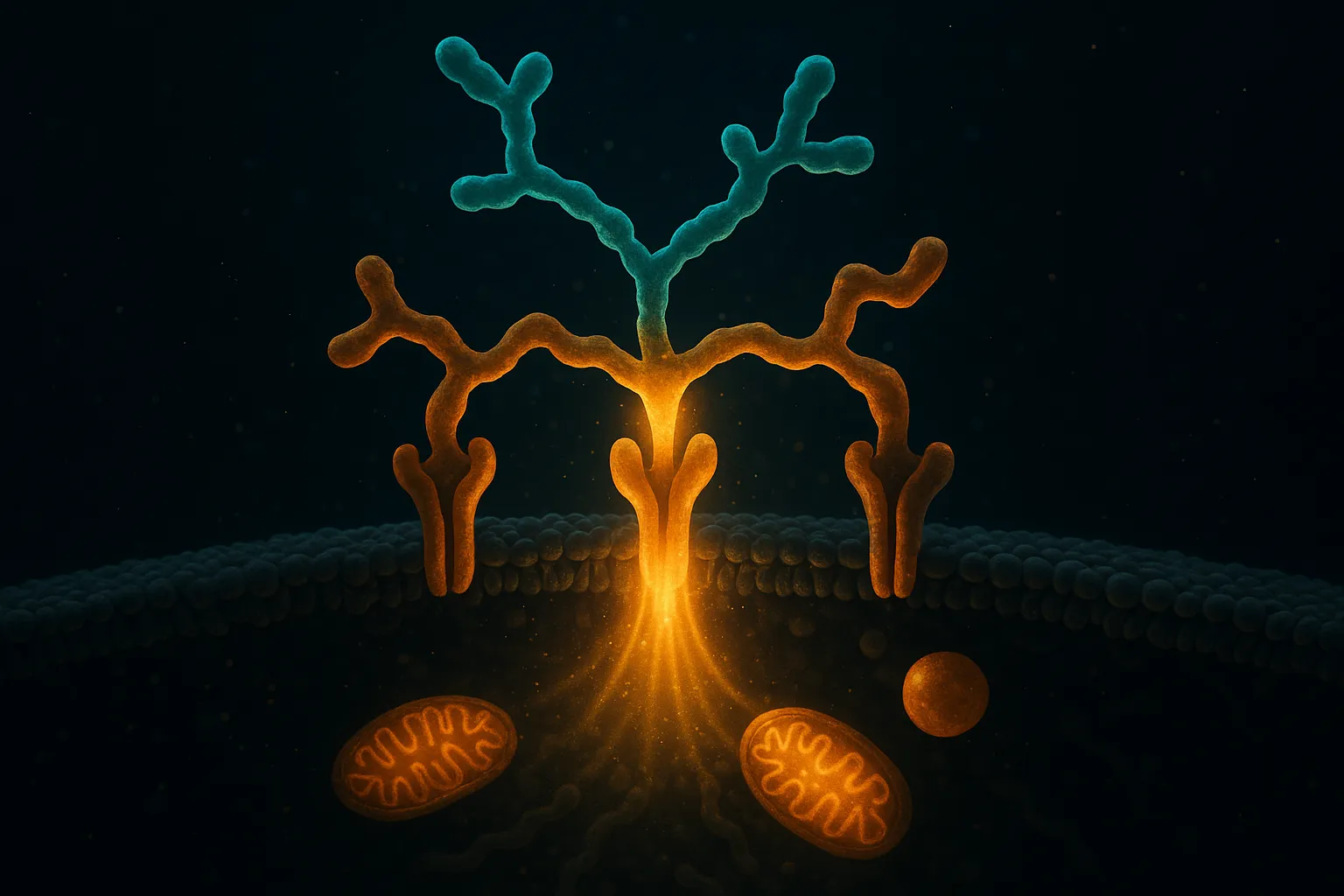
Dark navy scientific composition showing GIP and glucagon hormone receptors with glowing gold light signaling pathways alongside a faded GLP-1 molecule

The same scientists who invented the GLP-1 obesity drug class just argued GLP-1 may not be the right target. In a peer-reviewed paper published in Molecular Metabolism on April 16, 2026, Richard DiMarchi and Matthias Tschöp — the chemist and physiologist behind tirzepatide's underlying biology — propose that activating only the GIP and glucagon receptors, with no GLP-1 component, can match GLP-1-containing drugs for weight loss in rodents and monkeys. With less nausea. The hypothesis would, if it holds in humans, redraw the entire obesity drug map.

This story is everywhere this week. Most coverage is missing the practical question: what does it mean for the GLP-1, GIP, and glucagon peptides already on the market right now? That's what this guide is about.

What the New Paper Actually Says

The work was funded by BlueWater Biosciences and led by DiMarchi (Indiana University) and Tschöp (Helmholtz Munich). They synthesized a GIP/glucagon dual agonist with no GLP-1 activity and dosed obese mice and obese cynomolgus monkeys at higher exposures than typically used for GLP-1 drugs.

The headline findings:

  • Weight loss matched GLP-1 comparators in both species at sufficiently high dose
  • Tolerability was substantially better — markedly less nausea, vomiting, and food aversion
  • Mechanism centers on energy expenditure rather than appetite suppression, via glucagon receptor activation in the liver and adipose tissue and GIP-mediated effects on adipocyte function
  • GLP-1 absence avoided the gut-brain nausea axis that drives the dropout rate of approved drugs

The provocation: if you can get tirzepatide-level weight loss without the GLP-1 arm, why include it? The nausea, vomiting, and gastroparesis signal in semaglutide and tirzepatide is GLP-1-receptor-driven. Removing GLP-1 may remove the side-effect ceiling.

The caveats are real. This is a preclinical paper. Rodent-to-human translation in obesity has a mixed history — many compounds that crushed it in mice stalled in clinical trials. The doses were higher than GLP-1 drugs are run at clinically. And the comparator was monogonist semaglutide, not the strongest currently-approved drug (tirzepatide).

But the people making the claim are not cranks. DiMarchi co-invented tirzepatide's chemistry. Tschöp is the most-cited obesity researcher alive. When they say GLP-1 may be optional, the field listens.
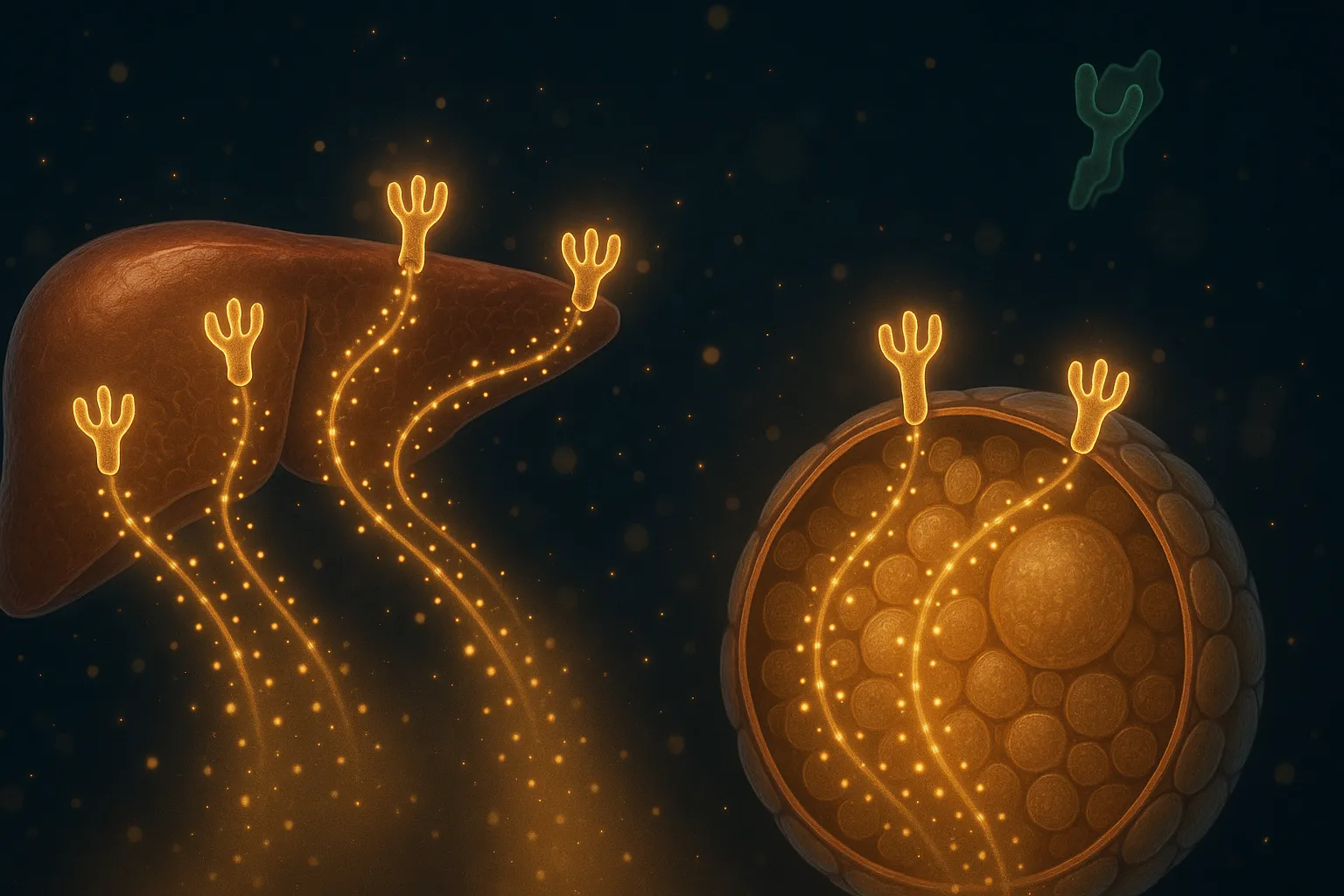
Dark navy abstract scientific imagery showing two brain regions and metabolic tissues with glucagon receptors illuminated in warm gold while a faded green GLP-1 receptor sits inactive

Why This Connects to Retatrutide and Survodutide

Approved GLP-1 drugs are mostly built around GLP-1 as the primary engine. Tirzepatide adds GIP. The next generation — already in late-stage trials — adds glucagon. The DiMarchi/Tschöp paper is, in effect, a theoretical defense of why those next-generation drugs work better than pure GLP-1 agonists.

Retatrutide activates GLP-1, GIP, and glucagon. The Phase 3 TRIUMPH-4 readout showed 28.7% weight loss at 68 weeks — exceeding both semaglutide (~14.9%) and tirzepatide (~22.5%) in their respective pivotal trials. If the new hypothesis is right, retatrutide's outperformance is exactly what you'd expect: it has the most glucagon and GIP signaling on top of GLP-1.

Survodutide is a GLP-1/glucagon dual agonist (no GIP). Phase 2 trials reported 18.7% weight loss at 46 weeks. Survodutide is the closest currently-available human proxy for "what if you took GLP-1's contribution down and let glucagon do the work?" — minus the GIP arm.

Tirzepatide is a GLP-1/GIP dual agonist. The DiMarchi/Tschöp paper specifically calls out the GIP arm as a major driver. The clinical superiority of tirzepatide over semaglutide (22.5% vs 14.9% in head-to-head SURMOUNT-5) tracks with that.

Semaglutide is GLP-1 only. In the new framework, it's the weakest of the four — the drug that does only the part that may not be necessary.

The Side-Effect Math

The dropout-driving side effects of approved GLP-1 drugs are nearly all GLP-1-receptor-mediated. Nausea, vomiting, gastroparesis, food aversion. These come from GLP-1 acting on receptors in the area postrema (the brain's vomiting center) and on gut motility.

GIP and glucagon don't drive that pathway. Glucagon at high doses can cause hyperglycemia and increase ketone production, but in dual-agonist designs the GLP-1 (or GIP) component buffers the glucose effect. That's why retatrutide's safety profile in Phase 2/3 is tolerable despite the heavy glucagon arm.

The clinical implication of the new paper: a pure GIP/glucagon agonist could in principle deliver tirzepatide-level efficacy with semaglutide-level tolerability — or better. That's the prize. It's also why the paper will get pushed back against; it implies the entire commercial GLP-1 franchise was, partly, an accident of which receptor was discovered first.

For peptide buyers, the takeaway right now is more concrete:

What Buyers Should Actually Do With This News

This is a hypothesis paper, not a Phase 3 readout. Treat it accordingly. Here's the practical translation:

If semaglutide is working for you, stay on it. A preclinical paper proposing a better-targeted future drug is not a reason to abandon a drug currently producing weight loss. The new hypothesis would, at most, change which compound your prescriber recommends a few years from now.

If you've plateaued on semaglutide or are a GLP-1 non-responder, the case for retatrutide gets stronger. The DiMarchi/Tschöp paper provides a mechanistic explanation for why a triple agonist outperforms a single agonist that goes deeper than "more receptors = more effect." Glucagon and GIP appear to do real, independent work on adipocyte and hepatic metabolism.

If you're shopping for a Phase 3-supported alternative to tirzepatide, retatrutide is the strongest candidate. Phase 3 TRIUMPH-4 (28.7% weight loss with knee OA pain reduction) and TRANSCEND-T2D-1 (16.8% weight loss + 2.0% A1C drop in T2D) both hit. The drug isn't FDA-approved yet — earliest realistic timing is late 2027 — but research-grade material is available from compliant vendors today.

If nausea is your main barrier, survodutide is the targeted bet. The GLP-1 arm in survodutide is preserved, so it's not the pure GIP/glucagon design DiMarchi tested. But it's the closest available drug to the "less GLP-1, more glucagon" thesis. Phase 3 data is pending; Phase 2 tolerability looked competitive.

Don't expect a pure GIP/glucagon drug for human use anytime soon. BlueWater Biosciences hasn't filed an IND. From hypothesis paper to Phase 3 readout is 6-8 years minimum. The interim play is the drugs already on the trial path.

Dark navy futuristic medical visualization showing a multi-receptor peptide molecule binding simultaneously to GIP and glucagon receptors on adipocyte and liver cell membranes, with golden light cascading through metabolic pathways

How to Read the Coverage You'll See This Week

Three framings are circulating:

"GLP-1 drugs are obsolete." Wrong. The paper does not say this. Approved GLP-1 drugs work, are safe at scale, and remain the standard of care for obesity and T2D. The paper says future drugs may improve on them by skipping the GLP-1 arm.

"Big Pharma is hiding the real weight loss drug." Also wrong. The lead authors invented the GLP-1 drug class commercially. They're proposing improvements, not exposing a conspiracy. The work was published in a mainstream peer-reviewed journal and funded by a biotech with disclosed financial relationships.

"The next-generation obesity drugs will look different." Correct. Retatrutide already does. Survodutide does. Pure GIP/glucagon designs in early development do. The DiMarchi/Tschöp paper is an academic articulation of a direction the industry is already moving in.

For buyers, the framework is simple: the GLP-1-only era is ending — slowly. The dual- and triple-agonist era is starting. Retatrutide and survodutide are the leading edge of that transition.

What's Next in the Pipeline

The drugs in or approaching Phase 3 with GIP and/or glucagon arms include:

  • Retatrutide (Eli Lilly) — GLP-1/GIP/glucagon. NDA filing expected Q4 2026. Approval earliest 2027.
  • Survodutide (Boehringer Ingelheim/Zealand) — GLP-1/glucagon. Phase 3 SYNCHRONIZE program ongoing.
  • Mazdutide (Innovent) — GLP-1/glucagon. Approved in China 2025; US trials ongoing.
  • Pemvidutide (Altimmune) — GLP-1/glucagon, with strong MASH/liver fat data.

Pure GIP/glucagon drugs without GLP-1 — the design DiMarchi proposes — are in early discovery at multiple companies but not yet in clinical trials.

For ongoing peptide news — vendor changes, FDA actions, new trial readouts — see the news article archive.

The Bottom Line

The DiMarchi/Tschöp paper does not invalidate GLP-1 drugs. It reframes them. GLP-1 was the first receptor in the gut-hormone family discovered to be drug-targetable for weight loss; it became the entire foundation of an industry. The new hypothesis says GIP and glucagon may have been doing the heavier lifting all along, and the GLP-1 arm — which drives the side effects — may be optional.

For 2026 buyers, this is not a reason to change anything tomorrow. It is a reason to weight retatrutide and survodutide more heavily in your "what to try next" planning, and to expect that the obesity drugs of 2028 will look more like retatrutide than semaglutide.

Frequently Asked Questions

What did the new April 2026 paper from DiMarchi and Tschöp actually claim?
Published in Molecular Metabolism on April 16, 2026, the paper proposes that activating only the GIP and glucagon receptors — with no GLP-1 component — can produce weight loss comparable to GLP-1-containing drugs in rodents and monkeys, with substantially less nausea and vomiting. The work is funded by BlueWater Biosciences and has not yet been tested in humans.
Does this mean semaglutide and tirzepatide are obsolete?
No. Approved drugs with billions of patient-weeks of safety data don't get replaced by an animal study. The hypothesis matters because it points the next generation of obesity drugs — including ones already in clinical trials like retatrutide and survodutide — toward GIP and glucagon receptor activity as the primary engine of weight loss.
How does retatrutide fit into this story?
Retatrutide is a triple agonist of GLP-1, GIP, and glucagon receptors. Phase 2 data showed up to 24.2% weight loss at 48 weeks — the highest in any obesity drug trial. If GIP and glucagon are doing most of the work, retatrutide's superior weight loss vs semaglutide and tirzepatide is exactly what you'd predict, because it has more glucagon and GIP signaling on top of GLP-1.
Is survodutide relevant here?
Yes. Survodutide is a GLP-1/glucagon dual agonist (no GIP). Phase 2 trials showed 18.7% weight loss at 46 weeks. If glucagon receptor activation drives a meaningful portion of weight loss independent of GLP-1, survodutide is the closest currently-available proxy for the DiMarchi hypothesis — minus the GIP arm.
What does this paper mean for the semaglutide-to-retatrutide question?
One preclinical paper does not establish a switching rationale on its own. For users who have plateaued on semaglutide or hit GLP-1 genetic resistance, retatrutide is described as a reasonable next step on its own merits — Phase 3 data is positive. Where semaglutide is working, the new GIP/glucagon hypothesis reads as a reason to watch the space, not to switch.
30ml bacteriostatic water vial — 0.9% benzyl alcohol multi-dose
Bac Water Made for Peptides
Don't risk a $300 peptide on generic bac water.
Most cloudy reconstitutions trace back to one thing — and it isn't the peptide. Sterile, non-pyrogenic, 0.9% benzyl alcohol — formulated for peptide reconstitution, not repackaged from generic stock.
0.9% benzyl alcohol Made for peptides 30 mL multi-dose
See why our bac water doesn't ruin peptides
30ml from $18.75 · Ships fast · Code thepeptidecatalog

References

  1. DiMarchi RD, Tschöp MH, et al. Reassessing the role of GLP-1 in next-generation incretin-based obesity therapeutics. Molecular Metabolism. 2026. (Pre-print published April 16, 2026.)
  2. Eli Lilly. Lilly's triple agonist, retatrutide, delivered weight loss of up to an average of 71.2 lbs along with substantial relief from osteoarthritis pain in first successful Phase 3 trial. Press release, December 2025.
  3. Jastreboff AM, et al. Triple-Hormone-Receptor Agonist Retatrutide for Obesity — A Phase 2 Trial. N Engl J Med. 2023. PMID 37366315.
  4. le Roux CW, et al. Glucagon and GLP-1 receptor dual agonist survodutide for obesity: a randomised, double-blind, placebo-controlled, dose-finding phase 2 trial. Lancet Diabetes Endocrinol. 2024. PMID 38330987.
  5. Coskun T, et al. LY3437943, a novel triple glucagon, GIP, and GLP-1 receptor agonist for glycemic control and weight loss: From discovery to clinical proof of concept. Cell Metab. 2022. PMID 35985340.
  6. Knerr PJ, et al. Next generation GLP-1/GIP/glucagon triple agonists normalize body weight in obese mice. Mol Metab. 2022. PMID 35809773.
  7. Lilly Investor Relations. SURMOUNT-5: Tirzepatide demonstrates superior weight loss vs semaglutide in head-to-head trial. Press release, 2024.