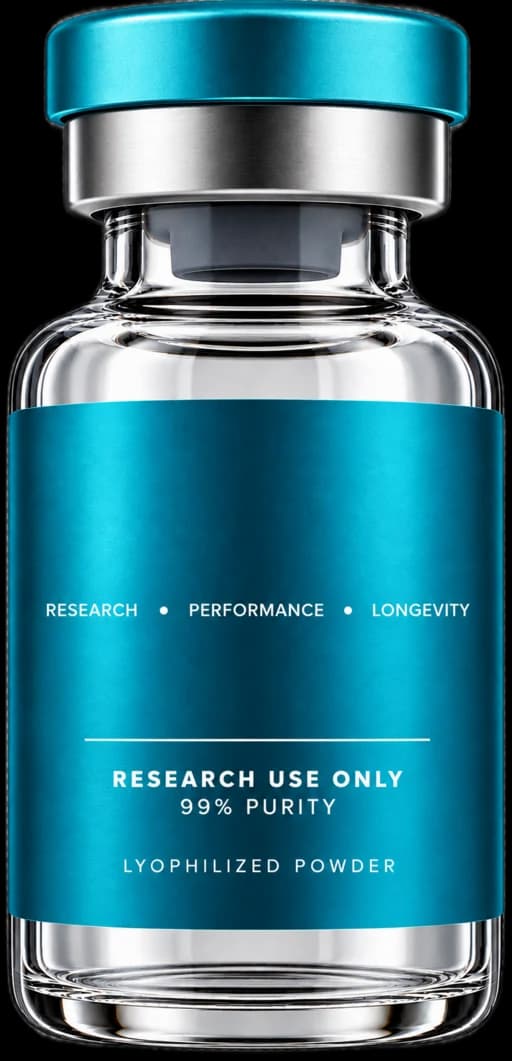
Survodutide

Lyophilized powder

Survodutide is an investigational dual agonist of the GLP-1 and glucagon receptors, in clinical trials for obesity and the fatty-liver disease MASH. Below: today's vial sizes, prices through our link and the vendor's COA details.

Size

$7.02/mg · In stock

Price

$70.20

List

$78.00

Buy 10 mg at EZ Peptides

Price shown uses code thepeptidecatalog at EZ Peptides's checkout (10% off list).

Volume pricing at EZ Peptides

  • 5+ vials5% offin cart
  • 10+ vials10% offin cart

Applied in EZ Peptides's cart; how it combines with our code is set at checkout.

Sold by EZ Peptides. The Peptide Catalog does not sell peptides; we earn a commission if you buy through this link, at no extra cost to you. For laboratory research use only, not for human or veterinary use. Not FDA-approved. Nothing on this page is medical or dosing advice.

Survodutide research vial
SurvodutideEZ Peptides
Third-party testedResearch use only
Certificate of AnalysisVendor-stated: Third-party tested · HPLC · public COAView
  • Vendor-stated testing: Third-party tested · HPLC · public COA
  • Listed on our survodutide vendor comparison, ordered by our vendor rankings
  • Lyophilized powder · laboratory research use only
Research-context information only. Survodutide is an investigational drug not approved by the FDA. Protocols, doses, and reactions reported below come from published clinical trials and self-reported community sources. This article reports what has been documented, not what should be done. Possession or use of investigational drugs outside an authorized clinical trial may be illegal in your jurisdiction. Consult a licensed physician for personal medical decisions.

Vial sizes listed by the vendor

Survodutide Vial Sizes & Prices

Survodutide vial sizes, prices and lots at EZ Peptides
SizeListWith our codePer mgAvailability
10 mg$78.00$70.20$7.02In stock

Prices checked today, 5:09 AM CT on EZ Peptides's site, with code thepeptidecatalog applied. Vendor-stated testing: Third-party tested · HPLC · public COA. The lot certificate is on EZ Peptides's product page. Sizes not re-checked in the last 7 days are hidden. The vendor's checkout is final.

Test results

Survodutide Certificate of Analysis

EZ Peptides publishes its certificates publicly (vendor-stated: Third-party tested · HPLC · public COA). Match the lot number on the vial to its certificate.

View the Survodutide certificate on EZ Peptides's product page.

How to check one: how to verify a peptide COA.

Survodutide Dosing in Clinical Research

Weight Loss / Metabolic Health

Educational reference only. Individual responses vary. Consult healthcare provider before use.

Vial Size
5 mg or 10 mg
Reconstitution
1-2 mL BAC water
Dose
0.3 mg → 4.8 mg (titrated over 20 weeks)
Timing
Same day each week
Frequency
Once per week
Duration
46 weeks (Phase 2 trial duration)
Protocol Notes
Dual GLP-1/glucagon receptor agonist. Investigational — not FDA-approved. Requires slow 7-step titration to minimize GI side effects. Glucagon component adds energy expenditure and liver fat reduction.

Why This Dosing Protocol

Why slow titration? Dual receptor activation produces dose-dependent GI side effects. Phase 2 trials used a 20-week escalation from 0.3mg to 4.8mg — allowing adaptation at each step dramatically improves tolerability.

Why weekly? Extended half-life supports once-weekly subcutaneous injection. Phase 3 trials test 3.6mg and 6.0mg as maintenance doses with flexible escalation schedules.

Why higher doses in Phase 3?Phase 2 weight loss hadn't plateaued at 46 weeks, and the 6.0mg dose (not tested in Phase 2) may provide additional efficacy in the 76-week SYNCHRONIZE trials.

How Survodutide Works

Dual Agonist — GLP-1/Glucagon Receptor

Receptor → Metabolic Cascade → Weight & Glucose → Outcomes

1
Target

GLP-1 + Glucagon Receptors — Dual Activation

Survodutide (BI 456906) is a dual agonist derived from glucagon, engineered to activate both GLP-1 receptors (appetite suppression, insulin secretion) and glucagon receptors (energy expenditure, liver fat oxidation). Unlike tirzepatide's GIP/GLP-1 approach, survodutide pairs GLP-1 with glucagon — adding a "burn more" signal alongside "eat less."

2
Cellular Signal

cAMP Activation → Satiety + Thermogenesis + Hepatic Fat Oxidation

GLP-1 receptor activation suppresses appetite, slows gastric emptying, and stimulates glucose-dependent insulin release. Glucagon receptor activation in the liver promotes fatty acid oxidation and ketogenesis, while increasing whole-body energy expenditure through thermogenesis — without activating the sympathetic nervous system.

3
Systemic Effect

Reduced Intake + Increased Expenditure + Liver Fat Clearance

The dual mechanism produces weight loss from both sides of the energy equation. Phase 2 completers achieved 18.7% weight loss at 46 weeks with no plateau observed. Uniquely, 62% of MASH patients achieved histologic improvement (NEJM 2024) — the glucagon component directly clears hepatic fat.

4
What You Notice

Strong Appetite Reduction + Steady Weight Loss + Liver Improvement

Appetite reduction begins within weeks of starting. Weight loss accelerates through months 2-4 as the glucagon-driven metabolic boost compounds with reduced intake. GI side effects (nausea, diarrhea) are common during titration but improve. Liver fat markers improve significantly — particularly relevant for fatty liver disease.

What Makes This Peptide Different

Survodutide occupies a unique position between semaglutide and retatrutide. Unlike pure GLP-1 agonists, its glucagon component increases energy expenditure and directly oxidizes liver fat. Unlike retatrutide (triple agonist), it skips GIP — focusing the dual mechanism on the two pathways most relevant to obesity and liver disease. FDA Breakthrough Therapy designation for MASH (Sept 2024) reflects its strong liver data.

Survodutide Clinical Evidence

Two parallel grades per outcome — clinical RCT depth and real-world community adoption. See the Research Overview below for citations and detail.

OutcomeClinical EvidenceCommunity Evidence
Body weight reduction (obesity)StrongPreliminary
MASH histology resolutionStrongPreliminary
HbA1c reduction in T2DModeratePreliminary

Survodutide Research Overview

Outcome-by-outcome look at what the evidence actually supports for Survodutide, including human vs. animal study counts and our editorial take on each.

Body weight reduction in obesity

Clinical:StrongCommunity:Preliminary

Le Roux 2024 (Lancet D&E, Phase 2 dose-finding) showed mean body weight reductions of 6.2% (0.6 mg), 12.5% (2.4 mg), 13.2% (3.6 mg), and 14.9% (4.8 mg) vs 2.8% placebo over 46 weeks in adults with overweight/obesity. The dose-response curve had not plateaued at 4.8 mg — Phase 3 SYNCHRONIZE will define the asymptote.

2 human studies · 4 animal studies

Key findings & citations
  • 14.9% mean weight loss at 4.8 mg over 46 weeks.
  • Dose-response had not plateaued — higher doses tested in Phase 3.
  • Glucagon-receptor agonism contributes to fat oxidation beyond GLP-1 effect.

Our take

Among the most active second-generation GLP-1/glucagon dual agonists. Phase 3 readouts will determine its rank among retatrutide, tirzepatide, and semaglutide.

MASH / fibrosis

Clinical:StrongCommunity:Preliminary

Sanyal 2024 (NEJM Phase 2, n=293) showed survodutide produced MASH resolution without fibrosis worsening in 47-62% of patients across dose arms vs 14% placebo over 48 weeks. Fibrosis improvement also separated from placebo at higher doses — a cleaner fibrosis signal than semaglutide.

1 human study · 4 animal studies

Key findings & citations
  • MASH resolution: 47% (2.4 mg), 62% (4.8 mg), 43% (6.0 mg) vs 14% placebo.
  • Fibrosis stage improvement separated from placebo in higher-dose arms.
  • Glucagon agonism likely contributes via direct hepatic FFA oxidation.

Our take

Most promising MASH peptide signal to date. Glucagon agonism appears to add real fibrosis benefit beyond what pure GLP-1 produces.

What Survodutide doesn't do

Claims that current evidence does not support. Worth knowing before you set expectations.

Technical specifications

Survodutide chemical & analytical data

Receptor targets
GLP-1R / glucagon receptor dual agonist
Half-life (clinical PK)
~7 days (weekly dosing)
Form
Lyophilized (freeze-dried) powder in a sealed vial
Presentation
10 mg
Regulatory status
Investigational. Not FDA-approved for any use.

Survodutide Reconstitution Calculator

Dilution math and unit conversions. Prefilled using a common vial size for this peptide.

Open calculator

Storage & Handling

Storage at a glance

Proper storage temperatures, shelf life, reconstitution best practices, and travel tips for lyophilized and reconstituted peptides.

Powder: Freezer
1+ year at -20°C
Reconstituted: Fridge
4 weeks max at 2-8°C
View Complete Storage Guide

Handling specifics

Educational overview on storage, labeling, and traceability considerations for lab environments. Consult primary literature and vendor documentation for specifics.

Powder storage (very stable)
  • Freezer (-20°C): 1+ year
  • Refrigerator (2-8°C): 1-3 months
  • Room temperature: 2-3 weeks (emergency only)
Reconstituted storage (fragile)
  • MUST refrigerate at 2-8°C
  • 4-week maximum shelf life
  • NEVER freeze after reconstitution
  • Use bacteriostatic water for multi-dose

9 answers

Survodutide FAQ: Buying, COA, Storage & Research

What is survodutide and how does it work?
Survodutide (BI 456906) is a dual glucagon/GLP-1 receptor agonist developed by Boehringer Ingelheim. It combines appetite suppression from GLP-1 receptor activation with increased energy expenditure and liver fat oxidation from glucagon receptor activation. This dual mechanism targets weight loss from both sides of the energy equation.
Is survodutide FDA-approved?
No. Survodutide is currently in Phase 3 clinical trials (SYNCHRONIZE-1 and SYNCHRONIZE-2). It is not approved for any indication. All dosing and efficacy data comes from published Phase 1 and Phase 2 clinical trials.
How does survodutide compare to semaglutide and tirzepatide?
Survodutide is a dual GLP-1/glucagon agonist, while semaglutide targets only GLP-1 and tirzepatide targets GLP-1/GIP. The glucagon component gives survodutide unique benefits for energy expenditure and liver fat clearance. Phase 2 weight loss (~18.7%) falls between semaglutide (~15-17%) and retatrutide (~24%).
What are the main side effects of survodutide?
Gastrointestinal effects dominate: nausea, vomiting, diarrhea, and decreased appetite, occurring in about 75% of participants in Phase 2. These are consistent with the GLP-1 agonist class and typically improve with dose titration. No unexpected safety signals were identified.
How much weight can I lose on survodutide?
In the Phase 2 trial, participants on the highest dose (4.8mg weekly) lost up to 18.7% of body weight over 46 weeks (actual doses received analysis). The intention-to-treat analysis showed 14.9%. Over half of participants at 4.8mg achieved at least 15% weight loss.
Does survodutide help with liver disease?
Yes. In a dedicated Phase 2 MASH trial, 83% of participants on the highest dose achieved histologic improvement with no worsening of fibrosis. The glucagon receptor component directly promotes hepatic fat oxidation, making survodutide particularly effective for metabolic liver disease.
How long does reconstituted peptide last?
Once mixed with bacteriostatic water, peptides remain stable for up to 4 weeks when refrigerated at 2-8°C (36-46°F). Unopened powder can last 1+ year in the freezer. Get our complete Storage & Travel Guide.
Is this peptide legal to purchase?
Peptides sold "for research purposes only" are legal to purchase in the US, but are not FDA-approved for human use outside of specific medical applications. Always consult a healthcare provider before use.
New to peptides?
Take our Peptide Match tool to find the best peptide for your goals. You can also read our Complete Guide to Peptides to learn the basics.

Survodutide Research Articles

Compare Survodutide to alternatives

Side-by-side mechanism, dose, half-life, and vendor pricing.

Open compare →

Compare Survodutide Vendors Before You Buy

Disclosure: we may earn affiliate commission from qualifying purchases. Educational information only — not medical advice.