guidesApril 26, 2026·7 min read

AOD-9604 Dosage Chart: 300mcg/Day Fat Loss Protocol

Most run 300mcg but miss the fasted timing that matters most. Covers 250-500mcg protocols, cycling, reconstitution, and stacking.

AOD-9604 Dosing: 300mcg/Day Fat Loss Protocol

AOD-9604 (Advanced Obesity Drug) is a synthetic peptide fragment of human growth hormone (amino acids 176-191) that retains the fat-loss properties of GH without affecting IGF-1, insulin, or blood glucose. It has FDA GRAS status as a food ingredient. This is not medical advice.

Research-context information only. AOD-9604 is an investigational research peptide; FDA Phase 2 trial program for obesity was discontinued without approval. Protocols, doses, and reactions reported below come from published clinical trials and self-reported community sources. This article reports what has been documented, not what should be done. Possession or use of investigational drugs outside an authorized clinical trial may be illegal in your jurisdiction. Consult a licensed physician for personal medical decisions.

AOD-9604 Dosing Table

Match your vial size below — reconstitution and dose math update automatically.

Reconstitute: add 2 mL of bacteriostatic water to the 5 mg vial. Resulting concentration: 2.5 mg/mL.
250 mcg10 units · 0.1 mL
Daily fasted SubQ
Starter
300 mcg12 units · 0.12 mL
Daily fasted SubQ
Standard
500 mcg20 units · 0.2 mL
Daily fasted SubQ
Advanced

Math assumes U-100 insulin syringes (1 mL = 100 units). Verify your syringe matches before injecting. Round half-units to the nearest visible mark.

Quick Reference: Standard Protocol

Parameter Standard Protocol
Dose 300 mcg/day
Route Subcutaneous injection (abdominal fat)
Timing Morning, fasted
Frequency 5 days on, 2 days off
Cycle 8 weeks on, 8 weeks off
Vial size 5 mg
Reconstitution 2 mL bacteriostatic water → 2.5 mg/mL
Community-documented draw 12 units on insulin syringe
Storage Refrigerate, use within 28 days

Draw volumes reflect community-documented reconstitution protocols, not a recommended dosing schedule.

The protocol below reflects the most commonly documented community approach.

Standard protocol: 300 mcg SC injection into abdominal fat, first thing in the morning on an empty stomach. 5 days on, 2 days off. Community protocols describe waiting 20–30 minutes before eating.

Cycling: 8 Weeks On, 8 Weeks Off

Run 300 mcg daily (5 on / 2 off) for 8 weeks, then take 8 weeks off. Community protocols use the 8-week on/off structure to reduce the risk of receptor desensitization — this hasn't been directly tested in published AOD-9604 trials.

Weeks 1-2: Some users start at 250 mcg daily to assess tolerance. AOD-9604 is generally well-tolerated with minimal side effects.

Weeks 3-8: 300 mcg daily, 5 days on / 2 days off.

Timing matters: Community protocols describe fasted morning injection; the cited rationale is avoiding insulin spikes that may compete with lipolytic signaling. Some users inject 30 minutes before cardio for enhanced fat oxidation.

Enhanced Protocol (Community)

Some community protocols push doses higher for more aggressive fat loss:

Parameter Enhanced Protocol
Dose 500 mcg/day
Route Subcutaneous injection
Timing Morning, fasted
Frequency 5 days on, 2 days off
Cycle 8 weeks on, 8 weeks off
Draw amount 20 units (from 5 mg vial with 2 mL BAC water)

The 300 mcg standard community protocol is the recommended starting point. 500 mcg is the upper end referenced in community discussions.

Routes of Administration

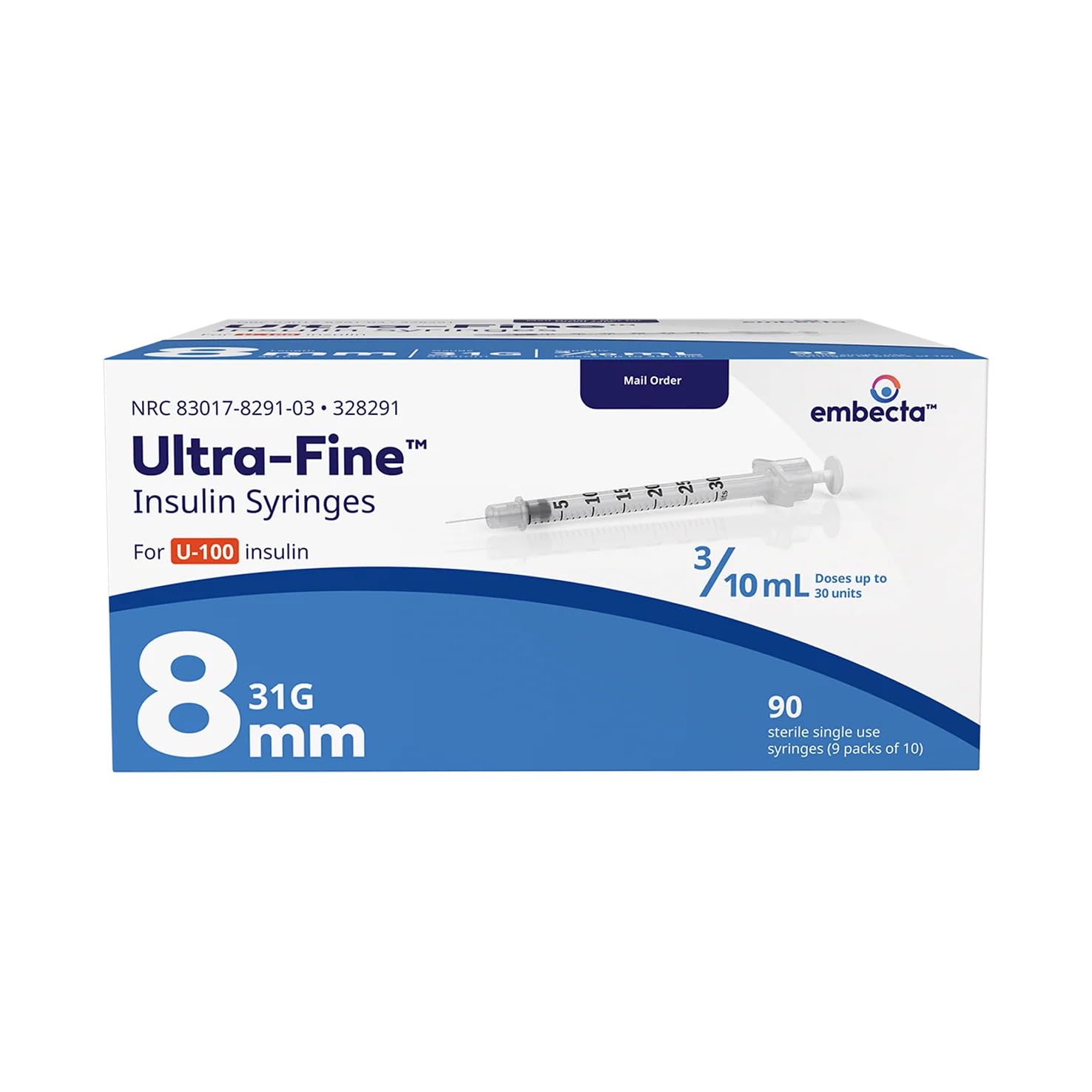
Subcutaneous injection (primary): Community protocols describe subcutaneous injection into abdominal fat, love handles, or thighs, typically 0.1–0.3 mL with an insulin syringe (29–31 gauge).

Oral (research context): Animal studies showed oral activity at 500 mcg/kg, and AOD-9604 has GRAS status as a food ingredient. Community preference remains injectable for more reliable bioavailability.

Intra-articular (emerging): Recent research explored AOD-9604 for joint health, with cartilage-protective effects observed in animal models.

30ml bacteriostatic water vial — 0.9% benzyl alcohol multi-dose
Bac Water Made for Peptides
Don't risk a $300 peptide on generic bac water.
Most cloudy reconstitutions trace back to one thing — and it isn't the peptide. Sterile, non-pyrogenic, 0.9% benzyl alcohol — formulated for peptide reconstitution, not repackaged from generic stock.
0.9% benzyl alcohol Made for peptides 30 mL multi-dose
See why our bac water doesn't ruin peptides
30ml from $18.75 · Ships fast · Code thepeptidecatalog

Reconstitution Quick Reference

Vial Size BAC Water Concentration 300 mcg Dose
5 mg 2 mL 2.5 mg/mL 11 units

Math: 5,000 mcg / 2 mL = 2,500 mcg/mL. For 300 mcg: 300 / 2,500 = 0.12 mL = ~11 units. One vial lasts ~16 doses.

Community protocols describe gentle swirling — not shaking — to avoid degradation, with storage at 2–8°C and use within 28 days. For step-by-step instructions, see the Reconstitution Calculator.

Top AOD-9604 Vendors

Ranked by price, COA availability, and reputation

1
Ascension PeptidesCOA
10/10
5mg$11.00/mg
2
Ion PeptideCOA
9.8/10
10mg$6.90/mg
3
EZ PeptidesCOA
9.6/10
2mg$19.00/mg

Affiliate disclosure: vendor links in this article are affiliate links — The Peptide Catalog may earn a commission if you buy through them, at no additional cost to you.

Where These Numbers Come From

AOD-9604 has a notable research history including animal studies, human clinical trials, and FDA GRAS evaluation.

Animal studies: Both hGH and AOD-9604 reduced body weight gain via increased fat oxidation and plasma glycerol levels without affecting IGF-1 or insulin (Ng et al., 2001). AOD-9604 stimulates lipolysis through beta-3 adrenergic receptor pathways (Heffernan et al., 2001). Oral doses of 500 mcg/kg reduced body weight gain in Zucker rats without affecting lean mass or blood glucose (Ng et al., 2000).

Human clinical context: AOD-9604 progressed through Phase 2 trials. Safety was confirmed with no significant adverse events. Efficacy was mixed -- weight loss observed in initial trials but not replicated in later studies that included intensive diet/exercise programs. No effects on IGF-1, insulin, or glucose were confirmed in humans.

Joint health: Intra-articular AOD-9604 enhanced cartilage regeneration in rabbit OA models, with combined AOD-9604 + hyaluronic acid outperforming either alone (Kwon & Park, 2015).

Stacking AOD-9604

Stack Peptides Purpose
GH + Fragment AOD-9604 300 mcg AM + CJC-1295/Ipamorelin 100/100 mcg PM GH secretagogue effects + targeted lipolysis
Fat Loss + Recovery AOD-9604 300 mcg AM + BPC-157 500 mcg AM/PM Body recomposition with joint/tissue support
Aggressive Fat Loss AOD-9604 300 mcg AM + Tesofensine 0.5 mg oral Peripheral lipolysis + central appetite suppression

Stacking tips: Community stacking protocols describe maintaining fasted morning timing for AOD-9604 and moving GH secretagogues to nighttime. Diet remains critical -- the lipolytic activity documented in animal trials targets fat loss but doesn't replace a caloric deficit.

Side Effects & Safety

  • GRAS status -- FDA Generally Recognized As Safe as a food ingredient
  • No GH axis effects -- does not alter IGF-1, insulin, or glucose levels
  • Injection site redness -- mild, standard for SC peptides
  • Mild headache -- infrequent
  • Slight stomach upset -- if injected too close to eating
  • Water retention -- rare, unlike full GH
  • No diabetogenic effects -- blood sugar neutral, no acromegaly risk

AOD-9604 has one of the cleanest safety profiles in the peptide space due to its GH fragment design. For more detail, see our AOD-9604 benefits guide.

mg to Units Conversion

On a standard 100-unit insulin syringe, each "unit" equals 0.01 mL (so 100 units = 1 mL). Once AOD-9604 is reconstituted, the conversion from a target dose to syringe units depends on the chosen dilution.

The two reconstitution ratios most often described in community protocols are below.

Reconstitution A: 5 mg vial + 2 mL BAC water (2.5 mg/mL) — the standard dilution from the Quick Reference above.

Dose (mcg) Volume (mL) Units (insulin syringe)
150 mcg 0.06 mL 6 units
300 mcg 0.12 mL 12 units
450 mcg 0.18 mL 18 units
600 mcg 0.24 mL 24 units

Reconstitution B: 5 mg vial + 3 mL BAC water (1.67 mg/mL) — more BAC water for larger, easier-to-measure draws.

Dose (mcg) Volume (mL) Units (insulin syringe)
150 mcg 0.09 mL 9 units
300 mcg 0.18 mL 18 units
450 mcg 0.27 mL 27 units
600 mcg 0.36 mL 36 units

These conversions reflect the dilutions documented in community reconstitution protocols. They report how the math is described, not a recommended dosing schedule.

Frequently Asked Questions

What is the standard AOD-9604 dose?
Community-documented protocols most commonly describe 300 mcg subcutaneously once daily, injected into abdominal fat in the morning on an empty stomach, 5 days on / 2 days off.
How long does AOD-9604 take to work?
Most users report initial effects within 2-4 weeks, with more noticeable fat loss at 4-8 weeks. Results depend heavily on diet and exercise. AOD-9604 is not a standalone weight loss solution.
What do protocols describe about AOD-9604 and food timing?
Community protocols commonly describe fasted injection, typically first thing in the morning. The reported rationale is to avoid insulin spikes that may compete with lipolytic signaling, though this hasn't been clinically validated for injectable use.
Does AOD-9604 affect growth hormone levels?
No. AOD-9604 is the C-terminal fragment (hGH 176-191) and retains lipolytic activity without affecting IGF-1, insulin, or growth hormone levels. This is its key advantage over full GH therapy.
How long should an AOD-9604 cycle last?
8 weeks on, 8 weeks off is the standard cycle. The 5-on/2-off weekly schedule and 8-week cycle help prevent receptor desensitization.
Can AOD-9604 be taken orally?
Animal studies showed oral activity for AOD-9604, and it received GRAS status as a food supplement. However, community protocols primarily use subcutaneous injection for more reliable bioavailability.

References

Citation Topic PMID
Ng et al., International Journal of Obesity (2001) Fat oxidation and weight loss in obese mice 11673763
Heffernan et al., Endocrinology (2001) Beta-3 AR mechanism, lipid metabolism in obese mice 11713213
Ng et al., Hormone and Metabolic Research (2000) Oral AOD-9604 metabolic effects in Zucker rats 11146367
Kwon & Park, Annals of Clinical and Laboratory Science (2015) Intra-articular AOD-9604 for osteoarthritis 26275694

For educational and research purposes only. This is not medical advice. AOD-9604 has GRAS status but is not FDA-approved as a drug. All protocols described are for informational purposes.