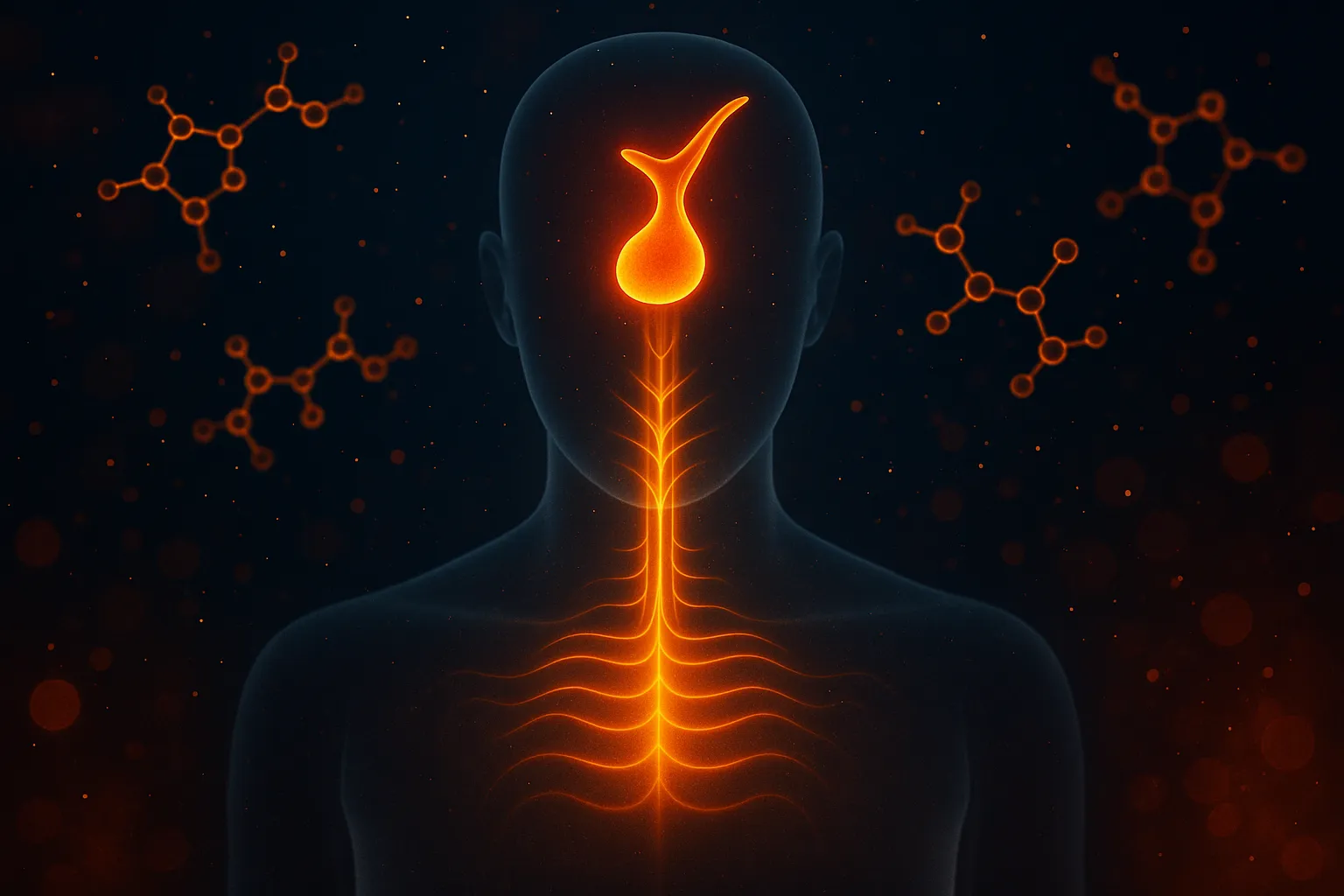
GHRP-2 (Growth Hormone Releasing Peptide-2) is a synthetic hexapeptide that activates the ghrelin receptor (GHS-R1a) to trigger potent growth hormone pulses from the pituitary. Among the GHRPs, it produces some of the strongest GH responses documented in human studies — significantly exceeding what GHRH alone achieves.
Research-context information only. GHRP-2 is a research peptide. Protocols, doses, and reactions reported below come from published research and self-reported community sources. This article reports what has been documented, not what should be done. Consult a licensed physician for personal medical decisions.
This article covers 6 research-backed benefits of GHRP-2, ranked by evidence quality. Most data comes from human clinical studies, which is unusual for peptides in this space. Where evidence is preclinical, that distinction is clearly noted.
For dosing protocols, see our GHRP-2 Dosing Guide.
Key Benefits at a Glance
| Benefit | Evidence Level | Key Finding |
|---|---|---|
| GH release | Human clinical trials | 3x stronger GH pulse than GHRH alone |
| Appetite stimulation | Human controlled study | 35.9% increase in caloric intake |
| Body composition | Human clinical data | Improved lean mass in GH-deficient populations |
| Synergy with GHRH | Human clinical trials | Combination produces supraphysiologic GH peaks |
| Cortisol/ACTH modulation | Human data | Transient, dose-dependent activation |
| Neuroprotective potential | Preclinical only | Indirect via GH/IGF-1 axis |
1. Growth Hormone Release (Strongest Evidence)
Evidence level: Multiple human clinical trials
GHRP-2 is one of the most potent growth hormone secretagogues studied in humans. At 1 mcg/kg IV, it induces GH responses significantly larger than equimolar doses of GHRH. The magnitude of the GH pulse is dose-dependent and reproducible across studies (Bowers et al., 1996).
What makes GHRP-2 distinct from GHRH is its mechanism. GHRH works by stimulating GH synthesis and release at the pituitary. GHRP-2 works primarily through the ghrelin receptor, amplifying the pulsatile release pattern and also suppressing somatostatin — the hormone that normally puts the brakes on GH secretion. This dual action explains the outsized GH pulses.
In a Phase I pharmacokinetic study in children, GHRP-2 produced robust, dose-dependent GH release across all tested doses, with peak GH levels occurring 15-30 minutes after administration (Pihoker et al., 1998).
The practical implication: GHRP-2 produces reliable, large-amplitude GH pulses that mimic (and amplify) the body's natural pulsatile secretion pattern. This makes it a strong candidate for individuals with suboptimal endogenous GH output.
2. Appetite Stimulation (Strong Human Evidence)
Evidence level: Controlled human study
GHRP-2 is a functional ghrelin mimetic. In a controlled crossover study in healthy men, a single dose of GHRP-2 increased caloric intake by approximately 35.9% compared to placebo. Participants reported significantly greater subjective hunger ratings (Laferrere et al., 2005).
This effect is clinically relevant for populations struggling with inadequate caloric intake. In a case report, one year of intranasal GHRP-2 in a severely emaciated anorexia nervosa patient produced a 6.7 kg body weight increase and resolved chronic hypoglycemia (Haruta et al., 2015).
The appetite effect is mediated through the same GHS-R1a receptor that ghrelin activates, triggering hypothalamic hunger signaling. This is a feature for underweight individuals needing caloric support — but a potential nuisance for those using GHRP-2 purely for GH benefits who don't want increased hunger.
Compared to GHRP-6, which is known for even stronger appetite stimulation, GHRP-2 produces a more moderate hunger response while delivering stronger GH output. See our GHRP-2 vs GHRP-6 comparison for a detailed breakdown.
3. Body Composition Improvements (Human Data — Indirect)
Evidence level: Human clinical data in GH-deficient populations
GHRP-2's body composition benefits are driven by its GH-releasing effects. Sustained GH elevation promotes lipolysis, increases lean mass, and improves nitrogen retention. In children treated with intranasal GHRP-2, growth velocity increased from 3.7 cm/year to 6.1 cm/year over 6 months, demonstrating meaningful anabolic effects (Pihoker et al., 1997).
The body composition effects track with what GH itself produces: reduced visceral fat, improved muscle protein synthesis, and enhanced recovery from exercise. These are not direct effects of GHRP-2 on adipose tissue or muscle — they are downstream consequences of amplified GH secretion.
For individuals with age-related GH decline, GHRP-2 represents a way to restore more youthful GH pulse amplitudes without exogenous GH administration. The pulsatile release pattern it produces is physiologically more appropriate than the flat-line delivery of injectable GH.
4. Synergy with GHRH (Strong Human Evidence)
Evidence level: Multiple human clinical trials
When GHRP-2 is combined with GHRH, the resulting GH release is not simply additive — it is synergistic. The combination produces GH peaks significantly larger than either compound alone, often reaching supraphysiologic levels (Bowers et al., 1990).
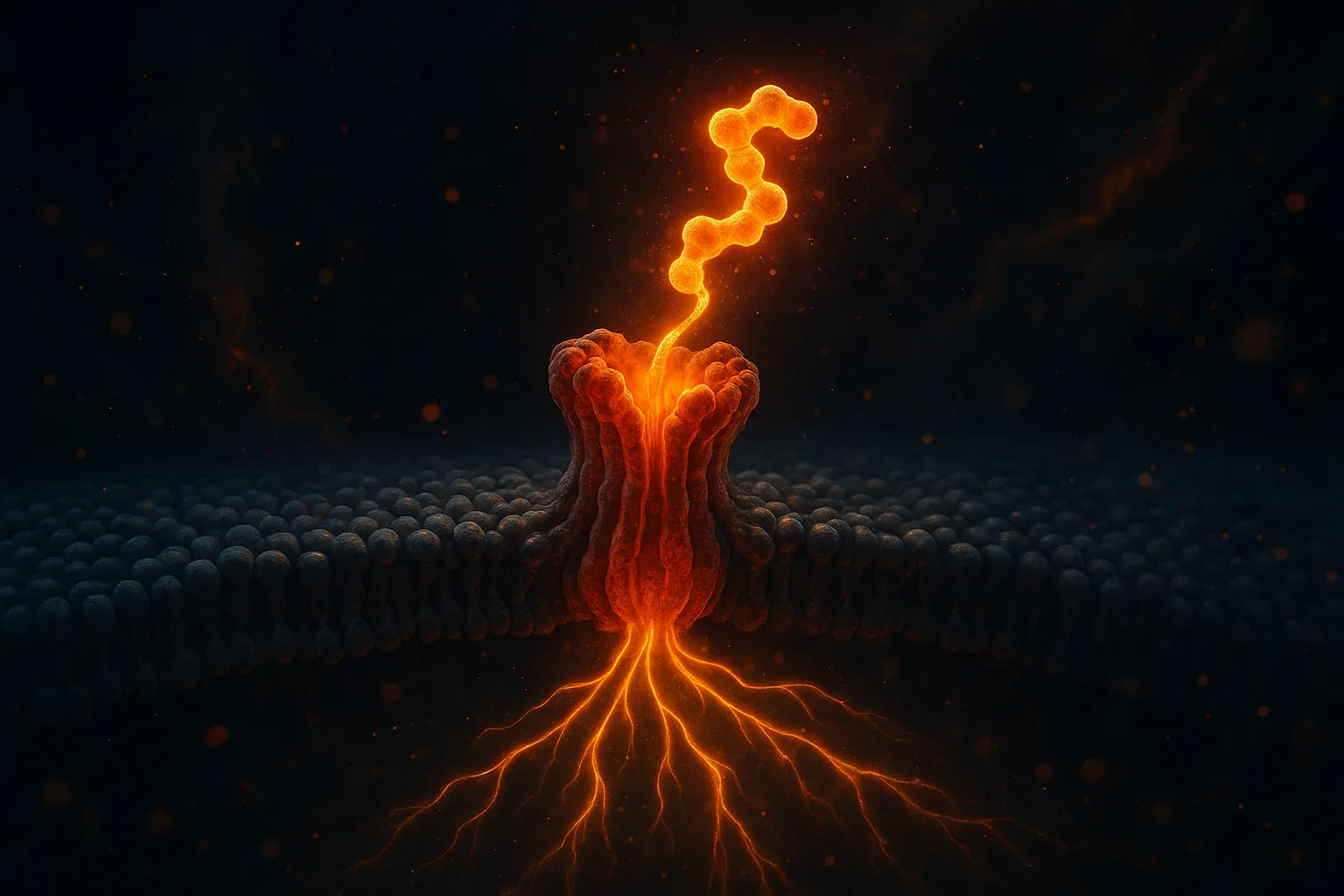
This synergy exists because GHRP-2 and GHRH work through completely independent mechanisms. GHRH activates the GHRH receptor on somatotroph cells, directly stimulating GH synthesis and release. GHRP-2 activates the ghrelin receptor, which amplifies the release signal and suppresses somatostatin. Together, you get maximum stimulation with minimum inhibition.
The combination protocol is commonly used in clinical GH-stimulation testing and forms the basis for many peptide stacking protocols. Compounds like CJC-1295 (a GHRH analog) are frequently paired with GHRPs for this reason. See the CJC-1295 + Ipamorelin guide for the most popular combination protocol.
5. ACTH and Cortisol Modulation (Human Data — Mixed Relevance)
Evidence level: Human clinical studies
GHRP-2 stimulates ACTH and cortisol release in addition to GH. At 1 mcg/kg IV, the cortisol-releasing activity is comparable to that of human CRH (corticotropin-releasing hormone), though the effect is transient and self-limiting (Arvat et al., 1997).
This is a double-edged finding. The cortisol response is generally modest and returns to baseline within 1-2 hours. At standard peptide protocol doses (100-300 mcg subcutaneously), the cortisol elevation is less pronounced than with IV bolus dosing used in clinical studies.
However, this cortisol activity distinguishes GHRP-2 from ipamorelin, which does not raise ACTH or cortisol even at doses over 200 times the GH-releasing ED50 (Raun et al., 1998). For users concerned about cortisol or prolactin elevation, ipamorelin is the cleaner choice. For maximum GH release regardless of secondary hormone effects, GHRP-2 is stronger.
For a detailed comparison of all three major GHRPs, see Ipamorelin vs GHRP-2 vs GHRP-6.
Ready to buy? Compare verified vendors on our best GHRP-2 sources page, or browse all coupon codes for up to 50% off.