Gonadorelin is the rare compound where the delivery pattern, not the dose, decides whether it stimulates or suppresses. Delivered in physiologic pulses — the published clinical protocols start at 10 mcg every 90 minutes through a portable subcutaneous pump — it drives luteinizing hormone (LH) and follicle-stimulating hormone (FSH) release. Delivered continuously, the identical molecule downregulates pituitary GnRH receptors and shuts gonadotropin output down. That is not a side effect or an edge case; it is the mechanism long-acting GnRH agonists use to produce medical castration.
The figure circulating in community and telehealth-clinic use is different: roughly 50-200 mcg injected subcutaneously two to three times per week. This guide reports both, keeps them separate, and is explicit that the published efficacy evidence sits behind the pump protocol — not the twice-weekly injection.
Research-context information only. Gonadorelin is the active ingredient in FDA-approved products for evaluating hypothalamic-pituitary-gonadal function and for inducing ovulation in hypothalamic amenorrhea; research-peptide and compounded forms are not FDA-approved and are sold for research purposes only. Protocols, doses, and reactions reported below come from clinical trials and community sources. This article reports what has been documented, not what should be done. Consult a licensed physician for personal medical decisions.
Gonadorelin is a synthetic decapeptide identical in sequence to endogenous gonadotropin-releasing hormone (pGlu-His-Trp-Ser-Tyr-Gly-Leu-Arg-Pro-Gly-NH2). What follows covers the documented pulsatile protocols, the community subcutaneous figures, reconstitution and syringe-unit math, and where the two diverge.
Gonadorelin Dosing Table
Match your vial size below — reconstitution and dose math update automatically.
| Dose | Syringe units | mL volume | Schedule |
|---|---|---|---|
| 10 mcg | 1 units | 0.01 mL | Every 90 min (pump)CHH trial regimen — not replicable by hand |
| 100 mcg | 10 units | 0.1 mL | 2x/week SubQCommunity convention — no trial data |
| 200 mcg | 20 units | 0.2 mL | 2x/week SubQUpper end of self-reported range |
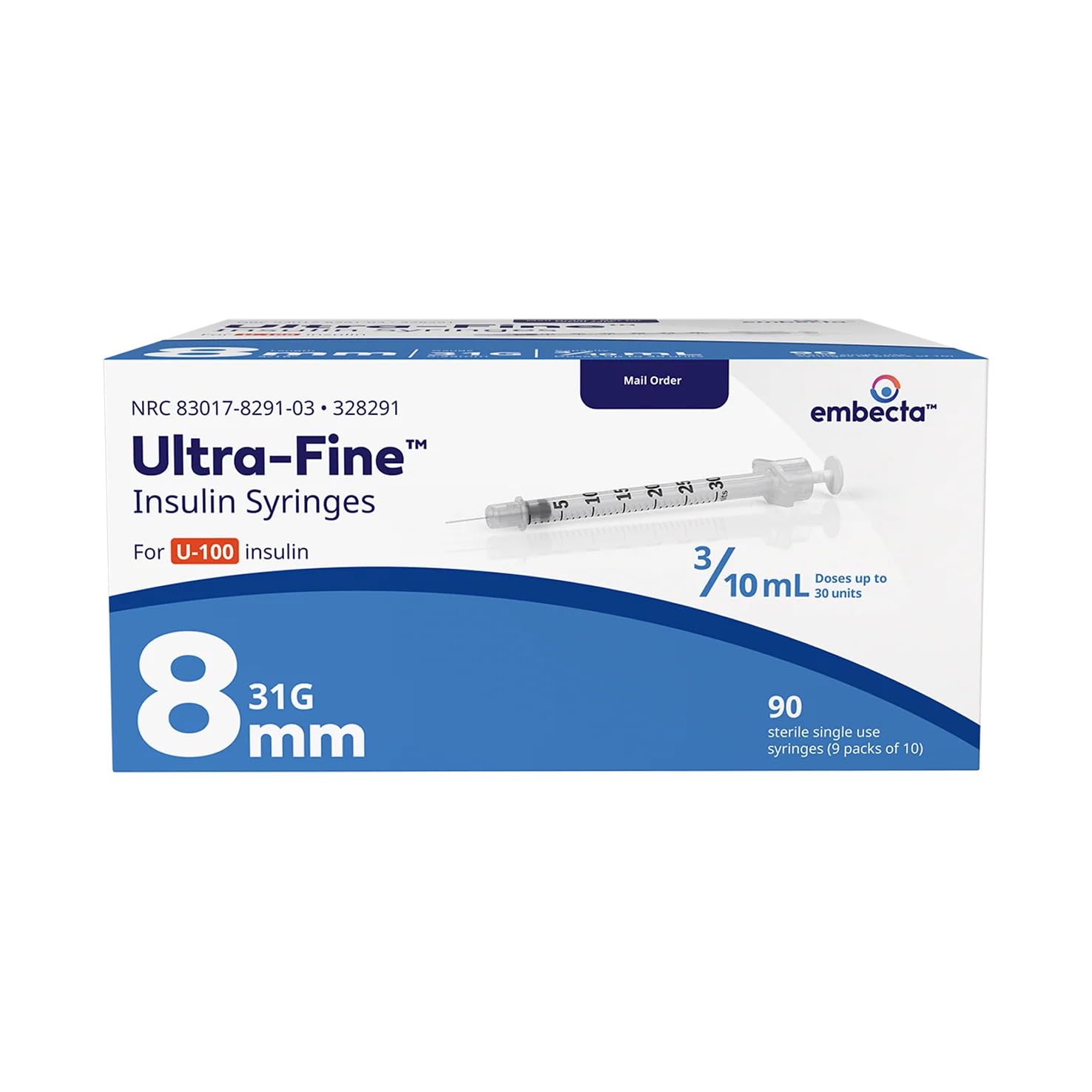
Math assumes U-100 insulin syringes (1 mL = 100 units). Verify your syringe matches before injecting. Round half-units to the nearest visible mark.
Pattern Beats Dose: Pulsatile Stimulates, Continuous Suppresses
This is the single most important fact about dosing gonadorelin, and it is not optional context.
In 1978, Belchetz and colleagues gave GnRH to rhesus monkeys with hypothalamic lesions. Intermittent delivery — one pulse per hour — reestablished pituitary gonadotropin secretion. Constant infusion of the same hormone, at comparable total exposure, failed to sustain it. Their conclusion was that the effect was attributable to the pattern of delivery rather than the amount of hormone the pituitary saw (PMID 100883).
The receptor biology behind this is well characterized. Gonadorelin binds the type-I GnRH receptor on anterior pituitary gonadotrophs, a Gq/11-coupled G-protein-coupled receptor; the coupling activates phospholipase C, which drives the inositol-phosphate and calcium signaling that releases LH and FSH (Hsieh & Martin, 1992, PMID 1333052). Under intermittent stimulation, the receptor population resets between pulses. Under continuous, non-physiologic stimulation, GnRH receptors downregulate and desensitize, gonadotropin secretion falls sharply, and testosterone drops toward castrate levels — the documented mechanism of depot GnRH-agonist therapy in prostate cancer (Eckstein & Haas, 2014, PMID 24756149).
Two practical consequences follow. First, "more gonadorelin" is not directionally the same as "more LH" — beyond a point, sustained exposure reverses the effect. Second, any protocol that changes the delivery interval is changing the pharmacology, not just the intensity.
Quick Reference: Documented Protocols
The figures below come from two different source classes and are kept apart deliberately. Only the first has published efficacy evidence attached to it.
Clinical protocol (pump-delivered pulsatile GnRH, congenital hypogonadotropic hypogonadism):
| Parameter | Documented figure |
|---|---|
| Dose per pulse | 10 mcg (starting dose, titrated by response) |
| Interval | Every 90 minutes, continuous around the clock |
| Route | Subcutaneous, via portable infusion pump |
| Approximate daily total | ~160 mcg across ~16 pulses |
| Duration | Months — spermatogenesis endpoints measured at 6-24 months |
| Source | Hao et al., 2021 (PMID 34277762); Huang et al., 2024 (PMID 38739523) |
Community protocol (self-administered subcutaneous injection, adjunct use alongside testosterone therapy):
| Parameter | Reported figure |
|---|---|
| Dose | 50-200 mcg per injection; 100 mcg the most commonly cited |
| Frequency | 2-3 times weekly, often aligned to testosterone injection days |
| Route | Subcutaneous, insulin syringe |
| Approximate weekly total | ~200-400 mcg across 2-3 injections |
| Vial size | Commonly 2 mg |
| Reconstitution | 2 mL bacteriostatic water → 1,000 mcg/mL |
| Draw amount | 10 units on a 100-unit insulin syringe for 100 mcg |
| Storage | Refrigerate, use within 28 days |
| Source | Self-reported community and telehealth-clinic sources; no controlled trial |
The arithmetic gap between the two is the part worth sitting with. The trial pump delivers roughly 112 discrete pulses per week; the community protocol delivers 2 or 3. The clinical protocol is not a larger version of the community one, and the community one is not a scaled-down version of the clinical one — they are different pharmacology.
Cycling and Frequency
There is no established on/off cycle for gonadorelin in the clinical literature. The pump protocols in congenital hypogonadotropic hypogonadism run continuously for months, with the pulse interval — not a weekly on/off pattern — doing the work of preserving receptor sensitivity. Hao et al. titrated from a 10 mcg / 90 minute starting point based on LH, FSH, and testosterone response (PMID 34277762); testosterone in that cohort did not rise until roughly one month into therapy, which is a useful marker of how slowly the axis responds.
Community sources describe indefinite adjunct use rather than defined cycles, generally continuing for as long as testosterone therapy continues. Some community and clinic sources raise receptor downregulation as a reason for spacing doses at least two days apart; that reasoning is mechanistically consistent with the Belchetz findings, but no trial has tested whether a 2-3x weekly interval preserves or erodes gonadotroph responsiveness over time.
Routes of Administration
Subcutaneous infusion (the trial route). Every published efficacy protocol cited here used a portable pump delivering subcutaneous micro-pulses. This is the only route with spermatogenesis and gonadotropin outcome data behind it.
Subcutaneous bolus injection (the community route). Self-administered abdominal or thigh injections with a 29-31 gauge insulin syringe, at volumes of roughly 0.05-0.2 mL depending on dilution. Community and telehealth-clinic sources describe this as how research-market gonadorelin is used outside a clinical, FDA-approved protocol.
Intravenous bolus (the diagnostic route). The GnRH stimulation test, used to assess hypothalamic-pituitary-gonadal axis function, is performed as a single 100 mcg intravenous bolus with LH and FSH sampled at fixed intervals afterward. It is a one-time diagnostic provocation, not a therapeutic protocol, and it is worth distinguishing from either pattern above. The historical US-approved diagnostic and pulsatile-fertility products have both been discontinued; current domestic supply is compounded or research-market material rather than an FDA-approved finished product.
Not oral. As a decapeptide, gonadorelin is degraded in the gastrointestinal tract; no oral route appears in the clinical record.

Reconstitution Quick Reference
| Vial size | BAC water | Concentration | 100 mcg dose |
|---|---|---|---|
| 2 mg | 2 mL | 1,000 mcg/mL | 10 units |
| 2 mg | 3 mL | ~667 mcg/mL | 15 units |
Math: 2,000 mcg / 2 mL = 1,000 mcg/mL. 100 mcg / 1,000 mcg per mL = 0.1 mL = 10 units on a 100-unit insulin syringe.
Community reconstitution references describe directing the water down the vial wall, swirling gently rather than shaking, refrigerating at 2-8°C, and using within 28 days. Gonadorelin's instability in solution is one reason the clinical pump protocols reload the reservoir on a short schedule.
These figures describe community-documented practice, not a recommended procedure — see the research-context note above.
Ready to buy? (affiliate links) Vendor coverage for gonadorelin is thin compared with mainstream research peptides — compare current gonadorelin vendors and $/mg, or browse all vendor coupon codes.