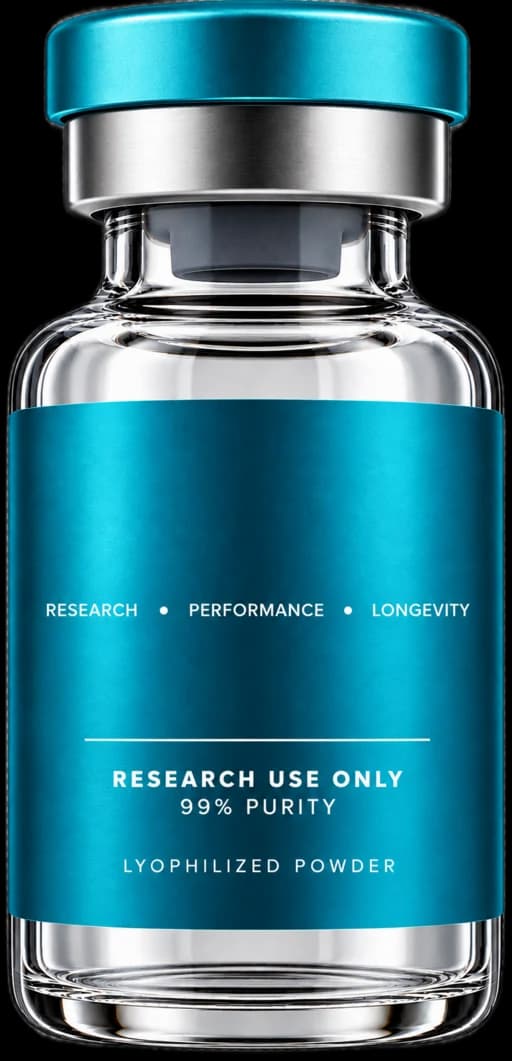
Tesamorelin + ipamorelin, sold as "Tesa/Ipa," is a two-peptide blend that pairs a GHRH analog with a selective ghrelin-receptor agonist: two separate signals that both trigger growth-hormone release. Tesamorelin is a synthetic analog of growth-hormone-releasing hormone (GHRH) with the strongest human evidence for reducing visceral fat — about 15% reductions in HIV-associated lipodystrophy trials (Falutz et al., NEJM 2007). Ipamorelin is a selective ghrelin receptor agonist that, in animal studies, raised GH without the cortisol or prolactin rises seen with older GHRPs (Raun et al., 1998). The case for combining the two classes rests on older work: GHRH given with the original hexapeptide GHRP released GH synergistically in healthy men (Bowers et al., JCEM 1990). No published trial has tested tesamorelin and ipamorelin together; the evidence comes from each peptide separately. The blend is most commonly sold as 10mg tesamorelin + 3mg ipamorelin in a single vial; some vendors list other splits, such as 13mg/3mg, so the label and COA show the actual ratio. This is not medical advice.
Research-context information only. Tesamorelin is the active ingredient in FDA-approved products for HIV-associated lipodystrophy; research-peptide and compounded forms are not FDA-approved and are sold for research purposes only. Protocols, doses, and reactions reported below come from clinical trials and community sources. This article reports what has been documented, not what should be done. Consult a licensed physician for personal medical decisions.
Tesamorelin vs Ipamorelin: How the Two Differ
The two peptides in a Tesa/Ipa vial reach the same end point, growth-hormone release from the pituitary, through different receptors. That difference is the whole reason they are sold together.
| Tesamorelin | Ipamorelin | |
|---|---|---|
| Class / mechanism | GHRH analog: stimulates synthesis and release of endogenous GH (Dhillon 2011) | Ghrelin-mimetic (GHRP-class) secretagogue: triggers a separate GH pulse |
| Receptor | GHRH receptor | GH secretagogue receptor (GHS-R1a, the ghrelin receptor) |
| Half-life | Short: given once daily subcutaneously in the Phase III trials (Falutz 2007) | About 2 hours terminal half-life after IV infusion in healthy men (Gobburu 1999) |
| Research status | Active ingredient in an FDA-approved product for HIV-associated abdominal fat; research-peptide forms are not approved | No FDA approval; human data limited to early pharmacology studies |
| What it is studied for | Visceral fat: a 15.2% reduction over 26 weeks vs a 5.0% rise on placebo in an HIV lipodystrophy RCT (Falutz 2007); liver fat in a later RCT (Stanley 2014) | Selective GH release: in swine, no ACTH or cortisol rise even at doses far above its GH-releasing ED50 (Raun 1998) |
| How they are combined | The GHRH half of the pair | The GHRP half; GHRH + GHRP-class pairs released GH synergistically in a 1990 study of the original GHRP (Bowers 1990) |
The pairing logic is class-level. The synergy data come from GHRH and an earlier GHRP, not from tesamorelin and ipamorelin specifically, and no trial has studied the two peptides in one vial.
Tesamorelin / Ipamorelin Blend Dosing Table
Match your vial size below — reconstitution and dose math update automatically.
Vials labeled "6/2" — 6 mg tesamorelin + 2 mg ipamorelin (8 mg total), the vial the community protocol lists. Doses below are split at that 3:1 ratio.
| Dose | Syringe units | mL volume | Schedule |
|---|---|---|---|
| 300 mcg + 100 mcg | 10 units | 0.1 mL | AM or PM SubQ, 5-on/2-off (8 wk on / 8 wk off)Community protocol |
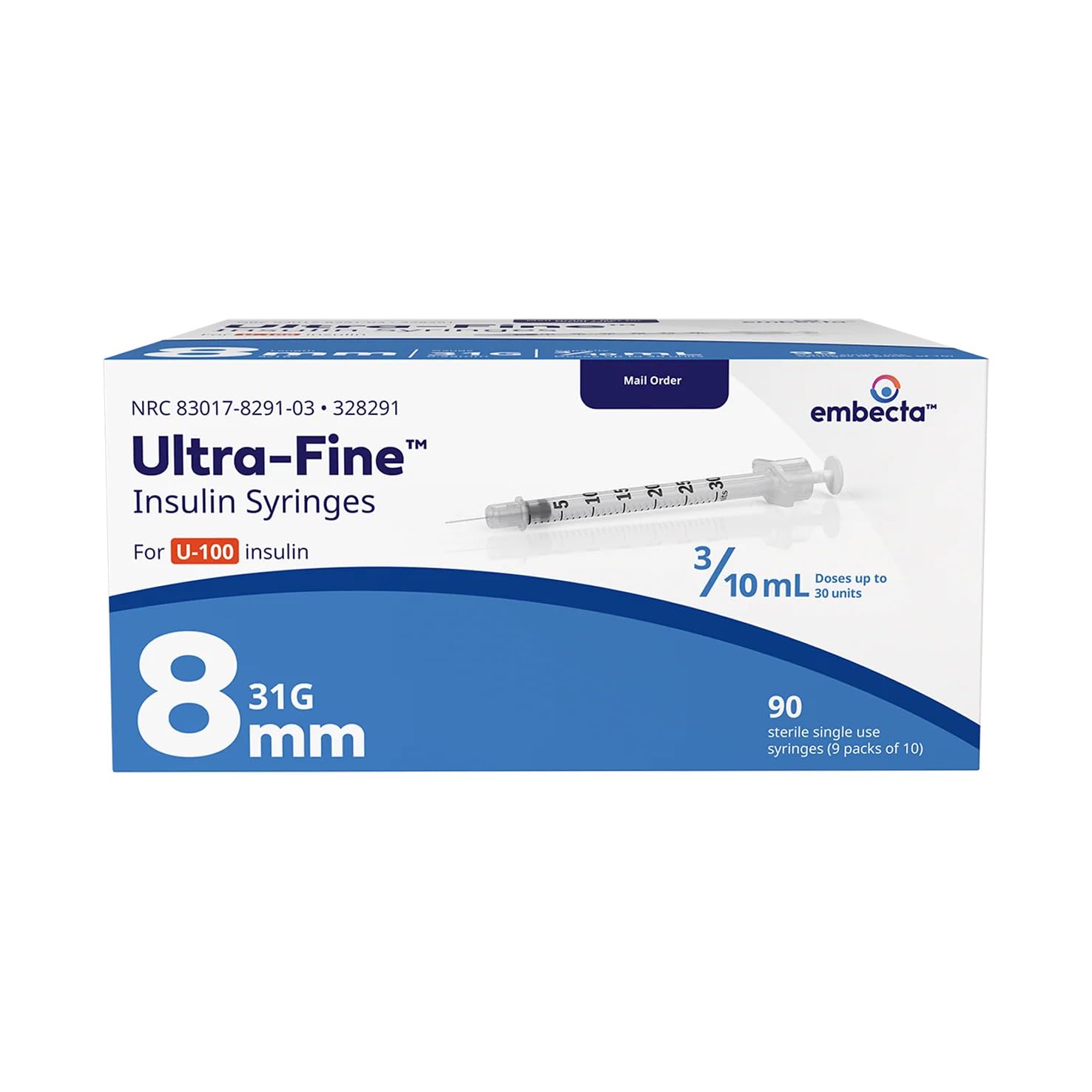
Math assumes U-100 insulin syringes (1 mL = 100 units). Verify your syringe matches before injecting. Round half-units to the nearest visible mark.
Vials labeled "10/3" — 10 mg tesamorelin + 3 mg ipamorelin (13 mg total). Doses below are split at that same 10:3 ratio.
| Dose | Syringe units | mL volume | Schedule |
|---|---|---|---|
| 300 mcg + 90 mcg | 6 units | 0.06 mL | AM or PM SubQ, 5-on/2-offCommunity 300 mcg tesamorelin draw at this vial's ratio |
| 1 mg + 300 mcg | 20 units | 0.2 mL | SubQ, 5-on/2-offOther reported, higher |
Math assumes U-100 insulin syringes (1 mL = 100 units). Verify your syringe matches before injecting. Round half-units to the nearest visible mark.
Quick Reference: Reported Protocol
| Parameter | Reported value |
|---|---|
| Dose per injection | 300 mcg tesamorelin + 100 mcg ipamorelin (community protocol); 1 mg + 300 mcg also reported |
| Frequency | Once daily, morning or evening |
| Schedule | 5 days on / 2 days off |
| Cycle length | 8 weeks on / 8 weeks off |
| Route | Subcutaneous (abdomen rotation) |
| Vial | 6mg / 2mg blend in 2 mL BAC water (community protocol); the more common 10mg / 3mg blend in 2 mL |
| Units drawn per dose | 10 units from the 6mg/2mg mix; 6 units of the 10mg/3mg mix for 300 mcg tesamorelin (with 90 mcg ipamorelin) |
The 300/100 mcg protocol is the Tesamorelin/Ipamorelin row in the community protocol. These values report how the blend is described, not a recommended schedule.
For reconstitution step-by-step, see the Tesamorelin Reconstitution Guide. For ipamorelin's safety profile as a standalone, see Ipamorelin Benefits.
Cycling Details
Community sources justify the 5-on/2-off weekly pattern and 8-on/8-off cycle structure by the pulsatile biology of the GH axis, arguing that continuous dosing downregulates both receptor systems; neither pattern has been clinically validated. Community-reported timelines describe gradual body composition shifts from week 3-4; the tesamorelin trials measured visceral fat at 26 weeks.
Goal timing described in community protocols:
- The community protocol lists one 300/100 mcg injection a day, morning or evening, 5 days on / 2 off, over an 8-week cycle
- Fat loss focus (also reported) — PM pre-bed dosing over an 8-week cycle; some reports describe splitting the higher 1mg/300mcg amount into an AM and a PM injection (0.5 mg tesa + 150 mcg ipa per dose)
- Recovery/anti-aging (also reported) — PM only, 8-week cycles, at the higher 1mg/300mcg amount
- Body recomposition with resistance training (also reported) — PM + post-workout on training days (split dose)
Routes of Administration
Subcutaneous injection is the route trial and community sources describe. Community sources describe abdomen sites (avoiding the 2" navel radius) as the most consistent. Community protocols describe rotating injection sites daily. Community sources describe intramuscular injection as possible but not used, since the trials used SC.
Reconstitution Quick Reference
| Vial Size | BAC Water | Concentration | 300 mcg tesamorelin | 1 mg tesamorelin (also reported) |
|---|---|---|---|---|
| 6mg / 2mg blend | 2 mL | 3 mg/mL + 1 mg/mL | 10 units (+100 mcg ipa) | 33 units (+333 mcg ipa) |
| 10mg / 3mg blend | 2 mL | 5 mg/mL + 1.5 mg/mL | 6 units (+90 mcg ipa) | 20 units (+300 mcg ipa) |
The community protocol's math: 6mg / 2mL = 3mg/mL = 3,000mcg/mL. For 300mcg tesamorelin: 300 / 3,000 = 0.1 mL = 10 units, and the ipamorelin at 2mg/2mL = 1mg/mL rides along at 100mcg in the same draw. From the 10mg/3mg vial: 10mg / 2mL = 5,000mcg/mL, so 300mcg tesamorelin is 300 / 5,000 = 0.06 mL = 6 units, carrying 1.5mg/mL × 0.06 mL = 90mcg ipamorelin. The higher also-reported 1mg tesamorelin is 0.2 mL = 20 units of that mix, with 300mcg ipamorelin. Ratio is fixed by the vial — community sources note that protocols describing higher ipamorelin amounts add standalone ipamorelin separately.
Community protocols describe swirling gently (not shaking), followed by refrigeration at 2–8°C; vials are typically used within 28 days. For step-by-step reconstitution with photos, see the Tesamorelin Reconstitution Guide.