guidesApril 19, 2026·12 min read

Where to Buy Tesamorelin: Vendor & COA Guide

7 vendors carry tesamorelin. Only 4 publish COA with mass spec verifying 5,196 Da. Which to trust, which vial size, red flags to avoid.

Where to Buy Tesamorelin

Tesamorelin is one of the few research peptides with an FDA-approved counterpart — Egrifta, which lists at roughly $3,000 per month. Research-grade tesamorelin drops that to $120-300/month, but the price gap cuts both ways: it's also the peptide most commonly counterfeited with cheaper sermorelin or CJC-1295 dressed up as tesamorelin. Vendor selection is the entire game.

This guide covers what to actually pay per milligram, which vial size matches a 1 mg/day or 2 mg/day protocol, how to read a tesamorelin COA, and the red flags that separate legitimate suppliers from relabelers. For dosing itself, see the tesamorelin dosing guide.

This is not a ranked vendor list — for that, see our Best Tesamorelin Vendors comparison. This guide teaches you how to evaluate any vendor yourself.

Understanding Tesamorelin Pricing

Tesamorelin is sold as a lyophilized (freeze-dried) powder in sealed glass vials. Three factors drive the price you pay: vial size (bigger = cheaper per mg), vendor markup, and whether the vendor invests in third-party COAs with mass spec. Because tesamorelin is structurally similar to sermorelin, skipping mass spec verification is the single cheapest way for a vendor to cut costs — and it's how counterfeits enter the market.

Current Market Pricing (2026)

Vial Size Typical Price Range Price Per mg Best For
2 mg $28-45 $14-22/mg Tolerance testing only — worst value
5 mg $35-75 $7-15/mg Short trial protocols, half-dose users
10 mg $60-150 $6-15/mg Standard 1-2 mg/day — best all-around
10 mg × 10 (kit) $495-855 $4.27-8.55/mg Full 16-week cycle, committed users

The pattern is clear: 10mg vials are the sweet spot. 2mg vials are almost always a trap — the per-mg cost typically runs 2-3x higher than 10mg. Multi-vial kits from vendors like Glacier Aminos drop per-mg cost to the $4.27/mg floor, but only make sense once you've confirmed you tolerate the compound.

Cost Per Week at Common Doses

Daily Dose Monthly Cost (10mg single) Monthly Cost (10mg kit) Savings
1 mg/day, 5-on/2-off (~20 mg/mo) $132-300/month $85-170/month ~35-45%
2 mg/day (Phase III, ~60 mg/mo) $396-900/month $255-510/month ~35-45%
1 mg/day continuous (~30 mg/mo) $198-450/month $128-255/month ~35-45%

For current vendor-specific pricing with exact $/mg breakdowns, see our Best Tesamorelin Vendors comparison and the tesamorelin cost per vial breakdown.

How to Verify Tesamorelin Quality
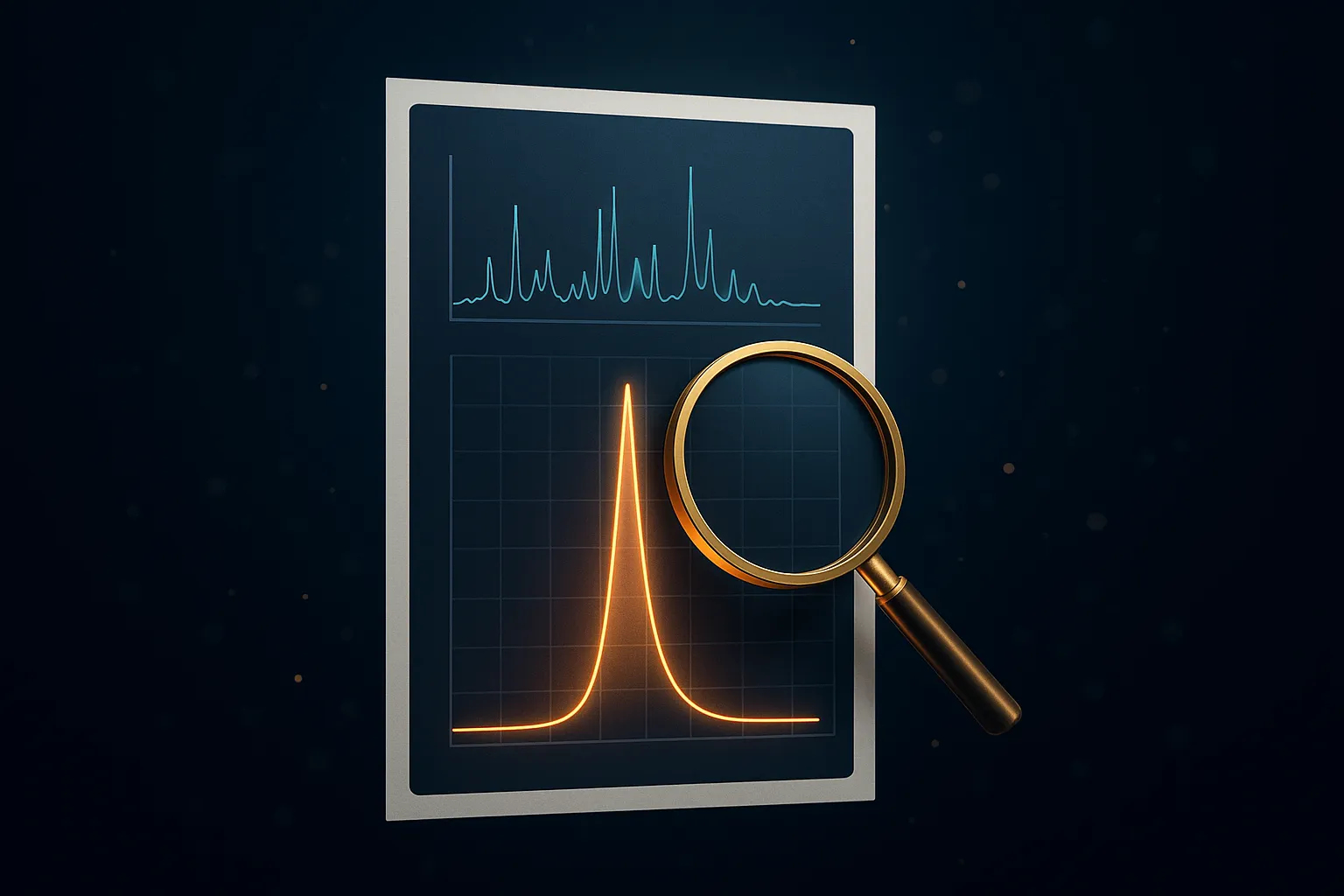
COA verification process

Tesamorelin is a 44-amino-acid GHRH analog with a trans-3-hexenoic acid modification at the N-terminus. That modification increases metabolic stability and is the structural feature that distinguishes tesamorelin from native GHRH and from sermorelin. Without mass spec, you cannot confirm you're buying tesamorelin versus a cheaper GHRH analog in a tesamorelin-labeled vial.

What a COA (Certificate of Analysis) Should Include

Identity Confirmation

  • Mass spectrometry confirming the correct molecular weight (5,196 Da for tesamorelin)
  • Amino acid sequence verification — the 44-residue sequence should match GHRH(1-44) with the hexenoyl N-terminal modification
  • This is the single most important test for tesamorelin because sermorelin (GHRH 1-29) and CJC-1295 are common substitutes

Purity Testing

  • HPLC purity — look for 98%+ purity
  • The HPLC chromatogram should show a single dominant peak with minimal secondary peaks
  • Water content (Karl Fischer) should be under 8% for proper lyophilization

Contamination Testing

  • Endotoxin levels (bacterial contamination)
  • Residual solvent analysis (acetonitrile, TFA)
  • Heavy metals screening

How to Verify a COA Is Legitimate

Not all COAs are real. Some vendors photoshop results or reuse old certificates from unrelated batches. Here's how to verify:

  1. Check the testing lab — Reputable labs include Janoshik Analytical, MZ Biolabs, and Colmaric Analyticals. Avoid vendors who only show "in-house" testing.

  2. Verify on the lab's website — Janoshik COAs have a task number you can look up directly at janoshik.com. If the vendor won't provide a verifiable task number, that's a red flag.

  3. Check the date — COAs should be recent (within 6 months). Old COAs may not represent the current batch.

  4. Match the batch — The batch/lot number on the COA should match what's printed on your vial.

  5. Confirm the mass is 5,196 Da — If the mass spec result shows ~3,358 Da, that's sermorelin. If it shows ~3,647 Da, that's CJC-1295 without DAC. Tesamorelin is uniquely heavier due to the 44-residue length plus hexenoyl modification.

Red Flags to Avoid

  • No COA available — any vendor unwilling to provide testing results is not worth the risk
  • Only in-house testing — self-reported purity numbers are meaningless without independent verification
  • Prices significantly below market — tesamorelin below $4/mg across every size is almost certainly relabeled sermorelin
  • COA doesn't show mass spec — for tesamorelin specifically, HPLC alone is not enough; mass spec is required to confirm identity
  • Vendor can't explain the hexenoyl modification — a legitimate supplier knows why tesamorelin costs more to synthesize than sermorelin
  • No contact information or cryptocurrency only — legitimate vendors have real customer service and accept standard rails (card, ACH, Zelle)
  • No return or reship policy — reputable vendors stand behind their products
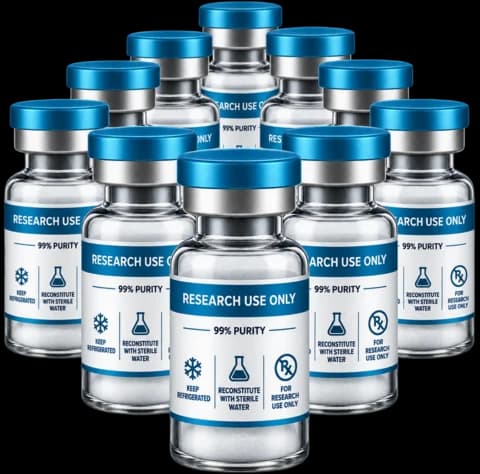
Choosing the Right Vial Size

Vial size comparison

Vial size selection isn't just about price — it's about matching your protocol duration to tesamorelin's reconstitution stability window, which is tighter than most peptides.

The 14-21 Day Stability Rule

Tesamorelin is less stable in solution than most research peptides. Reconstituted with bacteriostatic water and refrigerated, it's reliably stable for 14-21 days — shorter than the 28 days you see with BPC-157 or retatrutide. Reconstituted with sterile water (no preservative), it drops to 24 hours. That creates a practical vial-size constraint:

Vial Size At 1 mg/day At 2 mg/day At 1 mg/day 5-on/2-off
2 mg 2 days 1 day 3 days
5 mg 5 days 2.5 days 7 days
10 mg 10 days 5 days 14 days

All cells above are within the 14-21 day stability window — meaning 10mg is the largest vial size that makes sense for typical protocols. Anything larger (combined or pooled) risks degradation before use.

Solution: Reconstitute one 10mg vial at a time, use it within 10-14 days, and keep remaining vials sealed and refrigerated in powder form. Lyophilized tesamorelin is stable for 12+ months refrigerated.

First-time users or tolerance testing:

  • A single 5mg vial confirms you tolerate the compound without committing to a larger supply
  • Expect to use it inside 5-7 days at typical doses — plan accordingly

Standard 1 mg/day community protocol:

  • 10mg vial — lasts exactly 10 days at 1 mg/day, comfortably inside the stability window
  • The most commonly purchased size for a reason
  • Buy 2-4 vials at a time for a 20-40 day supply without reconstitution gaps

Phase III 2 mg/day protocol (Falutz et al. 2010):

  • 10mg vials in quantity — one vial every 5 days means 6 vials per month
  • Kit deals (10x 10mg) from Glacier Aminos drop per-mg cost meaningfully here
  • Budget 4-6 vials/month for a full 16-week cycle → 16-24 total vials

Buying Multiple Smaller vs One Large Kit

Factor Multiple Singles (e.g., 4× 10mg) Kit (1× 10× 10mg)
Cost per mg Higher ($6-15/mg) Lower ($4.27-8.55/mg)
Freshness Same (lyophilized storage equivalent) Same
Flexibility Can stop mid-cycle Committed to full supply
Storage Easier (smaller volumes) Requires dedicated fridge space
Shipping More frequent orders Single shipment

Our recommendation: Start with 2× 10mg singles to confirm your source and tolerance. If you're running the full 2 mg/day protocol or committing to 12+ weeks, a 10-pack kit typically saves 30-45% per mg. Only step up to a kit after your first cycle.

Why Tesamorelin Costs More Than Sermorelin or CJC-1295

A common question: why pay $6-10/mg for tesamorelin when sermorelin runs $2-4/mg and CJC-1295 is similar? Three reasons:

1. Clinical data depth. Tesamorelin has Phase III RCT data in 816 patients showing 15-18% visceral fat reduction at 26 weeks of 2 mg/day (Falutz et al. 2010). Sermorelin has no comparable trial data. CJC-1295 has never been tested in a human RCT for body composition.

2. Longer half-life via hexenoyl modification. The trans-3-hexenoic acid group at the N-terminus extends tesamorelin's half-life to ~26 minutes versus 11 minutes for native GHRH. That modification is harder to synthesize correctly, which is where the per-mg cost premium comes from.

3. Preserved muscle mass alongside fat loss. Tesamorelin uniquely increases muscle cross-sectional area while reducing intramuscular fat (Stanley et al. 2019). Sermorelin and CJC-1295 don't have data establishing this effect.

If you're paying for tesamorelin and the mass spec shows sermorelin's weight (~3,358 Da), you're paying a 3x markup for the cheaper peptide. The COA is how you catch this.

Pairing with Ipamorelin — Convenience vs Control

Some vendors sell a tesamorelin + ipamorelin blend in a single vial. The combination is pharmacologically sound — tesamorelin drives the GHRH arm while ipamorelin drives the ghrelin-receptor arm, producing a larger GH pulse than either alone. But blend vials have real trade-offs:

Pros of the blend:

  • One injection, one reconstitution step
  • Fixed ratio (typically 2 mg tesa + 2 mg ipamorelin per vial)
  • Slightly cheaper per total mg than buying separately

Cons of the blend:

  • Can't adjust ratios independently — if you tolerate more tesamorelin but want less ipamorelin, you can't
  • Harder to isolate which compound is driving side effects
  • COA complexity — vendors need to verify both peptides are present at labeled concentrations

Our take: For a first cycle, buy tesamorelin and ipamorelin separately. Once you know how you respond to each, a blend can simplify maintenance cycles.

Vendor Evaluation Methodology

When comparing tesamorelin vendors, we evaluate three weighted factors:

Price Competitiveness (40%)

We normalize to cost per milligram for fair comparison across vial sizes. A vendor selling 10mg at $60 ($6/mg) scores higher than one selling 5mg at $45 ($9/mg), all else being equal. We weight kit pricing separately because kits require larger upfront commitment.

COA & Testing (30%)

We verify that COAs are:

  • From recognized third-party labs (Janoshik, MZ Biolabs, Colmaric)
  • Recent (within the last 6 months)
  • Verifiable on the lab's website
  • Include mass spec confirming the 5,196 Da molecular weight (critical for tesamorelin specifically)

Reputation (30%)

Community feedback from peptide forums, shipping reliability, customer service responsiveness, and business track record. We give additional weight to vendors with consistent multi-year operations and no history of batch recalls or mis-labeled product.

Shipping and Storage

What to Expect When Your Order Arrives

Lyophilized tesamorelin should arrive as a white or off-white powder cake in a sealed glass vial. Check:

  • Vial integrity — no cracks, proper rubber seal, aluminum cap intact
  • Powder appearance — solid cake or loose powder, NOT liquid or discolored
  • Labeling — batch/lot number, milligram content, "for research use only"
  • Cold pack — reputable vendors ship with cold packs in summer months (tesamorelin tolerates brief room-temp shipping in lyophilized form, but extended heat exposure degrades it faster than more stable peptides)

Storage Guidelines

State Temperature Duration
Lyophilized (powder) Room temp Days only (for shipping)
Lyophilized (powder) Refrigerated (2-8°C) 12 months
Lyophilized (powder) Frozen (-20°C) 24+ months
Reconstituted (BAC water) Refrigerated (2-8°C) 14-21 days max
Reconstituted (sterile water) Refrigerated (2-8°C) 24 hours
Reconstituted Frozen Not recommended — freeze-thaw cycles degrade the hexenoyl modification

Key point: Keep unreconstituted vials refrigerated and only mix one 10mg vial at a time. See our tesamorelin reconstitution guide for step-by-step mixing instructions.

Frequently Asked Questions

Tesamorelin is FDA-approved as the prescription drug Egrifta for HIV-associated lipodystrophy. Research-grade tesamorelin is sold by peptide vendors for laboratory use only, labeled "not for human consumption." Purchasing research peptides is legal in most jurisdictions for research purposes, but you are not buying an FDA-regulated drug at that tier.

How much does tesamorelin cost per month?

At 1 mg/day (community dose), tesamorelin runs $120-300/month from research vendors using 10mg vials. At the full Phase III 2 mg/day protocol, budget $240-600/month. The prescription version (Egrifta) costs roughly $3,000/month — research-grade is 85-95% cheaper.

What vial size should I buy?

For almost every user, 10mg is the sweet spot. At 1 mg/day it lasts 10 days (inside the 14-21 day stability window). 5mg vials rarely beat 10mg on per-mg cost. 2mg vials are the worst value — often $14/mg or higher. See the tesamorelin cost per vial breakdown for the full per-size analysis.

What purity should I look for?

Third-party HPLC testing showing 98%+ purity, plus mass spec confirming the 5,196 Da molecular weight. Mass spec is non-negotiable for tesamorelin because sermorelin (~3,358 Da) is a common substitute. Reputable vendors use independent labs like Janoshik Analytical or MZ Biolabs.

Can I get tesamorelin from a compounding pharmacy?

Tesamorelin is FDA-approved as Egrifta, but compounding pharmacies generally cannot compound FDA-approved branded drugs without a supply shortage designation. Most US telehealth clinics that offer "tesamorelin" are actually compounding sermorelin or CJC-1295, which are different peptides. Always verify the actual compound being dispensed.

Is research-grade tesamorelin the same as Egrifta?

Chemically they can be the same 44-amino-acid peptide, but research-grade product is not FDA-regulated and has no guaranteed sterility, potency, or batch-to-batch consistency. The 15-25x price gap is why the research market exists, but COA verification is non-negotiable at that tier.

How do I know if a vendor is trustworthy?

Check for: third-party COA testing with mass spec showing 5,196 Da, verifiable lab task numbers, responsive customer service, community reputation on peptide forums, consistent pricing (not suspiciously cheap — under $4/mg is a red flag for tesamorelin), and a clear return/reship policy. See our Best Tesamorelin Vendors for pre-vetted options.

References

Citation Topic PMID
Falutz J, et al., J Clin Endocrinol Metab (2010) Phase III trial: Tesamorelin 2mg/day reduces visceral fat 15-18% 20101189
Stanley TL, et al., AIDS (2019) Tesamorelin preserves muscle cross-sectional area 31237318
Stanley TL, et al., Lancet HIV (2019) Tesamorelin reduces liver fat and prevents fibrosis progression 31611038

This article is for educational and informational purposes only. It is not medical advice and should not be used to diagnose, treat, or prevent any condition. Consult a licensed healthcare provider before using any peptide.