CJC-1295 + Ipamorelin Stack & Dosing Guide (2026)
CJC-1295 + Ipamorelin stack guide with synergistic mechanisms, dosing protocols, reconstitution, and cycling strategies.

After 30, your body starts shutting down what built you. Growth hormone output drops approximately 14% per decade (Iranmanesh et al., 1991), and with it goes the deep sleep, fast recovery, and lean body composition you took for granted in your twenties. The decline is gradual enough that most people don't notice it — until they do.
CJC-1295 and Ipamorelin have become the most widely used growth hormone peptide stack for a reason: they work through complementary mechanisms, produce synergistic GH release, and do so with a cleaner side effect profile than nearly any other combination in the GH secretagogue space. This isn't exogenous growth hormone. This is your own biology, unlocked.
This guide covers the science behind why this stack works, what the clinical evidence actually shows, practical dosing protocols, reconstitution details, what to expect and when, and how it compares to alternatives. For the foundational science on GHRH vs GHRP mechanisms, see our GHRH vs GHRP mechanistic breakdown.
Quick Reference: CJC-1295 + Ipamorelin Dosing
| Parameter | CJC-1295 (no DAC) | Ipamorelin |
|---|---|---|
| Dose | 100-300 mcg | 100-300 mcg |
| Route | Subcutaneous | Subcutaneous |
| Frequency | Once daily, PM | 1-2x daily (AM/PM) |
| Schedule | 5 days on, 2 days off | 5 days on, 2 days off |
| Cycle | 8-12 weeks on, 4-8 weeks off | 8-12 weeks on, 4-8 weeks off |
| Vial size | Typically 5 mg | Typically 5 mg |
| Reconstitution | 2 mL BAC water per vial | 2 mL BAC water per vial |
| Storage | Refrigerate, use within 28 days | Refrigerate, use within 28 days |
Combined Blend Option: Many vendors sell pre-mixed 5mg CJC-1295 + 5mg Ipamorelin blends. Dose: 250 mcg of each (20 units on insulin syringe with 2mL reconstitution) once or twice daily.
Community Dosing Protocols
Standard Protocol
| Parameter | Recommendation |
|---|---|
| CJC-1295 (no DAC) | 100-300 mcg per injection |
| Ipamorelin | 100-300 mcg per injection |
| Frequency | 1-3x daily |
| Preferred timing | Before bed (primary), optionally morning and/or post-workout |
| Administration | Subcutaneous injection |
| Cycle length | 8-12 weeks |
| Cycle off | 4 weeks minimum between cycles |
| Protocol | 5 days on, 2 days off (most common) |
Dose Escalation for Beginners
If you're new to GH peptides:
- Week 1-2: 100 mcg CJC-1295 + 100 mcg Ipamorelin, once daily (before bed)
- Week 3-4: 200 mcg each, once daily before bed
- Week 5+: 200-300 mcg each, 1-2x daily as desired
This allows you to gauge individual response and side effect sensitivity before increasing.
Timing Rationale
Before bed (most important dose): Growth hormone release peaks during the first 1-2 hours of sleep, coinciding with slow-wave sleep onset. Dosing CJC-1295 + Ipamorelin 15-30 minutes before bed amplifies this natural surge. Administer on an empty stomach — insulin and blood glucose blunt GH release.
Morning dose (optional): A fasted morning dose produces a GH pulse that supports daytime lipolysis and energy. Take at least 30 minutes before eating.
Post-workout dose (optional): Exercise itself is a potent GH stimulator. Adding a post-workout dose can extend the exercise-induced GH response, potentially enhancing recovery. Wait at least 30 minutes after eating post-workout before injecting.
What Not to Do
- Don't dose with food in your stomach — insulin suppresses GH release
- Don't combine with MK-677 without monitoring — both stimulate GH through different mechanisms, and stacking can amplify water retention and blood glucose effects
- Don't run indefinitely without cycling — periodic breaks maintain receptor sensitivity
- Don't use CJC-1295 with DAC in this stack — the sustained GH elevation conflicts with the pulsatile release profile that makes this stack effective
Ready to Buy? Compare Prices
Best current prices from verified vendors with COA testing.
Particle Peptides · 5mg · $10.89/mgCOA ✓
Limitless Biotech · 10mg · $5.00/mgCOA ✓
The Peptide Brief
Weekly price drops, new research, and vendor deals — straight to your inbox.
No spam. Unsubscribe anytime.
Why Stack CJC-1295 with Ipamorelin? The Super Soldier Synergy
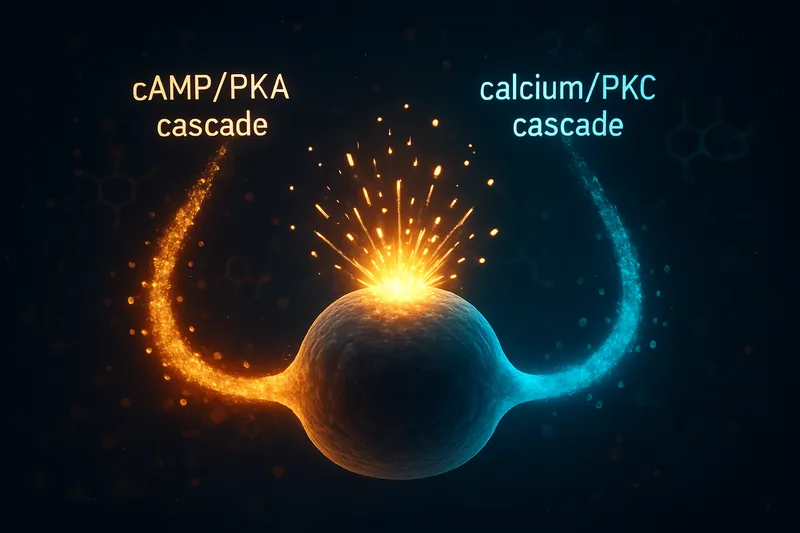
The answer comes down to receptor biology. CJC-1295 and Ipamorelin activate two completely different receptor systems that converge on the same outcome — growth hormone release from pituitary somatotroph cells. When you activate both pathways simultaneously, the result isn't additive. It's synergistic.
CJC-1295: The Sustained Signal
CJC-1295 is a synthetic analog of growth hormone releasing hormone (GHRH) — specifically, a modified version of the first 29 amino acids of GHRH(1-29), also known as tetrasubstituted GRF(1-29). It binds to the GHRH receptor (GHRHR) on pituitary somatotrophs and activates the Gs → adenylyl cyclase → cAMP → PKA signaling cascade (Mayo, 1992).
What makes CJC-1295 different from native GHRH is its resistance to enzymatic degradation. Native GHRH has a half-life of about 7 minutes — it gets chewed up by dipeptidyl peptidase IV (DPP-IV) almost immediately. CJC-1295 incorporates four amino acid substitutions that extend its half-life to approximately 30 minutes, long enough to produce a meaningful, sustained GH release pulse rather than a brief spike (Ionescu & Bhatt, 2006).
Important note: CJC-1295 without DAC (Drug Affinity Complex) — sometimes called modified GRF(1-29) or "mod GRF" — is the version used in most peptide stacks. CJC-1295 with DAC binds to albumin, extending its half-life to 6-8 days, but this produces elevated baseline GH rather than pulsatile release, which can desensitize receptors. For stack purposes, CJC-1295 without DAC is preferred. See our CJC-1295 page and CJC-1295 DAC page for the full comparison.
Ipamorelin: The Clean Amplifier
Ipamorelin is a pentapeptide growth hormone secretagogue that binds to the growth hormone secretagogue receptor type 1a (GHSR-1a) — the same receptor targeted by ghrelin. It activates the Gq → PLC → PKC → intracellular calcium cascade, triggering GH vesicle exocytosis through a completely independent pathway from CJC-1295 (Raun et al., 1998).
What sets Ipamorelin apart from other GHRPs (GHRP-6, GHRP-2, hexarelin) is its selectivity. Studies consistently show that ipamorelin stimulates GH release without significantly elevating cortisol, prolactin, or ACTH at therapeutic doses (Raun et al., 1998). This is unusual for GHSR-1a agonists — GHRP-6 and GHRP-2 both increase cortisol and prolactin to varying degrees, and hexarelin does so substantially. Ipamorelin's clean signal is why it's become the default GHRP for stacking.
For a deeper dive into ipamorelin's selectivity profile, see our Ipamorelin page.

The Synergy: Why 1 + 1 = 3
When CJC-1295 and Ipamorelin are administered together, they produce GH release that exceeds what either peptide achieves alone — often by 2-3x. This synergy is well-documented in the GHRH + GHRP literature (Bowers et al., 1991) and occurs because:
-
Dual second messenger activation: CJC-1295 raises intracellular cAMP (via PKA), while ipamorelin raises intracellular calcium (via PKC). Both pathways converge on GH vesicle fusion and exocytosis, but through different molecular machinery. Activating both simultaneously produces a greater calcium-dependent secretory response than either alone.
-
Hypothalamic amplification: Ipamorelin acts centrally to suppress somatostatin release from the hypothalamus. Since somatostatin is the primary brake on GH release, reducing its inhibitory tone allows CJC-1295's GHRH signal to produce a larger downstream effect at the pituitary (Thorner et al., 1990).
-
Preserved pulsatility: Unlike exogenous GH (which suppresses endogenous production via negative feedback) or CJC-1295 with DAC (which creates sustained elevation), the CJC-1295 + Ipamorelin combination produces discrete GH pulses that mimic natural physiology. This preserves hypothalamic-pituitary feedback sensitivity, meaning the stack continues working over extended protocols without the receptor desensitization seen with constant GH elevation.
What Does the Evidence Actually Show?
Let's separate what's well-established from what's extrapolated.
Well-Established (Human Clinical Data)
Growth hormone release: Multiple human studies confirm that GHRH analogs combined with GHRPs produce synergistic GH release. Bowers et al. demonstrated that combined GHRH + GHRP-6 administration produced GH peaks 2-3 times higher than either agent alone (Bowers et al., 1991). While this specific study used GHRP-6 rather than ipamorelin, the synergistic mechanism is identical — both act through GHSR-1a.
IGF-1 elevation: CJC-1295 administration (both with and without DAC) has been shown to produce dose-dependent increases in IGF-1 levels of 35-120% in human subjects, sustained over the dosing period (Teichman et al., 2006).
Ipamorelin selectivity: Human pharmacology studies confirm ipamorelin's selective GH release without cortisol, prolactin, or ACTH elevation at doses up to 1 mcg/kg (Raun et al., 1998).
Strongly Supported (Clinical + Mechanistic Evidence)
Body composition improvements: GH-mediated improvements in lean body mass and reductions in visceral fat are extensively documented with GH therapy and GH secretagogue use. The mechanism (GH → hepatic IGF-1 → protein synthesis + lipolysis) is well-characterized. Studies on tesamorelin (an FDA-approved GHRH analog) show significant reductions in visceral adipose tissue (Falutz et al., 2007), supporting the principle that GHRH-axis stimulation improves body composition.
Sleep architecture: GH release is intimately linked with slow-wave sleep (SWS). GHRH administration enhances SWS duration and depth in both young and elderly subjects (Steiger et al., 1992). Since the CJC-1295 + Ipamorelin stack is typically dosed before bed, this aligns with and enhances the natural nocturnal GH surge.
Recovery and connective tissue: Elevated IGF-1 from GH secretagogue use supports collagen synthesis, tendon repair, and recovery from exercise-induced damage. This is the same mechanism underlying prescription GH use in recovery contexts.
Extrapolated (Plausible but Less Direct Evidence)
Anti-aging effects: While GH decline correlates with aging phenotypes, the causal relationship between GH restoration and aging reversal remains debated. GH secretagogues may improve markers associated with aging (body composition, sleep quality, skin thickness) without necessarily modifying the aging process itself.
Cognitive improvements: Some users report improved mental clarity and focus. This may relate to sleep quality improvements or direct IGF-1 effects on neuroplasticity, but controlled data specific to this stack is limited.
Reconstitution & Injection Guide
Reconstitution
- Reconstitute lyophilized peptides with bacteriostatic water (BAC water)
- Use 1-2 mL BAC water per 5 mg vial (adjust based on desired concentration)
- Aim the water stream at the glass wall — never spray directly onto the powder
- Swirl gently until dissolved — never shake
- Store reconstituted peptides refrigerated (2-8°C)
- Use within 28 days of reconstitution
- Do not freeze reconstituted peptides
Reconstitution math: With a 5 mg vial reconstituted in 2 mL BAC water, you get 2,500 mcg/mL. A 200 mcg dose = 0.08 mL (8 units on an insulin syringe). A 300 mcg dose = 0.12 mL (12 units). Both peptides can be drawn into the same syringe and injected together — they're stable in the same solution.
Injection Technique
- Needle: 29-31 gauge insulin syringe, 0.5" needle
- Site: Subcutaneous — lower abdomen (most common), love handles, or outer thigh
- Rotation: Rotate injection sites to prevent lipodystrophy
- Angle: 45-90 degree angle into a skin pinch
- Time: 15-30 minutes before bed on an empty stomach

| Vial Size | BAC Water | Concentration | 100 mcg | 200 mcg | 300 mcg |
|---|---|---|---|---|---|
| 5 mg | 2 mL | 2.5 mg/mL | 4 units | 8 units | 12 units |
| 10 mg | 4 mL | 2.5 mg/mL | 4 units | 8 units | 12 units |
Note: Reconstitute each peptide vial (CJC-1295 and Ipamorelin) separately. Columns show units per peptide — draw each into the same syringe.
Swirl gently — do not shake. Refrigerate at 2–8°C and use within 28 days.
What to Expect: Timeline of Effects
Results from CJC-1295 + Ipamorelin are not overnight. This is endogenous GH stimulation, not exogenous injection — the effects build over weeks as sustained IGF-1 elevation drives downstream changes.
Week 1-2: Sleep and Recovery
- Deeper sleep is typically the first noticeable change. Many users report more vivid dreams and waking feeling more rested within the first week.
- Improved recovery between training sessions. Muscle soreness duration decreases.
- Possible mild water retention (transient, resolves as the body adjusts).
- Some users report tingling or numbness in hands — this is a known effect of elevated GH and typically resolves with dose adjustment.
Week 3-4: Body Composition Shifts Begin
- Fat loss acceleration, particularly in stubborn areas (visceral fat responds first to GH-mediated lipolysis).
- Improved skin quality — increased hydration, thickness, and elasticity from collagen synthesis upregulation.
- Training performance begins improving — more endurance, better pump, faster recovery between sets.
Week 6-8: Compounding Results
- Visible body recomposition — simultaneously leaner and fuller. This is the GH "look" that comes from reduced subcutaneous fat combined with increased muscle glycogen storage and water retention within muscle tissue.
- Measurable changes in lean body mass on DEXA or similar body composition testing.
- Joint and connective tissue improvements — tendons and ligaments that were nagging may begin resolving as collagen synthesis catches up.
Week 8-12: Full Expression
- Peak results from the cycle. Sleep quality, body composition, recovery, and skin/hair improvements are all at their highest expression.
- This is the typical point to begin cycling off while maintaining gains through continued training and nutrition.
Advanced Stacking Protocols
The CJC-1295 + Ipamorelin stack is already a complete GH protocol, but it can be enhanced with complementary peptides for specific goals.
+ BPC-157 (Recovery Enhancement)
| Peptide | Dose | Route | Timing |
|---|---|---|---|
| CJC-1295 | 200 mcg | SC | Before bed |
| Ipamorelin | 300 mcg | SC | Morning |
| BPC-157 | 250-500 mcg | SC | Post-workout or AM |
+ TB-500 (Ultimate Recovery)
For serious athletes and injury rehabilitation:
| Peptide | Dose | Frequency | Purpose |
|---|---|---|---|
| CJC-1295 | 200 mcg daily | 5 on/2 off | GH stimulation |
| Ipamorelin | 300 mcg 2x daily | 5 on/2 off | GH amplification |
| TB-500 | 500 mcg daily | Daily | Cell migration, repair |
+ Tesofensine (Body Recomposition)
For advanced users targeting fat loss with muscle preservation:
Weeks 1-8: CJC-1295 + Ipamorelin as standard protocol Weeks 9-16: Add Tesofensine 0.5mg daily for the fat loss phase
Side Effects and Safety
The CJC-1295 + Ipamorelin stack has one of the more favorable side effect profiles in the GH peptide space, primarily because ipamorelin doesn't significantly stimulate cortisol, prolactin, or appetite (unlike GHRP-6 or GHRP-2).
Common (Mild, Typically Transient)
- Injection site reactions — mild redness, itching, or swelling. Rotate injection sites.
- Water retention — especially in the first 1-2 weeks. Resolves as the body adjusts. Reduce sodium if significant.
- Tingling/numbness in extremities — a known effect of GH elevation. If persistent, reduce dose.
- Vivid dreams — a consequence of enhanced slow-wave sleep. Most people consider this a positive.
- Mild headache — occasionally reported in the first week, typically transient.
Less Common (Dose-Dependent)
- Elevated fasting blood glucose — GH is a counter-regulatory hormone to insulin. Monitor fasting glucose if running extended protocols, especially if stacking with other GH secretagogues.
- Joint stiffness — can occur with elevated GH, particularly in the morning. Hydration and dose adjustment usually resolve this.
- Increased hunger — less common with ipamorelin compared to GHRP-6, but some users report mild appetite increase.
What to Monitor
- Fasting blood glucose — check monthly during extended cycles
- IGF-1 levels — useful for confirming the stack is working and calibrating dose
- General bloodwork — standard health markers every 3-6 months if cycling regularly
CJC-1295 + Ipamorelin vs. Alternatives
vs. Exogenous Growth Hormone (HGH)
| Factor | CJC-1295 + Ipamorelin | Exogenous HGH |
|---|---|---|
| Mechanism | Stimulates your own GH production | Replaces endogenous GH |
| Pulsatility | Preserved (mimics natural pattern) | Flat elevation (suppresses natural production) |
| Cost | $150-300/month | $500-2000+/month |
| Side effects | Mild, self-limiting | More significant (insulin resistance, joint pain, carpal tunnel) |
| Shutdown risk | None (endogenous feedback preserved) | Yes (pituitary GH production suppressed) |
| Potency | Moderate (physiological GH levels) | High (supraphysiological possible) |
vs. MK-677 (Ibutamoren)
MK-677 is an oral ghrelin mimetic that provides 24-hour GH elevation. It's convenient (oral dosing) but comes with significant appetite stimulation, water retention, and blood glucose elevation. The CJC-1295 + Ipamorelin stack produces cleaner, pulsatile GH release with fewer metabolic side effects. See our MK-677 page for the full profile.
vs. Sermorelin
Sermorelin is a GHRH analog similar to CJC-1295 but with a shorter half-life (~10-15 minutes vs ~30 minutes). It works but requires more frequent dosing and produces a smaller GH pulse per injection. CJC-1295 is generally considered the superior GHRH analog for stack purposes. See our CJC-1295 vs Sermorelin comparison.
vs. GHRP-2 or GHRP-6 (replacing Ipamorelin)
GHRP-2 and GHRP-6 can substitute for ipamorelin in this stack, and both produce slightly higher peak GH release. However, they come with elevated cortisol and prolactin (both), and significant appetite stimulation (GHRP-6 especially). Ipamorelin's selectivity makes it the preferred choice for most users. See our GHRP comparison articles.
Maximizing Results
- Train consistently — GH amplifies the training stimulus, it doesn't replace it
- Prioritize sleep — the bedtime dose synergizes with natural sleep-related GH release
- Manage insulin — keep carb intake lower in the hours before your injection; insulin blunts GH release
- Stay hydrated — GH increases water distribution; adequate hydration prevents the joint stiffness and headache sides
- Get bloodwork — baseline and mid-cycle IGF-1 confirms the stack is working and helps calibrate dose
The Bottom Line
CJC-1295 + Ipamorelin has earned its reputation as the gold standard growth hormone peptide stack because it works with your biology rather than replacing it. The dual-pathway synergy produces meaningful GH elevation with minimal side effects, the pulsatile release pattern preserves long-term receptor sensitivity, and the clinical evidence supporting both components is substantial.
This isn't a shortcut. It's a tool that removes the hormonal bottleneck that develops with age — letting training, nutrition, and sleep do what they're supposed to do. Deeper sleep. Faster recovery. Better body composition. Not overnight, but over weeks that compound.
Wake up what's already inside you.
References
-
Iranmanesh A, Lizarralde G, Veldhuis JD. Age and relative adiposity are specific negative determinants of the frequency and amplitude of growth hormone (GH) secretory bursts and the half-life of endogenous GH in healthy men. J Clin Endocrinol Metab. 1991;73(5):1081-1088. PubMed
-
Mayo KE. Molecular cloning and expression of a pituitary-specific receptor for growth hormone-releasing hormone. Mol Endocrinol. 1992;6(10):1734-1744. PubMed
-
Teichman SL, Neale A, Lawrence B, Gagnon C, Castaigne JP, Bhatt RS. Prolonged stimulation of growth hormone (GH) and insulin-like growth factor I secretion by CJC-1295, a long-acting analog of GH-releasing hormone, in healthy adults. J Clin Endocrinol Metab. 2006;91(3):799-805. PubMed
-
Raun K, Hansen BS, Johansen NL, et al. Ipamorelin, the first selective growth hormone secretagogue. Eur J Endocrinol. 1998;139(5):552-561. PubMed
-
Bowers CY, Sartor AO, Reynolds GA, Badger TM. On the actions of the growth hormone-releasing hexapeptide, GHRP. Endocrinology. 1991;128(4):2027-2035. PubMed
-
Beck DE, Sweeney WB, McCarter MD, et al. Prospective, randomized, controlled, proof-of-concept study of the Ghrelin mimetic ipamorelin for the management of postoperative ileus in bowel resection patients. Int J Colorectal Dis. 2014;29(12):1527-1534. PubMed
-
Veldhuis JD, Keenan DM, Bailey JN, Adeniji A, Miles JM, Paulo R, Cosma M, Soares-Welch C. Testosterone and estradiol regulation of growth hormone secretion. J Clin Endocrinol Metab. 2009;94(10):3857-3862. PubMed
-
Falutz J, Allas S, Blot K, et al. Metabolic effects of a growth hormone-releasing factor in patients with HIV. N Engl J Med. 2007;357(23):2359-2370. PubMed
-
Steiger A, Guldner J, Hemmeter U, Rothe B, Wiedemann K, Holsboer F. Effects of growth hormone-releasing hormone and somatostatin on sleep EEG and nocturnal hormone secretion in male controls. Neuroendocrinology. 1992;56(4):566-573. PubMed
-
Thorner MO, Chapman IM, Gaylinn BD, Pezzoli SS, Hartman ML. Growth hormone-releasing hormone and growth hormone-releasing peptide as therapeutic agents to enhance growth hormone secretion in disease and aging. Recent Prog Horm Res. 1997;52:215-244. PubMed
Related Guides
- CJC-1295: Full Overview — benefits, pricing, vendor comparison
- Ipamorelin: Full Overview — benefits, pricing, vendor comparison
- GHRH vs GHRP — mechanistic breakdown of the two peptide classes
- CJC-1295 vs Sermorelin — comparing GHRH analogs
- Ipamorelin Dosing Guide — standalone ipamorelin protocols
- MK-677 Dosing Guide — oral GH secretagogue alternative
- Peptide Stacking Guide — general stacking principles