guidesApril 26, 2026·5 min read

Tesofensine Dosage: 0.5mg/Day Community Protocol

Community protocols cluster at 0.5mg/day — but the starting dose matters. Timing, cycling, half-life, and side effects by dose.

Tesofensine Dosing Guide

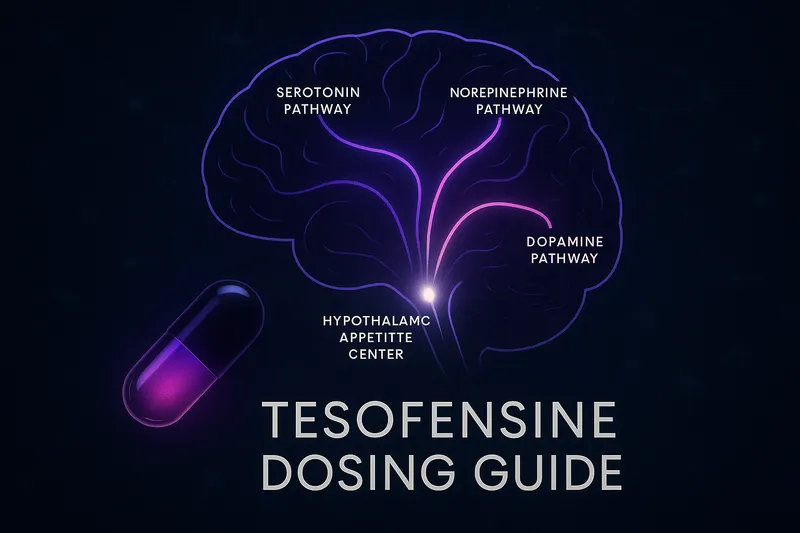
Tesofensine is an oral small-molecule triple monoamine reuptake inhibitor — not a peptide — developed for weight loss and studied in Phase 2 trials as a once-daily 0.5 mg capsule. Clinical data from the TIPO-1 trial and community experience form the basis of the protocols documented below. For the full mechanism and clinical trial data, see our tesofensine weight loss guide.

Research-context information only. Tesofensine is an investigational drug not approved by the FDA. Protocols, doses, and reactions reported below come from published clinical trials and self-reported community sources. This article reports what has been documented, not what should be done. Possession or use of investigational drugs outside an authorized clinical trial may be illegal in your jurisdiction. Consult a licensed physician for personal medical decisions.

All protocols below are based on Phase 2 clinical-trial data and self-reported community experience.

Quick Reference: Community Protocol

Parameter Community Protocol
Compound type Small molecule (not a peptide)
Route Oral (capsule)
Starting dose 0.25 mg/day for 1-2 weeks
Standard dose 0.5 mg/day
Timing Morning, fasted or with light meal
Frequency Once daily
Cycle 8 weeks on, 4 weeks off
Half-life ~220 hours (parent compound)
Storage Room temperature

Community protocols describe starting at 0.25 mg daily for 1-2 weeks to assess tolerance, then moving to 0.5 mg daily. The TIPO-1 data (Astrup et al., 2008) show the 0.5 mg dose achieving roughly 88% of the 1.0 mg weight-loss result — nearly equivalent efficacy with substantially fewer side effects.

Cycling Details

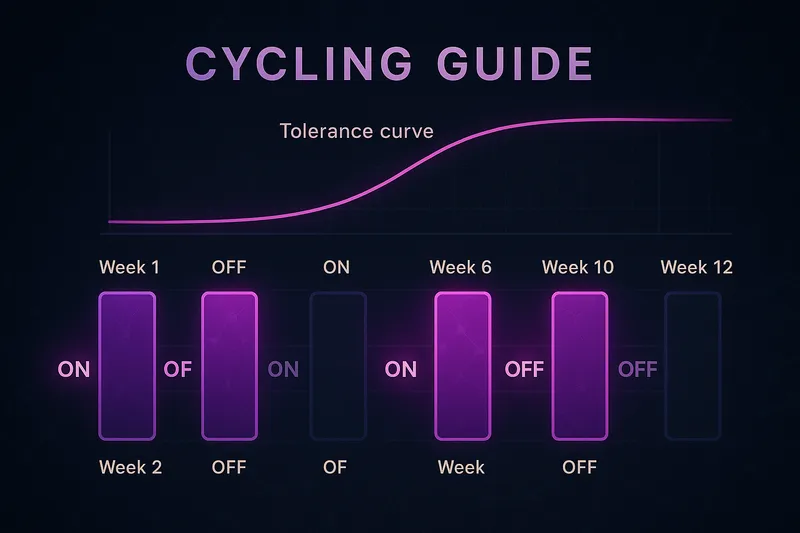
Tesofensine's monoamine mechanism makes tolerance a real consideration. Community protocols most commonly describe 8 weeks on, 4 weeks off.

Signs of developing tolerance that community sources describe (typically weeks 4-6): appetite suppression weakening, the energy boost diminishing, return of cravings. Community sources describe cycling off rather than increasing the dose when these appear.

Alternative: 5-on/2-off weekly — community sources describe 5 days on (Mon-Fri), 2 days off (weekends), continuing for 10-12 weeks before a full 4-week break. Given the ~220-hour parent-compound half-life, the 2-day break may not provide meaningful receptor recovery, and community sources describe the 8/4 cycle as more effective for managing tolerance.
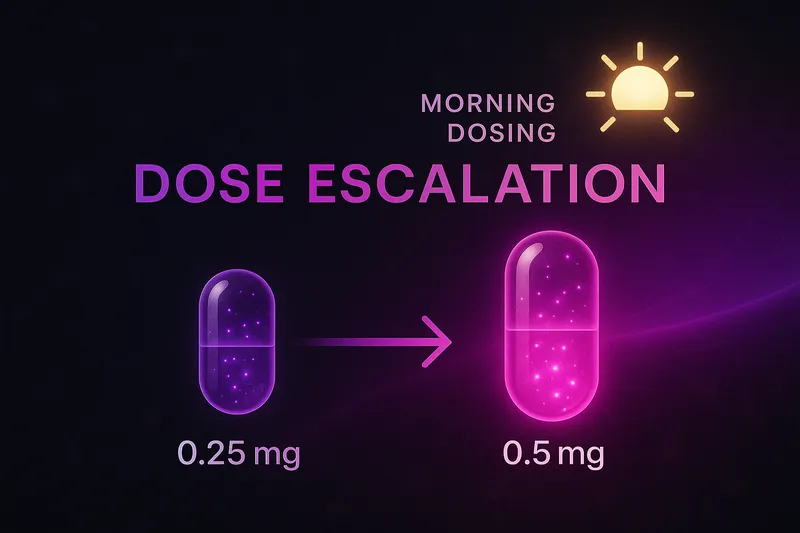
Tesofensine Dosing Protocol

Routes of Administration

Oral (only route): community sources describe swallowing the capsule whole in the morning, fasted or with a light meal — absorption is not significantly affected by food, though some users report faster onset fasted. Same-time daily dosing is commonly described.

No reconstitution needed. Not an injectable.
Top Tesofensine Vendors

Ranked by price, COA availability, and reputation

1
Glacier AminosCOA
10/10
30mg$3.83/mg
2
Swiss ChemsCOA
9/10
15mg$8.07/mg

Affiliate disclosure: vendor links in this article are affiliate links — The Peptide Catalog may earn a commission if you buy through them, at no additional cost to you.

Where These Numbers Come From

The landmark Phase II trial (TIPO-1) tested three doses against placebo over 24 weeks with a controlled diet:

Dose Weight Loss vs Placebo
0.25 mg 6.7% Significant
0.5 mg 11.3% Highly significant
1.0 mg 12.8% Highly significant

The jump from 0.25 mg to 0.5 mg was substantial (nearly double), while 0.5 mg to 1.0 mg gained only 1.5 percentage points with far more side effects. This dose-response curve is why the community settled on 0.5 mg (Astrup et al., 2008).

Sjödin et al. (2010) showed tesofensine increased energy expenditure and reduced appetite through triple monoamine reuptake inhibition — dopamine, serotonin, and norepinephrine (Sjödin et al., 2010).

Tesofensine Cycling Guide

Stacking Protocols

Tesofensine + GLP-1 Agonist

Compound Dose Route Purpose
Tesofensine 0.5 mg daily Oral Appetite suppression via DA/NE/5-HT, energy expenditure
Semaglutide or Tirzepatide Per protocol SC Satiety via GLP-1, gastric emptying

Completely different mechanisms — some community sources report more effective appetite control than either alone. Community sources describe keeping both at moderate doses, since combined suppression can be strong.

Combinations Community Sources Advise Against

Community sources consistently flag combinations with MAOIs (serotonin-syndrome risk), SSRIs/SNRIs (serotonergic overlap), stimulants (amphetamines, methylphenidate, modafinil), and other monoamine reuptake inhibitors (sibutramine, bupropion) as combinations to avoid.

Side Effects & Safety

Community sources and trial data describe these effects at 0.25 mg: Mild dry mouth, slight sleep difficulty if taken late, occasional headache, mild heart rate increase (2-5 bpm).

Community sources and trial data describe these effects at 0.5 mg: Dry mouth (most common), insomnia (more common with afternoon or evening dosing, per community sources), elevated heart rate (5-10 bpm), constipation, mild mood elevation.

Community sources describe these effects at 1.0 mg (rarely reported in protocols): Significant heart rate increase (8-15+ bpm), more frequent insomnia, anxiety/jitteriness, nausea, mood swings.

Trials and community sources describe discontinuation when: Resting heart rate is consistently above 100 bpm, insomnia persists beyond one week, or significant anxiety, palpitations, or blood-pressure spikes appear.

Contraindications described in the literature: Cardiovascular disease, uncontrolled hypertension, history of stroke, arrhythmias, glaucoma, hyperthyroidism, seizure history.

Frequently Asked Questions

What tesofensine doses do clinical trials and community sources report?
Community sources commonly describe 0.5 mg orally once daily in the morning, often starting at 0.25 mg for 1-2 weeks to assess tolerance before moving to 0.5 mg. Community protocols typically describe an 8-weeks-on, 4-weeks-off cycle. These figures come from Phase 2 trial data and self-reported community sources, not from a prescribing standard.
What do community sources describe for splitting tesofensine capsules?
Some community sources describe opening capsules and weighing partial doses with a milligram scale (0.001 g precision) to reach lower amounts. Others describe pre-made 0.25 mg capsules as the easier starting format. Both approaches are reported by community sources, not recommended here.
What onset timing do community sources report for tesofensine?
Community sources commonly report noticeable appetite suppression within the first 2-3 days and stimulant-like effects (increased energy, focus) on day one. Self-reported community timelines describe full weight-loss effects becoming apparent over 2-4 weeks as the compound reaches steady state.
What do community sources report about tesofensine and caffeine?
Tesofensine increases norepinephrine and dopamine levels, which community sources describe as amplifying the stimulant effects of caffeine. Many community sources report reducing caffeine intake by roughly half when starting tesofensine to limit jitteriness, elevated heart rate, or insomnia.
What do community sources describe for a missed tesofensine dose?
Community sources commonly describe taking a missed dose only if it is still morning, and otherwise skipping it and resuming the next morning. Late-day dosing is described as increasing insomnia risk given the compound's long half-life.
How does tesofensine compare to semaglutide for weight loss?
They act through completely different mechanisms and are difficult to compare directly. Tesofensine acts on dopamine, serotonin, and norepinephrine (appetite + energy), while semaglutide targets GLP-1 receptors (satiety + gastric emptying). Some community sources describe stacking both for complementary effects.

References

Citation Topic PMID
Astrup et al., The Lancet (2008) Phase II RCT: 0.5mg = 11.3% weight loss in 24 weeks 18579710
Sjödin et al., Int J Obesity (2010) Energy expenditure and appetite effects of tesofensine 21414090
Hauser et al., Neurology (2007) Tesofensine safety data from Parkinson's disease trials 18202642
Appel et al., Drugs of Today (2014) Tesofensine development history and pharmacology 23741593
Gilbert et al., Obesity (2012) Tesofensine effects on appetite sensations 19169362

For educational and research purposes only. This is not medical advice. Tesofensine is not FDA-approved for any indication.