How to Reconstitute the Wolverine Stack
The Wolverine Stack is a pre-blended vial containing 10mg BPC-157 + 10mg TB-500 — 20mg total. Reconstitution follows the same process as any lyophilized peptide: add bacteriostatic water, swirl, refrigerate. The only difference is the math. Because it is a blend, each injection delivers both peptides in a fixed 1:1 ratio without needing separate vials or syringes.
For anyone who has reconstituted BPC-157 or TB-500 individually before, this will feel familiar. For a first peptide vial, every step matters — most mistakes happen during mixing, not injection.
Research-context information only. The Wolverine stack is a research-peptide blend (containing BPC-157 and TB-500). Protocols, doses, and reactions reported below come from published research and self-reported community sources. This article reports what has been documented, not what should be done. Consult a licensed physician for personal medical decisions.
New to bacteriostatic water? Start with what it is, how much to use per vial, and how long it lasts — or see the full Bacteriostatic Water Guide.
Materials Documented in Reconstitution Protocols
Documented protocols describe gathering:
- Wolverine Stack vial (20mg lyophilized powder — 10mg BPC-157 + 10mg TB-500)
- Bacteriostatic water (BAC water) — not sterile water, not saline
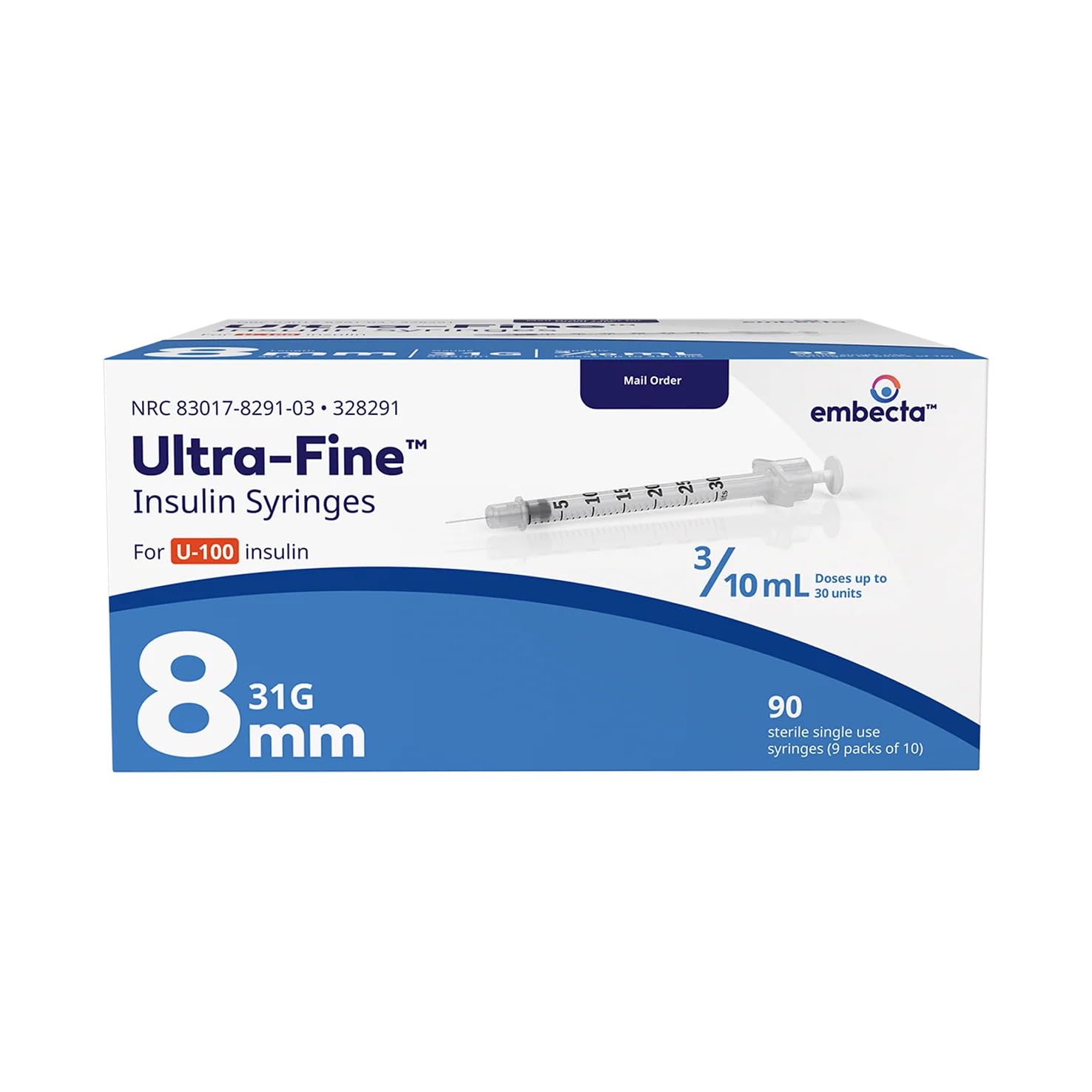
- Insulin syringes — 1mL (100 unit), 29-31 gauge
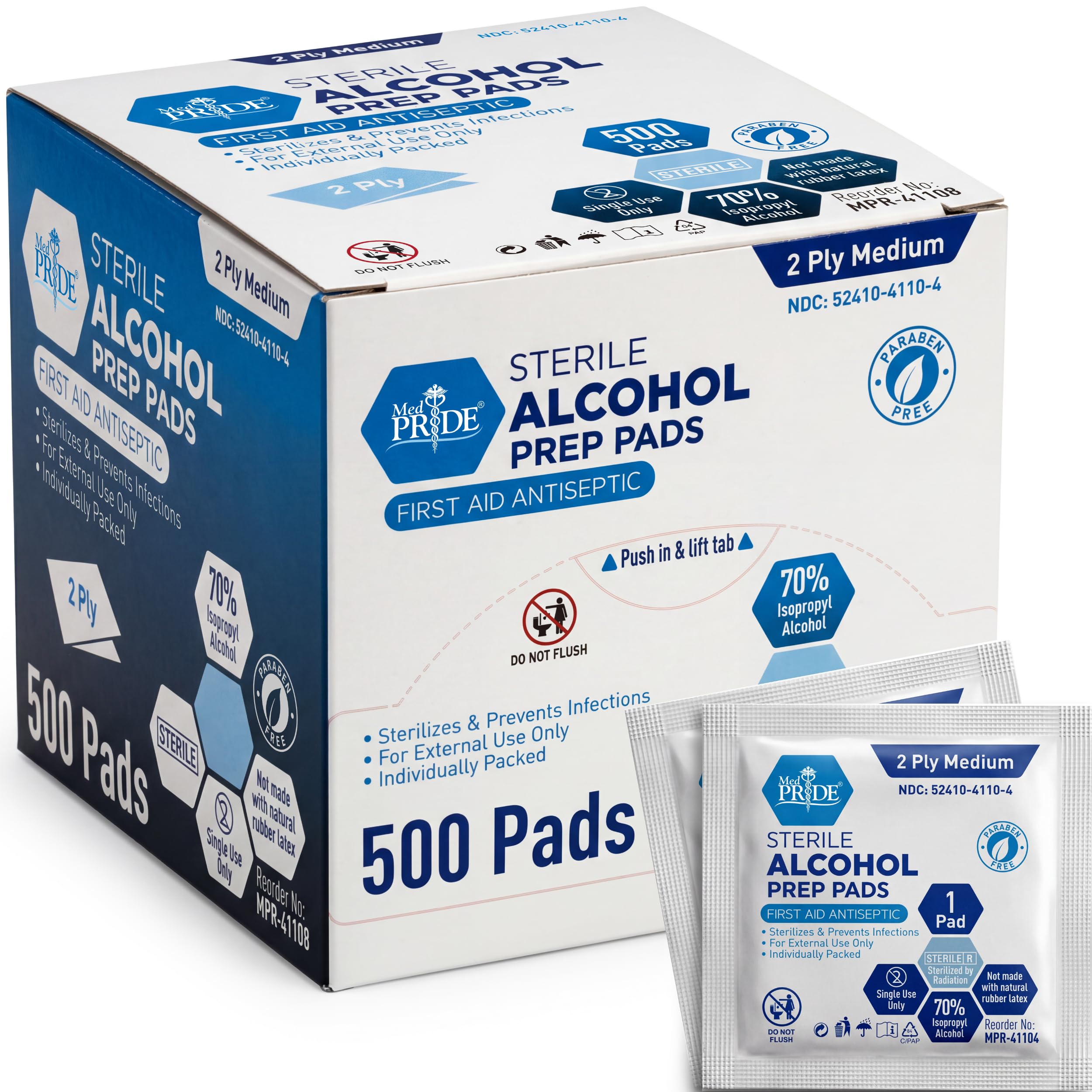
- Alcohol swabs — for cleaning vial tops before every puncture
- Sharps container — for safe needle disposal
- A clean, flat workspace
Why bacteriostatic water? It contains 0.9% benzyl alcohol that prevents bacterial growth in the solution. Regular sterile water has no preservative — vials reconstituted with it are typically discarded within 24 hours. BAC water allows up to 28 days refrigerated, which matters when a single vial lasts 40 days at standard dosing (half the vial's worth of doses is reconstituted at a time, or 2 vials are used per cycle).

Step-by-Step Reconstitution
Step 1: Clean Both Vial Tops
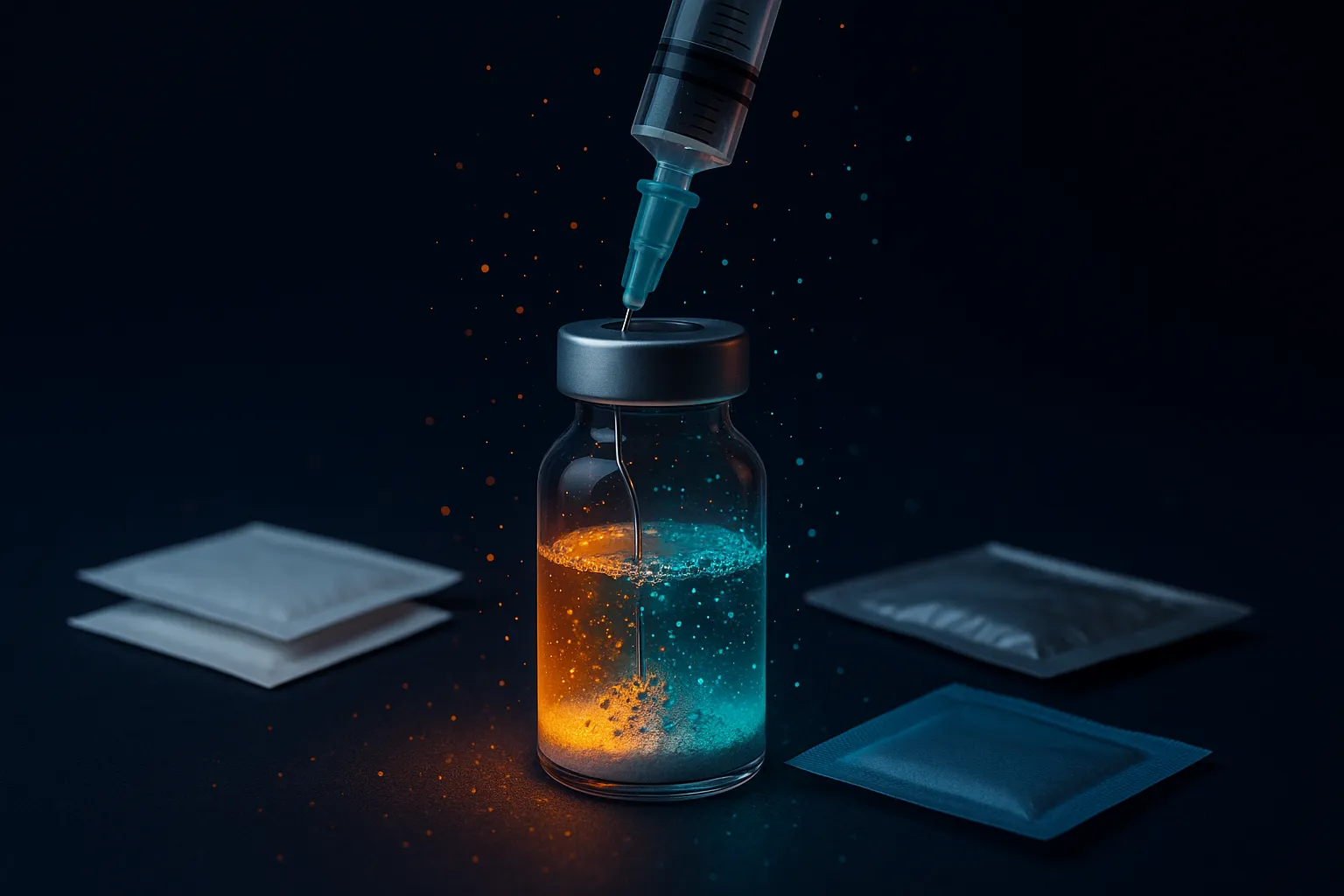
Standard reconstitution practice is to wipe the rubber stoppers on both the Wolverine Stack vial and the BAC water vial with separate alcohol swabs and let them air dry for 10 seconds. This step is consistently cited as the contamination-prevention checkpoint.
Step 2: Draw 2mL Bacteriostatic Water
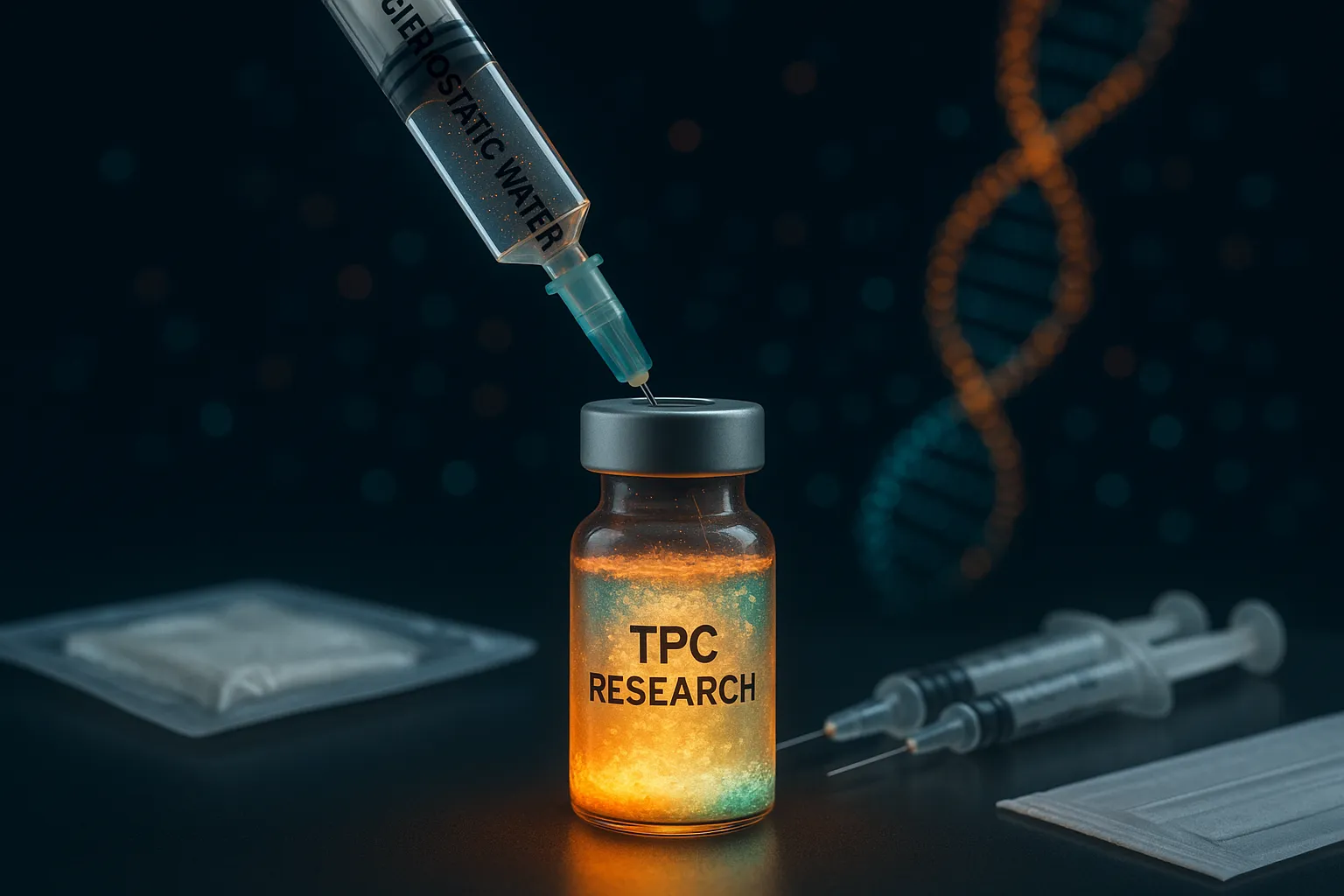
A fresh insulin syringe (or a larger 3mL syringe for easier measurement) is used to draw 2mL of BAC water. This is the most-cited standard dilution for the 20mg Wolverine Stack vial.
2mL is the most-cited dilution. It produces clean, round numbers for every common dose — 5 units for 500mcg, 7.5 units for 750mcg. No mental math required.
Step 3: Add Water to the Vial — Slowly
Documented protocols describe inserting the needle into the Wolverine Stack vial at an angle, with the needle tip aimed at the glass wall, not at the powder cake. The water trickles down the inside wall of the vial slowly.
Squirting water directly onto the powder is discouraged in standard reconstitution practice. Both BPC-157 and TB-500 are fragile peptide chains. Aggressive force can shear molecular bonds and reduce potency. The documented technique lets gravity do the work.
Step 4: Swirl Gently — Never Shake
With the syringe removed, standard practice is to rotate the vial gently between the fingers with a slow swirling motion. The powder is documented to dissolve within 1-3 minutes into a perfectly clear, colorless solution.
Shaking is discouraged. Shaking creates foam — air bubbles trapped against peptide molecules at the liquid-air interface. This can denature (permanently destroy) both peptides. Foam is a sign the mixing was too aggressive.
Particles remaining after 5 minutes of gentle swirling are commonly cited as a sign the peptide may be degraded. Properly manufactured Wolverine Stack dissolves easily.
Step 5: Label and Refrigerate
Documented practice is to write the date and concentration (10mg/mL or 10,000mcg/mL) on the vial with a marker or label, then refrigerate immediately at 36-46F (2-8C). The clock starts now — the vial is used within 28 days.
Dilution Chart
Why 2mL? At 10,000mcg/mL, each unit on a U-100 insulin syringe equals exactly 100mcg of total blend. The standard 500mcg dose is exactly 5 units — no fractions, no guessing.
Syringe Math Explained
The formula for verifying any dilution:
Concentration = Total Peptide (mcg) / Water Added (mL)
20,000mcg (20mg) / 2mL = 10,000mcg/mL
Units to inject = Desired Dose (mcg) / Concentration (mcg/mL) x 100
500mcg / 10,000mcg/mL x 100 = 5 units
On a U-100 insulin syringe, 1mL = 100 units. So each unit = 0.01mL. At this concentration, each unit delivers 100mcg of total blend.
| Dose | Units (2mL recon) | Blend Delivered |
|---|---|---|
| 250mcg | 2.5 units | 125mcg BPC-157 + 125mcg TB-500 |
| 500mcg | 5 units | 250mcg BPC-157 + 250mcg TB-500 |
| 750mcg | 7.5 units | 375mcg BPC-157 + 375mcg TB-500 |
| 1,000mcg | 10 units | 500mcg BPC-157 + 500mcg TB-500 |
What's in Each Dose
This is where blends differ from single peptides. The Wolverine Stack is a 1:1 ratio — half BPC-157, half TB-500. Every dose drawn contains equal parts of both peptides.
- 500mcg dose = 250mcg BPC-157 + 250mcg TB-500
- 750mcg dose = 375mcg BPC-157 + 375mcg TB-500
- 1,000mcg dose = 500mcg BPC-157 + 500mcg TB-500
The 500mcg daily dose (250mcg per peptide) aligns with standard standalone dosing for both BPC-157 and TB-500, so neither peptide is typically supplemented separately at this dose.
At 500mcg/day, one 20mg vial provides 40 doses — enough for 40 days. A standard 8-week (56-day) cycle requires 2 vials.