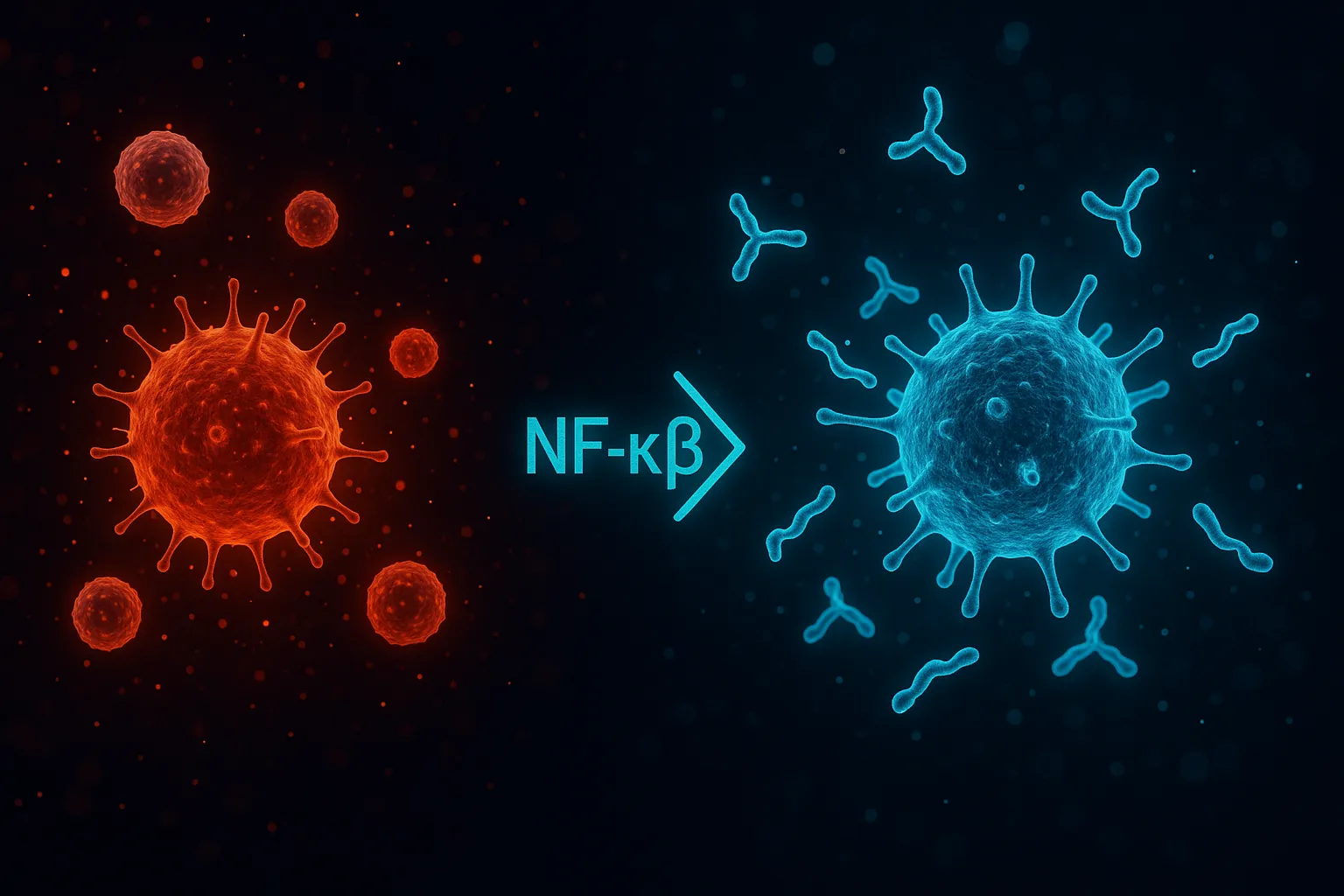
For readers searching "best peptides for inflammation," the short answer most experienced users describe in community sources is this: chronic inflammation is not one process. It is a cascade with multiple interconnected layers — trigger, signaling, tissue damage, resolution failure — and the most effective peptide depends on which layer is dysfunctional. Published research describes peptides as working through targeted mechanisms (NF-kB inhibition, immune rebalancing, tissue repair, gene-expression shifts) rather than the broad enzyme suppression of NSAIDs or the systemic immune suppression of corticosteroids.
Research-context information only. Peptides discussed below are research compounds. Protocols, doses, and reactions reported come from published research and self-reported community sources. This article reports what has been documented, not what should be done. Consult a licensed physician for personal medical decisions.
Evidence at a glance
Peptides covered below, sorted by clinical evidence strength. Each peptide also carries a parallel community-evidence grade reflecting real-world adoption. How we grade evidence.
Lowers TNF-alpha and IL-6 in rodent inflammation models. No human RCTs.
This guide ranks the five peptides community sources most commonly describe for inflammatory complaints, in the order experienced users typically reach for them. Each entry explains what trial data and community usage describe for that peptide, who typically chooses it, and what self-reported community outcomes look like. Dosing, reconstitution, and bloodwork details live in the linked deep-dive guides.
The Rankings
Bac Water Made for Peptides
Don't risk a $300 peptide on generic bac water.
Most cloudy reconstitutions trace back to one thing — and it isn't the peptide. Sterile, non-pyrogenic, 0.9% benzyl alcohol — formulated for peptide reconstitution, not repackaged from generic stock.
✓ 0.9% benzyl alcohol✓ Made for peptides✓ 30 mL multi-dose
Best for: users with chronic systemic inflammation or gut-driven inflammatory presentations where the inflammatory signaling itself is the priority target.
KPV (Lys-Pro-Val) is a tripeptide derived from the C-terminal end of alpha-MSH. Published research describes KPV as one of the most potent direct inhibitors of NF-kB signaling available in peptide form. NF-kB is the master transcription factor controlling inflammatory gene expression — published research describes it as driving production of TNF-alpha, IL-1beta, IL-6, COX-2, and virtually every other major inflammatory mediator. Blocking NF-kB at the source is described in published work as mechanistically upstream of what NSAIDs and most conventional anti-inflammatories achieve.
Published mechanistic work describes KPV as entering cells and directly inhibiting p65RelA nuclear translocation by stabilizing IkB-alpha (the endogenous NF-kB inhibitor). Competition assays described KPV as interacting with the importin-alpha3 binding site on p65RelA, physically preventing nuclear import [1]. Published research describes the effect as occurring at nanomolar concentrations — orders of magnitude lower than most pharmaceutical anti-inflammatory agents.
Published research describes KPV's mechanism as independent of melanocortin receptors, unlike full-length alpha-MSH [2]. This is the basis for the cited targeted NF-kB inhibition without the broader hormonal effects of full-length MSH. Published work describes KPV's anti-inflammatory action as available in tissues that lack melanocortin receptors.
The strongest preclinical evidence comes from intestinal inflammation models. Published research described KPV as reducing colitis severity through PepT1-mediated uptake in intestinal epithelial cells, with dose-dependent inhibition of inflammatory cytokine production and preserved epithelial barrier function. Published work additionally described oral nanoparticle delivery of KPV as efficiently alleviating ulcerative colitis in mouse models — published research describes oral bioavailability as achievable for this small tripeptide.
Community reports on KPV cluster around two themes: reduced gut inflammation symptoms (post-meal pain, bloating) within 1-2 weeks for users with active inflammatory gut presentations, and slower-developing reductions in skin inflammation (psoriasis, eczema) over 4-6 weeks. The most common caveat in those same community sources is the absence of human clinical trials for any inflammatory condition — the evidence base is preclinical with a precisely characterized mechanism rather than randomized human data.
2. BPC-157 — the tissue-level anti-inflammatory and repair layer
Best for: users with localized inflammatory presentations driven by tissue injury — joint inflammation, tendon problems, gut mucosal damage.
BPC-157's anti-inflammatory effects are intertwined with its tissue-repair mechanisms. Published research describes BPC-157 as a 15-amino-acid peptide derived from human gastric juice. While it is better known as a healing peptide (see the joint pain ranking), its anti-inflammatory actions deserve attention because they address local tissue inflammation at the injury site rather than systemic inflammatory pathways.
Published research describes BPC-157 as reducing inflammatory cytokine production in damaged tissue while simultaneously promoting angiogenesis and growth factor signaling that accelerates the transition from inflammatory phase to proliferative phase of healing. This dual action is described in published work as fundamentally different from conventional anti-inflammatories that suppress inflammation without supporting the resolution process.
In adjuvant arthritis models, published research described BPC-157 as reducing both the inflammatory arthritic process and the gastrointestinal damage caused by NSAID treatment of that arthritis [3]. Published work describes this finding as relevant for users currently managing chronic inflammation with NSAIDs, because BPC-157 may address both the underlying inflammatory condition and the iatrogenic damage from conventional treatment.
The angiogenic mechanism is itself anti-inflammatory in chronic conditions. Published research describes poor blood supply to damaged tissue as perpetuating inflammation because inflammatory mediators and cellular debris cannot be cleared efficiently. By restoring vascular supply through VEGFR2 upregulation, BPC-157 is described in published work as enabling the natural resolution of inflammation that insufficient blood flow prevents.
A 2025 pilot study described intravenous infusion of BPC-157 in humans with a favorable safety profile [4]. Combined with decades of preclinical evidence across hundreds of studies, published research describes BPC-157 as one of the most extensively studied research peptides for tissue-level inflammatory conditions.
Community reports on BPC-157 cluster around three themes: reduced inflammatory pain at injury sites within 1-2 weeks, gradual functional improvement (range of motion, baseline pain levels) over 4-8 weeks, and the consistent observation that local injection near the affected site is described in community sources as producing more pronounced effects than systemic subcutaneous dosing for joint and tendon presentations.
Best for: users with chronic inflammatory presentations linked to persistent infection — chronic sinusitis, periodontal disease, gut dysbiosis, biofilm-associated conditions.
LL-37 is the only human cathelicidin antimicrobial peptide. Published research describes LL-37 as a dual-purpose immunomodulator: it directly kills pathogens while simultaneously modulating the inflammatory response to prevent excessive tissue damage from the immune system's own activity. This dual action is described in published work as uniquely suited for inflammation driven by chronic infection or microbial triggers.
Published research describes the antimicrobial properties as broad-spectrum: LL-37 kills bacteria, fungi, and certain viruses, and disrupts established biofilms [5]. This is what published work describes as relevant for inflammation: many chronic inflammatory conditions — chronic sinusitis, periodontal disease, certain gut dysbioses — are described in published research as driven by persistent microbial presence that sustains the inflammatory response.
The immunomodulatory component is equally important. Published research describes LL-37 as attenuating LTA-induced phosphorylation of p38MAPK and Akt, reducing TNF-alpha and IL-6 production in macrophages. Published work additionally describes LL-37 as promoting epithelial wound repair and angiogenesis while simultaneously dampening excessive inflammatory cytokine release. In periodontal ligament cells, published research describes LL-37 as both anti-inflammatory and pro-apoptotic, clearing damaged cells while reducing inflammatory signaling.
LL-37 also increases epithelial barrier integrity. Published research describes LL-37 as enhancing lung epithelial cell stiffness and decreasing transepithelial permeability, preventing bacterial invasion [6]. This barrier-strengthening effect is described in published work as relevant for gut inflammation, respiratory inflammation, and any condition where compromised epithelial barriers allow microbial translocation.
The main limitation described in published research is that LL-37 specifically addresses infection-driven inflammation. For sterile inflammatory conditions (autoimmune, metabolic, age-related), the antimicrobial component is less relevant, though published research describes the immunomodulatory effects as still potentially beneficial. Human clinical trials specific to chronic inflammatory conditions have not been completed.
Community reports on LL-37 cluster around two themes: noticeable shifts in chronic sinus or biofilm-associated presentations within 2-4 weeks, and slower-developing reductions in inflammation markers for biofilm-related conditions over 6-8 weeks.
Best for: users with autoimmune-driven inflammation, immune dysregulation, or inflammatory conditions where immune dysregulation (rather than simple inflammation) is the core problem.
Thymosin alpha-1 occupies a distinctive position among anti-inflammatory peptides because published research describes it as not simply suppressing inflammation — it rebalances the immune system. As an endogenous thymic peptide, published work describes thymosin alpha-1 as modulating dendritic cell function, Toll-like receptor signaling, and the balance between inflammatory and regulatory T-cell populations.
The clinical evidence for thymosin alpha-1 is substantially stronger than any other peptide on this list. Published research describes decades of clinical use in chronic hepatitis B and C, immune-adjunct therapy in cancer, and critical-care settings. A 2025 systematic review and meta-analysis described thymosin alpha-1 as alleviating inflammation and preventing secondary infections in severe acute pancreatitis [7].
Published research describes the mechanism as involving multiple immune pathways. Thymosin alpha-1 is described as activating dendritic cells through Toll-like receptor/MyD88-dependent signaling, promoting antifungal Th1 resistance, and activating plasmacytoid dendritic cells via TLR9. Critically, published work also describes thymosin alpha-1 as inducing indoleamine 2,3-dioxygenase (IDO) activity in dendritic cells, which promotes immune tolerance and prevents autoimmune-type overactivation.
In COVID-19 patients, published ex vivo work described thymosin alpha-1 treatment as mitigating cytokine expression and inhibiting excessive lymphocyte activation — what published research describes as the ability to calm cytokine-storm-type cascades without suppressing the immune response needed to fight infection. This immune-balancing rather than immune-suppressing action is described in published research as the key differentiator.
For inflammatory pain specifically, published animal-model research described thymosin alpha-1 as attenuating mechanical allodynia and heat hyperalgesia in complete Freund's adjuvant models, with reduced upregulation of interferon-gamma, TNF-alpha, and brain-derived neurotrophic factor through modulation of the Wnt3a/beta-catenin pathway in spinal cord tissue.
Community reports on thymosin alpha-1 cluster around two themes: gradual reduction in autoimmune flare frequency over 4-8 weeks for users with diagnosed autoimmune conditions, and improved infection-recovery patterns for users with concurrent immunodeficiency presentations. The most common caveat in those same community sources is that the response is described as more subtle in users without measurable immune dysregulation than in users with clinical immune dysfunction.
Best for: users with chronic systemic inflammation, age-related inflammatory presentations, or inflammatory conditions where gene-expression shifts are the goal alongside tissue repair.
GHK-Cu approaches inflammation through the broadest mechanism on this list. Published research describes GHK-Cu (glycyl-L-histidyl-L-lysine copper complex) as directly modulating gene expression across thousands of genes involved in tissue repair, inflammation, and cellular defense. Rather than targeting a single pathway (NF-kB, TLR, COX), published work describes GHK-Cu as shifting the entire gene-expression profile of affected tissue away from inflammatory destruction and toward organized repair.
Gene expression studies described in published research describe GHK-Cu as influencing over 4,000 human genes. The anti-inflammatory profile described in published work includes suppression of genes for TNF-alpha production, thromboxane formation, and oxidizing iron release, alongside upregulation of superoxide dismutase and other antioxidant defense genes [8]. Published research describes this as a coordinated shift in tissue behavior — simultaneous suppression of pro-inflammatory and activation of anti-inflammatory gene networks.
The collagen and extracellular-matrix effects are inseparable from the anti-inflammatory action. In chronically inflamed tissue, published research describes the extracellular matrix as becoming disorganized and degraded, which perpetuates inflammatory signaling through damage-associated molecular patterns (DAMPs). By restoring organized collagen synthesis, glycosaminoglycan production, and controlled matrix turnover, published work describes GHK-Cu as removing the structural triggers that sustain chronic inflammation.
Published research also describes GHK-Cu as a potent antioxidant through multiple mechanisms: direct copper-mediated ROS scavenging, upregulation of endogenous antioxidant enzymes (SOD, glutathione peroxidase), and protection of cells from oxidative damage (UV, X-ray). Oxidative stress and inflammation are described in published research as bidirectionally linked — reactive oxygen species activate NF-kB, and NF-kB target genes produce more ROS — so breaking this cycle from the antioxidant side is described as complementing the direct anti-inflammatory approaches used by other peptides on this list.
Community reports on GHK-Cu cluster around two themes: gradual improvements in skin texture and inflammation markers over 4-8 weeks (the most consistently reported effect in published work and community sources), and slower-developing systemic effects on chronic inflammation over 8-12 weeks. The most common caveat in those same community sources is that topical application is described in published work as well-studied for skin inflammation but unlikely to reach deep-tissue targets relevant to systemic or joint inflammation.
Community usage and trial-evidence patterns map cleanly onto reader profiles. Here is how the picks above tend to break down across common audiences:
Users with chronic systemic inflammation and no specific trigger commonly choose KPV first. Published research describes NF-kB as the master inflammatory transcription factor, and KPV's nanomolar-concentration inhibition is described in published work as the most upstream single intervention point in this list.
Users with tissue-level inflammation from injury (joint, tendon, gut mucosa) commonly choose BPC-157. Published research describes BPC-157 as combining anti-inflammatory signaling with angiogenesis and growth-factor effects, which is the rationale community sources cite for using it where tissue damage and inflammation co-occur.
Users with infection-driven inflammation commonly choose LL-37. Published research describes LL-37 as the only peptide on this list with direct antimicrobial activity rather than operating through immune modulation alone. Community sources commonly describe pairing LL-37 with KPV when downstream inflammatory signaling needs concurrent suppression.
Users with autoimmune-driven inflammation commonly choose thymosin alpha-1. Published research describes thymosin alpha-1 as immune-rebalancing rather than immune-suppressing — including induction of IDO activity and regulatory T-cell function — which is the rationale community sources cite for autoimmune presentations where simple immune suppression worsens the picture.
Users with chronic age-related inflammation commonly choose GHK-Cu. Published research describes GHK-Cu's gene-expression shifts as the broadest anti-inflammatory mechanism on this list, and the collagen-and-matrix effects address the structural drivers of chronic inflammation that published research describes as accumulating with age.
Users with multi-layer inflammatory presentations commonly describe stacking. The combinations community sources most often describe are KPV + BPC-157 (signaling + tissue), KPV + GHK-Cu (signaling + gene-level), and thymosin alpha-1 + KPV (immune rebalancing + signaling). Published research describes multi-layer chronic inflammation as the rule rather than the exception, which is why community usage commonly describes stacking strategies.
What Trial and Community Data Describe as Signals of Effect
Three signals appear consistently in published research and community sources, in this order:
Weeks 1-2: Subjective inflammation shifts first. This is the most consistently community-reported early signal. Self-reported community timelines for KPV and BPC-157 commonly describe noticeable shifts in inflammatory pain, post-meal symptoms, or skin presentations within the first 1-2 weeks. Absence of any subjective shift by week 4 is what community sources commonly flag as a signal of under-dosing or product issues.
Weeks 4-8: Bloodwork. Published research describes hs-CRP (high-sensitivity C-reactive protein) as the most accessible systemic inflammation marker. Published reference ranges describe hs-CRP below 1.0 mg/L as the optimal range for cardiovascular and inflammatory health. ESR is described in published work as a complementary chronic-activity marker. Cytokine panels (TNF-alpha, IL-6, IL-1beta) are described in published research as more direct measures of the inflammatory mediators these peptides target. Community guidance commonly describes baseline plus a 4-8 week recheck as the minimum monitoring set.
Weeks 6-12: Functional and tissue-level shifts. This is when subjective and bloodwork changes translate to durable functional change. Published research describes GHK-Cu's gene-expression-based effects as requiring 4-8 weeks for measurable tissue-level remodeling. Published research describes thymosin alpha-1's immune-rebalancing effects as developing over 2-4 weeks for marker shifts but 8-12 weeks for the autoimmune-flare-pattern shifts community sources commonly describe.
Running anti-inflammatory peptide protocols without bloodwork is described in community sources as functionally running them blind. Subjective improvement is encouraging but insufficient — published research describes hs-CRP and cytokine panels as the objective indicators of whether systemic inflammation is resolving.