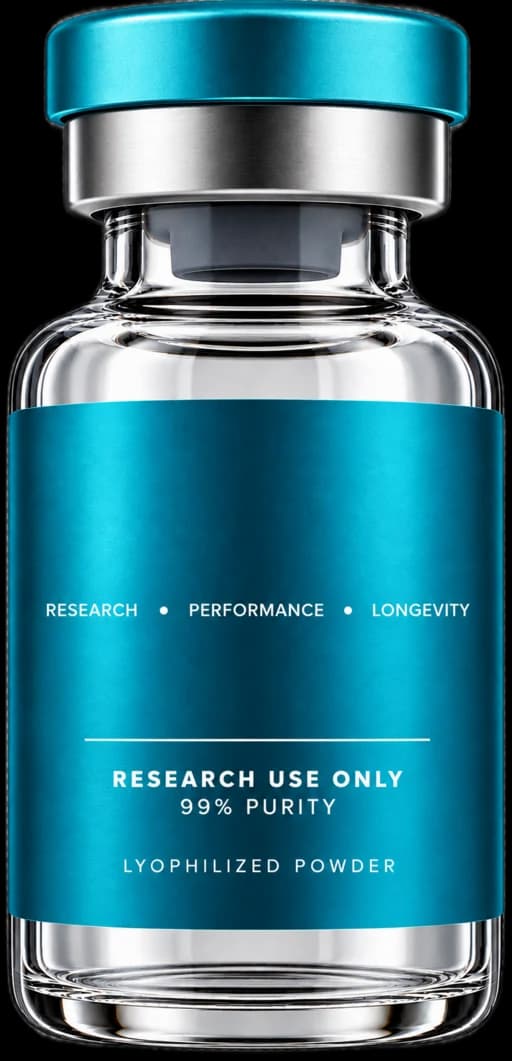
Oxytocin

Lyophilized powder

Oxytocin is a 9-amino-acid neuropeptide made in the hypothalamus and released by the pituitary gland, with roles in childbirth, breastfeeding and social bonding. Below: today's vial sizes, prices through our link and the vendor's COA details.

Size

$11.00/mg · In stock

Price

$22.00

List

$44.00

Buy 2 mg at Ascension Peptides

Price shown includes the 50% discount Ascension Peptides applies through our link.

Volume pricing at Ascension Peptides

  • 3+ vials3% offin cart
  • 5+ vials5% offin cart
  • 10+ vials10% offin cart

Applied in Ascension Peptides's cart; how it combines with our discount is set at checkout.

Sold by Ascension Peptides. The Peptide Catalog does not sell peptides; we earn a commission if you buy through this link, at no extra cost to you. For laboratory research use only, not for human or veterinary use. Not FDA-approved. Nothing on this page is medical or dosing advice.

Oxytocin research vial
OxytocinAscension Peptides
Third-party testedResearch use only
Certificate of AnalysisVendor-stated: Third-party tested · HPLC · public COAView
  • Vendor-stated testing: Third-party tested · HPLC · public COA
  • Listed on our oxytocin vendor comparison, ordered by our vendor rankings
  • Lyophilized powder · laboratory research use only
Research-context information only. Oxytocin is a research peptide. Protocols, doses, and reactions reported below come from published research and self-reported community sources. This article reports what has been documented, not what should be done. Consult a licensed physician for personal medical decisions.

Vial sizes listed by the vendor

Oxytocin Vial Sizes & Prices

Oxytocin vial sizes, prices and lots at Ascension Peptides
SizeListPricePer mgAvailability
2 mg$44.00$22.00$11.00In stock

Prices checked today, 5:02 AM CT on Ascension Peptides's site. Vendor-stated testing: Third-party tested · HPLC · public COA. The lot certificate is on Ascension Peptides's product page. Sizes not re-checked in the last 7 days are hidden. The vendor's checkout is final.

Test results

Oxytocin Certificate of Analysis

Ascension Peptides publishes its certificates publicly (vendor-stated: Third-party tested · HPLC · public COA). Match the lot number on the vial to its certificate.

View the Oxytocin certificate on Ascension Peptides's product page.

How to check one: how to verify a peptide COA.

Oxytocin Dosing in Clinical Research

Sexual Health / Mood

Educational reference only. Individual responses vary. Consult healthcare provider before use.

Vial Size
10 mg
Reconstitution
10 ml BAC water
Dose
50 mcg (5 units on 1ml syringe)
Timing
AM
Frequency
As needed
Duration
As needed
Protocol Notes
Known as the 'love hormone.' Also available as nasal spray for behavioral effects. Research explores use for anxiety, bonding, and mood support.

Why This Dosing Protocol

Two routes, two different targets: Intranasal oxytocin travels along the olfactory and trigeminal nerve pathways directly into the brain, bypassing the blood-brain barrier — making it the preferred route for anxiety, trust, and social cognition (brain-mediated effects). Subcutaneous injection, by contrast, delivers oxytocin to peripheral OT receptors on sensory neurons in skin and tissue. Very little crosses the blood-brain barrier from a SubQ injection, so the effects are primarily local: pain modulation and anti-inflammatory activity. A 2024 randomized controlled trial confirmed SubQ oxytocin (4 mcg) reduced heat pain only on the injected arm — not the opposite arm — confirming a peripheral, not central, mechanism.

Choose your route by your goal: Nasal spray for social/mood/anxiety effects. SubQ injection for pain and peripheral signaling.

Why context matters: Oxytocin enhances the salience of social cues — in positive social contexts it increases trust and bonding; in threatening contexts it can increase vigilance. This is why research results vary widely.

How Oxytocin Works

Neurohormone — Social Bonding / Anxiolytic

Target → GABAergic Modulation → Anxiety Reduction → Outcomes

1
Target

Oxytocin Receptors (Brain, Uterus, Heart)

Oxytocin binds its own specific G-protein coupled receptor found in the brain (social behavior, trust, anxiety reduction), uterus (contractions), heart, and other tissues. The intranasal route is preferred for behavioral effects as it provides more direct CNS access.

2
Cellular Signal

Gq → IP3/DAG + GABAergic Modulation

Oxytocin receptor activation triggers Gq signaling, which in the brain modulates GABAergic and serotonergic circuits. This reduces amygdala reactivity (less fear/anxiety), enhances social cognition, and promotes bonding behaviors. Effects are highly context-dependent.

3
Systemic Effect

Social Cognition + Anxiety Reduction + Bonding

Enhanced social perception and trust. Reduced social anxiety. Promoted bonding and attachment behaviors. Medically used for labor induction (Pitocin) and postpartum hemorrhage. Research explores autism, anxiety disorders, and PTSD applications.

4
What You Notice

Subtle — Calmer Social Interactions + Reduced Anxiety

Effects are subtle and context-dependent — most noticeable in social situations. Reduced social anxiety, enhanced empathy and connection. Effects are temporary (1-2 hours intranasal). Not a dramatic or obvious effect for most people.

What Makes This Peptide Different

Oxytocin is a natural neurohormoneyour body already produces — the "love hormone" involved in bonding, trust, and social behavior. Exogenous administration (usually intranasal) is being researched for social anxiety, autism, and PTSD. Effects are uniquely context-dependent — the same dose can increase trust OR increase suspicion depending on the social situation.

Oxytocin Clinical Evidence

Two parallel grades per outcome — clinical RCT depth and real-world community adoption. See the Research Overview below for citations and detail.

OutcomeClinical EvidenceCommunity Evidence
Autism spectrum social cognition (children/youth)WeakWeak
Emotion recognition acutelyModerateWeak
Pair bonding / trust effectsWeakWeak
Postpartum / labor (FDA-approved indication)StrongWeak

Oxytocin Research Overview

Outcome-by-outcome look at what the evidence actually supports for Oxytocin, including human vs. animal study counts and our editorial take on each.

Autism social cognition

Clinical:WeakCommunity:Weak

Sikich 2021 (NEJM, n=290) randomized children and adolescents with ASD to intranasal oxytocin vs placebo for 24 weeks and found no significant difference on the primary social functioning endpoint. This large definitive trial reframed the smaller positive trials (Guastella 2010, Yatawara 2016) as likely false positives.

6 human studies · 12 animal studies

Key findings & citations
  • Sikich 2021: no improvement in social withdrawal score vs placebo over 24 weeks.
  • Earlier smaller trials reported acute emotion-recognition improvements.
  • Replication of acute oxytocin effects has been inconsistent across labs.

Our take

The definitive RCT was negative. Don't expect oxytocin nasal spray to treat autism — that hypothesis didn't survive rigorous testing.

Trust / pair bonding effects

Clinical:WeakCommunity:Weak

Kosfeld 2005 (Nature) launched the 'oxytocin = trust' literature with a small economic-game finding. Subsequent registered replications (Lambert 2020, Declerck 2010s) have failed to reproduce the original effect at the same effect size. The popular 'cuddle hormone' narrative oversimplifies a far more context-dependent pharmacology.

5 human studies · 8 animal studies

Key findings & citations
  • Kosfeld 2005: oxytocin increased trust in trust-game investments.
  • Multiple registered replications failed to reproduce the original effect size.
  • Effects appear context- and individual-dependent rather than consistently prosocial.

Our take

The original headline-friendly effect didn't replicate. Treat 'oxytocin makes you trust people' as overclaim.

What Oxytocin doesn't do

Claims that current evidence does not support. Worth knowing before you set expectations.

Technical specifications

Oxytocin chemical & analytical data

Receptor targets
Oxytocin receptor (OXTR)
Backbone length
9 amino acids
Modifications
Disulfide bridge Cys1–Cys6; C-terminal amidation
Half-life (clinical PK)
~3–5 minutes
Form
Lyophilized (freeze-dried) powder in a sealed vial
Presentation
2 mg
Regulatory status
Research peptide; research-grade vials are not FDA-approved.

Oxytocin Reconstitution Calculator

Dilution math and unit conversions. Prefilled using a common vial size for this peptide.

Open calculator

Storage & Handling

Storage at a glance

Proper storage temperatures, shelf life, reconstitution best practices, and travel tips for lyophilized and reconstituted peptides.

Powder: Freezer
1+ year at -20°C
Reconstituted: Fridge
4 weeks max at 2-8°C
View Complete Storage Guide

Handling specifics

Educational overview on storage, labeling, and traceability considerations for lab environments. Consult primary literature and vendor documentation for specifics.

Powder storage (very stable)
  • Freezer (-20°C): 1+ year
  • Refrigerator (2-8°C): 1-3 months
  • Room temperature: 2-3 weeks (emergency only)
Reconstituted storage (fragile)
  • MUST refrigerate at 2-8°C
  • 4-week maximum shelf life
  • NEVER freeze after reconstitution
  • Use bacteriostatic water for multi-dose

8 answers

Oxytocin FAQ: Buying, COA, Storage & Research

What is oxytocin and why is it called the 'love hormone'?
Oxytocin is a 9-amino acid neuropeptide produced in the hypothalamus and released by the pituitary gland. It's called the "love hormone" or "bonding hormone" because it plays a central role in social bonding, trust, empathy, and romantic attachment. It's released during activities like hugging, sex, childbirth, and breastfeeding.
How is oxytocin administered for research purposes?
For behavioral and social effects, oxytocin is typically administered as a nasal spray (10-40 IU), which allows it to reach the brain more effectively. Injectable oxytocin (Pitocin) is used medically to induce labor and control postpartum bleeding but doesn't cross the blood-brain barrier well for behavioral effects.
What conditions is oxytocin being researched for?
Research is exploring oxytocin for autism spectrum disorders (social cognition), anxiety disorders, PTSD, depression, schizophrenia (social deficits), and relationship/couples therapy. Results have been mixed, with effects often being context-dependent and varying between individuals.
Does oxytocin actually improve social bonding?
Research shows oxytocin can enhance trust, empathy, and social memory in certain contexts. However, effects are nuanced — oxytocin may increase in-group favoritism while potentially increasing out-group distrust. The "love hormone" label is an oversimplification; its effects depend heavily on context, relationship, and individual factors.
What are the side effects of oxytocin?
Intranasal oxytocin is generally well-tolerated. Possible side effects include nasal irritation, headache, and drowsiness. Injectable oxytocin (medical use) can cause uterine contractions, nausea, and cardiovascular effects. Long-term effects of regular intranasal use are not well-established, as most research involves acute dosing.
How long does reconstituted peptide last?
Once mixed with bacteriostatic water, peptides remain stable for up to 4 weeks when refrigerated at 2-8°C (36-46°F). Unopened powder can last 1+ year in the freezer. Get our complete Storage & Travel Guide.
Is this peptide legal to purchase?
Peptides sold "for research purposes only" are legal to purchase in the US, but are not FDA-approved for human use outside of specific medical applications. Always consult a healthcare provider before use.
New to peptides?
Take our Peptide Match tool to find the best peptide for your goals. You can also read our Complete Guide to Peptides to learn the basics.

Oxytocin Studies & Sources

The following peer-reviewed studies and official resources provide additional scientific context for this peptide:

Oxytocin Research Articles

Compare Oxytocin to alternatives

Side-by-side mechanism, dose, half-life, and vendor pricing.

Open compare →

Compare Oxytocin Vendors Before You Buy

Disclosure: we may earn affiliate commission from qualifying purchases. Educational information only — not medical advice.