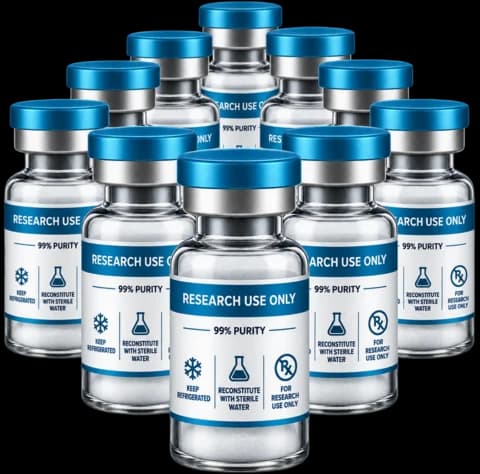
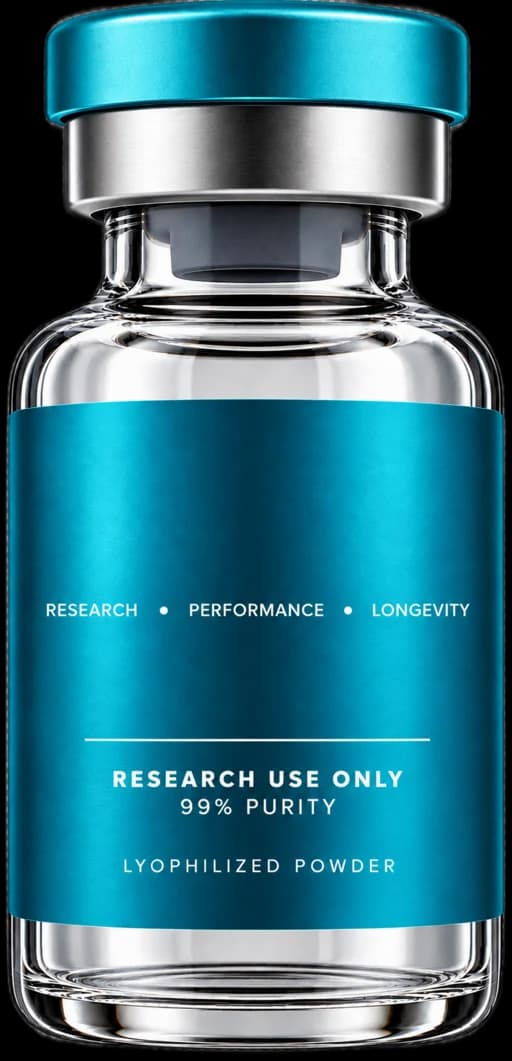
Ipamorelin is a growth hormone secretagogue — it signals the pituitary gland to release growth hormone in a pulsatile, natural pattern. It arrives as a lyophilized powder and needs to be mixed with bacteriostatic water before use.
The reconstitution process is the same as any peptide, but Ipamorelin has a few practical considerations around dose precision and timing that matter more than with healing peptides.
Research-context information only. Ipamorelin is a research peptide. Protocols, doses, and reactions reported below come from published research and self-reported community sources. This article reports what has been documented, not what should be done. Consult a licensed physician for personal medical decisions.
Ipamorelin lyophilized vial (typically 2mg or 5mg)
Bacteriostatic water (BAC water) — not sterile water, not saline
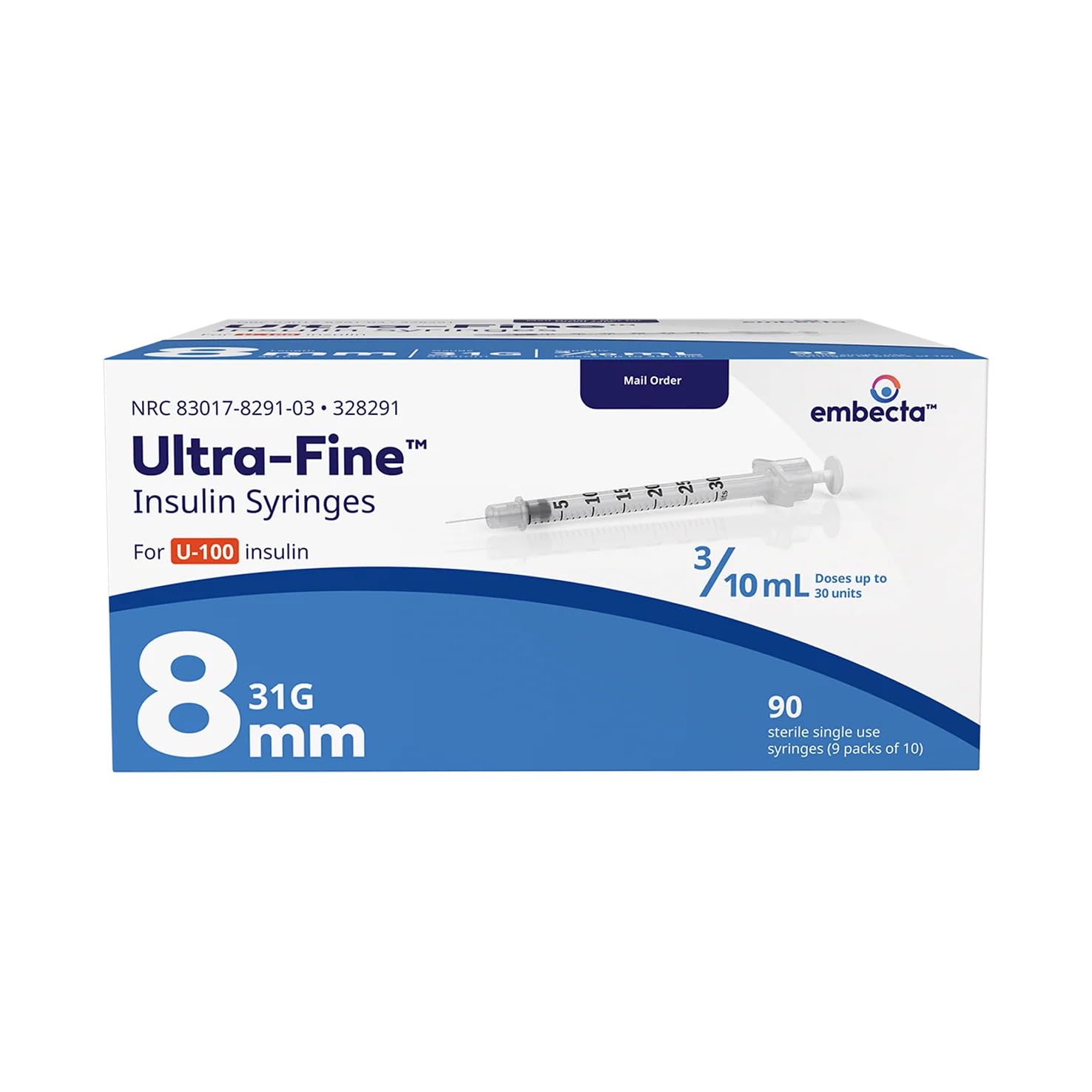
Insulin syringes — 1mL (100 unit), 29-31 gauge
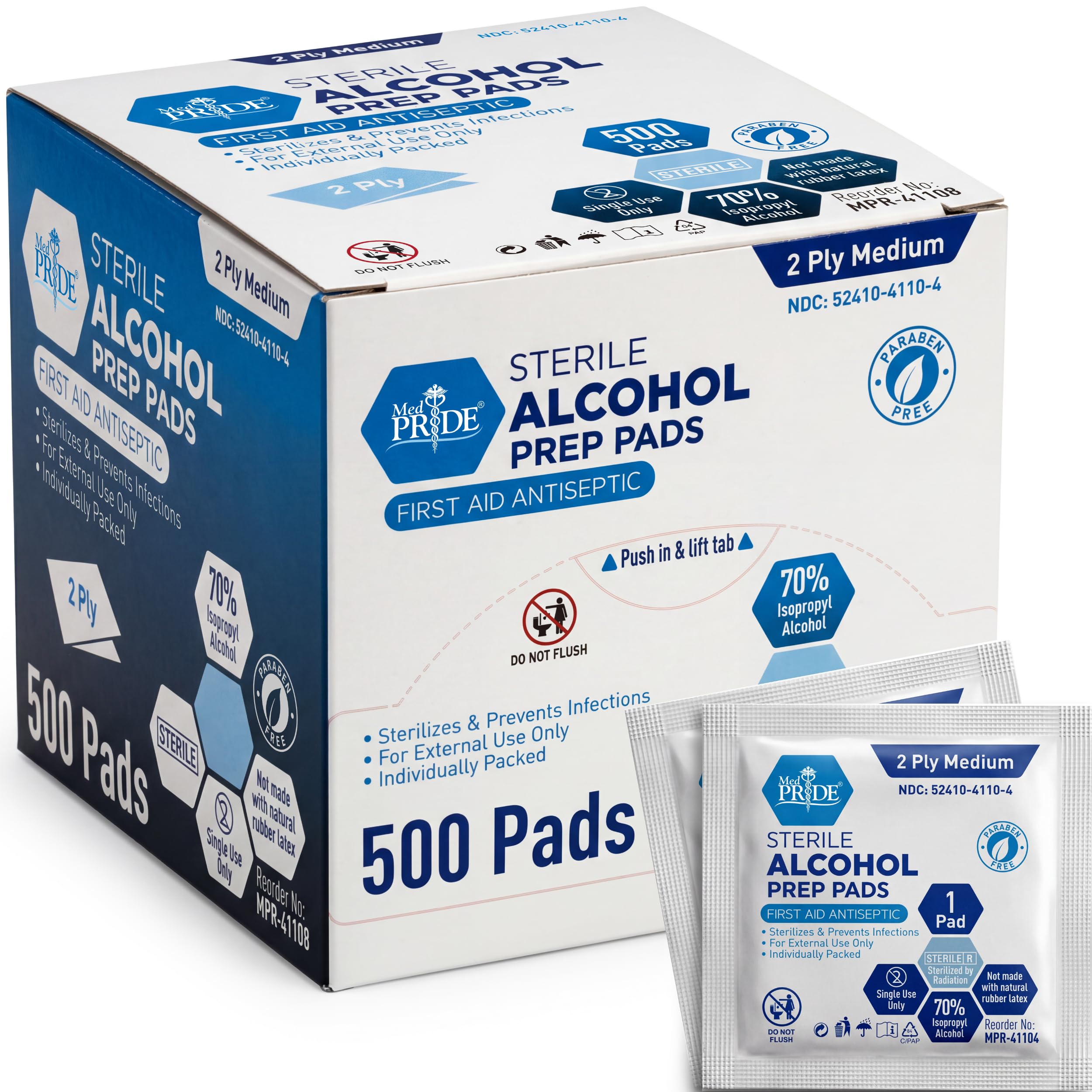
Alcohol swabs — for cleaning vial tops
A clean, flat workspace
Why bacteriostatic water? It contains 0.9% benzyl alcohol that prevents bacteria from growing in the solution. Regular sterile water has no preservative, so vials reconstituted with it are typically discarded within 24 hours. BAC water allows up to 28 days refrigerated.
Bac Water Made for Peptides
Don't risk a $300 peptide on generic bac water.
Most cloudy reconstitutions trace back to one thing — and it isn't the peptide. Sterile, non-pyrogenic, 0.9% benzyl alcohol — formulated for peptide reconstitution, not repackaged from generic stock.
✓ 0.9% benzyl alcohol✓ Made for peptides✓ 30 mL multi-dose
Standard reconstitution practice is to wipe the tops of both vials (Ipamorelin and BAC water) with alcohol swabs and let them air dry for 10 seconds. This step is consistently cited as the contamination-prevention checkpoint.
Step 2: Draw the Bacteriostatic Water
A fresh insulin syringe is used to draw the desired amount of BAC water. The volume added determines the final concentration (see the dilution charts below).
For a 5mg vial, 2mL is the most-cited dilution. It gives clean numbers for standard 200-300mcg doses.
Step 3: Add Water to the Peptide Vial
Documented protocols describe inserting the needle into the Ipamorelin vial at an angle, aiming at the glass wall — not directly at the powder. The water trickles down the side of the vial gently.
Squirting water directly onto the powder is discouraged in standard reconstitution practice. Peptides are fragile. Aggressive mixing can damage the molecular structure and reduce potency.
Step 4: Let It Dissolve
Standard practice is to swirl the vial gently with a slow rotating motion rather than shaking. The powder is documented to dissolve within 1-2 minutes into a perfectly clear, colorless solution.
Particles remaining after 5 minutes of gentle swirling are commonly cited as a sign the peptide may be degraded. Properly manufactured Ipamorelin dissolves easily.
Step 5: Store Correctly
Reconstituted vials are refrigerated immediately at 36-46F (2-8C). The reconstituted solution is stable for up to 28 days with bacteriostatic water.
Dilution Charts
Why 2mL? It gives you clean, round numbers for standard doses — easy to measure, hard to mess up.
The Math (So You Can Do It Yourself)
Here's the formula for any vial size and any amount of water:
Concentration = Peptide Amount (mcg) / Water Added (mL)
Then to find your injection volume:
Units to inject = Desired Dose (mcg) / Concentration (mcg/mL) x 100
Example: 5,000mcg vial + 2mL water = 2,500mcg/mL. For a 300mcg dose: 300 / 2,500 x 100 = 12 units.
For readers who prefer to skip the manual calculation, the Reconstitution Calculator handles any vial size and dose automatically.
Affiliate disclosure: vendor links in this article are affiliate links — The Peptide Catalog may earn a commission if you buy through them, at no additional cost to you.
Common Mistakes
Shaking the Vial
Peptides are proteins. Shaking creates foam, which means air bubbles trapped against peptide molecules. This can denature (destroy) the peptide at the air-liquid interface. Standard practice is to swirl gently.
Using Too Little Water
Adding 0.5mL to a 2mg vial gives 4,000mcg/mL. A 200mcg dose is only 5 units — hard to measure precisely. With a 5mg vial at 0.5mL, it's even worse. Documented protocols use at least 1mL, ideally 2mL.
Leaving It at Room Temperature
Reconstituted Ipamorelin degrades rapidly above refrigerator temperature. Every hour at room temperature reduces potency. Documented practice is to remove the vial, draw the dose, and return it to refrigeration rather than leaving it on the counter during prep.
Reusing Needles
Each puncture through the rubber stopper dulls the needle and increases contamination risk. A fresh syringe each time is the documented standard — they cost pennies.
Freezing Reconstituted Peptide
Freezing a liquid peptide solution creates ice crystals that can shear the peptide bonds apart. Only lyophilized (powder) peptides are frozen. Once reconstituted, vials are refrigerated rather than frozen.
Eating Too Soon After Injection
This isn't a reconstitution mistake, but it's the most common dosing error reported with Ipamorelin. Published research on growth hormone secretagogues documents that food — especially carbohydrates and fats — blunts the GH pulse. Protocols commonly describe waiting at least 30 minutes after injection before eating, and avoiding food for 2 hours before injection for maximum effect.
How Many Doses Per Vial?
This depends on dose and vial size:
2mg vial at 200mcg/dose = 10 doses2mg vial at 300mcg/dose = 6.6 doses (approximately 6)5mg vial at 200mcg/dose = 25 doses5mg vial at 300mcg/dose = 16.6 doses (approximately 16)
At a standard protocol of 200-300mcg once or twice daily, a 5mg vial lasts 8-25 days depending on frequency and dose. A 2mg vial goes fast — most people prefer 5mg vials for cost efficiency.
Storage Quick Reference
State
Temperature
Shelf Life
Lyophilized (powder)
Room temp
6-12 months
Lyophilized (powder)
Refrigerated
2+ years
Lyophilized (powder)
Frozen (-20C)
3+ years
Reconstituted (BAC water)
Refrigerated
Up to 28 days
Reconstituted (sterile water)
Refrigerated
Use within 24 hours
Pro tip: When multiple vials are purchased, documented practice is to keep unopened ones in the freezer and reconstitute only what will be used within 3-4 weeks.
Frequently Asked Questions
How much bacteriostatic water is added to Ipamorelin?
For a 5mg vial, adding 2mL of bacteriostatic water gives 2,500mcg/mL. A 200mcg dose would be 8 units (0.08mL) and a 300mcg dose would be 12 units (0.12mL) on an insulin syringe.
Can Ipamorelin and CJC-1295 be mixed in the same syringe?
Community sources commonly describe drawing from both vials into one syringe for a single injection. The peptides are chemically compatible in solution for the brief time between drawing and injecting. Vials are not pre-mixed together for storage.
What does reconstituted Ipamorelin look like?
Perfectly clear and colorless. Any cloudiness, particles, or discoloration is a sign the peptide may be degraded, and a fresh vial is used instead.
What timing do protocols describe for Ipamorelin injection?
Most protocols describe injection on an empty stomach, typically before bed or first thing in the morning. Growth hormone release is blunted by food, especially carbohydrates and fats. Protocols commonly describe waiting at least 30 minutes after injection before eating.
Research Supplies for Ipamorelin
Hand-picked storage, injection, and recovery supplies paired with Ipamorelin protocols.
Raun, K., et al. (1998). Ipamorelin, the first selective growth hormone secretagogue. European Journal of Endocrinology, 139(5), 552-561. PubMed:9849822
Andersen, N.B., et al. (2001). The growth hormone secretagogue ipamorelin counteracts glucocorticoid-induced decrease in bone formation of adult rats. Growth Hormone & IGF Research, 11(5), 266-272. PubMed:11735244
USP General Chapter 797: Pharmaceutical Compounding — Sterile Preparations. Storage and beyond-use dating guidelines for reconstituted peptides.
This guide is for educational and informational purposes only. It is not medical advice. Ipamorelin is sold as a research compound and is not FDA-approved for human use. Reconstituting and self-administering peptides carries inherent risks including infection, contamination, and dosing errors. Always use proper sterile technique. Consult a qualified healthcare provider before starting any peptide protocol. The Peptide Catalog is not responsible for any adverse effects resulting from the use or misuse of information presented here.