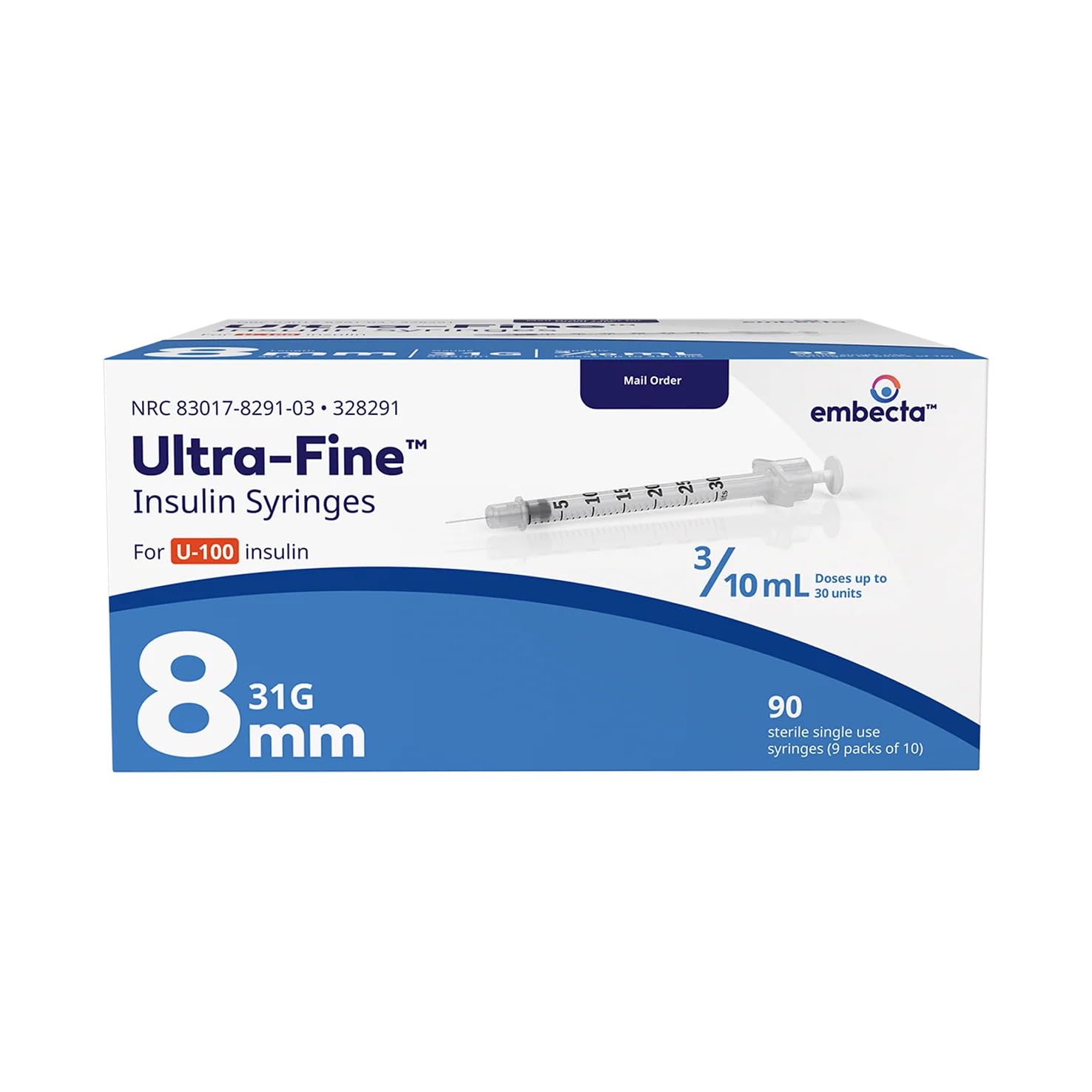
Note on labeling: the events below come from r/peptides, r/PeptideTherapy, and peptide forums where users describe their experience with the combined product. They are not trial-grade incidence rates.
Injection-site reactions
The most consistent community feedback is mild redness, itching, or a small warm welt at the subcutaneous injection site, typically lasting under 24 hours. Community sources commonly describe rotating sites and warming the vial to room temperature as factors that reduce reaction frequency. Users self-reporting persistent site reactions beyond two weeks commonly describe product-quality issues (incomplete reconstitution, contamination of BAC water) as the trigger.
Facial flushing within 15-30 minutes post-injection
Community reports cluster around a brief warmth and visible flush in the face and upper chest. This is most often attributed to the GHK-Cu component. Self-reported community timelines describe the flush resolving without intervention within 30 minutes; some users describe pre-emptive dose splitting to reduce intensity.
First-week lethargy or "blunted" feeling
The most consistent community feedback for the first week is a 1-3 day fatigue or "muted" window. Users in community sources commonly describe it as similar to starting an anti-inflammatory protocol, fading by week 2. No trial data corresponds.
Sleep changes
Less consistently reported. Some users describe deeper sleep in the first week; others describe early-morning waking. The mixed pattern suggests individual variation rather than a consistent blend effect.
Less Commonly Reported Events
These appear sparsely in community data.
- Mild GI changes (loose stool, transient appetite shifts) — community sources commonly attribute these to the BPC-157 component, citing the same pattern reported in single-component BPC-157 use.
- Metallic taste in the hours after injection — attributed by community sources to the copper in GHK-Cu.
- Localized hyperpigmentation at repeated injection sites — sparse, attributed by community sources to the copper component.
What Component-Level Trials and Reviews Document
These are not blend AEs; they are the documented event profile of each constituent at the doses studied in their published research.
BPC-157 component
In small human inflammatory bowel disease trials referenced in the Sikiric review (PMID 21548867), no toxicity at oral doses studied was reported. Animal models across over 100 published studies cover GI, tendon, muscle, nerve, bone, and vascular endpoints; published toxicity ceilings are far above the per-injection BPC-157 doses found in KLOW-style blends.
TB-500 (TB-4) component
Two Phase 2 dermal ulcer trials referenced in the Goldstein review (PMID 22074294) reported acceleration of healing without serious adverse events at the studied subcutaneous doses. Injection-site reactions were the most commonly reported finding.
GHK-Cu component
The Pickart & Margolina 2018 review (PMID 29986520) summarizes human topical work showing minimal irritation. Injectable human data are sparse; the community-reported flushing pattern aligns with the molecule's vasodilatory copper-modulated activity but has no formal incidence rate.
KPV component
The Dalmasso PepT1-mediated colitis study (PMID 18061177) and related preclinical work report no toxicity at the studied oral and IP doses in mouse colitis models. Human safety data for injectable KPV is community-source-dominated.
Community-reported KLOW doses cluster around 250-500 mcg per component per injection, daily for 4-6 weeks. Self-reported community sources describe:
- Site reactions rising with consecutive daily injections in the same anatomical region; rotation resolves it.
- Flushing increasing modestly at higher GHK-Cu fractions per dose.
- First-week fatigue independent of dose magnitude — appears at low and high doses similarly.
No published research validates these relationships for the blend. The component-level dose-response curves in published research apply only to the doses studied in those references.
Dose-Pause and Stopping Patterns
Community reports describe two patterns. Pause-and-resume — short 3-5 day breaks when site reactions persist or flushing becomes intrusive, then resumption at a lower dose. Full discontinuation — rare, most commonly attributed to product-quality issues rather than the peptides themselves.
There is no published guideline for when to stop the KLOW blend. Component trials' stopping rules were defined for single-component administration and do not transfer.

Is KLOW Safe? What the Component Evidence Supports
There is no safety trial of the KLOW blend itself. Every safety statement about KLOW is an
inference from its four components studied separately, usually at different doses and by
different routes than a blend delivers — so the honest answer is that the blend is
uncharacterised, not that it is established as safe.
What the component literature does document:
- GHK-Cu is the most studied of the four and appears in cosmetic and wound-healing
literature with a long topical safety record. Injected use is far less documented, and
copper-containing compounds carry a theoretical accumulation concern with prolonged use.
- BPC-157 has no completed published human safety trial. Animal toxicology reports have
not identified a toxic dose, which is not the same as human safety data.
- TB-500 (thymosin beta-4) reached early human trials for other indications; long-term
data at community-reported doses does not exist.
- KPV is the least studied of the four in humans.
Community reports most often describe injection-site reactions, transient fatigue, and
flushing, with the copper component occasionally associated with a metallic taste. These
are self-reported and unverified.
Two things the evidence cannot tell us: what four peptides do in combination, and what
happens beyond the short community-reported cycles. Compounds sold for research use are not
manufactured to pharmaceutical standards, so product purity is a separate variable from
compound safety. Anyone weighing this should consult a licensed physician.