TB-500 is the active 17-23 amino acid fragment of thymosin beta-4 — the 889 Da synthetic heptapeptide (Ac-LKKTETQ) that captures the LKKTET actin-binding motif at a fraction of full TB-4's cost. Pricing on the research market ranges from $4/mg to $40/mg for essentially the same molecule, and vendor quality matters more than ever because a mislabeled full-TB-4 product can be 5× the cost per mg.
This guide covers what you should actually pay, which vial size fits the standard 500 mcg/day protocol, how to verify a COA for the heptapeptide specifically (not full TB-4), and vendor red flags. TB-500 is also the primary pair for BPC-157 in the wolverine stack, so factoring both into your purchase makes sense.
This is not a ranked vendor list — for that, see our Best TB-500 Vendors comparison. This guide teaches you how to evaluate any vendor yourself.
Understanding TB-500 Pricing
TB-500 is sold as a lyophilized powder in sealed glass vials. It's a short 7-amino-acid peptide and cheap to synthesize correctly — there's no excuse for a legitimate vendor to skip testing. The three factors that move price: vial size, manufacturer sourcing, and whether the vendor pays for third-party COAs.
Current Market Pricing (2026)
Vial Size
Typical Price Range
Price Per mg
Best For
5 mg
$29-75
$5.80-15/mg
Short 10-day trial, tolerance testing
10 mg
$44-110
$4.40-11/mg
Standard 500 mcg/day — best all-around
The pattern is clear: 10mg is the sweet spot for virtually every TB-500 protocol. The 5mg vial exists mainly as a low-commitment trial size — it costs 20-40% more per mg and doesn't align cleanly with the typical 20-28 day loading phases.
Cheapest single-vial option: Ion Peptide's 15% off drops the 10mg vial to $41.65 ($4.17/mg effective) — the lowest effective price we track for buying one vial. Get the code →
Cost Per Week at Common Doses
Weekly Dose
Monthly Cost (5mg vial)
Monthly Cost (10mg vial)
Savings
2 mg/week (loading)
$23-60/month
$18-44/month
~25%
3.5 mg/week (500 mcg/day)
$41-105/month
$31-77/month
~25%
5 mg/week (aggressive)
$58-150/month
$44-110/month
~25%
For current vendor-specific pricing with exact $/mg breakdowns, see our Best TB-500 Vendors comparison.
How to Verify TB-500 Quality
TB-500 is the synthetic heptapeptide Ac-LKKTETQ — the N-acetylated active fragment corresponding to residues 17-23 of endogenous thymosin beta-4. Its molecular weight is 889 Da. Full-length TB-4 is 43 amino acids at 4,921 Da. These are different molecules, and some vendors blur the line — either selling full TB-4 as "TB-500" (cheating you out of 5× the peptide mass) or claiming "TB-500" that's actually a non-acetylated fragment with reduced stability.
What a COA (Certificate of Analysis) Should Include
Identity Confirmation
Mass spectrometry confirming the correct molecular weight (889 Da for TB-500)
Confirmation of N-terminal acetylation — critical for TB-500 stability
Purity Testing
HPLC purity — look for 98%+ purity
The chromatogram should show a single dominant peak with minimal non-acetylated or truncated impurities
Contamination Testing
Endotoxin levels (bacterial contamination)
Residual solvent analysis (acetonitrile, TFA)
Heavy metals screening
How to Verify a COA Is Legitimate
Check the testing lab — Reputable labs include Janoshik Analytical, MZ Biolabs, and Colmaric Analyticals. Avoid vendors who only show "in-house" testing.
Verify on the lab's website — Janoshik COAs have a task number you can look up directly at janoshik.com. If the vendor won't provide a verifiable task number, that's a red flag.
Check the date — COAs should be recent (within 6 months).
Match the batch — The batch/lot number on the COA should match what's printed on your vial.
Look for the original PDF — Screenshots are easier to fake than full PDFs with lab letterhead and signatures.
Red Flags to Avoid
No COA available — any vendor unwilling to provide testing results is not worth the risk
Only in-house testing — self-reported purity numbers are meaningless
MW shown as ~4,921 Da — that's full TB-4, not TB-500. Real TB-500 is 889 Da
Missing acetylation confirmation — non-acetylated fragments degrade faster and have reduced bioactivity
Prices well below $4/mg — implausible for correctly-synthesized, N-acetylated TB-500
No return or reship policy — reputable vendors stand behind their products
Vial size selection is straightforward for TB-500 — only two common sizes exist (5mg and 10mg), and the 28-day reconstitution window caps how far you can stretch a single vial.
The 28-Day Rule
Once reconstituted with bacteriostatic water, TB-500 is stable for up to 28 days refrigerated. Sterile water (no preservative) drops this to 24 hours. See our TB-500 reconstitution guide for step-by-step mixing.
Vial Size
At 2mg/week (loading)
At 500 mcg/day (3.5 mg/week)
At 5mg/week
5 mg
2.5 weeks ✓
10 days ✓
7 days ✓
10 mg
5 weeks ⚠️
20 days ✓
14 days ✓
⚠️ = exceeds 28-day window per reconstitution
Solution at 2mg/week loading on a 10mg vial: you can slightly exceed 28 days (at 35 days you're only 7 days over), but most community protocols transition to maintenance dosing within 4 weeks, making the overage moot. If running strictly by the book, reconstitute ~6mg at a time and leave the rest as powder.
Recommended Vial Size by Protocol
Short trial or tolerance test:
5mg vial — lowest upfront cost, 10 days at 500 mcg/day
Our recommendation: The 10mg vial is the right choice for almost every user. At 500 mcg/day you use the full vial in 20 days, inside the stability window, at the best per-mg price.
Vendor Evaluation Methodology
When comparing TB-500 vendors, we evaluate three weighted factors:
Price Competitiveness (40%)
We normalize to cost per milligram for fair comparison. A vendor selling 10mg at $50 ($5/mg) scores higher than one selling 5mg at $40 ($8/mg), all else being equal.
COA & Testing (30%)
We verify that COAs are:
From recognized third-party labs
Recent (within the last 6 months)
Verifiable on the lab's website
Confirming the 889 Da molecular weight and N-acetylation — critical distinctions
Reputation (30%)
Community feedback from peptide forums, shipping reliability, customer service responsiveness, and business track record. We give extra weight to vendors with consistent multi-year operations and clear labeling that distinguishes TB-500 from full TB-4.
Shipping and Storage
What to Expect When Your Order Arrives
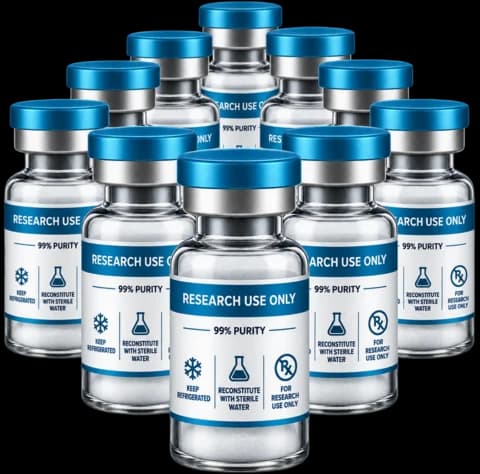
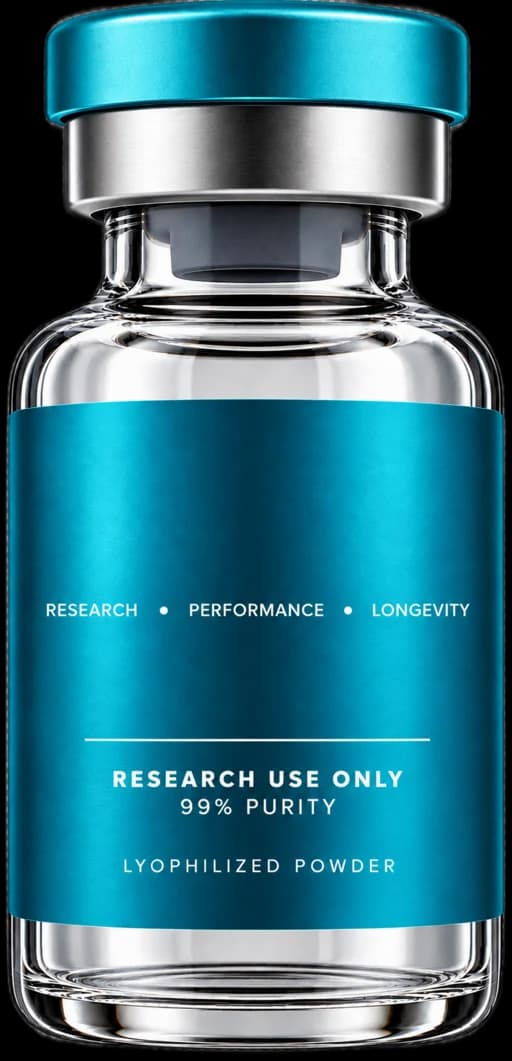
Lyophilized TB-500 should arrive as a white or off-white powder cake in a sealed glass vial. Check:
Vial integrity — no cracks, proper rubber seal, aluminum cap intact
Powder appearance — solid cake or loose powder, NOT liquid or discolored
Labeling — batch/lot number, milligram content, "for research use only", preferably with "Ac-LKKTETQ" or "fragment 17-23" notation
Cold pack — reputable vendors ship with cold packs in summer months
Storage Guidelines
State
Temperature
Duration
Lyophilized (powder)
Room temp
Weeks (for shipping)
Lyophilized (powder)
Refrigerated (2-8°C)
12-24 months
Lyophilized (powder)
Frozen (-20°C)
2+ years
Reconstituted (BAC water)
Refrigerated (2-8°C)
28 days max
Reconstituted (sterile water)
Refrigerated (2-8°C)
24 hours
Reconstituted
Frozen
Not recommended (peptide degradation)
Key point: Keep unreconstituted vials refrigerated. TB-500 is sensitive to pre-filled syringes — draw each dose fresh from the vial rather than pre-loading multiple syringes.
Bac Water Made for Peptides
Don't risk a $300 peptide on generic bac water.
Most cloudy reconstitutions trace back to one thing — and it isn't the peptide. Sterile, non-pyrogenic, 0.9% benzyl alcohol — formulated for peptide reconstitution, not repackaged from generic stock.
✓ 0.9% benzyl alcohol✓ Made for peptides✓ 30 mL multi-dose
TB-500 is sold as a research chemical and is legal to purchase in most jurisdictions for research purposes. It is not FDA-approved and is banned by WADA for human athletic use. Vendors label product 'not for human consumption.' Full-length thymosin beta-4 (TB-4) has different regulatory treatment.
How much does TB-500 cost per month?
At the standard 3.5 mg/week community protocol (500 mcg/day), TB-500 runs $40-90/month depending on vendor. A 10mg vial covers 20 days at this dose and is the most popular size. Paired with BPC-157 in the wolverine stack, expect combined cost of $65-130/month.
What vial size should I buy — 5mg or 10mg?
At 500 mcg/day, a 10mg vial lasts exactly 20 days — inside the 28-day window and the best value for almost every user. 5mg vials cost 20-40% more per mg and only make sense for short 10-day trials. 2mg/week loading protocols can stretch a 10mg vial to 5 weeks with careful reconstitution splitting.
What purity should I look for in TB-500?
Look for third-party HPLC testing showing 98%+ purity and mass spec confirming the 889 Da molecular weight of the Ac-LKKTETQ fragment. A real COA distinguishes TB-500 (7 amino acids, ~889 Da) from full TB-4 (43 amino acids, ~4,921 Da) — some vendors mislabel one as the other.
Can I buy TB-500 from a pharmacy?
No. TB-500 is not FDA-approved and is not available through pharmacies. It is only available as a research peptide from specialty vendors. Some compounding pharmacies offer full-length thymosin beta-4 via prescription for specific conditions, but this is a different compound.
This article is for educational and informational purposes only. It is not medical advice and should not be used to diagnose, treat, or prevent any condition. Consult a licensed healthcare provider before using any peptide.