guidesApril 16, 2026·9 min read

Where to Buy KLOW Blend: Price & Vendor Guide

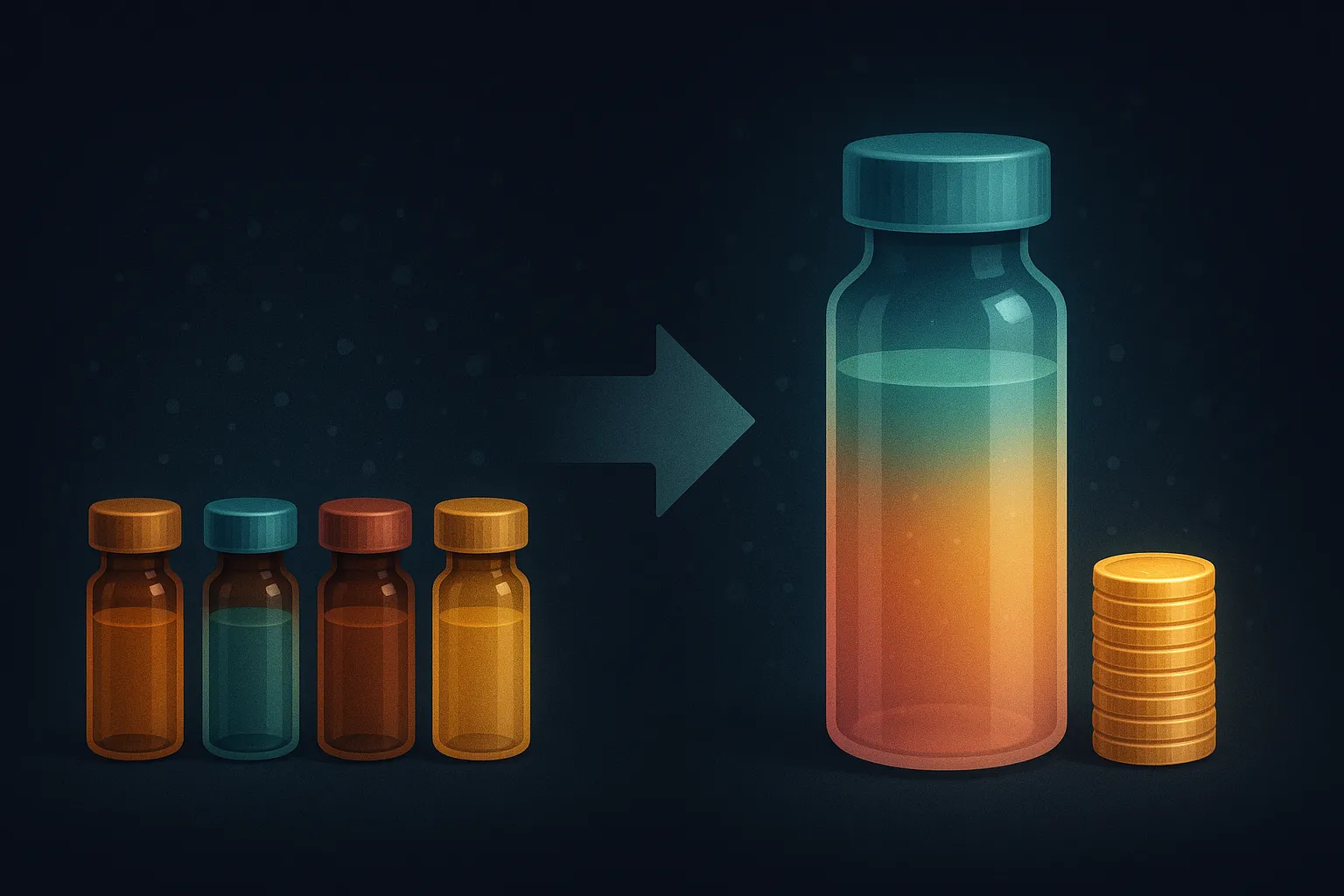
4 peptides in one 80mg vial drops to ~$0.55/mg — roughly 50-60% cheaper than buying BPC-157, TB-500, GHK-Cu, and KPV separately. Vendors compared.

Where to Buy KLOW Blend

KLOW is the most comprehensive healing-and-anti-inflammatory blend on the market — BPC-157 (10mg), TB-500 (10mg), GHK-Cu (50mg), and KPV (10mg) pre-mixed in a single 80mg vial. One reconstitution, one injection, four mechanisms. The question most buyers ask isn't "is it legit" — it's "am I actually saving money over buying the singles."

Short answer: yes, and it's not close. An 80mg KLOW vial from a top vendor runs $88-135, while the same peptide quantities bought separately run $215+. This guide walks you through how to verify a KLOW vendor, what you should actually pay per milligram, how the blend pricing math compares to singles, and the red flags to avoid.

This is not a ranked vendor list — for that, see our Best KLOW Blend Vendors comparison. This guide teaches you how to evaluate any blend vendor yourself.

Understanding KLOW Blend Pricing

KLOW is sold almost exclusively as a single 80mg lyophilized vial. The actual ratio inside the vial: GHK-Cu 50mg (62.5%), BPC-157 10mg (12.5%), TB-500 10mg (12.5%), KPV 10mg (12.5%). Blend pricing is driven by the same three factors as single peptides — vial size, vendor markup, testing investment — plus one extra: whether the vendor actually uses the stated ratios (verifiable on the COA).

Current Market Pricing (2026)

Vendor Tier Typical Price (80mg) Price Per Total mg Notes
Budget $88-110 $0.55-0.69/mg EZ Peptides, Ion Peptide
Mid-tier $114-135 $0.72-0.84/mg Glacier Aminos, Ascension, Penguin
Premium $150-275 $0.94-1.72/mg Certified Pep, BioLongevity

The pattern is clear: KLOW's total-mg pricing hides the per-component economics. What looks like $0.55-1.70/mg for the blend is actually ~$1.10-3.40 per mg of effective dose at the stated ratios (because 62.5% of the mass is GHK-Cu, which is the cheapest component individually). Compare that to the cost of buying the four components separately below.

Blend vs Buying Singles (Cost Per Cycle)

Using typical community vendor pricing, here's what the same peptide mass costs each way:

Peptide Amount Singles Price (mid-tier)
BPC-157 10mg ~$45
TB-500 10mg ~$45
GHK-Cu 50mg ~$80
KPV 10mg ~$45
Singles total 80mg ~$215
KLOW 80mg vial 80mg $88-135
Savings 40-60%

The pattern is clear: you save at least $80 per vial — typically closer to $100-130 — by buying the blend. Over a 12-week cycle (2-3 vials), that's $200-400 in savings.

Cost Per Week at Standard Doses

Protocol Vials per Cycle (12wk) Monthly Cost (EZ $88) Monthly Cost (mid-tier $125)
Loading only (4 wks @ 5x/wk) 1 $88 $125
Standard cycle (12 wks) 2-3 $59-88/month $83-125/month
Aggressive injury (daily, 10 wks) 3-4 $88-117/month $125-167/month

For current vendor-specific pricing with exact $/mg breakdowns, see our Best KLOW Blend Vendors comparison.

How to Verify KLOW Blend Quality

COA verification process

Blend COAs are trickier than single-peptide COAs. A vendor can technically pass a "blend purity" test while still having the ratios wrong, or while having one component at 70% purity dragging the aggregate down. For a 4-peptide blend, you need per-component testing — that is the single most important thing to verify.

What a KLOW COA Should Include

Identity Confirmation (Per Component)

  • Mass spectrometry confirming correct molecular weight for each peptide:
    • BPC-157: 1,419.55 Da
    • TB-500: 4,963.44 Da
    • GHK-Cu: 340.85 Da (tripeptide-copper complex)
    • KPV: 372.46 Da
  • Amino acid sequence verification for each

Purity Testing

  • HPLC purity per component — look for 98%+ for each peptide individually
  • A single aggregate blend purity number is insufficient

Contamination Testing

  • Endotoxin (LPS) levels — critical for an injected product
  • Residual solvent analysis (acetonitrile, TFA)
  • Heavy metals screening — especially important because GHK-Cu contains copper, making heavy-metal testing non-optional

How to Verify a COA Is Legitimate

Not all COAs are real. Some vendors photoshop results, reuse old certificates, or show a single-peptide COA and hope nobody notices. Here's how to verify:

  1. Check the testing lab — Reputable labs include Janoshik Analytical, MZ Biolabs, and Colmaric Analyticals. Avoid vendors who only show "in-house" testing.

  2. Verify on the lab's website — Janoshik COAs have a task number you can look up directly at janoshik.com. If the vendor won't provide a verifiable task number, that's a red flag.

  3. Check the date — COAs should be recent (within 6 months). Old COAs may not represent the current batch.

  4. Match the batch — The batch/lot number on the COA should match what's printed on your vial.

  5. Demand per-component data — For a 4-peptide blend, any vendor not showing separate HPLC for BPC-157, TB-500, GHK-Cu, and KPV is cutting corners.

Red Flags to Avoid

  • Single "blend purity" number with no per-component breakdown — the biggest blend-specific red flag
  • No COA available — walk away immediately for a research blend this complex
  • Only in-house testing — self-reported purity is meaningless without independent verification
  • Prices significantly below market — KLOW below $80/vial across the board is a quality concern
  • Heavy metals not tested — non-negotiable given GHK-Cu's copper content
  • No endotoxin testing — injection safety issue, period
Single Vial or Buy Singles: Which Makes Sense

KLOW vs singles comparison

The blend-vs-singles decision is about trade-offs, not just price. Here's the honest breakdown.

The 28-Day Reconstitution Window

Once reconstituted with bacteriostatic water, peptide blends follow the same stability rules as singles: up to 28 days refrigerated. Most users add 2 mL BAC water to an 80mg vial (40 mg/mL concentration) and get ~4 weeks of loading dosing, which fits inside the window.

Vial Size Loading (5x/wk @ 10 units) Maintenance (3x/wk @ 10 units)
80 mg 4 weeks ✓ 6.5 weeks ⚠️

⚠️ = exceeds 28-day window per reconstitution

Solution: If you're running maintenance only, reconstitute in two batches (add less water the second time) or plan a short loading phase to use the first batch within 28 days.

When Blends Win

Cost savings — 40-60% cheaper per peptide mass than singles at every tier Fewer injections — one shot instead of four Simpler logistics — one vial to reconstitute, one syringe draw per dose Built-in ratios — protocol is standardized; less room for dose error

When Singles Win

Dose flexibility — you can tweak BPC-157 up without also increasing GHK-Cu Troubleshooting side effects — if you flush from KPV or get drowsy from GHK-Cu, you can pull that one component Not committed to the full stack — some users only want BPC-157 + TB-500 (see our Wolverine Stack buying guide) or want to drop KPV after the first cycle Per-component freshness — reconstitute each one as you need it

Buying Multiple Smaller Blend Vials vs One Large

Most vendors only sell 80mg KLOW vials, so this question often doesn't apply. But a few vendors stock 40mg and 160mg options:

Factor 2× 40mg 1× 80mg
Cost per mg Higher Standard
Freshness Better (reconstitute as needed) Fine if loading phase
Flexibility Can stop after 4 weeks Committed to full supply

Our recommendation: For most users, buying one 80mg vial per loading cycle and another for maintenance is the right move. Step up to multiple 80mg vials only if you're running a 12-week aggressive protocol.

Vendor Evaluation Methodology

When comparing KLOW blend vendors, we weight three factors:

Price Competitiveness (40%)

We normalize to total cost per milligram across the full 80mg. A vendor at $88/80mg ($1.10/mg) scores higher than one at $150/80mg ($1.88/mg), all else being equal — but we heavily penalize suspiciously cheap pricing that signals corner-cutting.

COA & Testing (30%)

For blends specifically, we verify:

  • Per-component HPLC (all four peptides tested individually)
  • Heavy metals screening (non-negotiable for GHK-Cu)
  • Endotoxin testing
  • Verifiable third-party lab (Janoshik, MZ Biolabs, Colmaric)

Reputation (30%)

Community feedback from peptide forums, shipping reliability, customer service responsiveness, and multi-year operating history. Blend specialists with consistent batch-to-batch ratios get extra weight.

Shipping and Storage

What to Expect When Your Order Arrives

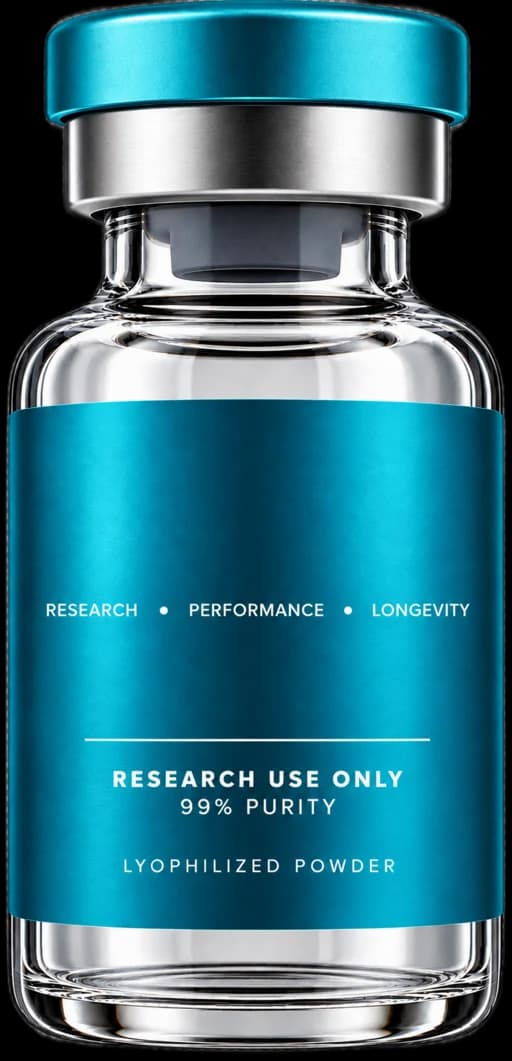
Lyophilized KLOW should arrive as an off-white or slightly blue-tinted powder cake in a sealed glass vial. The blue tint comes from GHK-Cu's copper content — that's normal, not a defect. Check:

  • Vial integrity — no cracks, rubber stopper intact, aluminum cap sealed
  • Powder appearance — solid cake or loose powder with slight blue cast, NOT liquid or brown
  • Labeling — batch/lot number, total mg, "for research use only"
  • Cold pack — reputable vendors ship with cold packs in summer months

Storage Guidelines

State Temperature Duration
Lyophilized (powder) Room temp Weeks (for shipping)
Lyophilized (powder) Refrigerated (2-8°C) 12-24 months
Lyophilized (powder) Frozen (-20°C) 2+ years
Reconstituted (BAC water) Refrigerated (2-8°C) 28 days max
Reconstituted (sterile water) Refrigerated (2-8°C) 24 hours
Reconstituted Frozen Not recommended

Key point: The 28-day rule is the same as singles — multi-component blends are not more unstable than their individual peptides. See our KLOW reconstitution guide for step-by-step mixing.

Frequently Asked Questions

The components are sold as research chemicals and legal to purchase in most jurisdictions for research purposes. None are FDA-approved, and BPC-157 is on the 503A bulks Category 2 list — compounding pharmacies cannot produce it. Research vendors label product "not for human consumption."

How much does KLOW cost per month?

At the community-standard 10 units 3x/week maintenance dose (1 vial every ~6.5 weeks), KLOW runs about $60-125/month from a reputable vendor. A 12-week loading-then-maintenance cycle typically uses 2-3 vials, totaling $180-400.

Is it cheaper than buying singles?

Yes — 40-60% cheaper. The same 80mg of peptide mass bought separately (10mg BPC-157 + 10mg TB-500 + 50mg GHK-Cu + 10mg KPV) runs ~$215 from mid-tier vendors, while an 80mg KLOW vial runs $88-135.

What purity should I look for?

Per-component HPLC showing 98%+ purity for each of BPC-157, TB-500, GHK-Cu, and KPV individually, plus mass spec confirming each peptide's molecular weight. Plus heavy-metals screening (mandatory for GHK-Cu) and endotoxin testing (mandatory for any injectable).

Can I buy KLOW from a pharmacy?

No. BPC-157 is on the 503A Category 2 list, blocking compounding pharmacies from producing it. KPV is also not FDA-approved. KLOW is only available through research peptide vendors.

How do I know if a blend vendor is trustworthy?

Check for: per-component third-party COAs, verifiable lab results, responsive customer service, community reputation on peptide forums, consistent pricing (not suspiciously cheap), and a clear return/reship policy. See our Best KLOW Blend Vendors for pre-vetted options.

References

Citation Topic PMID
Pickart & Margolina, Int J Mol Sci (2018) GHK-Cu gene expression, 4,000+ genes 29986520
Dalmasso et al., Gastroenterology (2008) PepT1-mediated KPV uptake, NF-kB inhibition 18061177
Malinda et al., PNAS (1999) TB-500 LKKTET actin-binding mechanism 10469335

This article is for educational and informational purposes only. It is not medical advice and should not be used to diagnose, treat, or prevent any condition. Consult a licensed healthcare provider before using any peptide.