SS-31 (elamipretide) is the mitochondrial peptide that earned FDA approval in September 2025 — but only for Barth syndrome. For general research use, the SS-31 for sale on the research market comes only from specialty peptide vendors, with per-mg pricing that varies roughly threefold across vendors and vial sizes for essentially the same 639.8 Da molecule. The spread is huge, and it's entirely driven by vendor markup and vial size choice.
This guide covers what you should pay per milligram before you buy SS-31, which vial size fits a standard 500 mcg/day protocol, and how to verify a COA for this uniquely-structured tetrapeptide. SS-31 contains 2,6-dimethyltyrosine (Dmt) — an unusual modification that a legitimate vendor's mass spec will confirm.
This is not a ranked vendor list — for that, see our Best SS-31 Vendors comparison. This guide teaches you how to evaluate any vendor yourself.
Understanding SS-31 Pricing
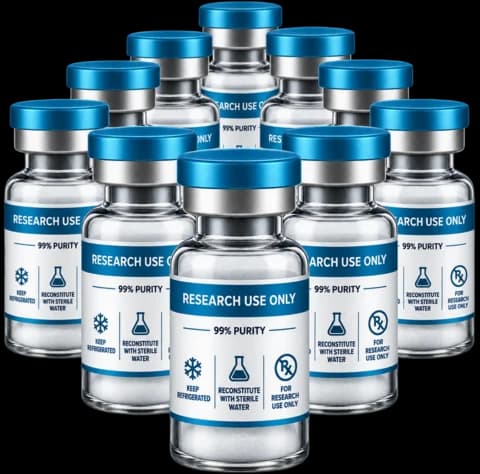
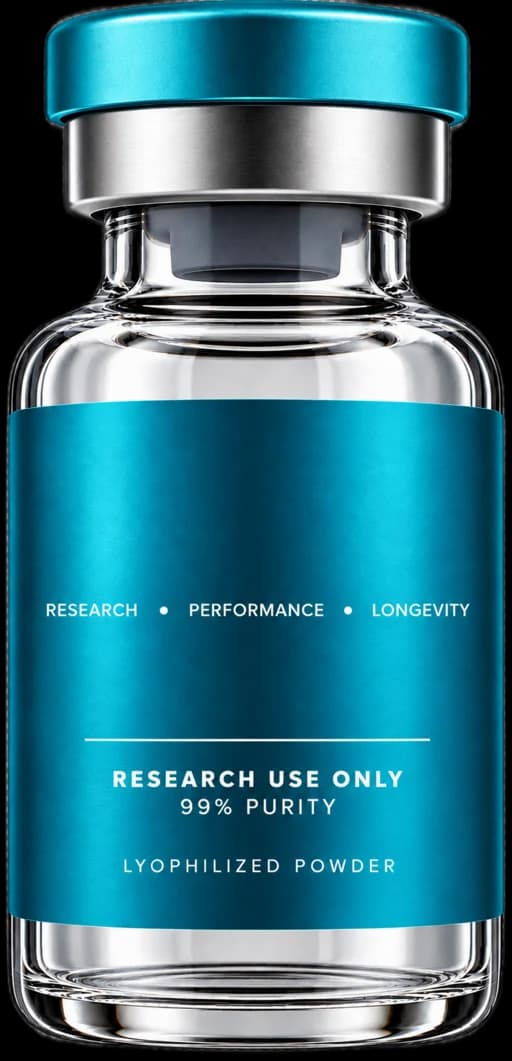
SS-31 is sold as a lyophilized powder in sealed glass vials. Because it's a small tetrapeptide, synthesis is relatively cheap — but demand is high and many vendors charge accordingly. The three factors that move price: vial size, manufacturer sourcing, and whether the vendor pays for third-party testing.
Current Market Pricing (2026)
Vial Size
Best For
5 mg
Tolerance testing only
10 mg
Standard 500 mcg/day — most popular
30 mg
Mid-length protocols, better value
50 mg
Best $/mg — long protocols
The pattern is clear: the 50mg vial carries the lowest per-mg price of the common sizes, well below the 10mg vial. But once mixed, the entire vial follows the 28-day stability window.
Single-vial discount: Ascension Peptides' coupon code applies to its 10mg vial — current effective prices are on the Ascension deals page. Get the code →
Cost Per Week at Common Doses
Weekly Dose
Monthly Amount (~30 days)
10mg Vials per Month
50mg Vials per Month
1.75 mg/week (250 mcg/day)
~7.5 mg
~0.75
~0.15
3.5 mg/week (500 mcg/day)
~15 mg
~1.5
~0.3
5 mg/week (5-on/2-off, 1mg/day)
~21.4 mg
~2.1
~0.43
For current vendor-specific pricing with exact $/mg breakdowns, see our Best SS-31 Vendors comparison.
How to Verify SS-31 Quality
SS-31 is a synthetic tetrapeptide with an unusual structure: D-Arg-Dmt-Lys-Phe-NH2. The 2,6-dimethyltyrosine (Dmt) residue is what lets it target mitochondrial cardiolipin, and it's expensive to synthesize correctly. A vendor selling "SS-31" for $1/mg may be selling a simpler Arg-Tyr-Lys-Phe sequence without the Dmt modification — identical looking on a cheap assay, completely non-functional in practice.
What a COA (Certificate of Analysis) Should Include
Identity Confirmation
Mass spectrometry confirming the correct molecular weight (639.8 Da for SS-31)
Confirmation of the Dmt (2,6-dimethyltyrosine) residue — the most critical modification
Purity Testing
HPLC purity — look for 98%+ purity
The chromatogram should show a single dominant peak with minimal truncated-sequence impurities
Contamination Testing
Endotoxin levels (bacterial contamination)
Residual solvent analysis (acetonitrile, TFA)
Heavy metals screening
How to Verify a COA Is Legitimate
Check the testing lab — Reputable labs include Janoshik Analytical, MZ Biolabs, and Colmaric Analyticals. Avoid vendors who only show "in-house" testing.
Verify on the lab's website — Janoshik COAs have a task number you can look up directly at janoshik.com. If the vendor won't provide a verifiable task number, that's a red flag.
Check the date — COAs should be recent (within 6 months). Old COAs may not represent the current batch.
Match the batch — The batch/lot number on the COA should match what's printed on your vial.
Look for the original PDF — Screenshots are easier to fake than full PDFs with lab letterhead and signatures.
Red Flags to Avoid
No COA available — without confirming the Dmt residue, you have no idea if you're buying real SS-31
Only in-house testing — self-reported purity numbers are meaningless
Prices below $2/mg across all sizes — synthesis of the Dmt residue is expensive; this signals a substituted sequence
No contact information — legitimate vendors have real customer service
Cryptocurrency only — good vendors accept crypto but also standard payment rails
No return or reship policy — reputable vendors stand behind their products
Vial size selection isn't just about price — it's about matching your protocol duration to the 28-day reconstitution stability window.
The 28-Day Rule
Once reconstituted with bacteriostatic water, SS-31 is stable for up to 28 days refrigerated. SS-31 is a small, relatively stable tetrapeptide but the standard peptide rules still apply. See our SS-31 reconstitution guide for the full mixing protocol.
Vial Size
At 250 mcg/day
At 500 mcg/day
At 1 mg/day (5-on/2-off)
5 mg
20 days ✓
10 days ✓
5 days ✓
10 mg
40 days ⚠️
20 days ✓
10 days ✓
30 mg
120 days ⚠️
60 days ⚠️
30 days ⚠️
50 mg
200 days ⚠️
100 days ⚠️
50 days ⚠️
⚠️ = exceeds 28-day window per reconstitution
Why vial size matters here: A lyophilized vial is reconstituted all at once — adding bacteriostatic water dissolves the full 30 mg or 50 mg of powder, and the 28-day window then applies to the entire contents. Part of a sealed vial cannot be mixed while the rest stays as powder. Buyers who want smaller working batches choose a smaller vial size rather than mixing part of a larger one.
Vial Size by Reported Protocol
Tolerance testing or short trial:
5mg vial — lowest upfront cost, 10 days at 500 mcg/day
Not cost-effective beyond the first trial
Standard 500 mcg/day protocol:
10mg vial — lasts 20 days at 500 mcg/day, inside the 28-day window
The simplest and most popular size
Long-term mitochondrial protocol (5-on/2-off):
30mg or 50mg vial — maximum per-mg value
At 1 mg/day (5-on/2-off), the mixed vial runs 30 or 50 days — past the 28-day window
Buying Multiple Smaller vs One Large Vial
Factor
Multiple Small (e.g., 3× 10mg)
One Large (1× 30mg)
Cost per mg
Higher
Usually lower (live offers above)
Freshness
Better (one vial mixed at a time)
Whole vial mixed at once
Flexibility
Can stop anytime
Committed to full supply
Storage
Easier (smaller volumes)
Requires careful planning
Shipping
More frequent orders
Single shipment
How the sizes compare: the 10mg vial is the most commonly bought size and fits a 500 mcg/day protocol inside the 28-day window. The 50mg vial carries the lowest per-mg price of the common sizes, in exchange for a mixed vial that outlasts the 28-day window at every dose in the table above.
Vendor Evaluation Methodology
When comparing SS-31 vendors, we evaluate three weighted factors:
Price Competitiveness (40%)
We normalize to cost per milligram for fair comparison across vial sizes. A vendor selling 50mg at $160 ($3.20/mg) scores higher than one selling 10mg at $80 ($8/mg), all else being equal.
COA & Testing (30%)
We verify that COAs are:
From recognized third-party labs
Recent (within the last 6 months)
Verifiable on the lab's website
Confirming the Dmt residue — critical for SS-31 specifically
Reputation (30%)
Community feedback from peptide forums, shipping reliability, customer service responsiveness, and business track record. We give additional weight to vendors with consistent multi-year operations.
Shipping and Storage
What to Expect When Your Order Arrives
Lyophilized SS-31 should arrive as a white or off-white powder cake in a sealed glass vial. Check:
Vial integrity — no cracks, proper rubber seal, aluminum cap intact
Powder appearance — solid cake or loose powder, NOT liquid or discolored
Labeling — batch/lot number, milligram content, "for research use only"
Cold pack — reputable vendors ship with cold packs in summer months
Storage Guidelines
State
Temperature
Duration
Lyophilized (powder)
Room temp
Weeks (for shipping)
Lyophilized (powder)
Refrigerated (2-8°C)
12-24 months
Lyophilized (powder)
Frozen (-20°C)
2+ years
Reconstituted (BAC water)
Refrigerated (2-8°C)
28 days max
Reconstituted (sterile water)
Refrigerated (2-8°C)
24 hours
Reconstituted
Frozen
Not recommended (peptide degradation)
Key point: Keep unreconstituted vials refrigerated. SS-31 is protected from light in the vial, but avoid prolonged UV exposure once reconstituted.
Bac Water Made for Peptides
Don't risk a $300 peptide on generic bac water.
Most cloudy reconstitutions trace back to one thing — and it isn't the peptide. Sterile, non-pyrogenic, 0.9% benzyl alcohol — formulated for peptide reconstitution, not repackaged from generic stock.
✓ 0.9% benzyl alcohol✓ Made for peptides✓ 30 mL multi-dose
SS-31 is sold by vendors as a research chemical; its legal status varies by jurisdiction. Elamipretide (the pharmaceutical version of SS-31) received FDA accelerated approval on September 19, 2025, to improve muscle strength in Barth syndrome patients weighing at least 30 kg (Shirley 2025, [PMID 41335372](https://pubmed.ncbi.nlm.nih.gov/41335372/)), but it is not approved for general use. Research-grade SS-31 is labeled 'not for human consumption.'
How much does SS-31 cost per month?
At the commonly reported 500 mcg/day research protocol, SS-31 use comes to about 15 mg a month — 1.5 10mg vials, or under a third of a 50mg vial. A single 10mg vial covers 20 days at 500 mcg/day. Larger vials carry a lower per-mg price but stretch past the 28-day stability window, because the whole vial is reconstituted at once. Current per-vial prices are on the [Best SS-31 Vendors](/best/ss-31?from=ss-31-buying-guide) page.
What vial size should I buy?
For 500 mcg/day (standard dose), a 10mg vial lasts 20 days — inside the 28-day window and simple to manage. 30mg and 50mg vials offer the best $/mg value but stretch past the 28-day stability window, because the whole vial is reconstituted at once. 5mg vials are mainly described as a tolerance-testing size.
What purity should I look for in SS-31?
Look for third-party HPLC testing showing 98%+ purity and mass spectrometry confirming the 639.8 Da molecular weight. SS-31 is a small tetrapeptide (D-Arg-Dmt-Lys-Phe-NH2) with the unusual 2,6-dimethyltyrosine (Dmt) residue — a legitimate COA will confirm this modification.
Can I buy SS-31 from a pharmacy?
Elamipretide received FDA accelerated approval in September 2025 for Barth syndrome only. That formulation is prescription-only and not available for general use. Research-grade SS-31 is only available through specialty peptide vendors, not pharmacies.
This article is for educational and informational purposes only. It is not medical advice and should not be used to diagnose, treat, or prevent any condition. Consult a licensed healthcare provider before using any peptide.