Tesamorelin results follow a predictable pattern because this is one of the few peptides with Phase III clinical trial data mapping outcomes to specific timepoints. There is little need to guess — the data documents what happens and when.
Research-context information only. Tesamorelin is the active ingredient in an FDA-approved product for HIV-associated lipodystrophy only; off-label and research-peptide use is not FDA-approved. Protocols, doses, and reactions reported below come from published clinical trials and self-reported community sources. This article reports what has been documented, not what should be done. Possession or use of investigational drugs outside an authorized clinical trial may be illegal in your jurisdiction. Consult a licensed physician for personal medical decisions.
The short version: hormonal changes happen in days, body composition changes take weeks to months. Visible results at week 2 are not documented. With consistent dosing through the first 8 weeks, the clinical data is strongly favorable.
This timeline draws from published clinical trials in HIV-associated lipodystrophy at the standard 2 mg daily dose. Off-label users in the general population may see different timelines, but the biological progression — GH elevation first, fat mobilization second, visible recomposition third — follows the same sequence.
Weeks 1-2: Hormonal Shift (Invisible But Measurable)
Everything changes biochemically during this phase, but nothing changes in the mirror.
What's happening internally:
GH pulsatility increases within the first few days of dosing
IGF-1 levels begin rising — Phase III data showed mean increases of approximately 108 ng/mL over baseline across the treatment period (Wellington & Goa, 2011)
Lipolytic enzymes begin upregulating in visceral adipose tissue
Hepatic IGF-1 production ramps up in response to increased GH signaling
What users and trial subjects commonly report:
Most people notice nothing at this stage — and that is normal
Some report improved sleep quality, particularly deeper sleep onset, likely related to GH's role in slow-wave sleep architecture
Occasional mild injection site reactions (redness, itching) in approximately 10% of users per Phase III safety data
Possible mild fluid retention or joint stiffness as GH levels adjust — a common GH-class side effect that typically resolves within 1-2 weeks
What is not commonly reported at this stage:
No visible fat loss
No measurable waist circumference change
No meaningful strength or energy differences
Blood work context: Labs drawn at week 2 typically show IGF-1 already rising. A baseline draw before starting and a follow-up at week 2-4 captures the initial hormonal shift and confirms the peptide is active.
Weeks 3-4: Early Subjective Changes
The hormonal foundation is established. GH and IGF-1 are elevated and stabilizing at a new set point. Downstream metabolic effects are beginning to accumulate.
What's happening internally:
Sustained IGF-1 elevation drives increased protein synthesis in skeletal muscle via mTOR activation
Visceral adipocyte lipolysis is accelerating — free fatty acid mobilization increases as GH upregulates beta-adrenergic receptor sensitivity in visceral fat cells
Hepatic lipid metabolism begins shifting
Collagen synthesis increases (GH is a potent stimulator of fibroblast activity)
What users and trial subjects commonly report:
Sleep improvements become more consistent for those who experience them
Subtle increases in energy and recovery between workouts
Skin quality changes reported anecdotally — improved hydration and slight tightening from GH-stimulated collagen synthesis
Appetite may fluctuate as metabolic rate adjusts
Transient paresthesias (tingling in hands) in some individuals — a recognized GH-class side effect
What is still too early:
Visible waist circumference reduction
Measurable body composition changes on DEXA
Significant strength or lean mass gains
This is the phase where impatience becomes the biggest risk. The hormonal machinery is running, but the physical results require weeks to accumulate. If IGF-1 is not elevated on blood work by week 4, investigate product quality, injection technique, or dose adequacy before continuing.
This is where data starts showing up in measurements, not just blood work. The clinical trials begin detecting meaningful differences from placebo during this window.
What's happening internally:
Visceral fat reduction becomes CT-measurable — the pivotal Phase III trial showed significant visceral adipose tissue reduction emerging during this period (Falutz et al., 2007)
Lean body mass begins increasing measurably — pooled Phase III data confirmed significant lean tissue accrual alongside fat reduction (Falutz et al., 2010)
Liver enzymes (ALT) begin improving in those with elevated baseline levels (Fourman et al., 2017)
Intramuscular fat starts decreasing while muscle cross-sectional area and density increase (Stanley et al., 2019)
What users and trial subjects commonly report:
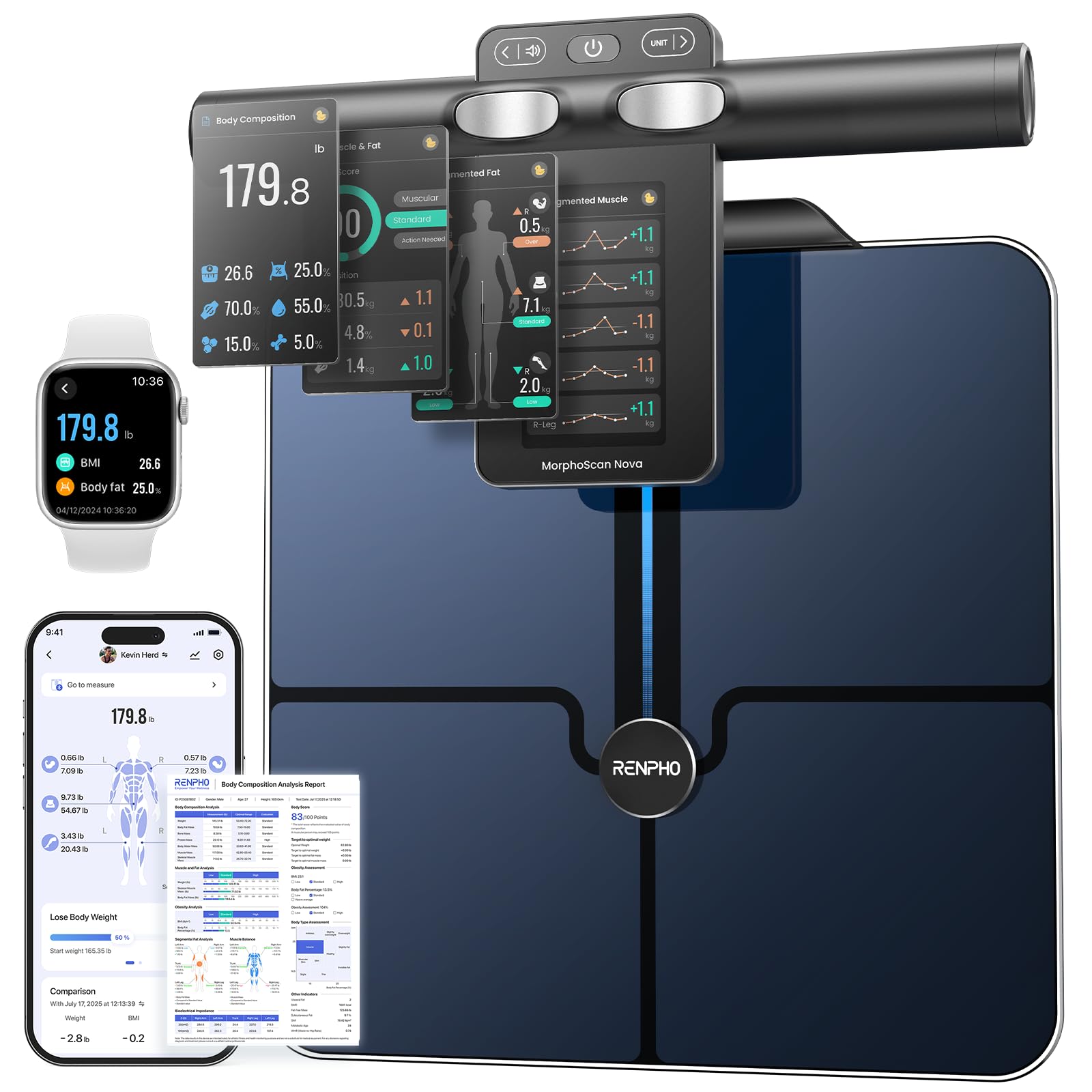
Waist circumference reduction — the first metric most people can track at home
Clothes fitting differently around the midsection, even if scale weight has not changed significantly
Improved workout recovery and potentially increased training capacity
Better body composition visible in the mirror — less abdominal bloat, more midsection definition
Metabolic markers improving on blood work (triglycerides, cholesterol ratios beginning to shift)
The recomposition paradox: Tesamorelin at this stage is doing something unusual — reducing visceral fat while adding lean tissue simultaneously. Your scale weight may not change dramatically because fat loss and muscle gain offset each other. This is not a failure — it is the desired outcome. Waist circumference, progress photos, and body composition scans tell the real story. The scale lies.
Recommended blood work at 8-12 weeks:
IGF-1 (should be elevated but within physiological range)
Fasting glucose and HbA1c (monitor for GH-mediated insulin effects)
Liver enzymes — ALT, AST (should be stable or improving)
Lipid panel (triglycerides and cholesterol ratios trending favorably)
Months 4-6: Peak Clinical Effect
The Phase III trials measured their primary endpoints at 26 weeks (6 months). This is where tesamorelin delivers its maximum documented benefit — and where the strongest data exists.
What the clinical data shows:
~15-18% reduction in visceral adipose tissue by CT scan at 26 weeks versus placebo (Falutz et al., 2007)
Significant improvements in trunk fat, waist circumference, and waist-to-hip ratio
Improved body image scores — patients reported meaningful improvements in belly appearance distress and physician-rated belly profile
Sustained IGF-1 elevation within normal physiological range
Metabolic improvements in triglycerides, cholesterol ratios, and inflammatory markers correlated with the degree of visceral fat loss (Stanley et al., 2012)
In patients with NAFLD, liver fat reduction and prevention of fibrosis progression documented at 12 months of continued treatment (Stanley et al., 2019)
What users and trial subjects commonly report:
Significant visible reduction in abdominal size — before/after comparisons become obvious at this stage
Improved body composition that others will notice
Sustained energy, sleep, and recovery improvements
Blood work showing comprehensive metabolic improvement across lipid and hepatic markers
For those who had elevated liver enzymes at baseline, measurably improved hepatic markers
Diminishing returns: The rate of visceral fat loss is highest during the first 26 weeks. Extension studies to 52 weeks showed maintained benefits but not dramatically accelerated losses beyond the 6-month mark. The biggest gains happen in this 4-6 month window. After 6 months, the trial data describe maintenance of accrued gains rather than rapid new improvements.
Results summary by goal:
Goal
First Signs
Meaningful Change
Peak Effect
Visceral fat loss
Weeks 4-8
Weeks 12-16
26 weeks
Lean body mass
Weeks 4-6
Weeks 8-12
26+ weeks
Metabolic markers
Weeks 8-12
Weeks 16-26
26 weeks
Liver fat reduction
Weeks 8-12
Weeks 16-26
52 weeks
Sleep and recovery
Days 3-7
Weeks 2-4
Weeks 4-8
Bac Water Made for Peptides50% off
Don't risk a $300 peptide on generic bac water.
Most cloudy reconstitutions trace back to one thing — and it isn't the peptide. Sterile, non-pyrogenic, 0.9% benzyl alcohol — formulated for peptide reconstitution, not repackaged from generic stock.
✓ 0.9% benzyl alcohol✓ Made for peptides✓ 30 mL multi-dose
Not everyone responds identically. These variables influence the specific timeline and magnitude of response.
Starting visceral fat level
Patients with higher baseline visceral adipose tissue in clinical trials showed greater absolute reductions. Individuals carrying significant visceral fat (waist-to-hip ratio above 0.9 for men, 0.85 for women) have more to lose and tend to show more dramatic changes. Conversely, in already-lean individuals the visceral fat reduction is less noticeable.
Dose consistency
Phase III results came from daily dosing at 2 mg without interruption for 26 weeks. Missed doses, inconsistent timing, or underdosing slow the timeline. Tesamorelin works through sustained GH elevation — every gap in dosing is a gap in the lipolytic signal to visceral fat cells.
Diet and training
Clinical trials did not mandate specific diet or exercise protocols, yet still showed significant results. Adding resistance training capitalizes on the GH-mediated protein synthesis boost and likely amplifies lean mass gains beyond what the trials demonstrated. A moderate caloric approach (not aggressive restriction) supports the recomposition effect — fuel is required for both fat mobilization and muscle building.
Age and baseline GH status
Older individuals with lower baseline GH production may see more dramatic GH restoration effects. Younger individuals with already-robust GH output may see less relative improvement, since tesamorelin works by stimulating endogenous GH rather than replacing it.
Cycling versus continuous use
The FDA-approved protocol is continuous daily dosing. In the pooled Phase 3 program, tesamorelin was dosed every day for 52 continuous weeks: IGF-1 reached its elevated plateau by week 26 and was held at that level through week 52, and the trials documented no tachyphylaxis (no loss of response over time) on continuous daily dosing, with visceral-fat reduction sustained across the full year (52-week extension, Falutz et al., 2010). Community off-label protocols often cycle 8-16 weeks on, 4-8 weeks off, typically described in the context of cost management and letting IGF-1 normalize between blocks. Use our tesamorelin cycle cost calculator to compare spending across different cycle lengths. Cycling means visceral fat may partially rebound during off periods, while continuous use mirrors the FDA-approved protocol and carries the strongest trial evidence for a sustained, non-attenuating response. See Do GH Peptides Desensitize the Pituitary? for how this compares across GH secretagogues.
When to Adjust the Protocol
Signs it is working (stay the course):
IGF-1 rising on blood work at 4-6 weeks (within physiological range)
Waist circumference decreasing by month 2-3
Sleep and recovery subjectively improving within the first month
Liver enzymes stable or improving (if previously elevated)
Clothes fitting differently around the midsection by week 8-12
Signs to reassess:
No IGF-1 increase at week 4 — suggests possible dosing issue, degraded product, or poor absorption. Verify the source, check reconstitution and storage, and confirm injection technique
No waist circumference change at week 12-16 — complete non-response at this timepoint warrants evaluation. Some individuals may need the full 26 weeks, but total non-response deserves investigation
Fasting glucose rising significantly — GH can impair insulin sensitivity in some individuals. This requires medical attention and possible dose adjustment
IGF-1 above reference range — dose reduction or discontinuation may be needed. Supraphysiological IGF-1 carries long-term risks
What happens after stopping:
Phase III trials clearly showed visceral fat regain after tesamorelin discontinuation. The benefits do not persist indefinitely after stopping. GH and IGF-1 return to baseline levels, and the lipolytic stimulus to visceral fat cells ceases. This is why many off-label protocols use extended cycles or continuous lower-dose maintenance rather than short bursts. The data supports sustained use for sustained results.
Frequently Asked Questions
How quickly does tesamorelin work?
GH and IGF-1 levels increase within the first week. Visible body composition changes typically begin around week 8-12, with maximum visceral fat reduction at 26 weeks per clinical trial data.
What happens when you stop tesamorelin?
Visceral fat regain occurs after discontinuation. Phase III trials showed benefits reversed when treatment stopped, which is why many protocols are long-term or cycled.
Will tesamorelin help with subcutaneous fat?
Minimal effect. Tesamorelin preferentially targets visceral (organ) fat. Clinical trials showed significant visceral fat reduction with minimal changes in subcutaneous fat or total body weight.
Research Supplies for Tesamorelin
Hand-picked storage, injection, and recovery supplies paired with Tesamorelin protocols.
For educational and research purposes only. This is not medical advice. Tesamorelin is FDA-approved for HIV-associated lipodystrophy; off-label use should be discussed with a physician.