BPC-157 is the most-searched healing peptide of 2026 — but since the FDA moved it to the 503A Category 2 bulks list, compounding pharmacies can no longer produce it, and every legitimate source is now a research peptide vendor. That makes vendor selection the entire game.
This guide covers everything you need to evaluate before purchasing: what to actually pay per milligram, which vial size matches a 500 mcg/day protocol, how to read a COA, and the vendor red flags to avoid. BPC-157 is a 15-amino-acid peptide that's well-characterized and cheap to produce correctly — there is no excuse for a legitimate vendor to skip testing.
This is not a ranked vendor list — for that, see our Best BPC-157 Vendors comparison. This guide teaches you how to evaluate any vendor yourself.
Understanding BPC-157 Pricing
BPC-157 is sold as a lyophilized (freeze-dried) powder in sealed glass vials. The three factors that move price: vial size (bigger = cheaper per mg), vendor markup, and whether they invest in third-party COAs. The cheapest 5mg vial on a sketchy site can cost more per dose than a well-tested 20mg vial from a top-tier vendor.
Current Market Pricing (2026)
| Vial Size | Typical Price Range | Price Per mg | Best For |
|---|---|---|---|
| 5 mg | $25-55 | $5-11/mg | Tolerance testing, 250 mcg/day protocols |
| 10 mg | $35-80 | $3.50-8/mg | Standard 500 mcg/day — best all-around |
| 20 mg | $75-140 | $3.85-7/mg | Stacks with TB-500, long protocols |
The pattern is clear: 10mg is the sweet spot for almost every user. Jumping to 20mg saves roughly 10-15% per mg but locks you into a longer reconstitution cycle. 5mg only makes sense as a trial vial. Stockout patterns documented in our Q1 2026 pricing data showed BPC-157 carrying a 36.6% out-of-stock rate — the highest in the dataset — after the FDA's category reclassification stressed inventory across multiple vendors.
Cheapest single-vial option: Glacier Aminos's 10% off drops the 20mg vial to $69.29 ($3.46/mg effective) — the lowest effective price we track for buying one vial. Get the code →
Cost Per Week at Common Doses
| Weekly Dose | Monthly Cost (5mg vial) | Monthly Cost (10mg vial) | Savings |
|---|---|---|---|
| 1.75 mg/week (250 mcg/day) | $17-35/month | $12-25/month | ~30% |
| 3.5 mg/week (500 mcg/day) | $35-70/month | $25-50/month | ~30% |
| 7 mg/week (500 mcg 2x/day) | $70-140/month | $50-100/month | ~30% |
For current vendor-specific pricing with exact $/mg breakdowns, see our Best BPC-157 Vendors comparison.
How to Verify BPC-157 Quality
BPC-157 is a 15-amino-acid peptide (pentadecapeptide) with a molecular weight of 1,419.55 Da. It's small, stable, and simple to synthesize — which is exactly why there's no excuse for a vendor to sell untested product. Contamination or low purity in a healing peptide is a safety issue, not a potency issue.
What a COA (Certificate of Analysis) Should Include
Identity Confirmation
- Mass spectrometry confirming the correct molecular weight (1,419.55 Da for BPC-157)
- Amino acid sequence verification matching Gly-Glu-Pro-Pro-Pro-Gly-Lys-Pro-Ala-Asp-Asp-Ala-Gly-Leu-Val
Purity Testing
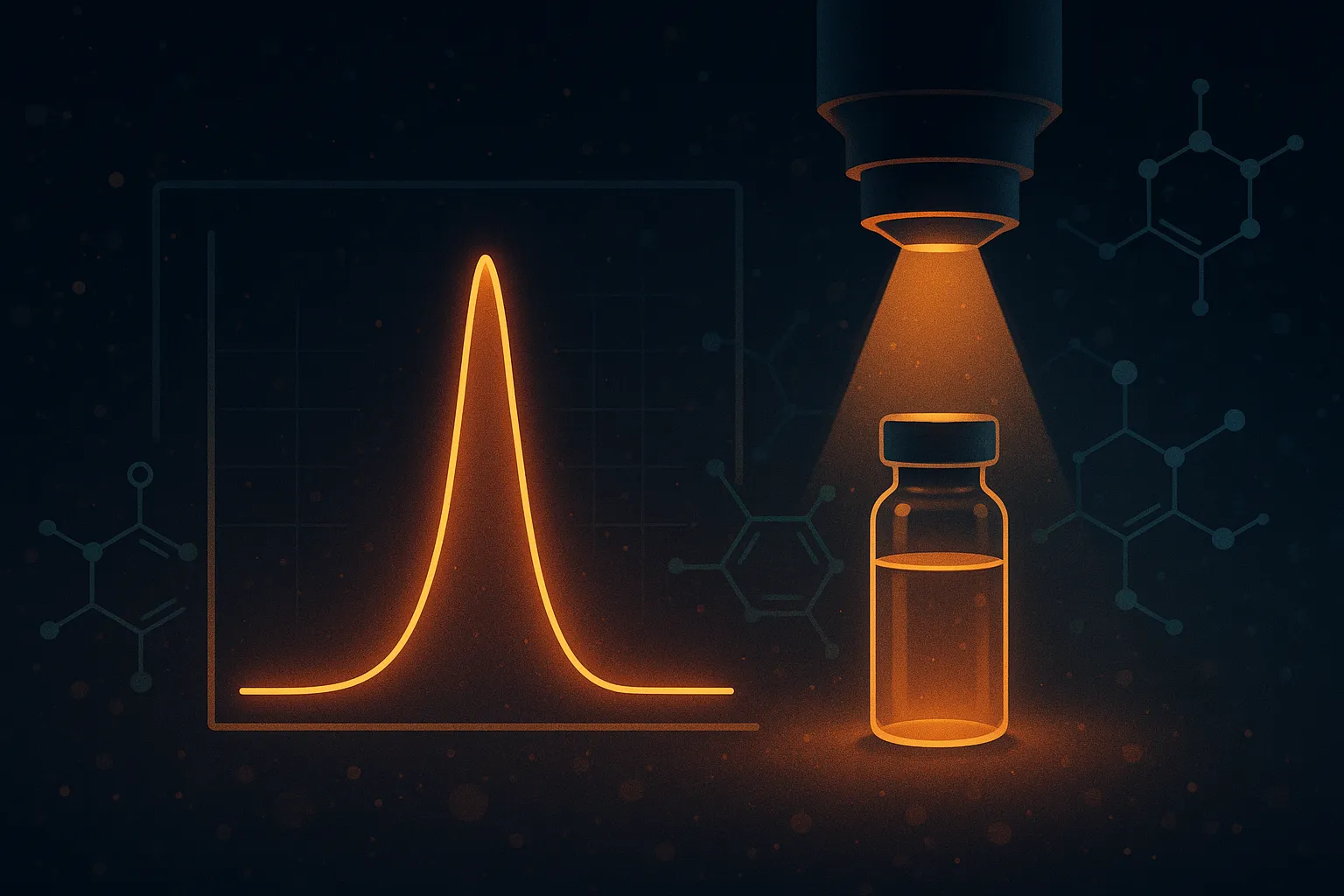
- HPLC purity — look for 98%+ purity
- The chromatogram should show a single dominant peak with minimal secondary peaks
Contamination Testing
- Endotoxin levels (bacterial contamination)
- Residual solvent analysis (acetonitrile, TFA)
- Heavy metals screening
How to Verify a COA Is Legitimate
Not all COAs are real. Some vendors photoshop results or reuse old certificates. Here's how to verify:
-
Check the testing lab — Reputable labs include Janoshik Analytical, MZ Biolabs, and Colmaric Analyticals. Avoid vendors who only show "in-house" testing.
-
Verify on the lab's website — Janoshik COAs have a task number you can look up directly at janoshik.com. If the vendor won't provide a verifiable task number, that's a red flag.
-
Check the date — COAs should be recent (within 6 months). Old COAs may not represent the current batch.
-
Match the batch — The batch/lot number on the COA should match what's printed on your vial.
-
Look for the original PDF — Screenshots of COAs are easier to fake than full PDFs with lab letterhead and signatures.
Red Flags to Avoid
- No COA available — any vendor unwilling to provide testing results is not worth the risk
- Only in-house testing — self-reported purity numbers are meaningless without independent verification
- Prices significantly below market — BPC-157 below $3/mg across every size is a quality concern
- No contact information — legitimate vendors have real customer service, not just a payment page
- Cryptocurrency only — good vendors accept crypto but also have standard rails (card, ACH, Zelle)
- No return or reship policy — reputable vendors stand behind their products