CJC-1295 DAC (Drug Affinity Complex) is a long-acting synthetic GHRH analog that covalently binds to serum albumin, extending its half-life to approximately 8 days. Short-term human studies documented dose-dependent, prolonged GH and IGF-1 elevation, but did not establish a long-term community dosing regimen. Community dosing is not based on clinical trial goals. This is not medical advice.
Research-context information only.CJC-1295 DAC is a research peptide. Protocols, doses, and reactions reported below come from published research and self-reported community sources. This article reports what has been documented, not what should be done. Consult a licensed physician for personal medical decisions.
Note: CJC-1295 DAC has no standardized clinical dosing protocol. The protocol below is a Community Protocol based on clinical trial data and community experience.
CJC-1295 with DAC Dosing Table
Match your vial size below — reconstitution and dose math update automatically.
Reconstitute: add 2.5 mL of bacteriostatic water to the 5 mg vial. Resulting concentration: 2 mg/mL.
Calculation example A from the dosing guide. Community-reported schedules are not validated clinical regimens.
Dose
Syringe units
mL volume
Schedule
1 mg
50 units
0.5 mL
2x/week SubQCommunity-reported example
2 mg
100 units
1 mL
Weekly or 2x/week SubQCommunity-reported alternatives, not equivalent weekly totals
4 mg
200 units
2 mL
Weekly SubQCommunity calculation example; exceeds one 100-unit syringe
1 mg50 units · 0.5 mL
2x/week SubQ
Community-reported example
2 mg100 units · 1 mL
Weekly or 2x/week SubQ
Community-reported alternatives, not equivalent weekly totals
4 mg200 units · 2 mL
Weekly SubQ
Community calculation example; exceeds one 100-unit syringe
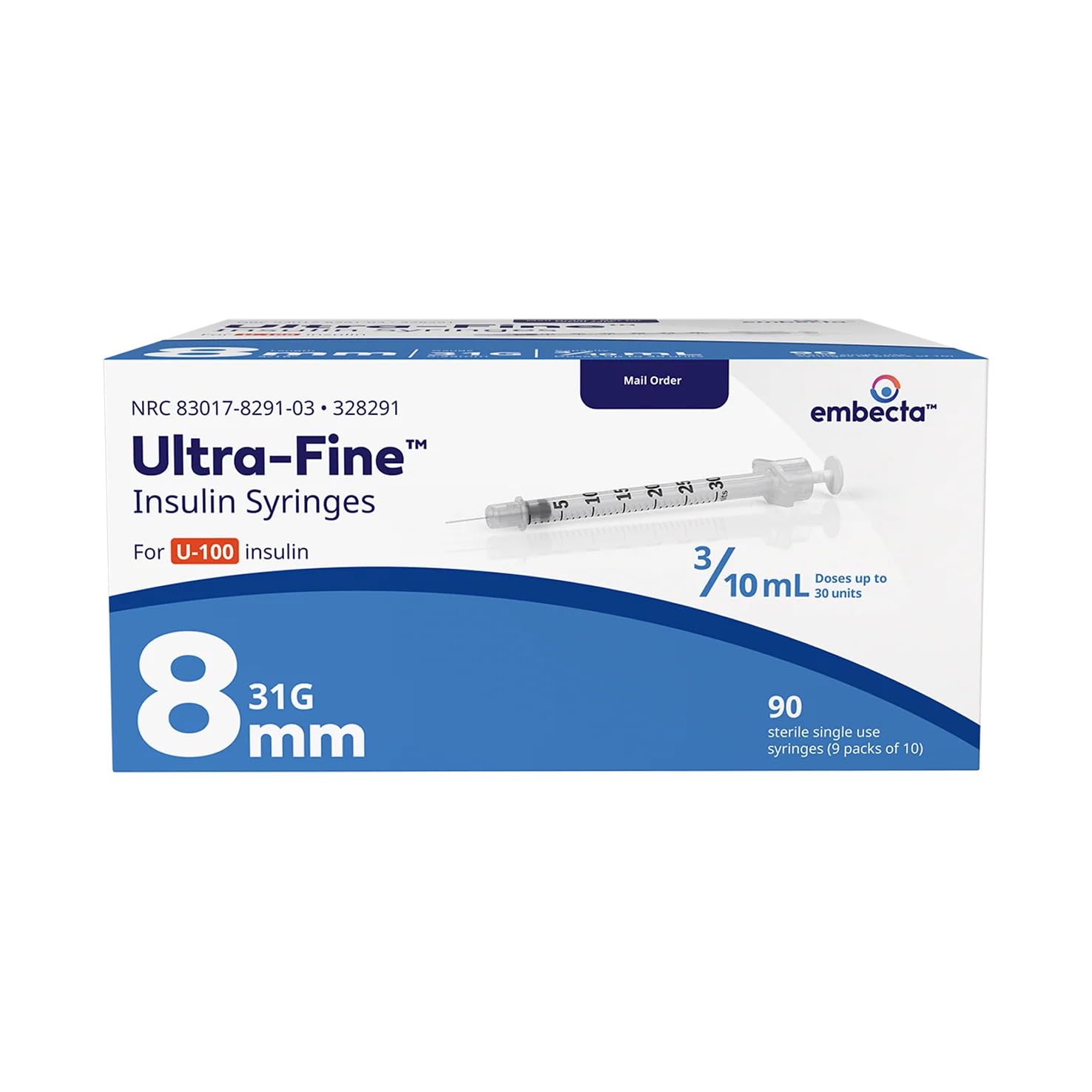
Math assumes U-100 insulin syringes (1 mL = 100 units). Verify your syringe matches before injecting. Round half-units to the nearest visible mark.
4 mg total per week; not an established clinical regimen
Lower-amount community example
1 mg
Twice weekly
Reported 12-16-week cycles
2 mg total per week; not a clinical IGF-1 target
Weekly community examples
2-4 mg
Once weekly
Reported 8-12-week cycles
2-4 mg total per week; not the weight-based trial protocol
These are community-reported schedules, not interchangeable clinical prescriptions. The embedded table uses the same examples and the primary dilution below. The published human studies used weight-based doses; they did not validate these fixed-dose cycles or compare their adherence.
Cycling Details
Teichman et al. reported a 5.8-8.1-day half-life and a cumulative effect after repeated dosing. Those findings do not establish that the fixed-dose community schedules above reach steady state after 2-3 injections or within 10-14 days.
Weeks 1-2: Community protocols document a starting dose of 1-2 mg twice weekly during the first two weeks. Community protocols describe blood work at week 4 to verify IGF-1 is in the target range (upper-normal, not supraphysiological).
Dose-adjustment claims: The cited studies do not establish a universal IGF-1 cutoff for changing a community dose or schedule. A result must be interpreted against the laboratory's age-adjusted reference range and clinical context by a licensed clinician, not converted into an automatic dose instruction.
Community-reported timing: Community sources describe once- or twice-weekly schedules, sometimes on fixed days such as Monday/Thursday. Claims that evening timing, fasting, or a particular split improves results have not been established by a head-to-head trial of these community schedules.
Routes of Administration
Subcutaneous route: The Teichman and Ionescu & Frohman studies used subcutaneous administration. Community reports also describe this route, but their site, syringe, and dilution choices are not standardized clinical instructions. The example volumes below follow the stated concentration; there is no single draw volume independent of dilution.
Reconstitution Quick Reference
Vial Size
BAC Water
Concentration
2 mg Dose
5 mg
2.5 mL
2 mg/mL
100 units
Math: Community reconstitution references document this ratio: 5,000 mcg / 2.5 mL = 2,000 mcg/mL. At this concentration a 2 mg dose draws to 100 units on a standard insulin syringe; a 1 mg dose to 50 units.
Community reconstitution resources describe gentle mixing and refrigerated handling. Their often-cited 28-day multidose-vial window is not evidence of CJC-1295 chemical stability for that duration. The CJC-1295 Reconstitution Guide discusses mixing examples and their assumptions.
Affiliate disclosure: vendor links in this article are affiliate links — The Peptide Catalog may earn a commission at no additional cost to the reader.
CJC-1295 DAC has short-term human clinical data for GH and IGF-1 stimulation; those studies are not validation of the fixed-dose community schedules above.
Pivotal study: Teichman et al. reported two randomized, placebo-controlled, ascending-dose studies lasting 28 and 49 days in healthy adults aged 21-61. Their abstract reports dose-dependent mean GH increases of 2-10 fold for at least 6 days and mean IGF-1 increases of 1.5-3 fold for 9-11 days after a single injection. Estimated half-life was 5.8-8.1 days; repeated dosing showed a cumulative effect (Teichman et al., 2006).
Preserved pulsatility: Ionescu & Frohman assessed healthy men before and one week after a single 60 or 90 mcg/kg injection. Pulse frequency and magnitude were unaltered. Trough GH increased 7.5-fold, while mean GH and IGF-1 increased 46% and 45%, respectively; these are study findings, not expected outcomes from a community regimen (Ionescu & Frohman, 2006).
Animal studies: CJC-1295 normalized growth in GHRH knockout mice with once-daily dosing (Alba et al., 2006). This animal result does not establish a human dosing schedule.
The fixed-dose examples and cycle lengths in community sources are not the same as these weight-based research protocols. Neither study establishes a personal IGF-1 target or a long-term safety profile for those community cycles.
Bac Water Made for Peptides
Don't risk a $300 peptide on generic bac water.
Most cloudy reconstitutions trace back to one thing — and it isn't the peptide. Sterile, non-pyrogenic, 0.9% benzyl alcohol — formulated for peptide reconstitution, not repackaged from generic stock.
✓ 0.9% benzyl alcohol✓ Made for peptides✓ 30 mL multi-dose
Ready to buy? Compare verified vendors on our best CJC-1295 DAC sources page, or browse all coupon codes for up to 50% off. (affiliate links — we earn a commission at no extra cost to you)
Stacking Protocols
The following are community-reported combinations, not combinations validated in the cited CJC-1295 trials.
Stack
Community-reported components
Reported rationale
DAC + Bedtime GHRP
CJC-1295 DAC 2 mg 2x/week + Ipamorelin 100-200 mcg nightly
Sustained IGF-1 + acute bedtime GH pulse
DAC Standalone
CJC-1295 DAC 2 mg 2x/week
Simplicity -- no daily injections needed
Stacking notes (community reporting): Combining with another GHRH analog (sermorelin, no-DAC CJC) is generally described as redundant rather than synergistic — they share the same GHRH receptor, so a second analog adds little once one saturates the response. The documented synergy is GHRH + GHRP (e.g., ipamorelin), which acts on a different receptor. The cited studies do not validate the safety of these combinations; interpreting GH-axis bloodwork requires clinical context. Combining with exogenous GH is not described in community protocols.
Side Effects & Safety
Injection site reactions -- most common in clinical trials (mild erythema, pain)
Flushing/warmth -- transient, 15-30 min post-injection
Water retention -- described in community reports; the cited studies do not establish a comparative rate versus no-DAC
Numbness/tingling -- carpal tunnel-like symptoms at higher doses
Joint stiffness -- GH-mediated fluid retention
Glucose tolerance -- GH-axis effects are a reason for clinical assessment; this article does not establish an individual monitoring schedule
Short-study safety finding -- Teichman et al. reported no serious adverse reactions in their 28- and 49-day studies of healthy adults; that does not establish long-term safety
Unstudied populations -- findings in healthy adults do not establish safety in pregnancy or in people with conditions such as active malignancy or diabetic retinopathy
Monitoring limits: Community sources discuss IGF-1 and glucose monitoring, but the cited CJC-1295 studies do not establish a universal 250-330 ng/mL target or a 350 ng/mL dose-adjustment threshold. Age, laboratory reference intervals, medical conditions, and other treatments affect interpretation. Monitoring does not make an unapproved regimen proven safe.
mg to Units Conversion
On a standard 100-unit insulin syringe, each "unit" equals 0.01 mL (so 100 units = 1 mL). Once CJC-1295 DAC is reconstituted, the conversion from a target dose to syringe units depends on the chosen dilution.
The two reconstitution ratios most often described in community protocols are below.
Reconstitution A: 5 mg vial + 2.5 mL BAC water (2 mg/mL) — the standard dilution from the Quick Reference above.
Dose (mg)
Volume (mL)
Units (insulin syringe)
1 mg
0.5 mL
50 units
2 mg
1 mL
100 units
Reconstitution B: 5 mg vial + 1 mL BAC water (5 mg/mL) — less BAC water for a lower total volume, so smaller draws and less fridge space.
Dose (mg)
Volume (mL)
Units (insulin syringe)
1 mg
0.2 mL
20 units
2 mg
0.4 mL
40 units
These conversions reflect the dilutions documented in community reconstitution protocols. They report how the math is described, not a recommended dosing schedule.
Core Supplies for This Protocol
The essentials for running any reconstituted injectable: cold storage, accurate syringes, alcohol prep pads, and metabolic tracking.
There is no established clinical standard for the community uses described here. Community sources describe 2 mg subcutaneously once or twice weekly, but those are different weekly totals, not equivalent regimens. Teichman et al. reported weight-based research doses and mean IGF-1 increases lasting 9-11 days after a single injection; that study did not validate these fixed-dose cycles.
How often do community protocols describe injecting CJC-1295 DAC?
Community sources describe once- or twice-weekly schedules, sometimes on fixed days such as Monday/Thursday. Teichman et al. reported a 5.8-8.1-day half-life, but the cited trials do not establish that a particular fixed-dose community split is safer or more effective.
Does CJC-1295 DAC produce natural GH pulses?
Ionescu and Frohman reported preserved GH pulse frequency and magnitude one week after a single CJC-1295 injection in healthy men, with increased trough GH. The comparison was with the participants' baseline, not a head-to-head trial against the no-DAC version.
What do community sources describe about combining CJC-1295 DAC with a GHRP?
Community sources describe both standalone use and combinations with ipamorelin or GHRP-2. The cited CJC-1295 trials do not establish that these combinations improve outcomes, are necessary, or have a validated combined dose or safety profile.
What cycle lengths do community protocols report for CJC-1295 DAC?
Community protocols typically run 12-16 weeks on, 6-8 weeks off, with IGF-1 monitored toward an upper-normal range rather than supraphysiological levels. Because the DAC form produces near-continuous GHRH stimulation rather than discrete pulses, sustained-stimulation desensitization is a theoretical concern, though it has not been tested in long human cycles; community protocols therefore monitor IGF-1 and cycle for cost and IGF-1 normalization. See [Do GH Peptides Desensitize the Pituitary?](/articles/do-gh-peptides-desensitize) for background.
CJC-1295 DAC vs MK-677 -- which is better?
Different mechanisms: CJC-1295 DAC stimulates GHRH receptors while MK-677 activates ghrelin receptors. The cited CJC-1295 studies do not establish a cleaner side-effect profile than MK-677. MK-677 is oral, though community reports and trial data describe significant appetite increase and potential insulin resistance as common side effects.
For educational and research purposes only. This is not medical advice. CJC-1295 DAC has human clinical data for GH/IGF-1 stimulation but has not been approved for anti-aging or body composition use.