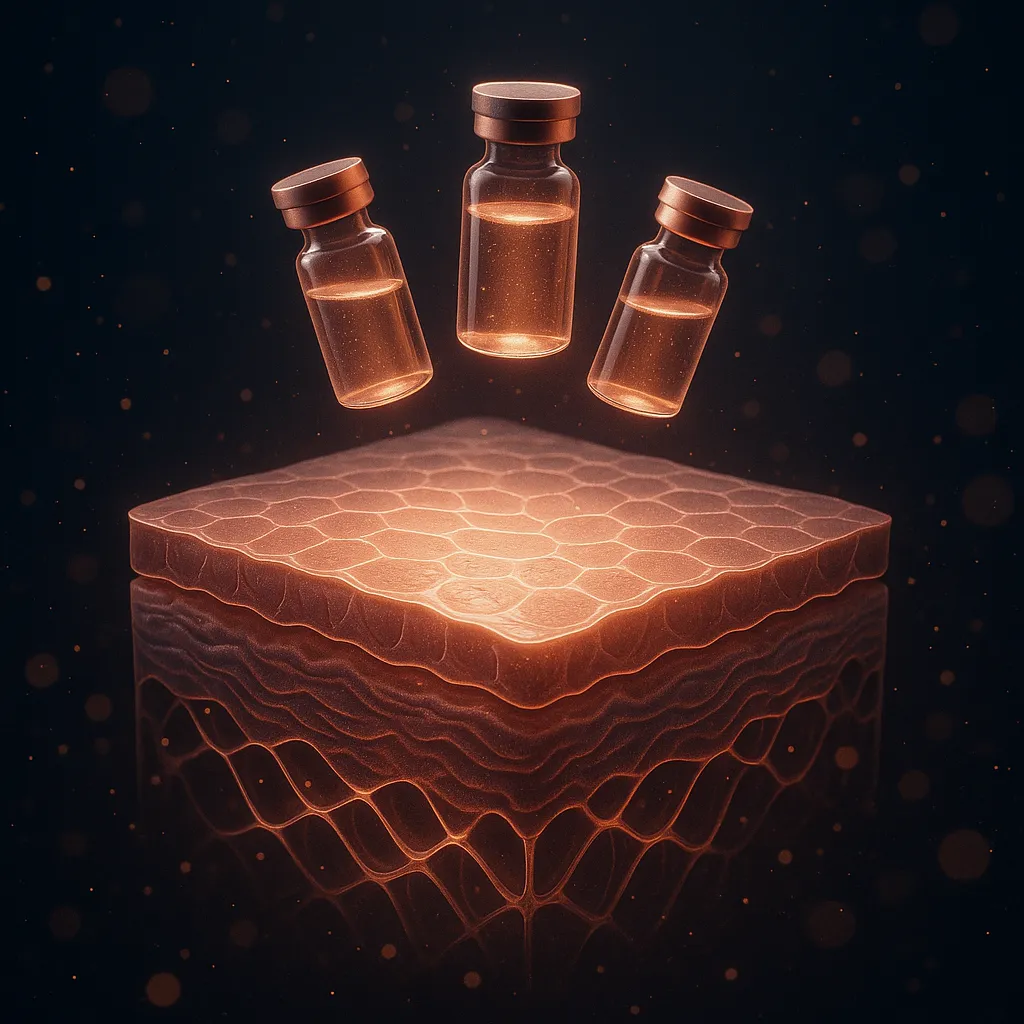
The Glow blend brings together the three most established tissue-repair peptides — GHK-Cu (50mg), BPC-157 (10mg), and TB-500 (10mg) — in a single 70mg vial. It's the streamlined version of the healing peptide stack: collagen remodeling, blood vessel formation, and cell migration in one injection.
What separates Glow from the Klow blend is what it doesn't have — KPV. That means Glow is focused purely on structural repair and regeneration without a dedicated NF-kB anti-inflammatory layer. For skin-focused, musculoskeletal, and anti-aging protocols, that's a feature, not a limitation — fewer variables, lower cost, and GHK-Cu represents a higher proportion of each dose (71.4% vs 62.5% in Klow).
Here are 5 benefits ranked by evidence quality. For dosing protocols, see the Glow Blend Dosing Guide. For mixing instructions, see the Glow Reconstitution Guide.
Research-context information only. The Glow blend (GHK-Cu, BPC-157, TB-500) is a research peptide. Protocols, doses, and reactions reported below come from published research and self-reported community sources. This article reports what has been documented, not what should be done. Consult a licensed physician for personal medical decisions.
How the 3 Peptides Work Together
The Glow blend covers three critical phases of tissue repair:
| Phase | Peptide | What Happens |
|---|---|---|
| 1. Vascularization | BPC-157 | New blood vessels form, growth factors increase |
| 2. Cell mobilization | TB-500 | Repair cells migrate to injury site |
| 3. Tissue remodeling | GHK-Cu | Collagen synthesis, scar remodeling, gene activation |
This isn't just additive — it's sequential. BPC-157 creates the delivery network. TB-500 uses it to transport repair cells. GHK-Cu activates the genes those cells need to rebuild organized, functional tissue.
1. Collagen Synthesis and Anti-Aging (GHK-Cu)
Evidence quality: Strong (multiple human and in vitro studies)
GHK-Cu is the dominant component at 71.4% of the Glow blend. This copper-binding tripeptide activates over 4,000 human genes involved in tissue repair, antioxidant defense, and anti-inflammatory signaling (Pickart & Margolina, 2018).
Specific skin and anti-aging effects:
- Upregulates collagen types I, III, and V plus elastin production
- Remodels scar tissue by regulating metalloproteinases (MMPs) — replacing disorganized scar collagen with organized functional tissue
- Attracts mesenchymal stem cells to damaged areas
- Promotes dermal papilla cell proliferation and hair-follicle elongation in vitro (Pyo et al., 2007)
GHK-Cu levels decline naturally from ~200 ng/mL in plasma at age 20 to ~80 ng/mL by age 60. Restoring GHK-Cu through supplementation addresses a measurable age-related deficit. In the Glow blend, it provides the long-term tissue quality improvements users notice by weeks 4-8 — smoother skin texture, reduced fine lines, stronger nails.
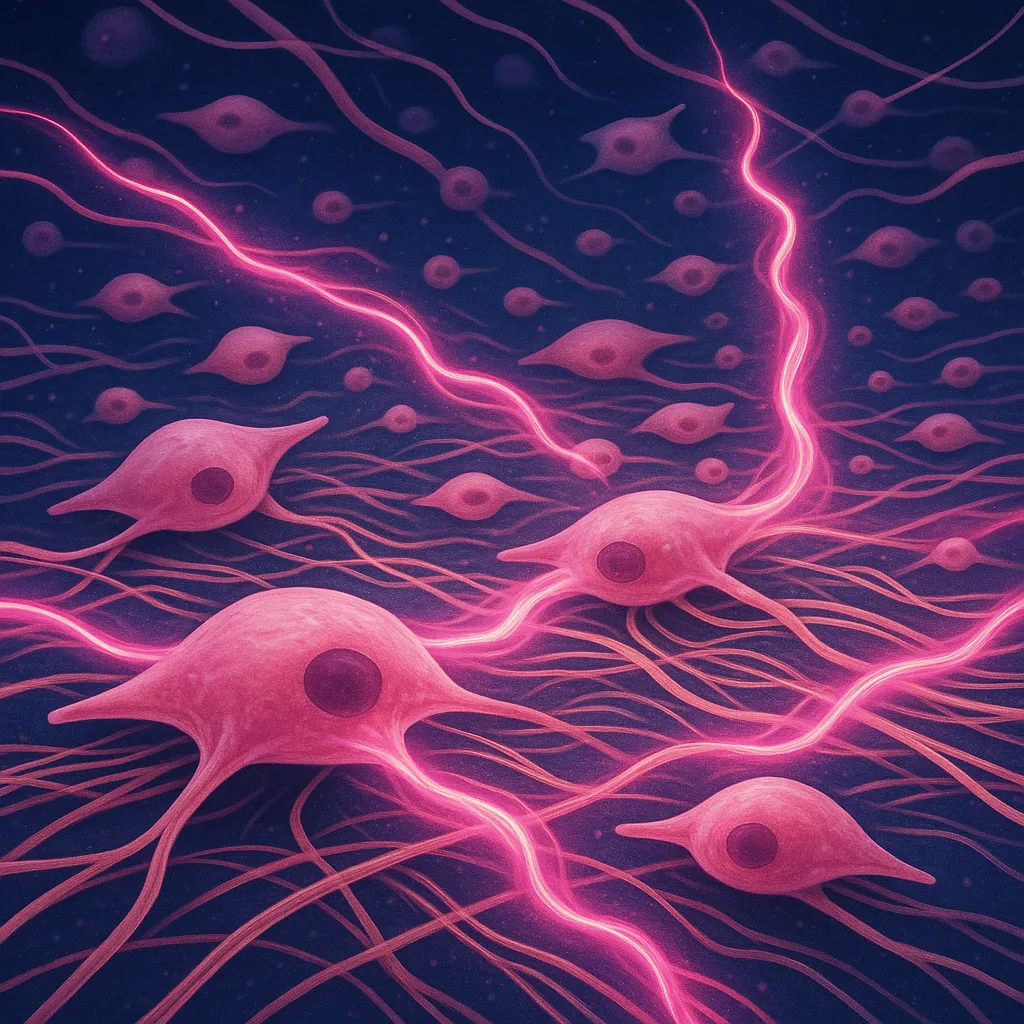
2. Angiogenesis and Tissue Repair (BPC-157)
Evidence quality: Strong (hundreds of animal studies)
BPC-157 initiates the healing cascade that GHK-Cu's remodeling depends on. Without new blood vessels delivering oxygen and nutrients to damaged tissue, collagen synthesis stalls.
Key effects in the Glow blend:
- Promotes new blood vessel formation via VEGF upregulation — the vascular infrastructure for all repair
- Increases EGF, FGF, and other growth factors that drive tissue rebuilding (Seiwerth et al., 2014)
- Modulates nitric oxide to improve local blood flow (Sikiric et al., 2014)
- Activates FAK-paxillin pathway in tendon fibroblasts — directly accelerating connective tissue healing
BPC-157 is why the Glow blend works for musculoskeletal repair, not just skin. Its angiogenic and growth factor effects benefit tendons, ligaments, and joints in addition to surface-level tissue.
3. Cell Migration and Wound Healing (TB-500)
Evidence quality: Moderate (animal studies)
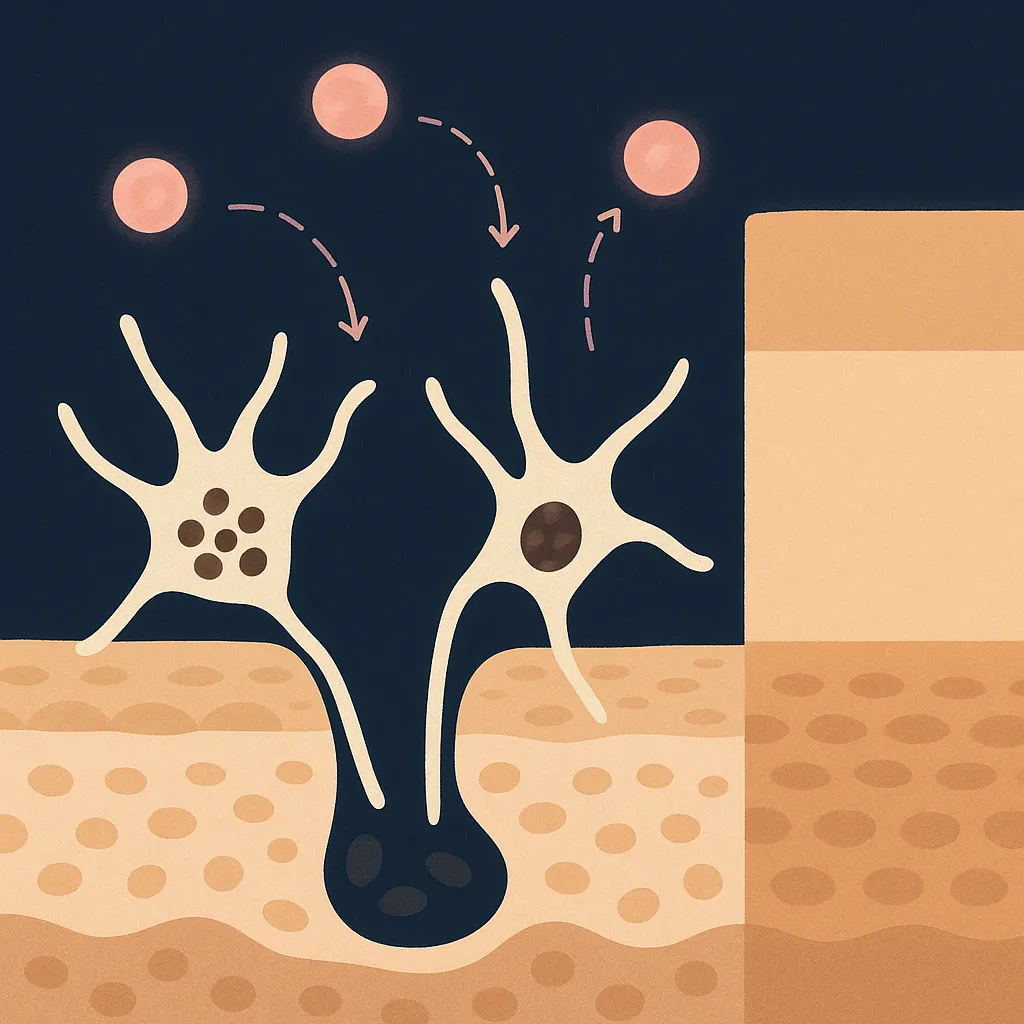
TB-500 ensures repair cells reach their targets. Its LKKTET actin-binding sequence promotes the migration of keratinocytes, endothelial cells, and fibroblasts to injury sites (Malinda et al., 1999).
Key contributions to Glow:
- Directs repair cells to where they're needed via actin polymerization
- Anti-fibrotic effects — reduces excessive scar formation during healing
- Modulates local inflammatory cytokines (Sosne et al., 2010)
- Hair follicle stimulation — activates follicular stem cells
TB-500's anti-fibrotic action is particularly valuable alongside GHK-Cu. While GHK-Cu remodels existing scar tissue, TB-500 prevents new scars from forming during the healing process.
4. Multi-Phase Repair Synergy
Evidence quality: Theoretical (no combination studies exist)
The three peptides in Glow address different bottlenecks in repair. BPC-157 builds the blood supply infrastructure. TB-500 transports repair cells along that infrastructure. GHK-Cu activates those cells for long-term remodeling.
In standalone use, the body handles these phases sequentially. With all three present simultaneously, the entire pipeline runs in parallel — which is why blend users often report faster subjective results than single-peptide protocols.
The caveat: This synergy is mechanistically logical but not clinically proven. No study has tested this specific three-peptide combination.
5. Hair and Nail Improvement
Evidence quality: Low-moderate (component studies, anecdotal reports)
Two of the three Glow peptides have hair-related evidence:
- GHK-Cu promoted dermal papilla cell proliferation and follicle elongation in cultured human hair follicles (Pyo et al., 2007)
- TB-500's parent protein Thymosin Beta-4 stimulates hair follicle growth in animal models
Users commonly report improved nail strength by weeks 4-6 and hair thickness changes by weeks 8-12. These are secondary benefits — Glow isn't designed as a hair treatment, but GHK-Cu's dominance (71.4%) means significant collagen and keratin pathway activation that benefits hair and nails alongside skin.
Ready to buy? Compare verified vendors on our best Glow Blend sources page, or browse all coupon codes for up to 50% off.