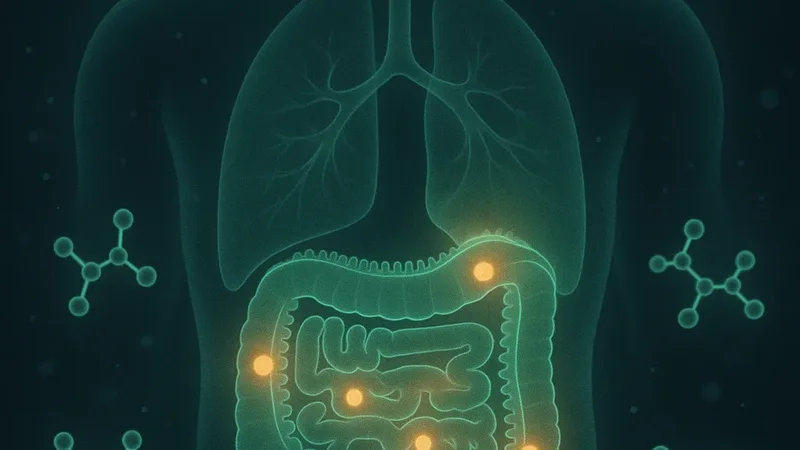
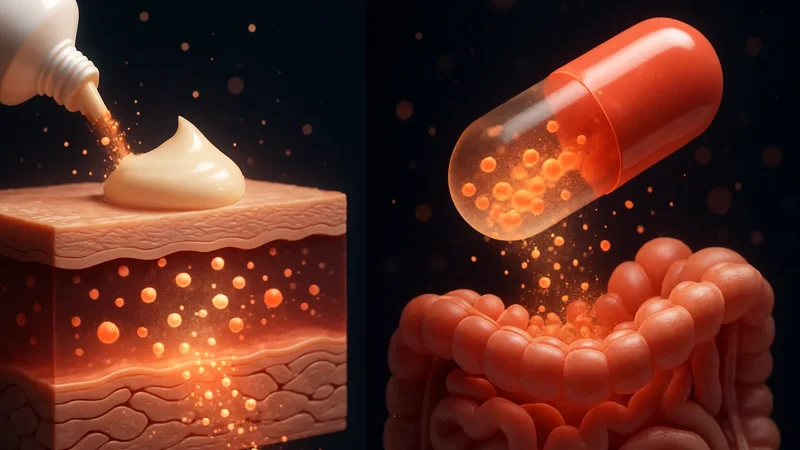
KPV is the C-terminal tripeptide of alpha-melanocyte-stimulating hormone — the three-amino-acid sequence Lys-Pro-Val that carries most of alpha-MSH's anti-inflammatory activity without touching the pigmentation receptors. It is one of the very few peptides in the research market that works orally, because it hitches a ride through the gut via the PepT1 di/tripeptide transporter. That oral activity is what makes KPV interesting for gut inflammation and IBD-adjacent protocols, and what makes vendor selection straightforward: KPV is a small, simple peptide that should be cheap to make correctly. If a vendor can't produce a clean COA at these molecular weights, walk away.
If you're shopping for KPV for sale, the market is small and the pricing is simple. This guide covers what to pay per milligram when you buy KPV, why the 10mg vial dominates, what a real COA for a 358 Da tripeptide should show, and the vendors worth your order in 2026.
This is not a ranked vendor list — for that, see our Best KPV Vendors comparison. This guide teaches you how to evaluate any vendor yourself.
Understanding KPV Pricing
KPV ships as a lyophilized powder in sealed glass vials, most commonly 5mg or 10mg. Three factors move price: vial size (bigger is cheaper per mg), vendor overhead on third-party testing, and whether the product is sold as injectable vials or oral capsules. The peptide itself is trivial to synthesize — it's three amino acids — so there is no legitimate reason for KPV to cost 3x what BPC-157 or TB-500 do on a per-mg basis.
Current Market Pricing (2026)
Vial Size
Typical Price Range
Price Per mg
Best For
5 mg
$30-55
$6-11/mg
Short trials, tolerance testing
10 mg
$40-80
$4-8/mg
Standard 500 mcg/day — best all-around
20 mg
$75-140
$3.75-7/mg
Rare; long-cycle or dual oral/SC stacks
The pattern is clear: 10mg is the default purchase. 5mg costs roughly 50% more per mg, and 20mg rarely saves enough to justify the longer reconstitution timeline. If you see KPV priced at less than $2.50/mg on a 10mg vial, that is a red flag — the synthesis floor plus QC makes genuinely tested KPV hard to deliver below about $3/mg.
Cheapest single-vial option: EZ Peptides's 10% off drops the 10mg vial to $39.60 ($3.96/mg effective) — the lowest effective price we track for buying one vial. Get the code →
Cost Per Week at Common Doses
Daily Dose
Monthly Cost (5mg vial)
Monthly Cost (10mg vial)
Savings
250 mcg/day (low)
$45-85
$30-60
~35%
500 mcg/day (standard)
$90-170
$60-120
~30%
1,000 mcg/day (high-dose gut protocol)
$180-340
$120-240
~30%
For current vendor-specific pricing with exact $/mg breakdowns, see our Best KPV Vendors comparison.
How to Verify KPV Quality
KPV is the tripeptide Lys-Pro-Val with a molecular weight of approximately 358 Da and the free-base sequence H-Lys-Pro-Val-OH. At that molecular size, synthesis is straightforward solid-phase peptide chemistry, and there is no legitimate excuse for a vendor to deliver anything less than 98% purity on HPLC. A COA that can't confirm 358 Da via mass spec is either testing the wrong product or not testing at all.
What a COA (Certificate of Analysis) Should Include
Identity Confirmation
Mass spectrometry confirming correct molecular weight (~358 Da for KPV)
Explicit identification of the product as KPV, not a longer alpha-MSH fragment
Purity Testing
HPLC purity — look for 98%+ purity (KPV should routinely hit 99%+ given its simplicity)
HPLC chromatogram showing a single dominant peak
Contamination Testing
Endotoxin levels (bacterial contamination) — critical if you intend subcutaneous dosing
Residual solvent analysis (acetonitrile, TFA)
Heavy metals screening
How to Verify a COA Is Legitimate
Check the testing lab — Reputable labs include Janoshik Analytical, MZ Biolabs, and Colmaric Analyticals. "In-house" testing alone is a red flag.
Verify on the lab's website — Janoshik COAs carry a task number verifiable at janoshik.com. No verifiable number means no trust.
Check the date — COAs should be within 6 months. Stale COAs may not reflect current batches.
Match the batch — The lot number on the COA must match what's printed on your vial.
Look for the full PDF — Screenshots are trivially faked; demand the lab-letterhead PDF.
Red Flags to Avoid
No COA available — non-negotiable for a peptide this easy to test
Only in-house testing — self-reported numbers from a vendor running an easy synthesis have no excuse for skipping third-party verification
Prices implausibly low — KPV under $2.50/mg on a 10mg vial is almost certainly underdosed or substituted with a cheaper filler; at that price the synthesis, QC, testing, and packaging math doesn't close
Oral/injectable ambiguity — KPV can be dosed orally (via PepT1) or subcutaneously; vendors should clearly specify endotoxin testing for injectable product
No mass spec data — for a 358 Da peptide this is a deliberate omission, not a cost-saving measure
No contact information or cryptocurrency only — legitimate vendors have real customer service and standard payment rails
Vial size selection for KPV is a tradeoff between per-mg cost and whether you're dosing orally or subcutaneously.
The 28-Day Rule
Once mixed with bacteriostatic water, KPV is stable for up to 28 days refrigerated. Sterile water (no preservative) drops this to ~24 hours. KPV is not particularly temperature- or light-sensitive compared to larger peptides, but the 28-day window still applies.
Vial Size
At 250 mcg/day
At 500 mcg/day
At 1,000 mcg/day
5 mg
20 days
10 days
5 days
10 mg
40 days
20 days
10 days
20 mg
80 days
40 days
20 days
At the standard 500 mcg/day dose, a 10mg vial lasts 20 days — comfortably inside the 28-day window. A 20mg vial at the same dose exceeds the window, so either split reconstitution or plan to use higher daily doses.
Solution: Reconstitute 10mg at a time and finish it inside 28 days.
Recommended Vial Size by Protocol
Short trial or tolerance testing (2-week cycle):
Start with a 5mg vial — low upfront cost, enough for 10-20 days of dosing.
Standard gut-inflammation or anti-inflammatory protocol (500 mcg/day, 4-8 week cycle):
10mg vial — 20 days of daily dosing, one to two vials per cycle.
Our recommendation: For almost every KPV user, 10mg vials are the clean default. Only step to 20mg if you're running a dual oral/SC high-dose protocol and have tight reconstitution discipline.
Vendor Evaluation Methodology
When comparing KPV vendors, we weight three factors.
Price Competitiveness (40%)
We normalize to cost per milligram across vial sizes. A vendor selling 10mg at $55 ($5.50/mg) beats one selling 5mg at $40 ($8/mg), all else equal. Because KPV is cheap to produce, mid-market pricing should still deliver high-purity product — there is no "premium tier" worth paying for on a tripeptide.
COA & Testing (30%)
We check that COAs are from recognized third-party labs, recent (≤6 months), verifiable on the lab's website, and include mass spec confirming 358 Da plus HPLC at 98%+. For KPV specifically, endotoxin testing matters most if you intend subcutaneous dosing — oral-only users can weight HPLC purity more heavily.
Reputation (30%)
Peptide-forum feedback, shipping reliability, customer-service responsiveness, and multi-year operating history. Batch-recall history counts against a vendor even when the underlying issue was resolved.
Shipping and Storage
What to Expect When Your Order Arrives
Lyophilized KPV arrives as a white or off-white powder cake in a sealed glass vial. Check:
Vial integrity — no cracks, rubber stopper seated, aluminum cap intact
Powder appearance — white or off-white cake, NOT yellow/brown (oxidation) or liquid
Labeling — batch/lot, milligram content, "KPV" explicitly (not generic "MSH fragment"), "for research use only"
Cold pack — less critical for KPV than for larger peptides, but reputable vendors still include one in warm months
Storage Guidelines
State
Temperature
Duration
Lyophilized (powder)
Room temp
Weeks (shipping only)
Lyophilized (powder)
Refrigerated (2-8°C)
12-24 months
Lyophilized (powder)
Frozen (-20°C)
2+ years
Reconstituted (BAC water)
Refrigerated (2-8°C)
28 days max
Reconstituted (sterile water)
Refrigerated (2-8°C)
24 hours
Key point: KPV is one of the hardier peptides in common use — the small, simple structure has no oxidation-prone residues to worry about. Still, freeze for long-term storage and protect reconstituted vials from extended light exposure. See our KPV dosing guide for oral vs subcutaneous protocol details.
Bac Water Made for Peptides50% off
Don't risk a $300 peptide on generic bac water.
Most cloudy reconstitutions trace back to one thing — and it isn't the peptide. Sterile, non-pyrogenic, 0.9% benzyl alcohol — formulated for peptide reconstitution, not repackaged from generic stock.
✓ 0.9% benzyl alcohol✓ Made for peptides✓ 30 mL multi-dose
KPV is sold as a research chemical and is legal to purchase in most jurisdictions for laboratory use. It is not FDA-approved, and vendors label product 'not for human consumption.' It is not on WADA's banned list because it is not a performance-enhancing agent — it is an anti-inflammatory tripeptide fragment of alpha-MSH.
How much does KPV cost per month?
At the standard 500 mcg/day community protocol, KPV runs about $20-40/month. A single 10mg vial covers 20 days at that dose, so most users buy one to two 10mg vials per month. 5mg vials nearly double the per-mg cost, which is why 10mg is the default.
What vial size should I buy — 5mg or 10mg?
For a standard 500 mcg/day protocol, the 10mg vial is the clear winner: 20 days per vial at daily dosing, fresh reconstitution each cycle, and 30-40% lower cost per mg than a 5mg vial. 5mg vials only make sense for short 2-week trials or tolerance testing. Larger vials (20mg+) are rare for KPV and usually not worth hunting down.
What purity should I look for in KPV?
Look for third-party HPLC testing showing 98%+ purity and mass spec confirming the 358 Da molecular weight (KPV is Lys-Pro-Val, a three-amino-acid peptide). Janoshik Analytical, MZ Biolabs, and Colmaric Analyticals are the labs whose COAs are worth verifying — in-house numbers alone don't count. KPV is small and cheap to synthesize, so there is no excuse for a vendor to skip full testing.
Can I buy KPV from a pharmacy?
No. KPV is not a compounded pharmaceutical and is not available from US compounding pharmacies. It is only accessible through research peptide vendors. Some vendors market oral capsules alongside lyophilized vials, but both channels are research-use-only.
This article is for educational and informational purposes only. It is not medical advice and should not be used to diagnose, treat, or prevent any condition. Consult a licensed healthcare provider before using any peptide.