A federal grand jury indicted Utah physician Justin Bradley Watkins for purchasing unapproved peptides from China, slapping fake labels on them, and selling them to more than 200 patients. The April 2026 indictment is one of the first federal criminal cases targeting a doctor in the peptide space — and it underscores exactly why COA verification and vendor transparency are non-negotiable.
What Happened: The Federal Indictment
Between February 2024 and April 2025, Watkins allegedly purchased peptides through a middleman sourcing from Chinese manufacturers. The products included tirzepatide, semaglutide, retatrutide, cagrilintide, BPC-157, TB-500, ipamorelin, CJC-1295, GHK-Cu, and NAD+.
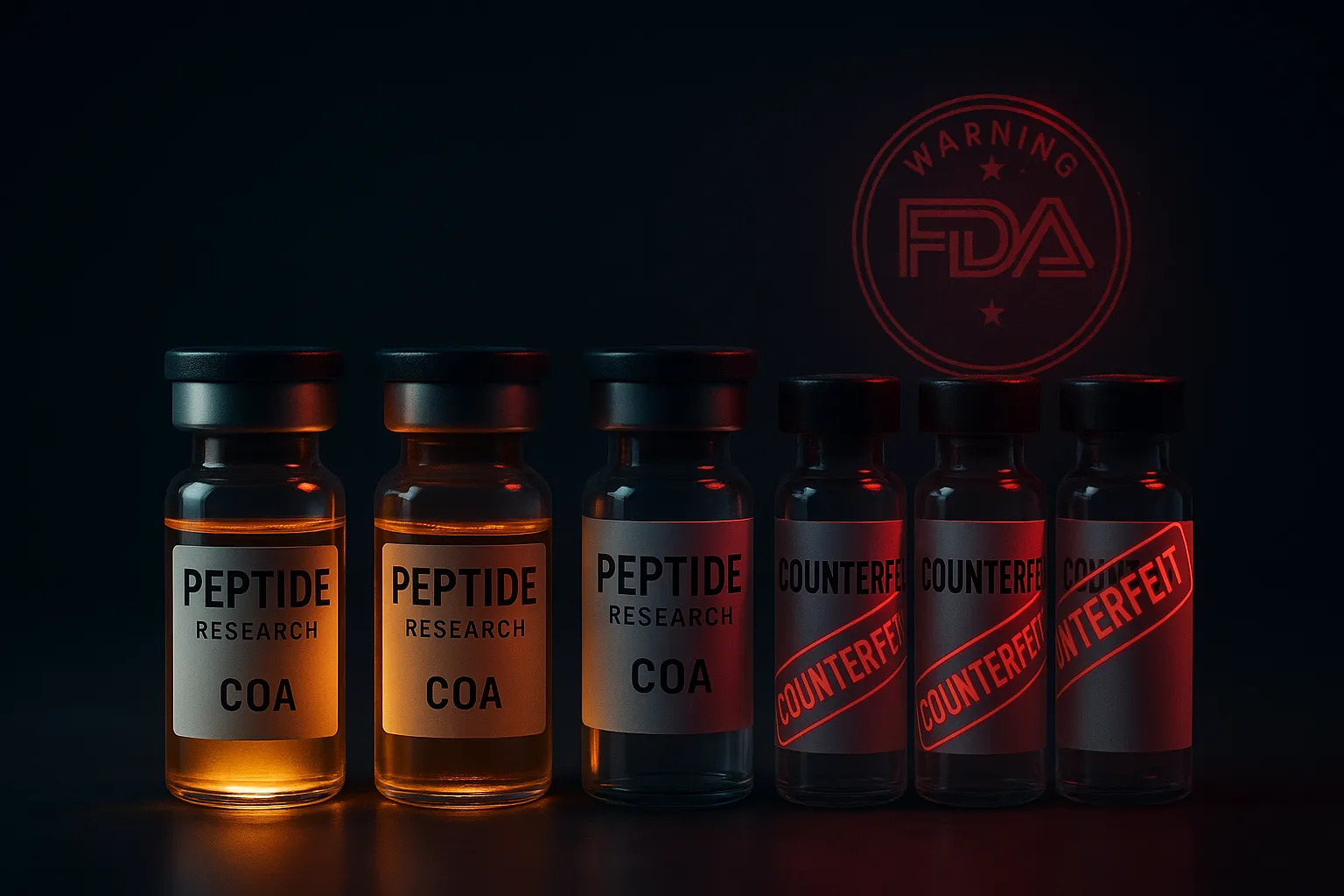
According to court documents reported by the Salt Lake Tribune, Watkins created his own labels for the vials and pill bottles before distributing them through his clinic. The labels did not disclose the actual manufacturer, packer, or distributor — a direct violation of the FDA's Food, Drug, and Cosmetic Act.
The charges: receipt in interstate commerce and delivery for pay of misbranded drugs with intent to defraud or mislead. His initial court appearance is set for April 22, 2026.
This isn't an isolated quality issue. It's a federal crime involving a licensed physician who exploited the trust patients place in their doctor's recommendations.
Why This Matters: The Bigger Quality Problem
This indictment lands in a market already struggling with quality control. Recent independent lab testing paints a troubling picture:
- 73% of peptide samples submitted to independent labs show purity discrepancies versus supplier claims (based on 1,200+ samples tested from 2024-2026)
- Nearly 40% of vendors fail to meet their stated purity levels, with some testing as low as 75% actual peptide content
- A 2024 gray-market analysis found bacterial endotoxin contamination, wrong compounds in vials, and significant content variability
The Utah case adds a new layer: a licensed medical professional knowingly relabeling unverified imports. If a doctor's patients can't trust what they're getting, how do you protect yourself buying online?
How to Verify Your Vendor Is Legitimate
The difference between the Utah doctor's operation and a reputable vendor comes down to three things: transparency, third-party testing, and traceability.
1. Demand Batch-Specific COAs
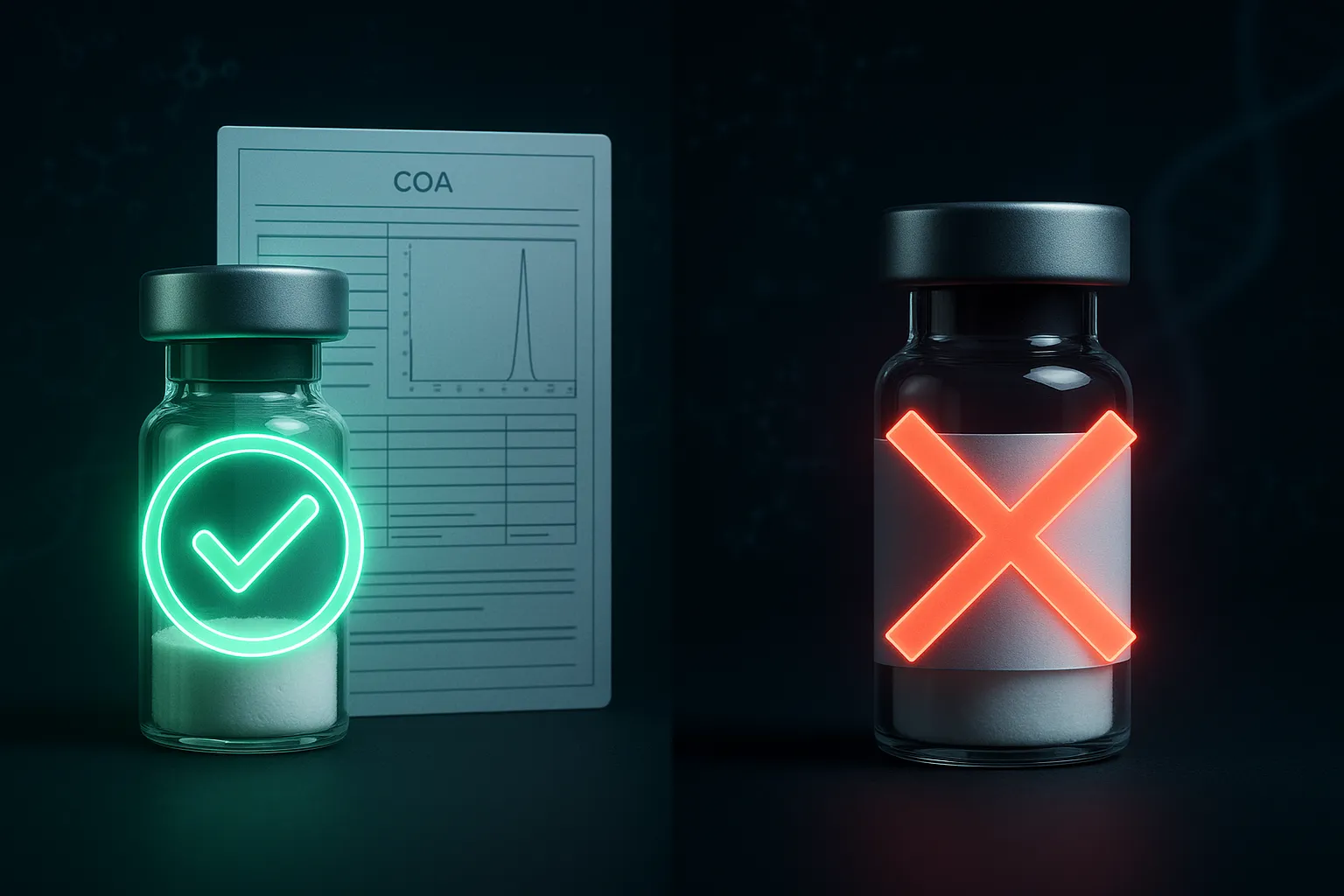
A legitimate COA includes:
- HPLC chromatogram (the actual graph, not just a purity percentage)
- Mass spectrometry confirmation of molecular identity
- Batch/lot number matching your specific order
- Testing date within a reasonable window of your purchase
- Independent lab name and contact information
If a vendor provides only a generic COA without batch numbers, or refuses to provide one at all, walk away.
2. Confirm Third-Party Testing
In-house testing is a conflict of interest. The vendors we recommend use independent, accredited laboratories. Look for:
- Lab name you can independently verify
- Results published publicly (not just "available upon request")
- Consistent batch-to-batch testing (not just an initial sample)
3. Check Vendor Track Records
Vendors with years of operation, public COA databases, and community verification carry far less risk than newcomers with no history. Our best peptide vendor rankings score vendors on COA transparency, pricing, and reputation.

Where to Buy Tested Peptides Instead
The peptides in the Utah indictment — BPC-157, TB-500, semaglutide, tirzepatide, CJC-1295, and others — are available from vendors with verified third-party COAs and established reputations. Here's where to start:
- Compare BPC-157 vendors — ranked by price, COA quality, and stock
- Compare TB-500 vendors — third-party tested options
- Compare semaglutide vendors — verified sources with batch COAs
- Compare tirzepatide vendors — pricing and purity verified
- Compare CJC-1295 vendors — in-stock, tested options
Or skip the research — here are the verified vendors we recommend, ranked by preferred order, with third-party COAs and active discount codes:
Check our deals page for the full list of current vendor discounts.