articlesApril 19, 2026·11 min read

Preserve Muscle on Semaglutide & Tirzepatide

Ranking of the tools that protect lean mass on GLP-1s — what each does, who it suits, and what trials and community sources describe.

Preserve Muscle on Semaglutide & Tirzepatide

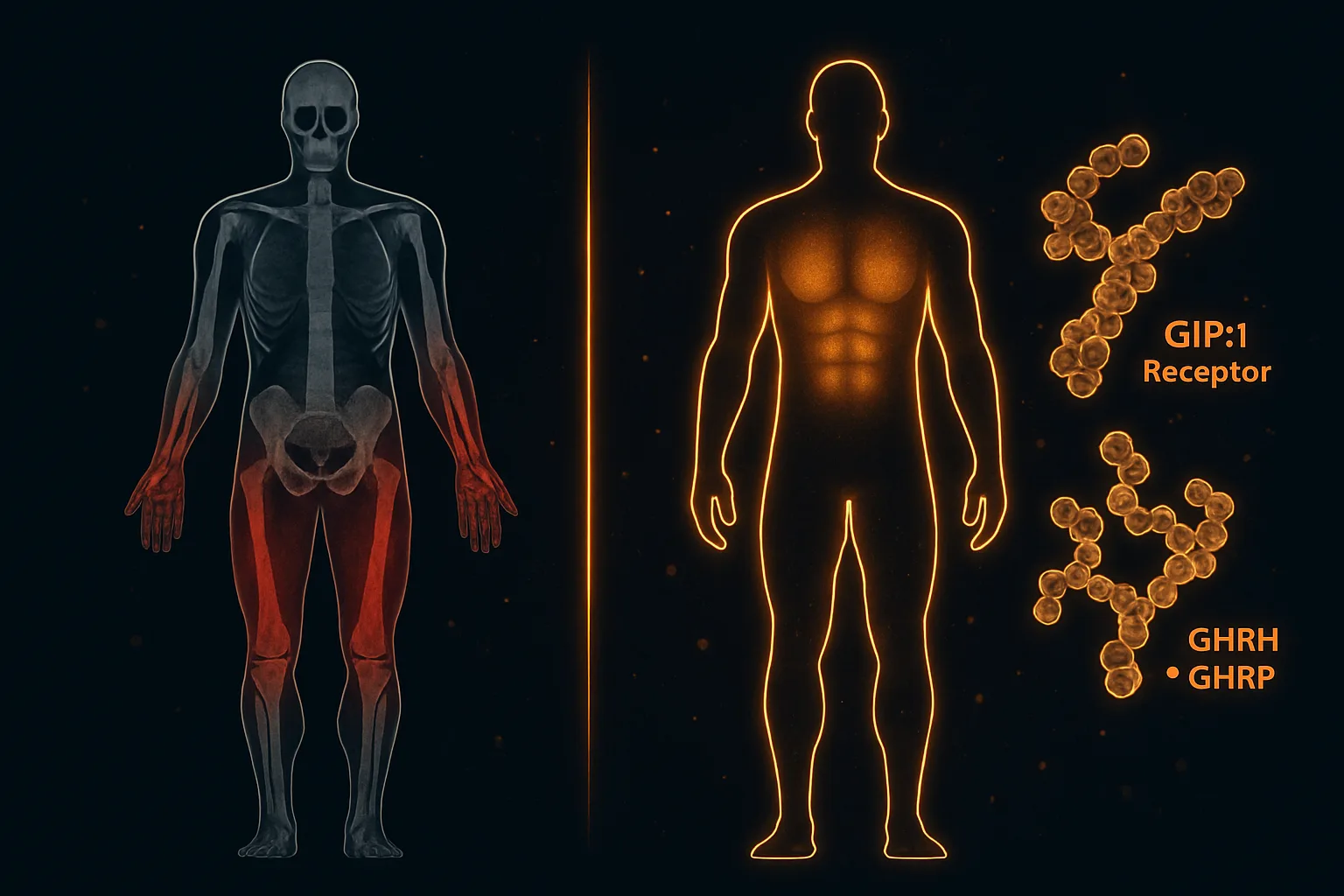
For readers searching "preserve muscle on semaglutide and tirzepatide," the picture trial data describes is this: the STEP 1 body-composition substudy reported roughly 25% of total weight lost on semaglutide 2.4 mg coming from lean tissue. The SURMOUNT-1 DXA substudy on tirzepatide reported a similar 75:25 fat-to-lean ratio. Published research describes that lean-mass cost as the single biggest downside of GLP-1 weight loss — visible as weakness in the gym, lower metabolic rate at goal weight, and (in older users) sarcopenic obesity risk.

Research-context information only. Compounds discussed below are research peptides and supplements; some are investigational drugs not approved by the FDA. Protocols, doses, and reactions reported come from published research and self-reported community sources. Possession or use of investigational drugs outside an authorized clinical trial may be illegal in your jurisdiction. This article reports what has been documented, not what should be done. Consult a licensed physician for personal medical decisions.

This guide ranks the tools community sources and clinical trials most commonly describe for muscle preservation during a GLP-1 cut, in the order experienced users typically reach for them. Each entry explains the mechanism, who tends to use it, and what trial-reported and community-reported outcomes look like. Dosing detail lives in the linked deep-dive guides.

Why GLP-1s Erode Lean Tissue

Published research describes GLP-1 weight loss as driven by appetite suppression. In a sustained caloric deficit — particularly one large enough to drop 15-20% body weight — trial data describe both fat and protein as catabolized. Without an anti-catabolic signal (heavy resistance training plus adequate protein intake plus, optionally, anabolic peptide support), trial-and-community sources describe lean tissue as following fat down.

The second mechanism is protein intake specifically. Community sources commonly describe GLP-1 agonists as blunting appetite enough that users self-report dropping from 100+ grams of protein per day to 50-60 grams. Self-reported community timelines describe sustained intakes below 1.2 g/kg as the configuration most associated with rapid lean-mass loss — independent of any pharmacological effect of the drug itself.

The Rankings

30ml bacteriostatic water vial — 0.9% benzyl alcohol multi-dose
Bac Water Made for Peptides
Don't risk a $300 peptide on generic bac water.
Most cloudy reconstitutions trace back to one thing — and it isn't the peptide. Sterile, non-pyrogenic, 0.9% benzyl alcohol — formulated for peptide reconstitution, not repackaged from generic stock.
0.9% benzyl alcohol Made for peptides 30 mL multi-dose
See why our bac water doesn't ruin peptides
30ml from $18.75 · Ships fast · Code thepeptidecatalog

1. Cagrilintide + Semaglutide — the CagriSema combination

Best for: users wanting the most-evidenced combination for maximum weight loss with the most favorable fat-to-lean ratio.

Cagrilintide is a long-acting amylin analog that slows gastric emptying and acts on hindbrain satiety centers through a receptor pathway distinct from GLP-1. The REDEFINE 1 Phase 3 trial reported cagrilintide plus semaglutide producing a 20.4% body-weight reduction at 68 weeks versus 3.0% on placebo, with a fat-to-lean loss ratio described as more favorable than semaglutide monotherapy in the STEP 1 comparator. Published preclinical research describes amylin satiety signaling as preserving lean mass relative to pure GLP-1 agonism, likely because the amylin pathway does not blunt protein-specific appetite the way GLP-1 does.

Community usage typically describes cagrilintide as an add-on, not a replacement — users layer it on top of semaglutide rather than swap. Self-reported community reports cluster around stronger satiety signaling and a smoother weight-loss curve through month 4, with somewhat higher first-month gastrointestinal load during titration. Solo cagrilintide for muscle preservation is rare in community usage.

Deep dive: Best Cagrilintide Vendors | Cagrilintide Dosing Guide | Cagrilintide vs Semaglutide


2. Tesamorelin + Ipamorelin — the anabolic-support stack

Best for: users wanting the most clinically-evidenced GHRH+GHRP combination for body recomposition during a cut.

This is the GHRH+GHRP combination with the deepest human evidence. Tesamorelin is the only GHRH analog with Phase 3 trial data behind it. The Falutz 2010 trial in adults with abdominal fat accumulation reported daily tesamorelin reducing visceral fat by roughly 15-18% and raising IGF-1 about 80% versus placebo. The Adrian 2019 follow-up analysis reported tesamorelin also increased truncal lean muscle area while decreasing intramuscular fat. Ipamorelin is the GHRP that pairs with it — published research describes it as the most selective GHRP, releasing growth hormone without meaningful cortisol, ACTH, or prolactin elevation.

On a GLP-1 cut, the mechanism community sources describe is straightforward: the GLP-1 drives fat loss through appetite suppression; the GHRH+GHRP signals the body to preserve lean tissue and pull from visceral fat stores instead. Published research describes the two pathways as independent. Community reports cluster around three themes: visible waist tightening within 4-6 weeks, deeper sleep within the first week, and improved between-session recovery during the cut.

Deep dive: Best Tesamorelin + Ipamorelin Vendors | Tesamorelin Dosing Guide | Tesamorelin Results Timeline


3. CJC-1295 + Ipamorelin — the starter GH stack

Best for: first-time GH-peptide users on a GLP-1 cut who want a more affordable entry point than tesa + ipa.

CJC-1295 (no DAC, sometimes called "mod GRF 1-29") is a synthetic GHRH analog modified to extend its half-life to about 30 minutes — long enough to amplify the ipamorelin pulse without flatlining natural GH rhythm. Published pharmacokinetic data describe CJC-1295 as raising GH 2-10x and IGF-1 1.5-3x. Combined with ipamorelin, the stack produces a clean synergistic pulse — the same mechanism trial data describe for tesa + ipa, at a lower price point and with somewhat thinner outcome data.

On a GLP-1 cut, CJC + ipa works for the same reason tesa + ipa works — GH/IGF-1 elevation signals the body to preserve lean tissue during a deficit. Community reports cluster around better sleep within days, fuller-looking muscles around week 3-4, and gradual recomposition by week 8. Users who have run both commonly describe tesa + ipa as producing larger body-composition shifts at higher doses; the trade-off is higher cost.

Deep dive: Best CJC-1295 + Ipamorelin Vendors | CJC-1295 / Ipamorelin Dosing Guide

GLP-1 Muscle Loss Mechanism


4. MK-677 (Ibutamoren) — the oral appetite counterweight

Best for: users on a GLP-1 whose appetite is suppressed enough that protein intake has collapsed.

MK-677 is the only oral compound on this list. Published research describes it as a 24-hour ghrelin-receptor agonist that raises GH and IGF-1 and increases appetite. The Nass 2008 RCT in Annals of Internal Medicine reported a 1.6 kg gain in fat-free mass over 12 months of oral MK-677 in older adults versus placebo. On a GLP-1 cut, community sources commonly describe MK-677's appetite-restoring effect as the practical mechanism — restoring enough protein-specific appetite to let users hit their protein floor while the GLP-1 still suppresses non-protein intake.

Trade-offs reported in the Nass trial include fluid retention in the first 4-6 weeks, measurable elevation in fasting glucose, and mild drowsiness. Community reports cluster around the same effects. Trial-and-community sources commonly describe the 8-week HbA1c check as non-negotiable on this combination.

Deep dive: MK-677 Peptide Page | MK-677 Dosing Guide


5. IGF-1 LR3 — the advanced direct-receptor tool

Best for: advanced users already running a GHRH+GHRP, hitting protein, lifting heavy, and still seeing lean mass drop.

IGF-1 LR3 doesn't go through the GH pathway at all — it's IGF-1 itself, modified to last longer in the body, injected directly. That makes it conceptually simple (skip the brain, act on the muscle directly) and practically more complex on a GLP-1 cut. Published research describes hypoglycemia as the documented risk: IGF-1 cross-activates the insulin receptor at high doses, and trial-and-community sources describe the risk as elevated in users with blunted appetite and irregular meal timing — both of which describe a typical GLP-1 user. Trial protocols and community guidance describe keeping fast-acting carbs accessible during use, and warn against combining IGF-1 with exogenous insulin without medical supervision.

Community usage of IGF-1 LR3 in this context skews toward users who have already maxed out a GHRH+GHRP stack and want a downstream tool. Self-reported community reports cluster around vivid hand and forearm pumps within hours, durable strength gains over 4-6 weeks, and the consistent caution that hypoglycemia onsets faster than first-time users expect. Community usage as an entry-point peptide on a GLP-1 cut is rare.

Deep dive: Best IGF-1 LR3 Vendors | IGF-1 LR3 Dosing Guide


6. High-protein diet — the non-negotiable substrate

Best for: every user on a GLP-1, with or without anabolic peptide support.

Published research and community guidance both describe a protein floor of approximately 1.6-2.2 g per kg of goal body weight, divided across 3-4 meals of at least 30-40 g protein per meal to cross the leucine threshold for muscle protein synthesis. Self-reported community feedback consistently describes appetite collapsing on GLP-1s as the largest controllable contributor to lean-mass loss — protein intake drops, and lean tissue follows.

Community sources commonly describe protein shakes and dense protein sources (eggs, lean meat, Greek yogurt, whey isolate) as outperforming volume-heavy plant options on a GLP-1, because gastric volume is the limiter. No peptide stack on this list compensates for sustained intakes below 1.2 g/kg.


7. Heavy resistance training — the anti-catabolic signal

Best for: every user on a GLP-1 cut.

Published research describes heavy compound resistance training as the strongest non-pharmacological anti-catabolic signal during a deficit. Trial data describe 3-4 sessions per week at 70-85% 1RM (squat, deadlift, bench, overhead press, row) for 3-5 sets of 5-8 reps as the protocol most consistently associated with preserved lean mass. Community sources commonly describe the goal during a deficit as holding loads steady — not progressive overload — and dropping accessory volume to whatever can be recovered from in a calorie deficit.

Cardio is described in trial-and-community sources as accelerating total weight loss without protecting muscle. Walking is fine for metabolic health; HIIT and endurance work add only after the lifting base is stable.

Muscle Preservation Stack

How Different Audiences Choose

Trial-evidence patterns and community usage map cleanly onto reader profiles. Here is how the picks above tend to break down:

Users wanting maximum weight loss with the best fat-to-lean ratio typically choose the cagrilintide + semaglutide combination. REDEFINE 1 Phase 3 trial data describes the fat-to-lean ratio as more favorable than semaglutide monotherapy.

Users on a GLP-1 watching their lifts drop commonly add tesamorelin + ipamorelin. Trial data describe the deepest body-composition evidence of any GHRH+GHRP combination, with reported preservation or increase in lean muscle cross-sectional area.

First-time GH-peptide users on a GLP-1 commonly choose CJC-1295 + ipamorelin as the entry point. Community sources describe it as the most affordable and widely-stocked GHRH+GHRP combination.

Users whose protein intake has collapsed under GLP-1 appetite suppression commonly add oral MK-677. The Nass 2008 trial described 1.6 kg fat-free-mass gain over 12 months; community sources describe the appetite-restoring effect as the practical reason it appears in GLP-1 stacks.

Advanced users already running a GHRH+GHRP, hitting protein, lifting heavy sometimes layer IGF-1 LR3 on top as a 4-6 week phase. Community usage describes it as an addition, not a replacement; hypoglycemia caution is the consistent community-reported flag.

Users not adding any peptide layer are described in trial-and-community sources as bound by the non-pharmacological levers — protein floor (1.6-2.2 g/kg goal body weight), heavy resistance training 3-4 days per week, sleep regularization. These remain the substrate any peptide stack is layered on top of.

For users prioritizing fat loss as the primary goal (rather than muscle preservation on a medical GLP-1), see Best Peptides for Cutting and Best Peptides for Fat Loss.

What Trial and Community Data Describe as Signals of Effect

Three signals appear consistently in trial body-composition substudies and community sources, in this order:

Weeks 1-2: Sleep and recovery shift first. Self-reported community timelines on GHRH+GHRP additions describe falling asleep faster, sleeping deeper, and improved between-session recovery within the first 1-2 weeks. Trial subjects in tesamorelin and CJC-1295 studies reported the same pattern. Community guidance treats absence of any sleep shift by day 14 as a flag for under-dosing or product issues.

Weeks 4-8: Bloodwork and IGF-1 response. Published research describes a working GHRH+GHRP stack raising IGF-1 30-60% from baseline at 4 weeks. Trial protocols also commonly tracked fasting glucose and HbA1c at 8-12 weeks because GH opposes insulin and a subset of subjects developed measurable glucose elevation. Community sources commonly describe baseline IGF-1, fasting glucose, HbA1c, and a comprehensive metabolic panel as the minimum monitoring set.

Weeks 6-16: Body-composition divergence. Trial DXA substudies and self-reported community timelines both describe the largest fat-to-lean ratio improvements in the first four months of stacking GHRH+GHRP on top of a GLP-1 cut. Community sources commonly describe weeks 4-16 as the period of fastest absolute lean-mass loss without anabolic support — and the period where the stack matters most. Trial-reported lean-tissue preservation outcomes in trained subjects on a GHRH+GHRP combination during a cut have typically clustered around the difference between losing 25% lean / 75% fat (no stack) and losing closer to 10-15% lean / 85-90% fat (stack plus protein and lifting).

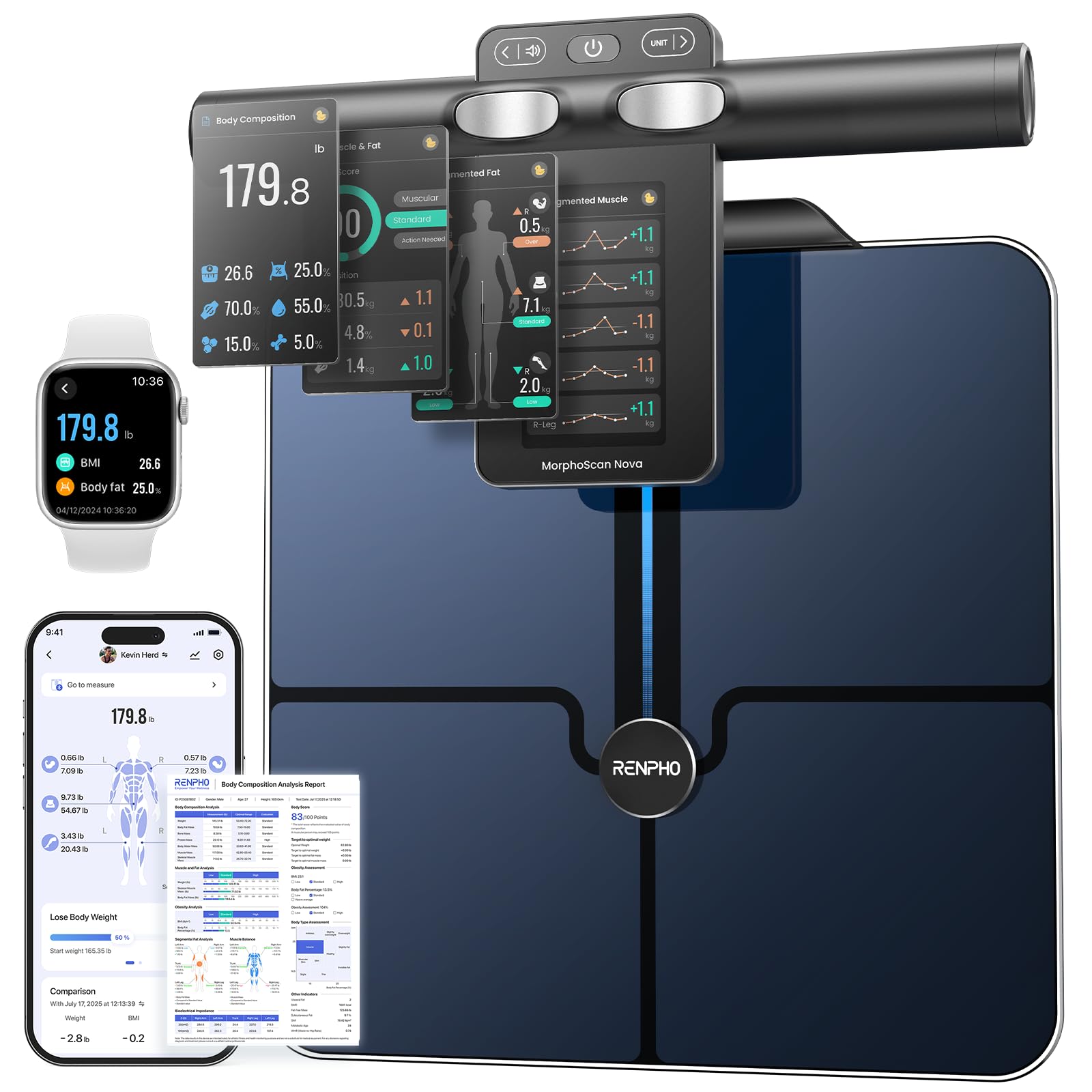
Running GLP-1 + GH peptide stacks without bloodwork is what trial-and-community sources both describe as running them blind. Baseline IGF-1, fasting glucose, HbA1c, and a metabolic panel before stacking, with a 4-week IGF-1 recheck and an 8-12 week metabolic panel, is the documented minimum.
References

# Citation PMID
1 Wilding JPH, et al. Once-weekly semaglutide in adults with overweight or obesity. N Engl J Med. 2021;384:989-1002. 33567185
2 Look M, et al. Body composition changes during weight reduction with tirzepatide in the SURMOUNT-1 study. Diabetes Obes Metab. 2025. 39996356
3 Garvey WT, et al. Coadministered cagrilintide and semaglutide in adults with overweight or obesity (REDEFINE 1). N Engl J Med. 2025. 40544432
4 Falutz J, et al. Effects of tesamorelin in HIV-infected patients with abdominal fat accumulation. J Clin Endocrinol Metab. 2010;95(9):4291-4304. 20101189
5 Adrian S, et al. Tesamorelin decreases muscle fat and increases muscle area in adults with HIV. J Frailty Aging. 2019;8(3):154-159. 31237318
6 Teichman SL, et al. Prolonged stimulation of GH and IGF-I secretion by CJC-1295 in healthy adults. J Clin Endocrinol Metab. 2006;91(3):799-805. 16352683
7 Raun K, et al. Ipamorelin, the first selective growth hormone secretagogue. Eur J Endocrinol. 1998;139(5):552-561. 9849822
8 Nass R, et al. Effects of an oral ghrelin mimetic on body composition in healthy older adults. Ann Intern Med. 2008;149(9):601-611. 18981485