P-21
P-21 (P021) is a small peptidergic compound studied in preclinical rodent models of neurogenesis and memory. It has no human trials. Below: today's vial sizes, prices through our link and the vendor's COA details.
Size
$20.69/mg · Sold out at last check
Price
$103.46
List
$114.95
Sold out at every vendor we list at last check. Compare p-21 vendors
Price shown uses code THEPEPTIDECATALOG at Swiss Chems's checkout (10% off list).
Sold by Swiss Chems. The Peptide Catalog does not sell peptides; we earn a commission if you buy through this link, at no extra cost to you. For laboratory research use only, not for human or veterinary use. Not FDA-approved. Nothing on this page is medical or dosing advice.
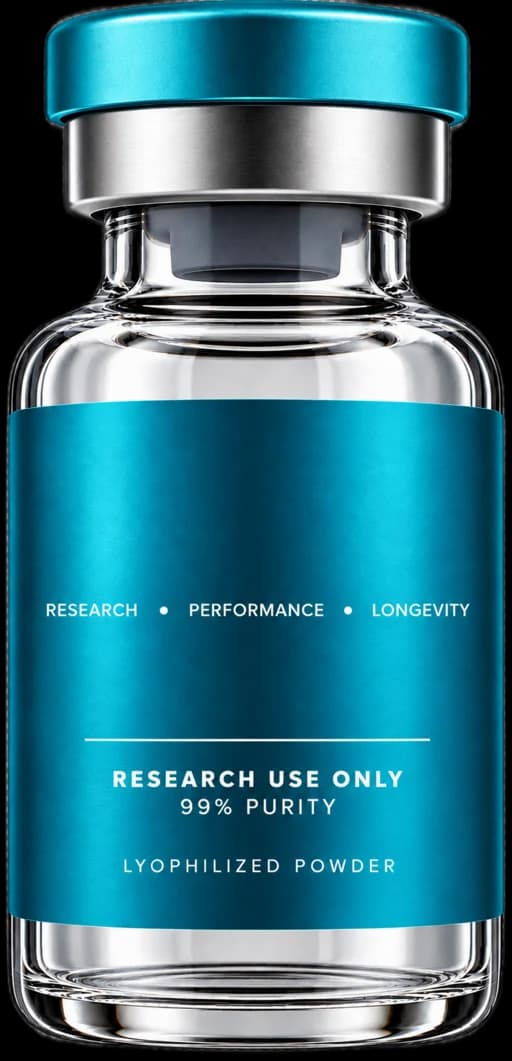
- Listed on our p-21 vendor comparison, ordered by our vendor rankings
- Lyophilized powder · laboratory research use only
Research-context information only. P-21 is a research peptide. Protocols, doses, and reactions reported below come from published research and self-reported community sources. This article reports what has been documented, not what should be done. Consult a licensed physician for personal medical decisions.
Vial sizes listed by the vendor
P-21 Vial Sizes & Prices
| Size | List | With our code | Per mg | Availability |
|---|---|---|---|---|
| 5 mg | $114.95 | $103.46 | $20.69 | Sold out |
Prices checked today, 5:05 AM CT on Swiss Chems's site, with code THEPEPTIDECATALOG applied. The lot certificate is on Swiss Chems's product page. Sizes not re-checked in the last 7 days are hidden. The vendor's checkout is final.
Test results
P-21 Certificate of Analysis
View the P-21 certificate on Swiss Chems's product page.
How to check one: how to verify a peptide COA.
P-21 Dosing in Clinical Research
Neurogenesis / Cognition (Research / No Human Data)
Educational reference only. Individual responses vary. Consult healthcare provider before use.
Why This Dosing Protocol
Form and route. Swiss Chems lists P21 as a 5 mg lyophilized vial, so community use involves bacteriostatic-water reconstitution like a standard injectable peptide. Community sources most often describe subcutaneous injection (intranasal is also mentioned), dosed in the morning, in 4-8 week cycles. Note rodent efficacy was shown with oral/peripheral dosing — a route mismatch worth flagging.
Same research area
Related cognitive & neuro peptides
 SelankSynthetic tuftsin analog studied in anxiety and neuropeptide research.
 SemaxSynthetic ACTH(4-10) analog studied in neuropeptide research.
 DSIPDelta sleep-inducing peptide, a nonapeptide studied in sleep research.
- PinealonKhavinson tripeptide (EDR) studied in preclinical brain-tissue research.Pinealon
- CortagenKhavinson tetrapeptide (AEDP) studied in preclinical nervous-system research.Cortagen
- DihexaAngiotensin IV-derived small peptide studied in preclinical cognition research.Dihexa
- NoopeptSynthetic dipeptide-derived compound studied in cognition research.Noopept
- NSI-189Benzylpiperazine-aminopyridine compound studied in neurogenesis research.NSI-189
How P-21 Works
CNTF-Derived Adamantylated Tetrapeptide — Neurogenic / Neuroprotective (Preclinical Evidence Only; No Human Trials)
Target → Signal → Effect → Outcomes
CNTF-Active-Region Tetrapeptide → BDNF Cascade — Proposed
P-21 (P021) is a synthetic adamantane-modified tetrapeptide — Ac-DGGLAG-NH2(CAS 1246751-68-7) — derived from the active region of ciliary neurotrophic factor (CNTF), residues 148-151. It was developed in Khalid Iqbal's lab by paring Cerebrolysin's neurotrophic activity down to a single defined molecule (Li et al., 2010, PMID 20600002). The adamantane moiety was added to improve metabolic stability and blood-brain-barrier penetration. Although CNTF-derived, the reported procognitive effect runs largely through a BDNF-mediated cascade rather than classical CNTF receptor signaling.
↑BDNF, ↑phospho-CREB, ↓GSK-3β — Preclinical
In rodent and in-vitro models, P021 is reported to enhance dentate-gyrus neurogenesis and synaptic plasticity by inhibiting leukemia inhibitory factor (LIF) signaling and increasing BDNF transcription, with a downstream decrease in GSK-3β activity and increased phospho-CREB (PMID 28368015). Downstream effects in models include reduced tau pathology, preserved synaptic markers, and improved maze learning. All of this is preclinical — no human mechanistic or pharmacokinetic data exists.
Disease-Modifying in Rodent Models — Not Humans
The P-21 evidence base is a coherent, largely single-lab body of rodent work (~2010-2019). Chronic oral P021 reduced age-dependent cognitive decline in aged rats (PMID 24702821), produced disease-modifying effects in 3xTg-AD Alzheimer's mice including a reported survival increase (PMID 25046994), and rescued deficits in a Ts65Dn Down syndrome model (PMID 28368015). It is consistent in direction and clean of integrity flags — but it is rodent disease/aging-model data, not human cognitive-enhancement data. "Disease-modifying in a mouse model" is not "works in people."
Unknown in Humans
There are no human trials of P-21, so there is no evidence base for predicting what a person would notice. Community reports (anecdotal) describe subtle cognitive/mood or focus changes over days to a few weeks, but they are mixed and inconsistent — some describe noticeable effects, others little or nothing, and a subset describe overstimulation or sleep disruption at higher or later-day doses. None of this is placebo-controlled or verified.
What Makes This Peptide Different
P-21's evidence is the opposite kind of limited from Dihexa's: it is clean of retractions and integrity flags, but it is entirely preclinical and mostly from one originating lab, with zero human trials, no human safety, dose, or pharmacokinetic data, and no FDA approval for any indication. Unlike the Dihexa HGF/c-Met oncology discussion, there is no specific cancer-pathway literature tying P-21 to malignancy. It is sold strictly as a research chemical, not for human consumption.
Technical specifications
P-21 chemical & analytical data
- Also known as
- P021
- Form
- Lyophilized (freeze-dried) powder in a sealed vial
- Presentation
- 5 mg
- Regulatory status
- Research peptide; research-grade vials are not FDA-approved.
Storage & Handling
Storage at a glance
Proper storage temperatures, shelf life, reconstitution best practices, and travel tips for lyophilized and reconstituted peptides.
Handling specifics
Educational overview on storage, labeling, and traceability considerations for lab environments. Consult primary literature and vendor documentation for specifics.
- Freezer (-20°C): 1+ year
- Refrigerator (2-8°C): 1-3 months
- Room temperature: 2-3 weeks (emergency only)
- MUST refrigerate at 2-8°C
- 4-week maximum shelf life
- NEVER freeze after reconstitution
- Use bacteriostatic water for multi-dose
8 answers
P-21 FAQ: Buying, COA, Storage & Research
What is P-21 (P021)?
Does P-21 have human clinical trials?
Is there an established dose for P-21?
What does the preclinical research show?
What side effects are reported?
How long does reconstituted peptide last?
Is this peptide legal to purchase?
New to peptides?
P-21 Research Articles
P-21 Dosage: What the Community Reports
P-21 has no trial-set dose. See the 500 mcg-1 mg figure community sources actually use, the route mismatch, and the all-rodent evidence behind it.
side-effectsP-21 Side Effects: The No-Human-Data Reality
P-21 has zero human safety data — every figure is preclinical or anecdotal. The sleep-disruption signal and theoretical cautions, graded by source.
resultsP-21 Timeline: What the Evidence Shows
No human trial sets a P-21 timeline. Here's the gap between rodent chronic-dosing data and community-reported onset, each clearly labeled.
reconstitutionP-21 Reconstitution: 5mg Vial Bac Water Math
P-21 ships as a 5mg lyophilized vial with no validated human dose. Here's the bac-water math community sources use for the ~500mcg-1mg subQ range.
Compare P-21 Vendors Before You Buy
Disclosure: we may earn affiliate commission from qualifying purchases. Educational information only — not medical advice.