guidesApril 25, 2026·6 min read

LL-37 Dosage Chart: 125mcg/Day for 50 Days

Most protocols miss the vitamin D co-factor that activates LL-37. Covers 125mcg daily, 50-day cycling, and TA-1 stacking.

LL-37 Dosing: 125mcg/Day for 50 Days

LL-37 is the only human cathelicidin antimicrobial peptide — a 37-amino-acid peptide with broad-spectrum antimicrobial activity and potent immune-modulating properties. No human clinical trials exist for injectable LL-37. This is not medical advice.

Research-context information only. LL-37 is a research peptide. Protocols, doses, and reactions reported below come from published research and self-reported community sources. This article reports what has been documented, not what should be done. Consult a licensed physician for personal medical decisions.

LL-37 Dosing Table

Match your vial size below — reconstitution and dose math update automatically.

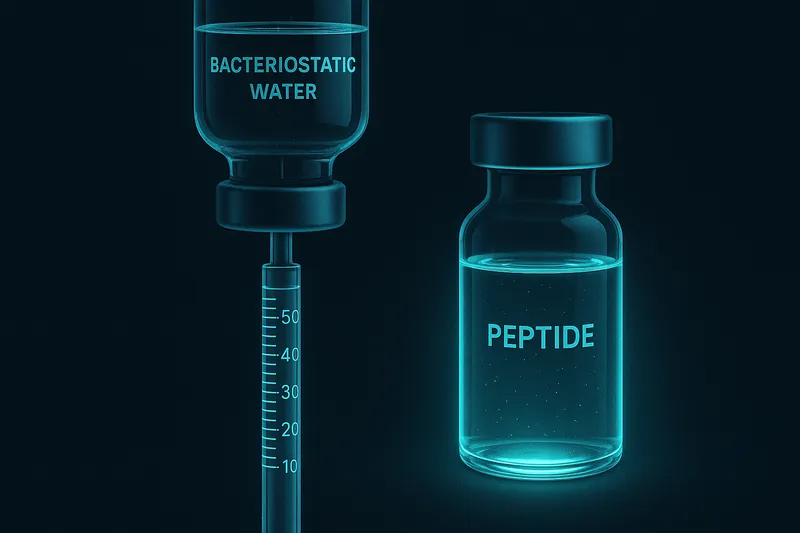
Reconstitute: add 2 mL of bacteriostatic water to the 5 mg vial. Resulting concentration: 2.5 mg/mL.
100 mcg4 units · 0.04 mL
Daily SubQ
Starter
125 mcg5 units · 0.05 mL
Daily SubQ
Standard (50-day cycle)
250 mcg10 units · 0.1 mL
Daily SubQ
Advanced

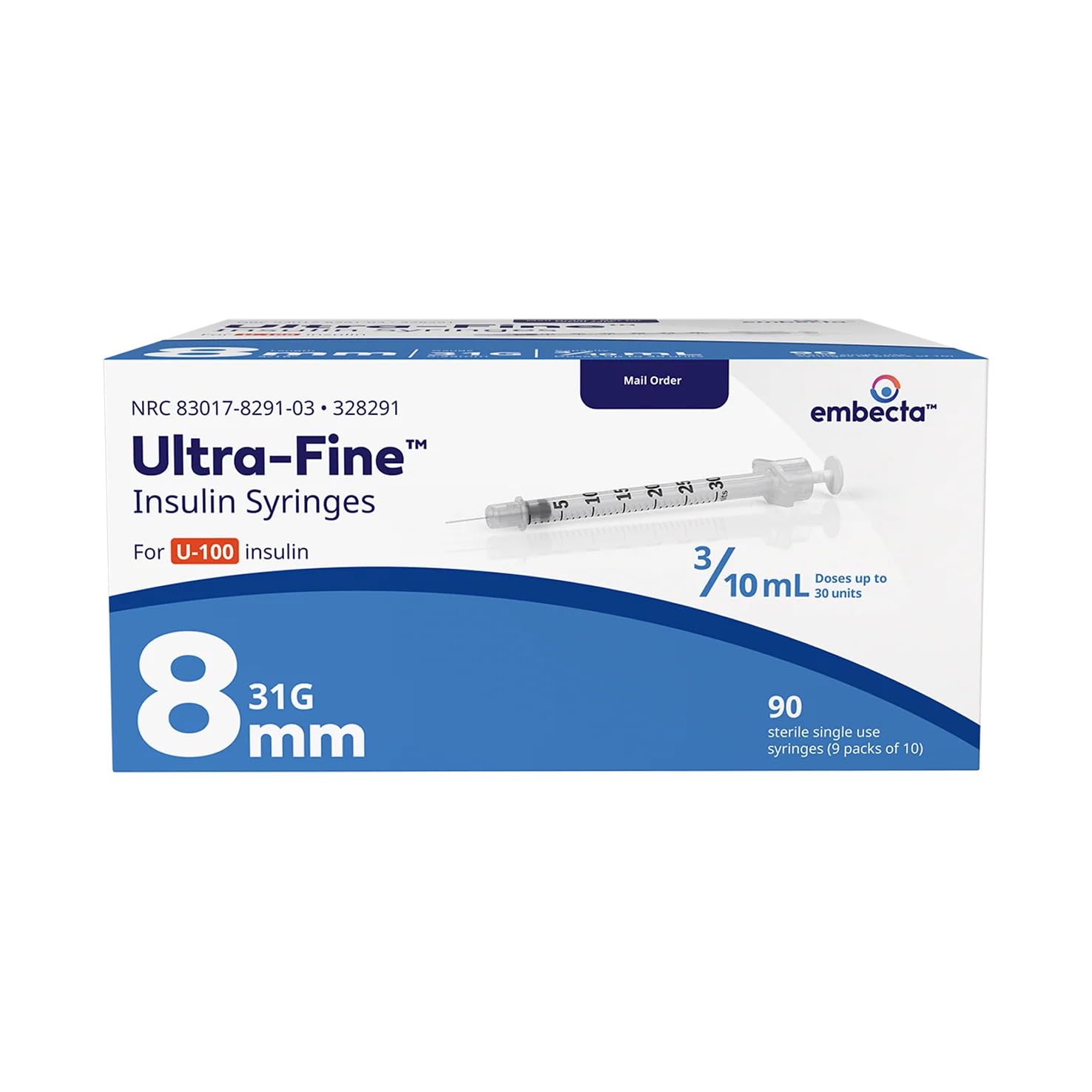
Math assumes U-100 insulin syringes (1 mL = 100 units). Verify your syringe matches before injecting. Round half-units to the nearest visible mark.

Quick Reference: Standard Protocol

Parameter Detail
Dose 125 mcg per injection
Route Subcutaneous injection
Timing AM (morning)
Frequency Every day
Cycle 50 days straight, 4 weeks off
Vial size 5 mg
Reconstitution 2 mL BAC water (2,500 mcg/mL)
Draw amount 5 units on insulin syringe
Storage Refrigerate, use within 28 days

Cycling Details

The standard protocol runs approximately 50 days of continuous daily injections, followed by 4 weeks off. One 5 mg vial at 125 mcg/day provides 40 doses — most users purchase 2 vials per cycle to cover the full 50 days.

The washout period allows the immune system to return to baseline and prevents potential desensitization. Some community members use an acute protocol (125-200 mcg daily for 2-4 weeks) during active immune challenges, while the full 50-day cycle serves as preventive/maintenance use.

Vitamin D3 synergy: Community protocols commonly include Vitamin D3 (5,000-10,000 IU daily) because Vitamin D directly upregulates endogenous LL-37 production via the VDRE in the cathelicidin gene (Liu et al., 2006). Community protocols target a serum 25(OH)D of 50-80 ng/mL. Many add Vitamin K2 (100-200 mcg MK-7) alongside high-dose D3.

Enhanced Protocol (Community)

Some community protocols describe 200 mcg daily for 6-8 weeks as an enhanced option, though the 125 mcg starting point is more consistently reported. This uses 8 units per injection instead of 5.

Routes of Administration

Subcutaneous (standard): Abdomen, love handles, or thighs. Protocols describe rotating injection sites. Morning injection is the most common community timing, aligning with immune circadian rhythms. Absorption is not affected by meals.

30ml bacteriostatic water vial — 0.9% benzyl alcohol multi-dose
Bac Water Made for Peptides50% off
Don't risk a $300 peptide on generic bac water.
Most cloudy reconstitutions trace back to one thing — and it isn't the peptide. Sterile, non-pyrogenic, 0.9% benzyl alcohol — formulated for peptide reconstitution, not repackaged from generic stock.
0.9% benzyl alcohol Made for peptides 30 mL multi-dose
See why our bac water doesn't ruin peptides
Ships fast · 50% off with code thepeptidecatalog

Reconstitution Quick Reference

LL-37 Reconstitution

Vial Size BAC Water Concentration 125 mcg Dose
5 mg 2 mL 2,500 mcg/mL 5 units

Math: 5,000 mcg / 2 mL = 2,500 mcg/mL. 125 mcg / 2,500 = 0.05 mL = 5 units. One vial provides 40 doses (40 days). Community technique describes gentle swirling rather than shaking; documented storage is refrigeration, with use within 28 days.

For step-by-step reconstitution instructions, see the BPC-157 reconstitution guide — same technique applies.
Top LL-37 Vendors

Ranked by price, COA availability, and reputation

1
Ascension PeptidesCOA
10/10
10mg$8.90/mg
2
Ion PeptideCOA
9.5/10
5mg$9.00/mg
3
EZ PeptidesCOA
9/10
10mg$7.80/mg

Affiliate disclosure: vendor links in this article are affiliate links — The Peptide Catalog may earn a commission if you buy through them, at no additional cost to you.

Where These Numbers Come From

LL-37 dosing is entirely community-derived. No pharmacokinetic studies exist for subcutaneous injection in humans.

LL-37 demonstrates antimicrobial activity against a broad range of pathogens, disrupting bacterial membranes through electrostatic interactions (Dürr et al., 2006). LL-37 expression is directly regulated by Vitamin D through the VDRE in the cathelicidin gene promoter, with TLR activation upregulating the vitamin D receptor and the 1-hydroxylase that converts 25(OH)D to active 1,25(OH)₂D (Liu et al., 2006).

LL-37 also disrupts and prevents bacterial biofilm formation at sub-MIC concentrations (Overhage et al., 2008). Beyond direct killing, LL-37 recruits immune cells and modulates inflammatory pathways (Kahlenberg & Kaplan, 2013).

The 125 mcg daily dose appears to be a conservative starting point extrapolated from in vitro effective concentrations, natural production rates, practical vial math (5 mg vial = 40 doses at 125 mcg), and community tolerance reports.

Stacking Protocols

LL-37 Immune Stacking

Stack LL-37 Dose Partner Partner Dose Purpose
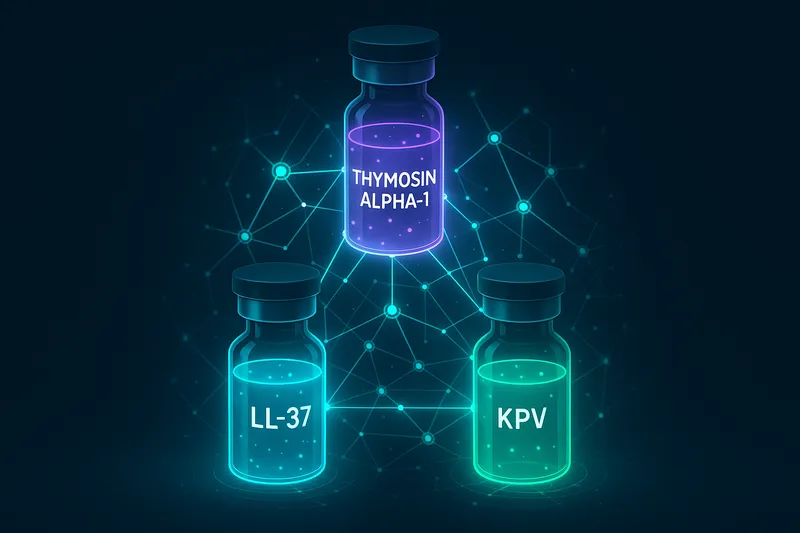
Thymosin Alpha-1 125 mcg daily TA-1 1.5 mg SC, 5on/2off Innate + adaptive immune (most commonly reported in community sources)
KPV 125 mcg daily KPV 500 mcg SC, 5on/2off Antimicrobial + anti-inflammatory
BPC-157 125 mcg daily BPC-157 250-500 mcg Immune + tissue healing
Vitamin D3 + K2 125 mcg daily D3 5,000-10,000 IU daily Upregulates endogenous LL-37

Community protocols describe starting one peptide at a time to assess tolerance, using different injection sites when combining, and aligning cycle lengths for simplicity.

Side Effects & Safety

  • Injection site redness/stinging — most commonly reported, typically mild
  • Transient warmth or swelling at injection site
  • Mild flu-like symptoms — first 1-3 days, possible immune activation response
  • Herxheimer-like reactions — reported by some, possibly from microbial die-off
  • Autoimmune caution — LL-37 overexpression is associated with psoriasis and rosacea; community protocols note elevated caution is warranted for these conditions, given LL-37's role in psoriasis and rosacea pathogenesis (Morizane & Gallo, 2012)
  • No human clinical safety data for injectable LL-37
  • Pregnancy/nursing — no safety data exists; community protocols exclude pregnant or nursing individuals

mg to Units Conversion

On a standard 100-unit insulin syringe, each "unit" equals 0.01 mL (so 100 units = 1 mL). Once LL-37 is reconstituted, the conversion from a target dose to syringe units depends on the chosen dilution.

The two reconstitution ratios most often described in community protocols are below.

Reconstitution A: 5 mg vial + 2 mL BAC water (2.5 mg/mL) — the standard dilution from the Quick Reference above.

Dose (mcg) Volume (mL) Units (insulin syringe)
50 mcg 0.02 mL 2 units
125 mcg 0.05 mL 5 units
200 mcg 0.08 mL 8 units
250 mcg 0.1 mL 10 units

Reconstitution B: 5 mg vial + 5 mL BAC water (1 mg/mL) — more BAC water for larger, easier-to-measure draws.

Dose (mcg) Volume (mL) Units (insulin syringe)
50 mcg 0.05 mL 5 units
125 mcg 0.125 mL 12.5 units
200 mcg 0.2 mL 20 units
250 mcg 0.25 mL 25 units

These conversions reflect the dilutions documented in community reconstitution protocols. They report how the math is described, not a recommended dosing schedule.

Frequently Asked Questions

What is the standard LL-37 dose?
The standard documented protocol is 125 mcg subcutaneous daily in the morning for 50 days straight, followed by 4 weeks off. Protocols describe drawing 5 units from a 5 mg vial reconstituted with 2 mL BAC water.
How long should an LL-37 cycle last?
The standard protocol is approximately 50 days straight, followed by 4 weeks off. One 5 mg vial at 125 mcg/day lasts 40 days; most purchase 2 vials per cycle.
How do I reconstitute LL-37?
Protocols describe adding 2 mL of bacteriostatic water to a 5 mg vial for a concentration of 2,500 mcg/mL. A 125 mcg dose equals 5 units on a standard insulin syringe. Documented technique is to swirl gently rather than shake, then refrigerate and use within 28 days.
What stacking protocols are documented for LL-37 and other immune peptides?
Yes — LL-37 is commonly stacked with Thymosin Alpha-1 for comprehensive immune support, or with KPV for combined antimicrobial and anti-inflammatory effects. Community protocols describe starting each peptide individually before combining.
What do community protocols describe about Vitamin D with LL-37?
Vitamin D is a key regulator of natural LL-37 expression. Many community protocols include Vitamin D3 supplementation (5,000-10,000 IU daily) alongside LL-37 to support endogenous production and complement the exogenous peptide.
What time of day do community protocols describe for LL-37?
Morning (AM) dosing is the most common community timing. This aligns with natural immune system circadian rhythms, as immune surveillance tends to be more active during waking hours.

References

Citation Topic PMID
Dürr et al., Biochimica et Biophysica Acta (2006) LL-37 structure and antimicrobial mechanism 16716248
Liu et al., Science (2006) TLR/Vitamin D-mediated cathelicidin induction 16497887
Overhage et al., Infection and Immunity (2008) LL-37 prevents biofilm formation 18591225
Kahlenberg & Kaplan, Journal of Immunology (2013) LL-37 in inflammation and autoimmune disease 24185823
Tokumaru et al., Journal of Immunology (2005) LL-37 induces keratinocyte migration via EGFR 16177113
Morizane & Gallo, Journal of Dermatology (2012) Cathelicidins in psoriasis pathogenesis 22352846
Mahlapuu et al., Wound Repair and Regeneration (2021) LL-37 RCT in venous leg ulcers 34687253
Miranda et al., Archives of Dermatological Research (2023) LL-37 cream RCT in diabetic foot ulcer 37480520

For educational and research purposes only. This is not medical advice. No human clinical trials exist for injectable LL-37. All protocols are community-developed.