
ComparisonSeptember 1, 2026·11 min read

Somatropin vs Peptides: HGH Alternatives

Somatropin is prescription rHGH — no peptide vendor sells it. Here's how it really differs from the GH-axis secretagogues people search for instead.

Direct recombinant growth hormone contrasted with the body's own pituitary growth-hormone pulse

Search "HGH peptides" and the results collapse two very different things into one shopping cart. On one side is somatropin — recombinant human growth hormone, an FDA-approved prescription biologic that a doctor prescribes and a pharmacy dispenses. On the other are the growth-hormone secretagoguessermorelin, CJC-1295, ipamorelin, tesamorelin, MK-677 and the GHRPs — the research compounds peptide vendors actually stock. They are related in what they influence, but they are not the same category, they are not bought the same way, and they do not do the same thing to the body.

That distinction is the whole point of this comparison. No research-peptide vendor sells somatropin, because it is a regulated drug, not a research chemical. So when someone asks "which peptide is like HGH," the honest answer starts by separating the approved hormone from the compounds that nudge the pituitary to make more of its own. This article lays out what somatropin is and what it is approved for, how the secretagogues take the opposite mechanistic route, and how the two compare on efficacy, access, cost and safety — so the terms stop getting blurred.

Research-context information only. The growth-hormone secretagogues discussed below — sermorelin, CJC-1295, ipamorelin, tesamorelin, MK-677 and the GHRPs — are research peptides, sold for laboratory research use only. Somatropin is a prescription biologic (recombinant human growth hormone) obtained only through a licensed physician; it is described here for education, not as something to source outside that route. Protocols, doses and reactions reported below come from published research and self-reported community sources. This article reports what has been documented, not what should be done. Consult a licensed physician for personal medical decisions.

What Somatropin Actually Is

Somatropin is recombinant human growth hormone: a 191-amino-acid protein manufactured to match the growth hormone the pituitary gland naturally produces. Because it is the finished hormone, an injection raises circulating growth hormone directly and immediately, independent of whether the pituitary would have released any on its own. That is the defining feature — and the defining limitation — of hormone-replacement therapy.

It is approved by the FDA and dispensed only on a prescription. Its labeled indications are specific medical conditions, not general wellness: growth hormone deficiency in children and adults, Turner syndrome, Prader-Willi syndrome, chronic kidney disease in children, short bowel syndrome, and HIV-associated wasting, among others. In adults with diagnosed growth hormone deficiency, the Endocrine Society's clinical practice guideline (Molitch et al., 2011) describes replacement that is individualized and titrated against IGF-1 levels rather than dosed by body weight, and monitored by an endocrinologist. It is a maintenance therapy for a diagnosed deficiency, not an enhancement protocol.

Somatropin is prescription-only for a reason that matters to this comparison. Direct growth hormone bypasses the body's own regulation, so it can push IGF-1 above the physiologic range if not carefully monitored, and distribution outside a legitimate medical channel is tightly restricted under federal law. Peptide vendors do not — and cannot — sell it. That is not a gap in their catalogs; it is the regulatory line that separates an approved drug from a research chemical.

One Name to Untangle: "HGH Fragment 176-191"

Search "HGH peptide" and one product muddies the picture further: HGH Fragment 176-191, which some research vendors do stock. Despite the name, it is not somatropin. It is a short fragment — residues 176 through 191 — of the growth hormone molecule, not the full 191-amino-acid hormone. The distinction is the whole point: the fragment carries a slice of growth hormone's structure without the parts that drive systemic IGF-1 and general growth signaling.

Research on the fragment has centered on lipolysis — fat metabolism — rather than the broad anabolic effects of the intact hormone, which is also why it sits on the research-vendor side of the regulatory line that somatropin does not. The stabilized, modified version most research interest has consolidated around is AOD-9604, an analog of this same fragment. So when a "HGH fragment" listing turns up in a peptide catalog, it belongs to that fat-loss fragment lane, not to recombinant growth hormone — see the AOD-9604 buying guide for the compound that lane actually points to.

Secretagogues Take the Opposite Route

The compounds peptide vendors do sell work on the supply chain rather than the product. A secretagogue is anything that prompts a gland to secrete its own hormone. Growth-hormone secretagogues fall into two families that are often combined in research protocols:

  • GHRH analogs — sermorelin, CJC-1295, and tesamorelin — mimic growth-hormone-releasing hormone and signal the pituitary to release growth hormone.
  • Ghrelin-receptor agonists (GHRPs and ghrelin mimetics) — ipamorelin, GHRP-6, GHRP-2, hexarelin, and the oral compound MK-677 — act on a second receptor that both triggers a GH pulse and amplifies the GHRH signal.

The mechanistic contrast with somatropin is the crux of the whole comparison. Direct rHGH is a flat, exogenous input; the secretagogues instead provoke the pituitary's own pulsatile release, which remains subject to negative feedback from somatostatin and IGF-1. Teichman and colleagues (2006) documented that a single subcutaneous dose of the long-acting GHRH analog CJC-1295 produced dose-dependent GH increases of roughly 2- to 10-fold and IGF-1 increases of 1.5- to 3-fold in healthy adults, with the elevation persisting for days while natural pulsatility was preserved. That preserved feedback loop is the mechanistic argument researchers make for the secretagogue approach: the pituitary is still in the circuit, so the system retains a ceiling that direct hormone injection removes.
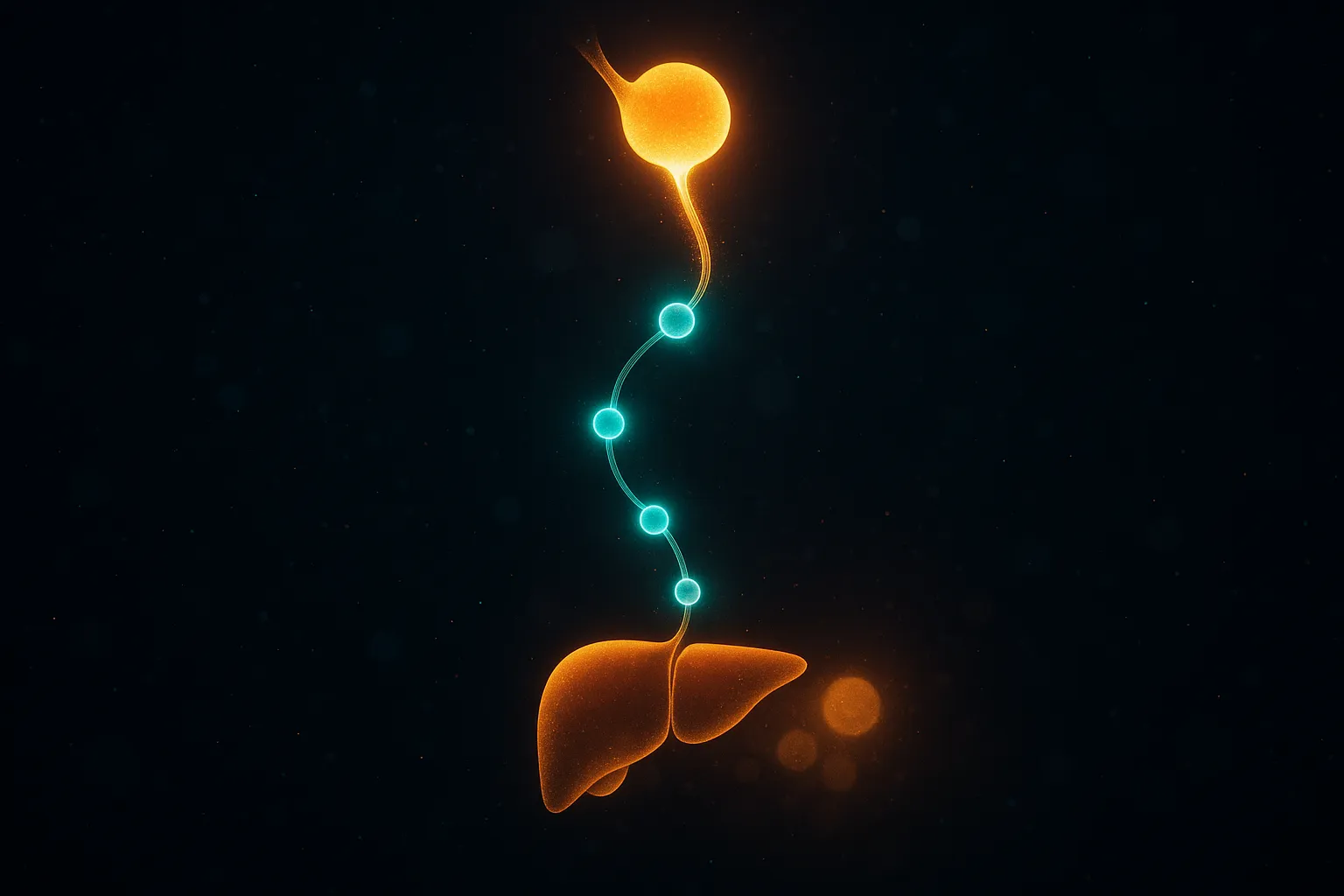
Abstract growth-hormone axis showing a pituitary pulse descending through receptor nodes

Two of these compounds sit in a middle category worth naming precisely. Sermorelin and tesamorelin are themselves the active ingredients in FDA-approved finished products — sermorelin was historically approved for pediatric growth hormone deficiency and diagnostic testing (Prakash and Goa, 1999), and tesamorelin is approved for HIV-associated lipodystrophy. Their research-peptide and compounded forms, however, are not FDA-approved and are sold for research use only. That makes them a useful bridge: they are GHRH analogs with real clinical trial data behind the molecule, even though the vials a research vendor ships are not the approved product.

Efficacy: What the Trials Actually Measured

The fairest way to compare is to put the trial numbers side by side and let the magnitudes speak, with the mechanism explaining the gap.

Direct rHGH produces the larger body-composition signal. The landmark Rudman study (1990) reported that six months of growth hormone in men over 60 with low baseline IGF-1 was associated with an 8.8% increase in lean body mass, a 14.4% decrease in fat mass, and a small rise in lumbar bone density. Those are substantial shifts — and they came from replacing the hormone outright.

The secretagogue trials report more measured effects, consistent with working through a regulated pathway. Nass and colleagues (2008) gave healthy older adults the oral ghrelin mimetic MK-677 for a year and reported that fat-free mass rose about 1.1 kg versus a 0.5 kg decline on placebo, while GH and IGF-1 were restored toward young-adult levels without serious adverse effects in that cohort. For tesamorelin, Stanley and colleagues (2014) reported in a randomized trial that daily injection over six months reduced visceral adipose tissue and liver fat in HIV-infected patients with abdominal fat accumulation — a targeted fat-depot effect rather than a whole-body recomposition claim.

The pattern across these trials is consistent: direct hormone replacement moved the larger numbers, and the secretagogues moved smaller, physiology-bounded numbers while keeping the pituitary in control. Neither the trial literature nor community sources support framing any secretagogue as mechanically equivalent to injected rHGH. They influence the same axis through different doors, and the reported effect sizes reflect that.

Affiliate disclosure: the vendor links below and throughout this article are monetized — The Peptide Catalog earns a commission on purchases made through them. Somatropin is a prescription drug and is not among them.

Ready to explore the research compounds? Compare verified vendors and third-party COAs on the best sermorelin sources and best MK-677 sources pages, or browse all vendor coupon codes.
The secretagogues below are the research compounds people reach for when they search "HGH peptides." Somatropin is not among them — it is a prescription drug, not a vendor SKU.

Access, Legality, and How the Two Are Obtained

This is where the two categories stop overlapping entirely. Somatropin is a prescription biologic. Obtaining it legally means a diagnosis, a prescription from a licensed physician, and a pharmacy — and its distribution outside that channel is specifically restricted under federal law. There is no research-use lane for it.

The secretagogues are sold under an entirely different framework: research chemicals labeled "not for human consumption," offered for laboratory research use only, with quality documented through third-party certificates of analysis rather than pharmacy dispensing. That is the framework this site tracks — per-milligram pricing, COA availability, and vendor reliability for compounds like sermorelin and ipamorelin.

The two are not interchangeable, and nothing here should be read as positioning research peptides as a legal path around a prescription. They are different products with different legal statuses, obtained through different systems. Anyone weighing a growth-hormone-axis intervention for a medical reason is describing a physician conversation, not a checkout page.

Balance motif contrasting a direct hormone vial with clustered peptide molecules

Cost and Practical Differences

The cost structures reflect the two systems. Prescription somatropin, dispensed through a pharmacy for an approved indication, is generally among the more expensive endocrine therapies and is typically handled through insurance for covered conditions. Research secretagogues are priced per milligram by vendor, with the figures tracked live on this site's comparison pages — which is why the per-mg framing that dominates peptide shopping simply does not map onto how prescription rHGH is billed.

There are practical handling differences as well. Somatropin is a finished, formulated product prepared for the labeled route of administration. Research peptides ship as lyophilized powder that community and trial protocols describe reconstituting with bacteriostatic water before use in the lab — a preparation step that has no equivalent on the prescription side. Oral MK-677 is the outlier among the secretagogues in that community sources describe it being used without reconstitution at all, since it is not an injectable.

Safety and Side-Effect Contrast

The side-effect literature tracks the mechanism, as expected. Direct rHGH, because it removes the pituitary's feedback ceiling, has a dose-dependent adverse-event profile documented in the clinical literature: fluid retention, joint pain, carpal tunnel symptoms, and insulin resistance are among the effects reported when growth hormone is pushed above physiologic levels, which is part of why the Endocrine Society guideline (Molitch et al., 2011) emphasizes IGF-1-guided titration and specialist monitoring.

For the secretagogues, the trial-reported profiles are generally milder in the studied cohorts, consistent with a mechanism that preserves feedback regulation. Nass and colleagues (2008) reported that a year of oral MK-677 in healthy older adults was tolerated without serious adverse effects in that group, though ghrelin-receptor agonists in the class have been associated with increased appetite and transient rises in fasting glucose in various studies. GHRH analogs like tesamorelin carried injection-site reactions and glucose-metabolism monitoring in their trials (Stanley et al., 2014). None of this is a safety endorsement — it is a description of what specific trials reported in specific populations, and the growth-hormone axis carries monitoring considerations regardless of which door is used to influence it.

Who Researches Which

In the research and community literature, the two categories attract different interest. Somatropin, as an approved therapy, is the province of diagnosed growth-hormone deficiency and the specific pediatric and metabolic conditions on its label — a physician-directed context throughout.

The secretagogues draw research interest along the lines each compound's data suggests. Community sources commonly describe sermorelin and CJC-1295 in the context of gentle, feedback-preserving GH support; ipamorelin as the most selective GHRP with the least effect on other hormones; MK-677 for its oral convenience and appetite effect; and tesamorelin specifically around visceral-fat questions, reflecting its trial evidence. The through-line is that the secretagogue category is where research-compound interest concentrates precisely because somatropin sits behind a prescription and these compounds do not claim to replace it.

Frequently Asked Questions

Is somatropin a peptide, and can peptide vendors sell it?
Somatropin is recombinant human growth hormone (rHGH) — a 191-amino-acid protein biologic, technically a peptide by size but regulated as an FDA-approved prescription drug. Research-peptide vendors do not carry it; it is dispensed only through a licensed pharmacy on a prescription. The compounds those vendors sell are growth-hormone secretagogues such as sermorelin, CJC-1295, ipamorelin, tesamorelin, and MK-677, which act on the pituitary rather than replacing the hormone directly.
How is somatropin different from a growth-hormone peptide like sermorelin?
Somatropin is the hormone itself, injected directly, so it raises growth hormone regardless of what the pituitary is doing. Sermorelin and the other secretagogues instead signal the pituitary to release its own growth hormone in natural pulses, which stays subject to the body's feedback loops. Teichman and colleagues (2006) documented that the GHRH analog CJC-1295 produced dose-dependent GH and IGF-1 rises while preserving pulsatility; direct rHGH bypasses that regulation entirely.
What is somatropin actually FDA-approved to treat?
Somatropin is approved for growth hormone deficiency in children and adults, and for specific conditions such as Turner syndrome, chronic kidney disease in children, Prader-Willi syndrome, short bowel syndrome, and HIV-associated wasting. The Endocrine Society's 2011 adult guideline (Molitch et al.) describes replacement dosing individualized and titrated to IGF-1. It is not approved as a general anti-aging or bodybuilding therapy.
Are growth-hormone peptides a legal substitute for prescription HGH?
No. Research peptides are sold for laboratory research use only and are labeled not for human consumption; somatropin is a prescription biologic obtained through a physician. They are not interchangeable products, and this article does not frame one as a replacement for the other. Legal status, sourcing, and intended use differ entirely between the two.
What did trials report about growth-hormone secretagogues versus direct rHGH?
Direct rHGH trials such as Rudman (1990) reported large body-composition shifts in older men — roughly 8.8% lean-mass gain and 14.4% fat-mass loss over six months — alongside side effects. Secretagogue trials such as Nass (2008) with oral MK-677 reported more modest lean-mass changes (about 1.1 kg over one year) while restoring GH and IGF-1 toward young-adult levels. The magnitude of effect and the safety profile differ because one replaces the hormone and the other stimulates it.

Bacteriostatic water is the standard research consumable for reconstituting lyophilized secretagogues in the lab, and its pricing is independent of anything on the prescription side.

30ml bacteriostatic water vial — 0.9% benzyl alcohol multi-dose
Bac Water Made for Peptides50% off
Don't risk a $300 peptide on generic bac water.
Most cloudy reconstitutions trace back to one thing — and it isn't the peptide. Sterile, non-pyrogenic, 0.9% benzyl alcohol — formulated for peptide reconstitution, not repackaged from generic stock.
0.9% benzyl alcohol Made for peptides 30 mL multi-dose
See why our bac water doesn't ruin peptides
Ships fast · 50% off with code thepeptidecatalog

References

Citation PMID Topic
Rudman D, et al. "Effects of human growth hormone in men over 60 years old." N Engl J Med. 1990. 2355952 Direct rHGH body-composition effects (lean mass, fat mass, bone density)
Molitch ME, et al. "Evaluation and treatment of adult growth hormone deficiency: an Endocrine Society clinical practice guideline." J Clin Endocrinol Metab. 2011. 21602453 Approved adult rHGH replacement, IGF-1-guided titration and monitoring
Stanley TL, et al. "Effect of tesamorelin on visceral fat and liver fat in HIV-infected patients with abdominal fat accumulation: a randomized clinical trial." JAMA. 2014. 25038357 Tesamorelin (GHRH analog) visceral- and liver-fat reduction
Prakash A, Goa KL. "Sermorelin: a review of its use in the diagnosis and treatment of children with idiopathic growth hormone deficiency." BioDrugs. 1999. 18031173 Sermorelin GHRH mechanism and clinical/diagnostic use
Nass R, et al. "Effects of an oral ghrelin mimetic on body composition and clinical outcomes in healthy older adults: a randomized trial." Ann Intern Med. 2008. 18981485 MK-677 lean-mass change and GH/IGF-1 restoration
Teichman SL, et al. "Prolonged stimulation of growth hormone and insulin-like growth factor I secretion by CJC-1295, a long-acting analog of GH-releasing hormone, in healthy adults." J Clin Endocrinol Metab. 2006. 16352683 CJC-1295 dose-dependent GH/IGF-1 rise with preserved pulsatility

This article compares an FDA-approved prescription biologic with research compounds for educational purposes. It does not recommend obtaining, dosing, or substituting any of them. Nothing here constitutes medical advice — consult a licensed physician for personal medical decisions.