dosingApril 25, 2026·6 min read

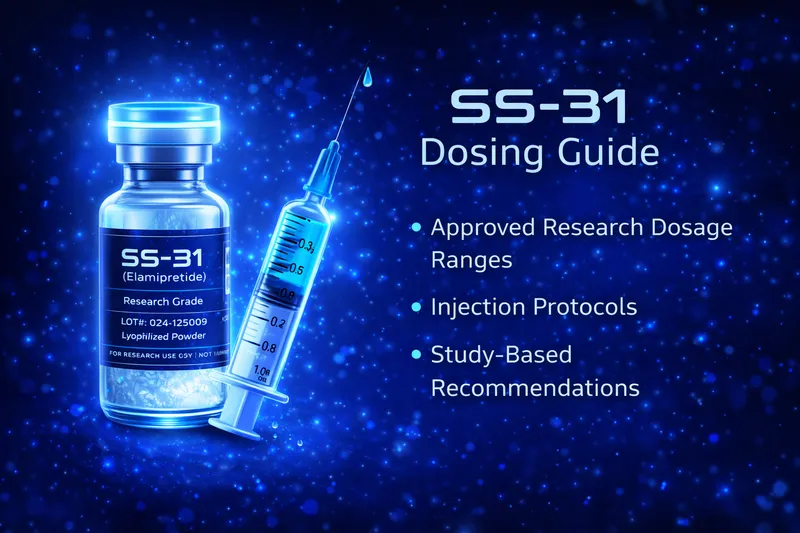
SS-31 Dosage Chart: 500mcg/Day, 5-On/2-Off

Clinical trials use 40mg — community protocols use 500mcg. Why the gap matters, plus cycling schedule and reconstitution.

SS-31 Dosing: 500mcg/Day, 5-On/2-Off Protocol

SS-31 (Elamipretide) is a synthetic mitochondria-targeted tetrapeptide that stabilizes cardiolipin in the inner mitochondrial membrane, restoring electron transport chain efficiency and ATP production. It's one of the few mitochondrial peptides with human clinical trial data.

Research-context information only. SS-31 is a research peptide. Protocols, doses, and reactions reported below come from published research and self-reported community sources. This article reports what has been documented, not what should be done. Consult a licensed physician for personal medical decisions.

SS-31 is not FDA-approved. Everything below reflects published clinical trial and community protocols. This is not medical advice.

SS-31 (Elamipretide) Dosing Table

Match your vial size below — reconstitution and dose math update automatically.

Reconstitute: add 2 mL of bacteriostatic water to the 10 mg vial. Resulting concentration: 5 mg/mL.
500 mcg10 units · 0.1 mL
Daily SubQ (5-on/2-off)
Community standard
1 mg20 units · 0.2 mL
Daily SubQ
Advanced

Math assumes U-100 insulin syringes (1 mL = 100 units). Verify your syringe matches before injecting. Round half-units to the nearest visible mark.

Quick Reference: Standard Protocol

Protocol parameters documented in clinical trials and community sources:

Parameter Documented value
Vial 10 mg
BAC Water 2 mL
Concentration 5 mg/mL
Dose (community) 500 mcg (10 units, standard 5 mg/mL reconstitution)
Route Subcutaneous (all community protocols)
Timing Morning (most community sources)
Frequency 5 days on, 2 days off (community protocol)
Cycle 8 weeks on, 8 weeks off (community protocol)
Storage 2–8 °C, within 28 days (community protocol)

Cycling Details

Community protocols describe 500 mcg daily for 5 consecutive days, then 2 days off, continuing this pattern for 8 weeks, then 8 weeks off before repeating.

SS-31's rapid mitochondrial uptake (>1,000-fold concentration within minutes) means no loading phase is necessary. The 5on/2off pattern within the 8-week cycle prevents potential desensitization, and the 8-week off period allows assessment of sustained effects.

Morning injection is most common — may support daytime energy levels. Some users dose 30-60 minutes pre-workout.

Routes of Administration

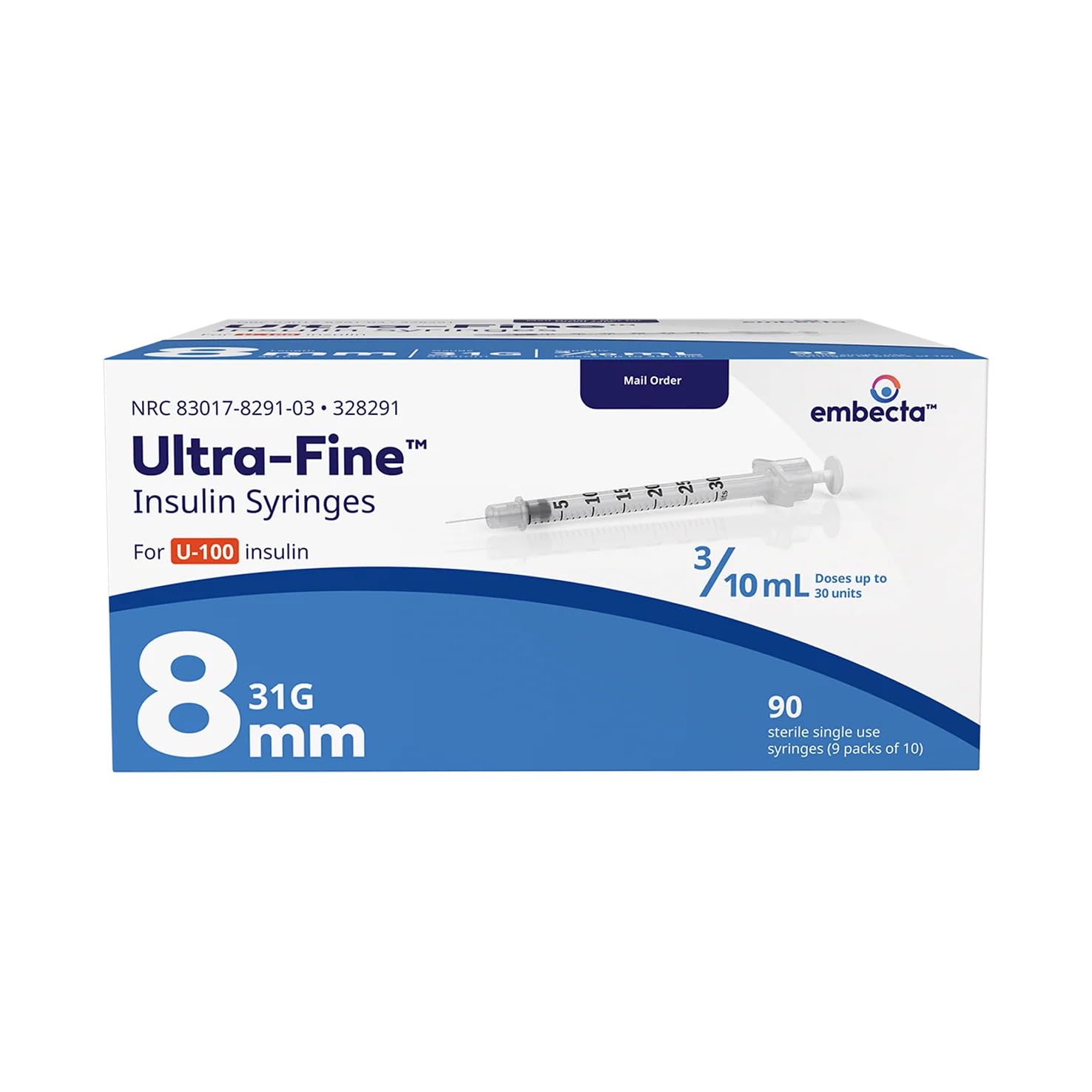
Subcutaneous injection is the standard community route. Protocols describe injecting into abdomen, thigh, or anywhere with SC fat. Volume is 0.1 mL with insulin syringe (29-31 gauge).

Intravenous is used only in clinical trials — provides rapid peak plasma levels but shorter tissue exposure than SC. Not practical for self-administration.

30ml bacteriostatic water vial — 0.9% benzyl alcohol multi-dose
Bac Water Made for Peptides50% off
Don't risk a $300 peptide on generic bac water.
Most cloudy reconstitutions trace back to one thing — and it isn't the peptide. Sterile, non-pyrogenic, 0.9% benzyl alcohol — formulated for peptide reconstitution, not repackaged from generic stock.
0.9% benzyl alcohol Made for peptides 30 mL multi-dose
See why our bac water doesn't ruin peptides
Ships fast · 50% off with code thepeptidecatalog

Reconstitution Quick Reference

Vial Size BAC Water Concentration 500 mcg Dose
10 mg 2 mL 5 mg/mL 10 units

Math: 10 mg / 2 mL = 5 mg/mL = 5,000 mcg/mL. For 500 mcg: 500 / 5,000 = 0.1 mL = 10 units.

Swirl gently — do not shake. Refrigerate at 2-8 C, use within 28 days. For step-by-step instructions, see the full SS-31 Reconstitution Guide.

Ready to buy? Compare verified vendors on our best SS-31 sources page, or browse all coupon codes for up to 50% off. For COA verification, vial size trade-offs, and a vendor-by-vendor price breakdown, see the full SS-31 Buying Guide.
Top SS-31 (Elamipretide) Vendors

Ranked by price, COA availability, and reputation

1
Ascension PeptidesCOA
10/10
10mg$6.00/mg
2
Ion PeptideCOA
9.5/10
$4.50/mg
3
Glacier AminosCOA
9/10
10mg$4.60/mg

Affiliate disclosure: vendor links in this article are affiliate links — The Peptide Catalog may earn a commission if you buy through them, at no additional cost to you.

Where These Numbers Come From

Community doses are dramatically different from clinical trial doses — for good reason.

TAZPOWER Trial (Barth Syndrome): 40 mg SC daily for 12 weeks in patients with genetic cardiolipin deficiency causing heart failure (Thompson et al., 2021).

PROGRESS-HF Trial: 4 mg SC daily for 4 weeks in heart failure patients with reduced ejection fraction.

Phase I Safety: IV doses up to 250 mcg/kg (~17.5 mg for a 70 kg adult) showed no dose-limiting toxicity (Szeto, 2014).

Why community doses are much lower: Clinical trials targeted severe genetic/cardiac conditions requiring aggressive intervention. Community protocols use 500 mcg for general longevity/mitochondrial support. SS-31 binds cardiolipin with high affinity — there's a finite amount to stabilize. Lower daily dose with cycling provides sustained benefits with wide safety margin.

Preclinical speed: SS-31 improves mitochondrial ADP sensitivity within 1 hour in aged human muscle (Siegel et al., 2023) — one of the fastest-acting peptides documented.

Stacking Protocols

Community-documented stacking protocols (self-reported sources):

Stack Purpose Protocol
SS-31 + MOTS-c Dual mitochondrial — structure + signaling SS-31 500 mcg + MOTS-c 1 mg, both 5on/2off
SS-31 + NAD+ Mitochondrial optimization + fuel SS-31 500 mcg 5on/2off + NAD+ 100 mg 2-3x/week
SS-31 + Epitalon Mitochondria + telomere maintenance Two key aging pathways covered

SS-31 stabilizes mitochondrial structure; MOTS-c activates metabolic signaling. Different mechanisms, complementary effects. For the full comparison, see our SS-31 vs MOTS-c.

Side Effects & Safety

  • Excellent safety profile — 40 mg daily was well-tolerated for 12+ weeks in TAZPOWER
  • No dose-limiting toxicity up to 0.25 mg/kg IV in Phase I
  • Occasional mild injection site irritation at community doses
  • Rare initial energy fluctuations — first few days only
  • No significant adverse events in any clinical trial
  • Community sources describe 500 mcg daily as generally well-tolerated, consistent with the absence of adverse events reported in clinical trials at significantly higher doses

mg to Units Conversion

On a standard 100-unit insulin syringe, each "unit" equals 0.01 mL (so 100 units = 1 mL). Once SS-31 is reconstituted, the conversion from a target dose to syringe units depends on the chosen dilution.

The two reconstitution ratios most often described in community protocols are below.

Reconstitution A: 10 mg vial + 2 mL BAC water (5 mg/mL) — the standard dilution from the Quick Reference above.

Dose (mcg) Volume (mL) Units (insulin syringe)
250 mcg 0.05 mL 5 units
500 mcg 0.1 mL 10 units
750 mcg 0.15 mL 15 units
1000 mcg 0.2 mL 20 units

Reconstitution B: 10 mg vial + 3 mL BAC water (3.33 mg/mL) — more BAC water for larger, easier-to-measure draws.

Dose (mcg) Volume (mL) Units (insulin syringe)
250 mcg 0.075 mL 7.5 units
500 mcg 0.15 mL 15 units
750 mcg 0.225 mL 22.5 units
1000 mcg 0.3 mL 30 units

These conversions reflect the dilutions documented in community reconstitution protocols. They report how the math is described, not a recommended dosing schedule.

Frequently Asked Questions

What is the standard SS-31 dose?
Community protocols most commonly describe 500 mcg SC daily, 5 days on / 2 days off, 8 weeks on / 8 weeks off. Reconstitution protocols typically use 2 mL BAC water in a 10 mg vial (5 mg/mL), drawing 10 units on an insulin syringe for each dose.
Why is community SS-31 dosing so much lower than clinical trials?
Clinical trials used 4-40mg daily for severe conditions like Barth syndrome and heart failure. Community protocols use 500mcg for general longevity/mitochondrial support — different applications requiring different doses.
How is SS-31 reconstituted?
Protocols describe adding 2 mL bacteriostatic water to a 10 mg vial for 5 mg/mL concentration. 500 mcg = 10 units on an insulin syringe. Refrigerated storage, used within 28 days, is the documented approach.
What routes of administration do protocols describe for SS-31?
All documented clinical trial and community protocols use subcutaneous or intravenous injection. SS-31 is a tetrapeptide degraded by digestive enzymes — oral bioavailability is not described in any protocol.
How fast does SS-31 work?
Preclinically, SS-31 improves mitochondrial function within 1 hour. Community users run 8-week cycles to assess sustained effects on energy, exercise capacity, and recovery.
What cycling pattern do SS-31 protocols describe?
Community protocols describe 8 weeks on, 8 weeks off. Within each cycle, a 5 days on / 2 days off pattern is described to limit potential receptor desensitization.
What's the difference between SS-31 and MOTS-c?
SS-31 uses 500mcg daily with rapid cardiolipin binding. MOTS-c uses 1mg daily for AMPK signaling. Both cycle 8 weeks on/off with 5on/2off frequency. SS-31 works in minutes; MOTS-c takes hours to days.

References

Citation Topic PMID
Zhao et al., J Biol Chem (2004) SS-31 discovery, mitochondrial targeting 15178689
Birk et al., J Am Soc Nephrol (2013) Cardiolipin binding mechanism 23813215
Szeto, Br J Pharmacol (2014) Comprehensive SS-31 review, Phase I data 24117165
Siegel et al., Aging Cell (2013) Rapid mitochondrial improvement in aged mice 23692570
Siegel et al., GeroScience (2023) ADP sensitivity in aging human muscle 37462785
Thompson et al., Genet Med (2021) TAZPOWER trial (Barth syndrome) 33077895
Campbell et al., Free Radic Biol Med (2019) Age-related redox stress reversal 30597195

For educational and research purposes only. This is not medical advice. SS-31 is not FDA-approved for any indication.