Running the Wolverine Stack without bloodwork means guessing whether BPC-157 + TB-500 is actually doing anything. Subjective improvements — less pain, better mobility, faster recovery — are real but unreliable. Inflammation markers, liver safety, and immune function give you the objective picture.
This guide covers the 6 labs that matter most for a BPC-157 + TB-500 protocol: what to test, when to test it, what optimal ranges look like, and when results should change your protocol.

Research-context information only. The Wolverine stack is a research-peptide blend (containing BPC-157 and TB-500). Protocols, doses, and reactions reported below come from published research and self-reported community sources. This article reports what has been documented, not what should be done. Consult a licensed physician for personal medical decisions.
Testing Schedule
Baseline (1-2 weeks before starting): Run all 6 labs. This is your reference point for everything.
Mid-cycle (weeks 4-6): Retest hs-CRP, ESR, and liver panel. Inflammatory markers should be trending down. Liver values confirm safety.
Post-cycle (2-4 weeks after finishing): Retest everything. This shows what improvements persisted and what bounced back.
Lab 1: hs-CRP (Inflammation Tracking)
Why it matters: High-sensitivity C-reactive protein is the single most useful marker for tracking the Wolverine Stack. Both BPC-157 and TB-500 have anti-inflammatory mechanisms — BPC-157 through nitric oxide modulation and TB-500 through local cytokine regulation. If these peptides are working, hs-CRP should trend downward.
| Range |
Interpretation |
| < 0.5 mg/L |
Optimal — minimal systemic inflammation |
| 0.5-1.0 mg/L |
Good — low cardiovascular risk |
| 1.0-3.0 mg/L |
Average — room for improvement |
| > 3.0 mg/L |
Elevated — significant inflammation |
| > 10 mg/L |
High — acute inflammation or infection |
What to expect: Users with elevated baseline hs-CRP (>1.0) often see a 20-40% reduction by weeks 4-6. If hs-CRP doesn't move at all after 6 weeks, the stack may not be addressing your primary inflammatory driver.
Testing note: hs-CRP can spike from acute illness, intense exercise, or injury. Test when healthy and rested for accurate results.
Lab 2: ESR (Secondary Inflammation Marker)
Why it matters: Erythrocyte sedimentation rate provides a second inflammation read that captures different inflammatory processes than CRP. While CRP responds to acute-phase proteins, ESR reflects chronic, low-grade inflammation more reliably.
| Range (Male) |
Range (Female) |
Interpretation |
| < 10 mm/hr |
< 15 mm/hr |
Optimal |
| 10-15 mm/hr |
15-20 mm/hr |
Normal |
| 15-20 mm/hr |
20-30 mm/hr |
Mildly elevated |
| > 20 mm/hr |
> 30 mm/hr |
Elevated — investigate |
What to expect: ESR moves more slowly than CRP. Meaningful changes typically appear by weeks 6-8. If CRP drops but ESR stays elevated, there may be a chronic inflammatory process that BPC-157/TB-500 isn't fully addressing.
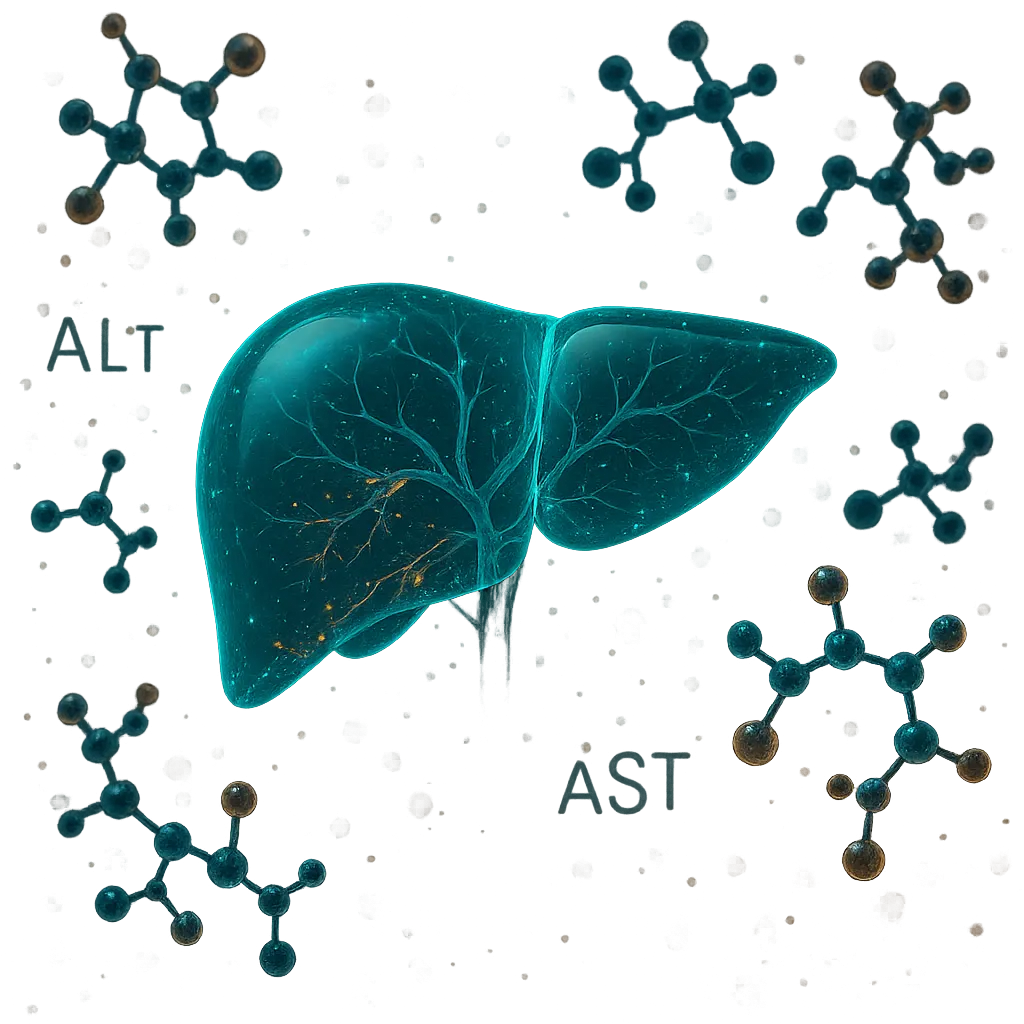
Lab 3: Liver Panel (ALT + AST)
Why it matters: Standard safety monitoring for any exogenous peptide. Both BPC-157 and TB-500 are processed systemically, and liver enzymes confirm you're not creating hepatic stress. BPC-157 has actually demonstrated hepatoprotective effects in animal studies, so liver values may improve during a cycle.
| Marker |
Optimal |
Normal Range |
Concern |
| ALT |
10-30 U/L |
< 40 U/L |
> 50 U/L |
| AST |
10-30 U/L |
< 40 U/L |
> 50 U/L |
What to expect: Liver enzymes should remain stable or improve slightly. If ALT or AST rises above 50 U/L during a cycle, pause the protocol and retest in 2 weeks. Persistent elevation warrants physician evaluation.
Note: Intense exercise can elevate AST (it's also in muscle tissue). Test in a rested state, 48+ hours after heavy training.
Lab 4: CBC with Differential
Why it matters: Complete blood count with differential tracks immune system function. TB-500's parent protein (thymosin beta-4) is produced by the thymus and plays a role in T-cell development. Monitoring white blood cell counts and differential ensures the immune system isn't being over-stimulated or suppressed.
| Marker |
Optimal Range |
Concern |
| WBC |
4.0-8.0 x10^3/uL |
< 3.5 or > 11.0 |
| Neutrophils |
40-60% |
> 70% or < 35% |
| Lymphocytes |
20-40% |
> 50% or < 15% |
| Platelets |
150-400 x10^3/uL |
< 100 or > 450 |
What to expect: CBC should remain within normal limits throughout a Wolverine Stack cycle. Significant shifts in WBC count or differential could indicate immune dysregulation — unlikely but worth monitoring given TB-500's thymic origin.
Lab 5: IGF-1 (Growth Factor Monitoring)
Why it matters: BPC-157 and TB-500 do not directly affect IGF-1. However, many users stack the Wolverine Stack with GH-releasing peptides (Ipamorelin, CJC-1295) or GH secretagogues (MK-677). If you're stacking, IGF-1 monitoring is essential to ensure growth hormone levels stay within safe ranges.
| Range |
Interpretation |
| 100-250 ng/mL |
Normal (age-dependent) |
| 250-350 ng/mL |
Elevated — may be fine if using GH peptides |
| > 350 ng/mL |
High — consider reducing GH peptide dose |
If not stacking: You can skip this test. BPC-157 and TB-500 alone should not meaningfully alter IGF-1.
If stacking with GH peptides: Test baseline and at weeks 4-6. IGF-1 above 350 ng/mL warrants dose reduction of the GH component.
Lab 6: P1NP (Tissue Repair Marker)
Why it matters: Procollagen type I N-terminal propeptide (P1NP) is a direct marker of collagen synthesis — essentially a readout of how actively your body is building new connective tissue. Both BPC-157 (via growth factor activation) and TB-500 (via cell migration to repair sites) should support increased collagen formation.
| Range |
Interpretation |
| 25-100 ng/mL |
Normal (age/sex dependent) |
| > 100 ng/mL |
Active tissue remodeling |
| Significant increase from baseline |
Healing peptides are working |
What to expect: P1NP should increase from baseline during an active healing protocol. A 20-50% increase suggests active tissue remodeling. If P1NP doesn't budge after 6 weeks, the healing response may be insufficient — consider dose adjustment or protocol review.
Testing note: P1NP is not a standard lab. Request it specifically or order through a specialty lab panel.

Interpreting Your Results
Best Case Scenario
- hs-CRP drops 20-40% from baseline
- ESR trends downward
- Liver enzymes stable or improved
- CBC unchanged
- P1NP increases (active tissue repair)
Concerning Patterns
- hs-CRP increases during cycle — may indicate infection or tissue stress, not peptide-related
- ALT/AST rises above 50 — pause protocol, retest in 2 weeks
- WBC count drops below 3.5 or rises above 11 — discontinue and consult physician
- Any unexpected lab shift that doesn't resolve within 2 weeks
When Bloodwork Should Change Your Protocol
| Lab Finding |
Action |
| hs-CRP rising |
Investigate other causes (infection, overtraining) — not typical of Wolverine Stack |
| ALT > 50 U/L |
Pause protocol 2 weeks, retest. If normalized, resume at lower dose |
| ALT > 100 U/L |
Discontinue, consult physician |
| WBC < 3.5 or > 11 |
Discontinue, consult physician |
| IGF-1 > 350 (if stacking) |
Reduce GH peptide dose |
| No change in P1NP after 8 weeks |
Reassess dose, protocol adherence, or whether the stack targets your specific issue |
When to Stop Based on Bloodwork
Red flags that mean discontinue immediately and consult a physician:
- ALT or AST > 3x upper limit (>120 U/L) — potential liver damage
- WBC < 2.5 x10^3/uL — immune suppression risk
- Platelets < 100 x10^3/uL — bleeding risk
- Any rapidly worsening lab value between tests
These scenarios are rare with the Wolverine Stack — BPC-157 has shown no hepatotoxicity in clinical trials and TB-500 hasn't demonstrated immune suppression in animal studies. But monitoring catches problems before they become serious.
Research Supplies for BPC-157
Hand-picked storage, injection, and recovery supplies paired with BPC-157 protocols.
As an Amazon Associate, The Peptide Catalog earns from qualifying purchases.
Full catalog →
References
- Sikiric, P., et al. (2014). BPC-157 and nitric oxide system interaction. Current Pharmaceutical Design, 20(7), 1126-1135. PMID: 23755725
- Seiwerth, S., et al. (2014). BPC 157 and wound healing. PMID: 23782145
- Sosne, G., et al. (2010). Thymosin beta 4: a novel corneal wound healing and anti-inflammatory agent. Clinical Ophthalmology, 4, 993-1005. PMID: 19668473
- Malinda, K.M., et al. (1999). Thymosin beta4 accelerates wound healing. Journal of Investigative Dermatology, 113(3), 364-368. PMID: 10469335
- Philp, D., et al. (2004). Thymosin beta4 promotes angiogenesis and wound healing. Mechanisms of Ageing and Development, 125(2), 113-115. PMID: 15037013
This article is for educational and informational purposes only. It is not medical advice. The Wolverine Stack (BPC-157 + TB-500) is sold as a research compound and is not FDA-approved for human use. Consult a qualified healthcare provider before starting any peptide protocol.