guidesMarch 25, 2026·8 min read

How to Heal a Tendon Faster: What Works in 2026

Rest and ice only go so far. Research compounds are now accelerating tendon repair in weeks, not months. Here's what the data actually shows.

How to heal a tendon faster

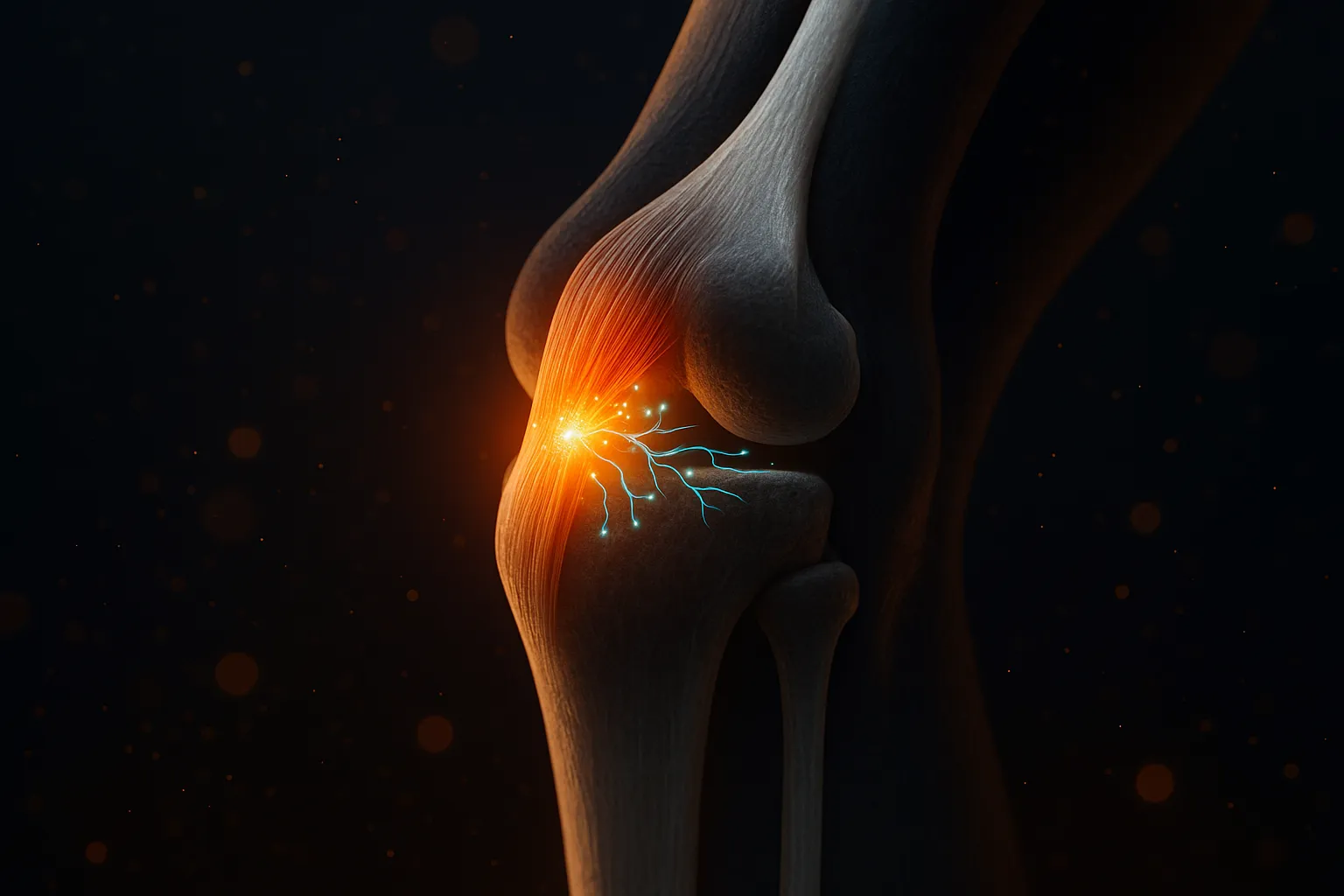
Tendon injuries are uniquely frustrating. Unlike muscle, tendons have minimal blood supply — which means the body's natural repair process is slow, often measured in months rather than weeks. If you have dealt with Achilles tendinitis, rotator cuff pain, or patellar tendinopathy, you know the cycle: rest, wait, try again, re-injure.

The core problem is biological. Tendons sit in a low-vascularity zone — they receive far less blood flow than surrounding muscle tissue. Blood delivers the oxygen, nutrients, and growth factors that drive tissue repair. When the supply line is weak, healing stalls. This is why a muscle strain might resolve in 2-3 weeks while a tendon injury of similar severity can linger for months.

Understanding this bottleneck is the first step toward solving it. Some conventional approaches address symptoms effectively. Others try to support the healing environment. And a newer category of research compounds targets the biological limitation directly — the blood supply deficit at the injury site.

What Conventional Treatment Gets Right (and Where It Stops)

Physical therapy and eccentric exercises have the strongest evidence base of any conventional tendon treatment. A systematic review of eccentric exercise for Achilles tendinopathy found it more effective than other exercise types for mid-portion injuries, with high-quality evidence supporting the Alfredson protocol (PMID:36698184). Eccentric loading stimulates collagen remodeling and tendon adaptation — it is the single best thing you can do for tendinopathy regardless of what else you add.

RICE protocol (rest, ice, compression, elevation) manages acute inflammation effectively but does not accelerate tissue repair. Rest prevents further damage. Ice reduces pain. Neither addresses the underlying healing rate.

NSAIDs (ibuprofen, naproxen) reduce pain and swelling, but there is a trade-off. A systematic review found that NSAIDs — particularly COX-2 selective inhibitors — may impair tendon-to-bone healing, especially when taken during the early inflammatory phase (PMID:31413684). The early inflammatory response is actually necessary for proper healing; suppressing it too aggressively can slow recovery.

PRP injections (platelet-rich plasma) concentrate your own growth factors and inject them at the injury site. The logic is sound, but the evidence is mixed. A meta-analysis of randomized controlled trials found no significant difference between PRP and placebo for tendinopathy pain relief or functional improvement (PMID:34342296). PRP also costs $500-1,500 per injection without insurance coverage.

Cortisone injections provide short-term pain relief but may weaken the tendon structure long-term. Most orthopedists now limit cortisone to 2-3 injections per site and reserve it for acute flares rather than ongoing management.

Collagen plus vitamin C supplementation is an emerging approach with promising early data. Vitamin C-enriched gelatin taken before exercise increased collagen synthesis markers in a controlled study (PMID:27852613). It is inexpensive and low-risk, but the effects are modest compared to the biological gap in tendon healing.

The pattern across all conventional approaches: they either manage symptoms, support the healing environment, or provide modest acceleration. None of them directly solve the fundamental problem — tendons heal slowly because they lack adequate blood supply at the injury site.

Conventional treatment approaches for tendon healing

The Research Frontier: A Different Approach to Tendon Repair

Over the past two decades, researchers have identified a class of compounds that take a fundamentally different approach to tissue repair. Instead of managing inflammation or supporting the healing environment from the outside, these compounds — called peptides — signal specific biological processes at the cellular level.

Peptides are short chains of amino acids (typically 2-50) that act as signaling molecules in the body. Your body already produces thousands of them. Research peptides are synthetic versions designed to trigger specific repair pathways — like blood vessel formation, cell migration, or inflammation regulation — with high precision.

For tendon injuries specifically, the research interest centers on peptides that upregulate angiogenesis (new blood vessel growth) at the injury site. If you can increase blood flow where the tendon is damaged, you remove the bottleneck that makes tendon healing so slow. This is fundamentally different from icing the area or taking anti-inflammatories — it targets the cause rather than the symptom.

To understand more about how these compounds work at the molecular level, see our introduction to peptides.

How Peptides Approach Tendon Healing Differently

The conventional approach to tendon injury works from the outside in: reduce inflammation, rest the tissue, and wait for the body to repair itself at whatever pace it can manage. Peptides work from the inside out — they amplify the biological signals that drive repair.

The key mechanism for tendon healing is VEGF upregulation. VEGF (vascular endothelial growth factor) is the primary signal that tells your body to build new blood vessels. When a tendon is injured, the local VEGF response is weak because tendons have few blood vessels to begin with. Research peptides can amplify this signal, essentially telling the body to prioritize blood vessel construction at the injury site.

Think of it as the difference between slowing down traffic around a construction zone versus actually sending more construction crews. Ice and rest slow down the traffic (inflammation). Peptides that upregulate VEGF send more crews (blood vessels) to do the actual rebuilding.

The Key Peptides for Tendon Recovery

BPC-157 — The Most-Studied Healing Peptide

BPC-157 is a 15-amino-acid compound originally isolated from human gastric juice. It is the most researched healing peptide, with hundreds of published studies across tendon, ligament, muscle, gut, and nerve repair models.

For tendons specifically, BPC-157 accelerated Achilles tendon healing in rats by stimulating tendon outgrowth, cell survival, and cell migration via the FAK-paxillin pathway (PMID:21030672). A separate study confirmed it promotes angiogenesis — new blood vessel formation — directly at the tendon injury site by modulating VEGF expression (PMID:20388964). This addresses the core bottleneck in tendon healing: insufficient blood supply.

BPC-157 is typically the starting point for anyone exploring healing peptides. It has the broadest evidence base, can be administered subcutaneously near the injury or taken orally, and has shown no toxic dose in published research.

For a deep dive into all of BPC-157's documented effects, see BPC-157 Benefits: 7 Reasons It Dominates Recovery.
TB-500 — Systemic Cell Migration and Repair

TB-500 is a synthetic fragment of thymosin beta-4, a naturally occurring protein involved in cell migration and tissue repair. While BPC-157 works primarily at the local injury site, TB-500 operates systemically — promoting cell migration and reducing inflammation throughout the body.

Thymosin beta-4 accelerated wound healing by stimulating keratinocyte migration 2-3 fold in controlled studies (PMID:10469335). Its mechanism centers on actin binding — it helps cells physically move to the injury site and begin repair. For widespread connective tissue issues or multiple injury sites, TB-500 provides broader coverage than a locally-targeted approach.

TB-500 is particularly relevant for chronic tendinopathy affecting multiple joints or for athletes dealing with accumulated connective tissue wear across the body.

The Wolverine Stack (BPC-157 + TB-500)

The most common research combination for tendon and connective tissue healing pairs BPC-157's local repair signaling with TB-500's systemic cell migration. The logic: BPC-157 builds new blood vessels and stimulates repair at the specific injury site, while TB-500 mobilizes repair cells body-wide and dampens systemic inflammation.

This combination is widely used in research protocols for musculoskeletal injuries and is covered in detail in our Wolverine Stack Guide.

For a full comparison of all healing peptides — including GHK-Cu for skin and scar tissue — see Best Peptides for Healing.

What to Know Before Going Further

If tendon healing peptides are new to you, here is what matters before you go deeper.

The evidence is mostly preclinical. The studies cited above are from animal models — rats and mice with induced tendon injuries. BPC-157 has entered phase 2 clinical trials for inflammatory bowel disease, but no completed human trials exist specifically for tendon healing. The animal data is consistent and compelling across dozens of studies, but "works in rats" does not automatically mean "works identically in humans." Be honest with yourself about where the evidence stands.

How people typically access research peptides. These compounds are sold by specialized peptide vendors as research chemicals. They are not available at pharmacies or through standard prescriptions. Quality varies significantly between vendors, which is why third-party testing (Certificates of Analysis, or COAs) matters. A COA from an independent lab confirms the peptide is what it claims to be, at the stated purity.

Start with the fundamentals. Peptides are not a substitute for physical therapy, proper loading protocols, and adequate nutrition. They are best understood as accelerators layered on top of a solid conventional recovery foundation. Eccentric exercises remain the single most important intervention for tendinopathy — peptides may help the tissue respond to that loading more effectively.

For transparent vendor comparisons with COA verification and real pricing, see our peptide vendor comparison pages.

FAQ

Can peptides heal a torn tendon without surgery? Peptides may accelerate healing of partial tendon tears based on animal research, but they are not a replacement for surgical repair when structurally necessary. Complete ruptures (like a full Achilles tear) typically require surgery regardless. Peptides are best understood as recovery accelerators used alongside standard treatment, not as alternatives to it.

Are healing peptides legal? BPC-157 and TB-500 are legal to purchase as research peptides in the United States. They are not FDA-approved for human therapeutic use. Their legal status varies by country, so check your local regulations. In research and wellness contexts, they are widely available from reputable peptide vendors.

How long does peptide-assisted tendon recovery take? Based on animal research and user reports, acute tendon injuries typically show noticeable improvement within 2-4 weeks. Chronic tendinopathy (long-standing Achilles or rotator cuff issues) may require 6-12 weeks of consistent use. These timelines are faster than conventional recovery alone, but they are not overnight fixes.

What's the difference between BPC-157 and TB-500 for tendons? BPC-157 works locally by upregulating VEGF and promoting new blood vessel formation at the injury site. It has the strongest tendon-specific research data. TB-500 works systemically by promoting cell migration through actin binding and reducing inflammation throughout the body. Many researchers combine both (the "Wolverine Stack") for complementary coverage.

References

  1. Eccentric exercise is more effective than other exercises in the treatment of mid-portion Achilles tendinopathy: systematic review and meta-analysis. Arch Phys Med Rehabil. 2023. PMID:36698184

  2. The Effect of Non-Steroidal Anti-Inflammatory Drugs on Tendon-to-Bone Healing: A Systematic Review with Subgroup Meta-Analysis. Am J Sports Med. 2019. PMID:31413684

  3. Efficacy of Platelet-Rich Plasma Versus Placebo in the Treatment of Tendinopathy: A Meta-analysis of Randomized Controlled Trials. Am J Sports Med. 2021. PMID:34342296

  4. Vitamin C-enriched gelatin supplementation before intermittent activity augments collagen synthesis. Am J Clin Nutr. 2017. PMID:27852613

  5. The promoting effect of pentadecapeptide BPC 157 on tendon healing involves tendon outgrowth, cell survival, and cell migration. J Appl Physiol. 2011. PMID:21030672

  6. Modulatory effect of gastric pentadecapeptide BPC 157 on angiogenesis in muscle and tendon healing. J Physiol Pharmacol. 2010. PMID:20388964

  7. Thymosin beta4 accelerates wound healing. J Invest Dermatol. 1999. PMID:10469335

This article is for educational and research purposes only. It is not medical advice. The peptides discussed are not FDA-approved for human therapeutic use.