IGF-1 LR3

Long R3 IGF-1Lyophilized powder

IGF-1 LR3 is a modified form of insulin-like growth factor 1 with an arginine substitution and a 13-amino-acid extension that reduce binding to IGF binding proteins and extend its activity. It is used mainly in cell-culture research. Below: today's vial sizes, prices through our link and the vendor's COA details.

Size

$52.50/mg · lot IGF1825J · 99.14% · In stock

Price

$52.50

List

$75.00

Buy 1 mg at Nura Peptide

Price shown uses code thepeptidecatalog at Nura Peptide's checkout (30% off list).

Sold by Nura Peptide as IGF1-LR3 1mg. The Peptide Catalog does not sell peptides; we earn a commission if you buy through this link, at no extra cost to you. For laboratory research use only, not for human or veterinary use. Not FDA-approved. Nothing on this page is medical or dosing advice.

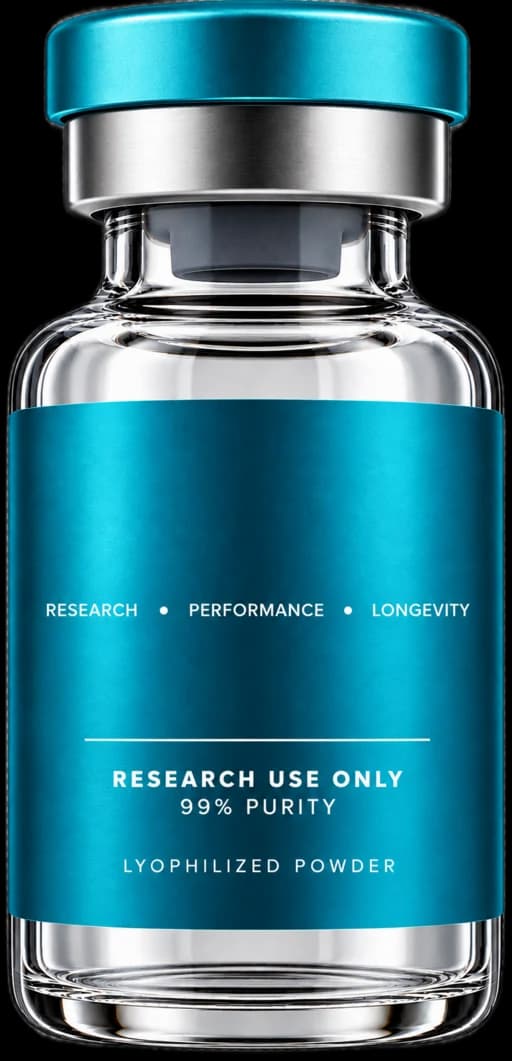
IGF-1 LR3 research vial sold by Nura Peptide as IGF1-LR3 1mg
Third-party tested≥99.14% reported purityResearch use only
Certificate of AnalysisLot IGF1825J · 99.14%View
  • Certificate of Analysis published for every lot (Freedom Diagnostics Testing)
  • Current lots report 99.14% purity or higher
  • Ships from a U.S. fulfillment center, per Nura Peptide
  • Lyophilized powder · laboratory research use only
Research-context information only. IGF-1 LR3 is a research peptide. Protocols, doses, and reactions reported below come from published research and self-reported community sources. This article reports what has been documented, not what should be done. Consult a licensed physician for personal medical decisions.

Vial sizes listed by the vendor

IGF-1 LR3 Vial Sizes, Prices & Lots

IGF-1 LR3 vial sizes, prices and lots at Nura Peptide
SizeListWith our codePer mgAvailabilityLot · purity
1 mg$75.00$52.50$52.50In stockIGF1825J · 99.14%

Prices checked today, 6:20 AM CT on Nura Peptide's site, with code thepeptidecatalog applied. Lot data from Nura Peptide's COA page, checked today, 7:24 PM CT. Sizes not re-checked in the last 7 days are hidden. The vendor's checkout is final.

Verified test results

IGF-1 LR3 Certificate of Analysis

Nura Peptide publishes a third-party certificate for each lot of IGF1-LR3 1mg. The figures below are copied from Nura Peptide's current-lot listings, checked today, 7:24 PM CT (refreshed hourly; hidden if older than 24 hours). Match the lot number on the vial to its certificate.

All lots on record: Nura Peptide COA library. How to check one: how to verify a peptide COA.

IGF-1 LR3 Dosing in Clinical Research

Muscle Building

Educational reference only. Individual responses vary. Consult healthcare provider before use.

Vial Size
1 mg
Reconstitution
1 ml BAC water
Dose
50 mcg (5 units on 1ml syringe)
Timing
AM
Frequency
10 days in a row
Duration
10 days on, 4 weeks off
Protocol Notes
Very potent. Monitor blood sugar. Receptor desensitization can occur with prolonged use — keep cycles short.

Why This Dosing Protocol

Why post-workout? Muscle tissue is most receptive to IGF-1 signaling after training. Post-workout intramuscular injection targets growth to trained muscles.

Why 10 days on, 4 weeks off? IGF-1R can desensitize with continuous exposure. Short cycles preserve receptor sensitivity. The 4-week off period allows full receptor recovery.

Why monitor blood sugar? IGF-1 LR3 drives glucose into cells, which can cause hypoglycemia. Have fast-acting carbs available, especially during initial use.

How IGF-1 LR3 Works

Growth Factor — Long-Acting IGF-1 Analog

Receptor → Growth Cascade → Anabolic Signaling → Outcomes

1
Target

IGF-1 Receptor (IGF-1R) — Direct Activation

Unlike GH peptides that indirectly raise IGF-1 by stimulating GH release, IGF-1 LR3 directly activates IGF-1 receptors. The LR3 modification (Arg→Glu at position 3 + 13-AA extension) reduces binding to IGF binding proteins, keeping it active ~3x longer than native IGF-1.

2
Cellular Signal

PI3K/Akt + MAPK → Protein Synthesis + Cell Proliferation

Direct IGF-1R activation triggers two major cascades: PI3K/Akt (protein synthesis, anti-apoptosis) and MAPK/ERK (cell proliferation, differentiation). This is the terminal growth signal that GH peptides ultimately produce, but IGF-1 LR3 bypasses the GH intermediate entirely.

3
Systemic Effect

Direct Anabolic Signaling → Muscle Hypertrophy

Potent anabolic effects: increased protein synthesis, muscle cell proliferation (hyperplasia — new fibers, not just bigger ones), nutrient partitioning toward muscle. Also lowers blood sugar by driving glucose into muscle cells — monitor blood sugar carefully.

4
What You Notice

Muscle Fullness → Rapid Recovery → Hypoglycemia Risk

Noticeable muscle fullness and pump within days. Accelerated recovery between sessions. Risk of hypoglycemia (low blood sugar) is real and requires careful monitoring. This is a potent compound — not for beginners.

What Makes This Peptide Different

IGF-1 LR3 is unique in bypassing GH entirelyto directly activate growth signaling. While CJC-1295 and Ipamorelin stimulate GH → IGF-1 naturally, IGF-1 LR3 delivers the end-product directly. This makes it more potent but also more risky — it affects blood sugar, doesn't have the natural feedback loops of GH peptides, and requires careful dosing and monitoring.

IGF-1 LR3 Clinical Evidence

Two parallel grades per outcome — clinical RCT depth and real-world community adoption. See the Research Overview below for citations and detail.

OutcomeClinical EvidenceCommunity Evidence
Anabolic effects in animal modelsModerateModerate
Muscle protein synthesis / lean massPreliminaryModerate
Glucose / hypoglycemia riskStrongModerate
Body composition in healthy adultsPreliminaryModerate

IGF-1 LR3 Research Overview

Outcome-by-outcome look at what the evidence actually supports for IGF-1 LR3, including human vs. animal study counts and our editorial take on each.

Anabolic effects in animal models

Clinical:ModerateCommunity:Moderate

Tomas and colleagues published a series of CSIRO studies in the early 1990s showing LR3-IGF-I is approximately 2.5-fold more potent than native IGF-I in rat anabolism — increased body weight, organ growth, and feed efficiency under both freely-fed and food-restricted conditions. The potency advantage comes from poor IGFBP binding, leading to higher free IGF-I activity.

0 human studies · 12 animal studies

Key findings & citations
  • LR3-IGF-I is ~2.5-fold more potent than native IGF-I in rat anabolism (Tomas 1992).
  • Half-life extended to 20-30 hours via reduced IGFBP affinity.
  • Anabolic in dexamethasone-catabolic rats (preserves muscle mass under steroid stress).
  • Reduces plasma IGF-1 in continuous infusion via negative feedback.

Our take

The animal data is consistent and well-powered. Translation to humans rests on the recombinant IGF-1 (mecasermin) literature, which is a different molecule.

Body composition / hypertrophy in healthy adults

Clinical:PreliminaryCommunity:Moderate

There is no published human RCT of IGF-1 LR3 for muscle hypertrophy or body composition. All community use rests on rodent data and on the mecasermin (recombinant IGF-1) clinical literature in pediatric short stature and ALS — which used native IGF-1, not LR3.

0 human studies · 6 animal studies

Key findings & citations
  • Zero published human composition RCTs of IGF-1 LR3.
  • Mecasermin (native IGF-1, FDA-approved) demonstrates GH-axis-independent growth in pediatric patients.
  • Hypoglycemia risk is real and dose-dependent in mecasermin trials.

Our take

The animal anabolism is real. The human composition data isn't there. Anyone selling LR3 as a muscle-building peptide is selling extrapolation.

Hypoglycemia and metabolic risk

Clinical:StrongCommunity:Moderate

IGF-1 LR3 binds the insulin receptor with weak but real affinity, and mecasermin clinical trials documented hypoglycemia as a dose-limiting side effect. The LR3 variant escapes IGFBP binding, raising free-IGF activity even further — a known liability for users not eating before injection.

0 human studies · 4 animal studies

Key findings & citations
  • Mecasermin (native IGF-1) hypoglycemia rates ~50% in pediatric populations.
  • LR3 variant has higher free fraction, theoretically higher hypoglycemia risk.
  • Inappropriate timing (fasted state, alcohol, alongside insulin) compounds risk.

Our take

If hypoglycemia is the side effect, eat before you inject. The pharmacology is unforgiving on this point.

What IGF-1 LR3 doesn't do

Claims that current evidence does not support. Worth knowing before you set expectations.

Technical specifications

IGF-1 LR3 chemical & analytical data

Also known as
Long R3 IGF-1
Sold by Nura Peptide as
IGF1-LR3 1mg
Receptor targets
IGF-1 receptor
Backbone length
83 amino acids
Modifications
Long R3 variant — Arg at position 3 + 13-residue N-terminal extension for reduced IGFBP binding
Half-life (clinical PK)
~20–30 hours
Form
Lyophilized (freeze-dried) powder in a sealed vial
Presentation
1 mg
Purity on current lots (COA)
99.14%
Testing laboratory
Freedom Diagnostics Testing
Regulatory status
Research peptide; research-grade vials are not FDA-approved.

IGF-1 LR3 Reconstitution Calculator

Dilution math and unit conversions. Prefilled using a common vial size for this peptide.

Open calculator

Storage & Handling

Storage at a glance

Proper storage temperatures, shelf life, reconstitution best practices, and travel tips for lyophilized and reconstituted peptides.

Powder: Freezer
1+ year at -20°C
Reconstituted: Fridge
4 weeks max at 2-8°C
View Complete Storage Guide

Handling specifics

Educational overview on storage, labeling, and traceability considerations for lab environments. Consult primary literature and vendor documentation for specifics.

Powder storage (very stable)
  • Freezer (-20°C): 1+ year
  • Refrigerator (2-8°C): 1-3 months
  • Room temperature: 2-3 weeks (emergency only)
Reconstituted storage (fragile)
  • MUST refrigerate at 2-8°C
  • 4-week maximum shelf life
  • NEVER freeze after reconstitution
  • Use bacteriostatic water for multi-dose

11 answers

IGF-1 LR3 FAQ: Buying, COA, Storage & Research

What makes IGF-1 LR3 different from regular IGF-1?
IGF-1 LR3 has an arginine substitution and a 13-amino acid extension that makes it less affected by IGF binding proteins. This extends its half-life from minutes to 20-30 hours and increases its potency for muscle protein synthesis compared to native IGF-1.
How does IGF-1 LR3 relate to growth hormone?
IGF-1 is the downstream mediator of many GH effects. When GH stimulates the liver, it produces IGF-1. IGF-1 LR3 bypasses this pathway, directly providing IGF-1 activity. It's more targeted for muscle growth but lacks the broader metabolic effects of GH itself.
What does IGF-1 LR3 do for muscle growth?
IGF-1 LR3 promotes muscle growth through multiple mechanisms: increasing protein synthesis, enhancing nitrogen retention, promoting satellite cell activation (muscle cell precursors), and potentially causing muscle hyperplasia (new muscle cell formation). It's one of the most potent peptides for anabolic effects.
What is the typical IGF-1 LR3 dosage?
A common research dosage is 50 mcg per day (5 units on 1ml syringe), administered in the AM. Protocol: 10 days in a row, then 4 weeks off. Keep cycles short due to receptor desensitization concerns. Monitor blood sugar.
What are the side effects of IGF-1 LR3?
Potential side effects include hypoglycemia (low blood sugar), joint pain, water retention, and gut growth with prolonged high-dose use. Some report headaches and lethargy. Because IGF-1 promotes cell growth broadly, there are theoretical concerns about tumor promotion, though evidence is limited.
Does IGF-1 LR3 cause hypoglycemia?
Yes, IGF-1 LR3 can cause hypoglycemia because IGF-1 has insulin-like effects on glucose uptake. This is why it's often taken with food or post-workout when glucose is being utilized. Users should monitor for symptoms like shakiness, sweating, and confusion.
Can IGF-1 LR3 be combined with GH peptides?
Yes, some combine IGF-1 LR3 with GH-releasing peptides, though this is considered an advanced approach. The theory is that GH peptides provide broader benefits while IGF-1 LR3 adds targeted anabolic effects. However, this increases complexity and potential side effects.
Why are IGF-1 LR3 cycles kept short?
Extended IGF-1 LR3 use can cause receptor desensitization, reducing effectiveness. It may also cause unwanted growth of organs (particularly intestines) and other tissues with prolonged high-dose use. Most protocols limit cycles to 4-6 weeks with equal time off between cycles.
How long does reconstituted peptide last?
Once mixed with bacteriostatic water, peptides remain stable for up to 4 weeks when refrigerated at 2-8°C (36-46°F). Unopened powder can last 1+ year in the freezer. Get our complete Storage & Travel Guide.
Is this peptide legal to purchase?
Peptides sold "for research purposes only" are legal to purchase in the US, but are not FDA-approved for human use outside of specific medical applications. Always consult a healthcare provider before use.
New to peptides?
Take our Peptide Match tool to find the best peptide for your goals. You can also read our Complete Guide to Peptides to learn the basics.

IGF-1 LR3 Studies & Sources

The following peer-reviewed studies and official resources provide additional scientific context for this peptide:

IGF-1 LR3 Research Articles

Compare IGF-1 LR3 to alternatives

Side-by-side mechanism, dose, half-life, and vendor pricing.

Open compare →

Compare IGF-1 LR3 Vendors Before You Buy

Disclosure: we may earn affiliate commission from qualifying purchases. Educational information only — not medical advice.