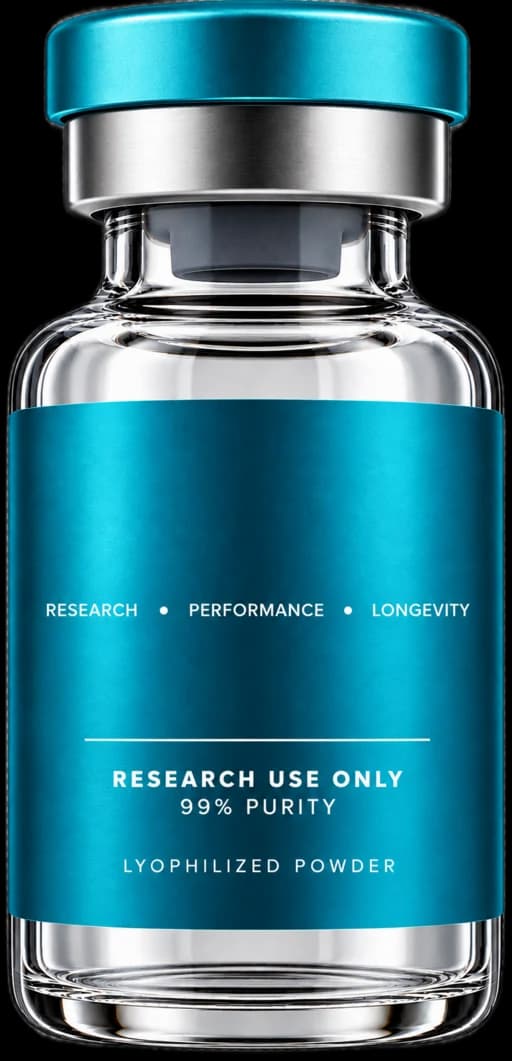
SS-31 (Elamipretide)

elamipretideMTP-131Lyophilized powder

SS-31 (elamipretide) is a small mitochondria-targeted peptide that binds cardiolipin, a lipid in the inner mitochondrial membrane where cells make energy. In September 2025 the FDA granted elamipretide accelerated approval as a prescription treatment for Barth syndrome, a rare inherited mitochondrial disease; the research-grade vials listed here are a different, unapproved product. Below: today's vial sizes, prices through our link and the vendor's COA details.

Size

$4.00/mg · In stock

Price

$40.00

List

$79.99

Buy 10 mg at Ascension Peptides

Price shown includes the 50% discount Ascension Peptides applies through our link.

Volume pricing at Ascension Peptides

  • 3+ vials3% offin cart
  • 5+ vials5% offin cart
  • 10+ vials10% offin cart

Applied in Ascension Peptides's cart; how it combines with our discount is set at checkout.

Sold by Ascension Peptides. The Peptide Catalog does not sell peptides; we earn a commission if you buy through this link, at no extra cost to you. For laboratory research use only, not for human or veterinary use. Not FDA-approved. Nothing on this page is medical or dosing advice.

SS-31 (Elamipretide) research vial
SS-31 (Elamipretide)Ascension Peptides
Third-party testedResearch use only
Certificate of AnalysisVendor-stated: Third-party tested · HPLC · public COAView
  • Vendor-stated testing: Third-party tested · HPLC · public COA
  • Listed on our ss-31 (elamipretide) vendor comparison, ordered by our vendor rankings
  • Lyophilized powder · laboratory research use only
Research-context information only. SS-31 (Elamipretide) is the active ingredient in FDA-approved products for Barth syndrome; research-peptide and compounded forms are not FDA-approved and are sold for research purposes only. Protocols, doses, and reactions reported below come from clinical trials and community sources. This article reports what has been documented, not what should be done. Consult a licensed physician for personal medical decisions.

Vial sizes listed by the vendor

SS-31 (Elamipretide) Vial Sizes & Prices

SS-31 (Elamipretide) vial sizes, prices and lots at Ascension Peptides
SizeListPricePer mgAvailability
10 mg$79.99$40.00$4.00In stock

Prices checked today, 5:02 AM CT on Ascension Peptides's site. Vendor-stated testing: Third-party tested · HPLC · public COA. The lot certificate is on Ascension Peptides's product page. Sizes not re-checked in the last 7 days are hidden. The vendor's checkout is final.

Test results

SS-31 (Elamipretide) Certificate of Analysis

Ascension Peptides publishes its certificates publicly (vendor-stated: Third-party tested · HPLC · public COA). Match the lot number on the vial to its certificate.

View the SS-31 (Elamipretide) certificate on Ascension Peptides's product page.

How to check one: how to verify a peptide COA.

SS-31 (Elamipretide) Dosing in Clinical Research

Longevity / Mitochondria

Educational reference only. Individual responses vary. Consult healthcare provider before use.

Vial Size
10 mg
Reconstitution
2 ml BAC water
Dose
500 mcg (10 units on 1ml syringe)
Timing
AM
Frequency
5 days on, 2 days off
Duration
8 weeks on, 8 weeks off
Protocol Notes
Targets mitochondrial cardiolipin. Cycles 8 weeks on/off for sustained mitochondrial support.

Why This Dosing Protocol

Why daily?SS-31's mitochondrial protective effects require consistent presence to maintain cardiolipin stabilization. The 5 on / 2 off cycling prevents potential adaptation.

Why morning?Aligning with the body's peak energy demand period. SS-31 supports mitochondrial energy production, making morning dosing most functionally relevant.

How SS-31 (Elamipretide) Works

Longevity Peptide — Mitochondrial Protectant

Target → Signal → Effect → Outcomes

1
Target

Cardiolipin (Inner Mitochondrial Membrane)

SS-31 (Elamipretide) specifically targets cardiolipin, a phospholipid found almost exclusively in the inner mitochondrial membrane. Cardiolipin is essential for electron transport chain function and ATP production. It's one of the few peptides that penetrates directly into mitochondria.

2
Cellular Signal

Cardiolipin Stabilization → ETC Optimization

By binding and stabilizing cardiolipin, SS-31 optimizes electron transport chain efficiency, reduces electron leak (which causes oxidative damage), and improves ATP production. This directly addresses the mitochondrial dysfunction that underlies many age-related conditions.

3
Systemic Effect

Improved Cellular Energy + Reduced Oxidative Stress

Better mitochondrial function means more efficient energy production in every cell. Reduced oxidative stress protects against age-related damage. Currently in clinical trials for heart failure, kidney disease, and mitochondrial myopathy.

4
What You Notice

Energy Improvements → Exercise Tolerance → Vitality

Improved energy levels and reduced fatigue. Better exercise tolerance and recovery. Effects are gradual and cumulative. Currently investigational — clinical trials are exploring applications in age-related conditions.

What Makes This Peptide Different

SS-31 is one of the only peptides that penetrates directly into mitochondria. While MOTS-c activates AMPK (an energy-sensing pathway), SS-31 physically enters mitochondria and stabilizes their inner membrane structure. This makes it uniquely targeted for mitochondrial dysfunction — the underlying cause of many aging-related conditions.

SS-31 (Elamipretide) Clinical Evidence

Two parallel grades per outcome — clinical RCT depth and real-world community adoption. See the Research Overview below for citations and detail.

OutcomeClinical EvidenceCommunity Evidence
Primary mitochondrial myopathyStrongPreliminary
Mitochondrial myopathy 6MWT (Phase 1/2)ModeratePreliminary
Mitochondrial cristae stabilization (mechanism)StrongPreliminary
General mitochondrial dysfunction in agingPreliminaryPreliminary

SS-31 (Elamipretide) Research Overview

Outcome-by-outcome look at what the evidence actually supports for SS-31 (Elamipretide), including human vs. animal study counts and our editorial take on each.

Primary mitochondrial myopathy

Clinical:StrongCommunity:Preliminary

MMPOWER-1 (Karaa 2018, n=36 Phase 1/2) showed dose-dependent improvements in 6-minute walk test (~64.5 m at the highest dose). However, MMPOWER-3 (Karaa 2023, pivotal Phase 3, n=218) failed to show a significant improvement in 6MWT or fatigue at 24 weeks vs placebo — a definitive negative for the broad PMM indication. Subsequent post-hoc genotype analysis (2024) suggests benefit may concentrate in specific PMM subtypes.

3 human studies · 8 animal studies

Key findings & citations
  • MMPOWER-1: dose-dependent 6MWT improvement (~64.5 m at highest dose).
  • MMPOWER-3 (n=218): failed primary endpoint at 24 weeks.
  • Post-hoc genotype-specific analysis suggests subtype-restricted benefit.
  • Mechanism (cardiolipin binding, cristae stabilization) remains well-characterized.

Our take

Phase 3 was negative for the broad indication. The mechanism is real, the population may be too narrow — sub-genotype trials may rescue it. As community 'mitochondrial peptide,' the evidence is far weaker than Phase 1 hype suggested.

Mitochondrial cristae and ATP production (mechanism)

Clinical:StrongCommunity:Preliminary

Multiple mechanistic studies confirm SS-31 selectively binds cardiolipin in the inner mitochondrial membrane, stabilizes cristae structure, reduces oxidative stress, and enhances ATP production. This is among the best-characterized peptide pharmacologies in mitochondrial biology — translation to clinical benefit is the harder question.

0 human studies · 12 animal studies

Key findings & citations
  • Cardiolipin binding mechanism confirmed across multiple structural studies.
  • Improves ATP synthesis efficiency and ANT (adenine nucleotide translocator) function in aged mitochondria.
  • Selectively localizes to inner mitochondrial membrane — minimal off-target distribution.

Our take

The pharmacology is genuinely well-characterized. The challenge is finding a human population where the mechanism translates to a clinical endpoint that moves.

What SS-31 (Elamipretide) doesn't do

Claims that current evidence does not support. Worth knowing before you set expectations.

Technical specifications

SS-31 (Elamipretide) chemical & analytical data

Also known as
elamipretide, MTP-131
Receptor targets
Cardiolipin (inner mitochondrial membrane)
Backbone length
4 amino acids
Modifications
D-Arg at position 1; 2',6'-dimethyltyrosine at position 2; C-terminal amidation
Half-life (clinical PK)
~2 hours
Form
Lyophilized (freeze-dried) powder in a sealed vial
Presentation
10 mg
Regulatory status
Elamipretide has FDA accelerated approval for Barth syndrome only; research-grade SS-31 vials are not FDA-approved.

SS-31 (Elamipretide) Reconstitution Calculator

Dilution math and unit conversions. Prefilled using a common vial size for this peptide.

Open calculator

Storage & Handling

Storage at a glance

Proper storage temperatures, shelf life, reconstitution best practices, and travel tips for lyophilized and reconstituted peptides.

Powder: Freezer
1+ year at -20°C
Reconstituted: Fridge
4 weeks max at 2-8°C
View Complete Storage Guide

Handling specifics

Educational overview on storage, labeling, and traceability considerations for lab environments. Consult primary literature and vendor documentation for specifics.

Powder storage (very stable)
  • Freezer (-20°C): 1+ year
  • Refrigerator (2-8°C): 1-3 months
  • Room temperature: 2-3 weeks (emergency only)
Reconstituted storage (fragile)
  • MUST refrigerate at 2-8°C
  • 4-week maximum shelf life
  • NEVER freeze after reconstitution
  • Use bacteriostatic water for multi-dose

11 answers

SS-31 (Elamipretide) FAQ: Buying, COA, Storage & Research

What makes SS-31 unique?
SS-31 (Elamipretide) specifically targets mitochondria, concentrating in the inner mitochondrial membrane. It's designed to improve mitochondrial function, reduce oxidative stress, and support cellular energy production. It's in clinical trials for mitochondrial diseases and heart failure.
How does SS-31 work at the molecular level?
SS-31 binds to cardiolipin, a phospholipid found only in the inner mitochondrial membrane. This stabilizes the electron transport chain, improves ATP production efficiency, and reduces the leakage of electrons that create harmful reactive oxygen species (ROS). The result is better energy production with less oxidative damage.
What conditions is SS-31 being studied for?
SS-31 is in clinical trials for primary mitochondrial myopathy, Barth syndrome, heart failure, age-related macular degeneration, and kidney disease. It's also researched for general aging, as mitochondrial dysfunction underlies many age-related diseases. Results have been promising for improving exercise capacity and reducing fatigue.
Can SS-31 improve exercise performance?
Research suggests SS-31 can improve exercise tolerance by enhancing mitochondrial ATP production. Clinical trials in patients with mitochondrial myopathy showed improved 6-minute walk distance and reduced fatigue. For healthy individuals, it may support endurance and recovery by optimizing cellular energy production.
How is SS-31 administered?
In clinical trials, SS-31 (Elamipretide) is administered via subcutaneous injection or intravenous infusion. Research dosages have ranged from 0.01 to 0.25 mg/kg. It has good bioavailability and rapidly concentrates in mitochondria-rich tissues like heart, muscle, and kidney.
What is the connection between SS-31 and aging?
Mitochondrial dysfunction is a hallmark of aging — mitochondria become less efficient and produce more damaging ROS over time. SS-31 addresses this by stabilizing mitochondrial function. Animal studies show it can reverse age-related decline in cardiac function, muscle strength, and kidney function. It's considered a promising anti-aging intervention.
Is SS-31 FDA approved?
Not yet. SS-31 (as Elamipretide) has received FDA Fast Track and Orphan Drug designations for certain conditions. It's currently in Phase 3 trials for primary mitochondrial myopathy and has shown promise in Phase 2 trials for heart failure. Approval decisions are pending based on ongoing trial results.
What are the side effects of SS-31?
In clinical trials, SS-31 has been generally well-tolerated. The most common side effects include injection site reactions and mild headache. Some patients experienced transient flushing. Serious adverse events have been rare. Its safety profile is encouraging given its novel mechanism of action.
How long does reconstituted peptide last?
Once mixed with bacteriostatic water, peptides remain stable for up to 4 weeks when refrigerated at 2-8°C (36-46°F). Unopened powder can last 1+ year in the freezer. Get our complete Storage & Travel Guide.
Is this peptide legal to purchase?
Peptides sold "for research purposes only" are legal to purchase in the US, but are not FDA-approved for human use outside of specific medical applications. Always consult a healthcare provider before use.
New to peptides?
Take our Peptide Match tool to find the best peptide for your goals. You can also read our Complete Guide to Peptides to learn the basics.

SS-31 (Elamipretide) Studies & Sources

The following peer-reviewed studies and official resources provide additional scientific context for this peptide:

SS-31 (Elamipretide) Research Articles

Compare SS-31 (Elamipretide) to alternatives

Side-by-side mechanism, dose, half-life, and vendor pricing.

Open compare →

Compare SS-31 (Elamipretide) Vendors Before You Buy

Disclosure: we may earn affiliate commission from qualifying purchases. Educational information only — not medical advice.