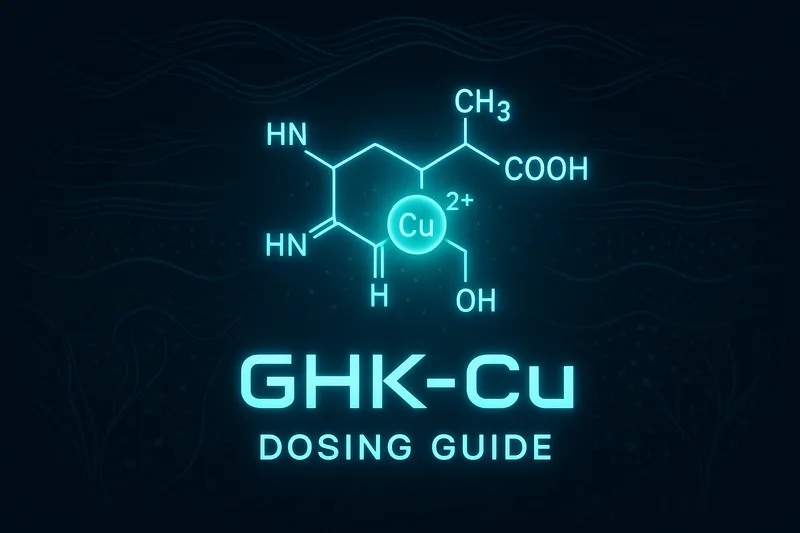
GHK-Cu (copper tripeptide-1) is a naturally occurring copper-peptide complex that plays crucial roles in tissue repair, collagen synthesis, and antioxidant enzyme function. Unlike most peptides, GHK-Cu exists naturally in human plasma, urine, and saliva. Topical GHK-Cu has extensive clinical research. Injectable GHK-Cu has no human trials. This is not medical advice.
Research-context information only. GHK-Cu is a research peptide. Protocols, doses, and reactions reported below come from published research and self-reported community sources. This article reports what has been documented, not what should be done. Consult a licensed physician for personal medical decisions.
GHK-Cu Dosing Table
Match your vial size below — reconstitution and dose math update automatically.
| Dose | Syringe units | mL volume | Schedule |
|---|---|---|---|
| 1.7 mg | 7 units | 0.07 mL | Daily SubQStandard |
| 2 mg | 8 units | 0.08 mL | Daily SubQ |
| 3 mg | 12 units | 0.12 mL | Daily SubQAdvanced |
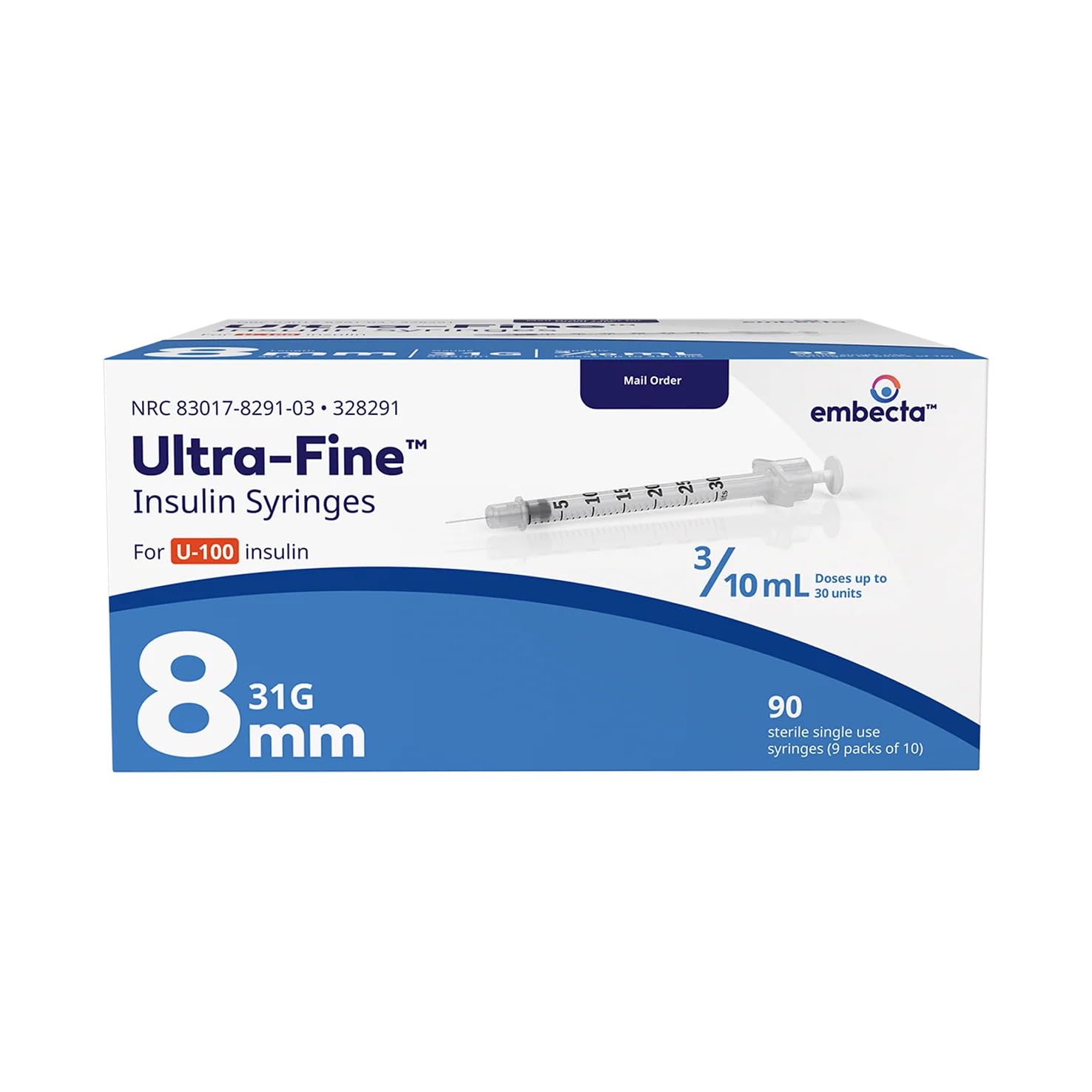
Math assumes U-100 insulin syringes (1 mL = 100 units). Verify your syringe matches before injecting. Round half-units to the nearest visible mark.
| Dose | Syringe units | mL volume | Schedule |
|---|---|---|---|
| 1.7 mg | 9 units | 0.09 mL | Daily SubQStandard |
| 3 mg | 15 units | 0.15 mL | Daily SubQ |
| 5 mg | 25 units | 0.25 mL | Daily SubQAdvanced |
Math assumes U-100 insulin syringes (1 mL = 100 units). Verify your syringe matches before injecting. Round half-units to the nearest visible mark.
Quick Reference: Standard Protocol
| Parameter | Standard Protocol |
|---|---|
| Dose | 1.7 mg/day |
| Weekly total | ~12 mg/week (1.7 mg × 7 days) |
| Route | Subcutaneous injection |
| Timing | AM |
| Frequency | Every day |
| Cycle | 8 weeks on, 8 weeks off |
| Vial size | 50 mg |
| Reconstitution | 3 mL bacteriostatic water → 16.67 mg/mL |
| Draw amount | 10 units on insulin syringe |
| Storage | Refrigerate, use within 28 days |
Topical alternative: 0.1-1% concentration applied daily/nightly on a continuous basis. Topical has clinical trial support; injectable is community-driven.
Starting Dose and Titration
Community protocols commonly describe starting below the 1.7 mg standard and ramping up over the first two weeks rather than beginning at the full dose. The rationale reported is tolerance assessment — injection-site response and any flushing are gauged at a lower dose before increasing. Injectable GHK-Cu has no human clinical trials, so these titration schedules are self-reported, not clinically established.
| Phase | Reported dose | Duration |
|---|---|---|
| Assessment | 0.5-1 mg/day | Days 1-7 |
| Ramp | 1-1.7 mg/day | Days 8-14 |
| Standard | 1.7-2 mg/day | Day 15 onward |
Documented daily doses cluster between 1 and 2 mg, with 1.7 mg the most frequently cited maintenance figure. Community sources describe some users injecting 3-5 times per week rather than daily; the daily protocol above is the more commonly reported form.
Dosing by sex: Community protocols do not report separate male and female dose ranges for GHK-Cu — the same 1-2 mg/day figures are described regardless of sex. Body-weight-scaled dosing is not documented for this peptide the way it is for some others.
Reconstitution Quick Reference
| Vial Size | BAC Water | Concentration | 1.7 mg Dose |
|---|---|---|---|
| 50 mg | 3 mL | 16.67 mg/mL | 10 units |
Math: 50,000 mcg / 3 mL = 16,667 mcg/mL (16.67 mg/mL). For 1.7 mg: 1,700 / 16,667 = 0.102 mL = ~10 units. One vial lasts ~29 days.
Community protocols describe gentle swirling — not shaking — to avoid degradation, with storage at 2–8°C and use within 28 days. For step-by-step instructions, see the GHK-Cu Reconstitution Guide.
Dose-to-Units Calculator (50 mg and 100 mg Vials)
Set the bacteriostatic water volume and read the insulin-syringe units for a 1 mg or 2 mg dose. The 100 mg vial concentrates the same dose into fewer units — useful for higher-dose or longer-running protocols.
Cycling: 8 Weeks On, 8 Weeks Off
Community protocols describe 1.7 mg subcutaneous daily in the morning for 8 weeks, then 8 weeks off. Community reports describe GHK-Cu effects on skin and hair building gradually over the cycle. The cycling approach is conservative given the lack of long-term human injectable data.
Morning injection is described in community protocols as aligning with natural circadian collagen synthesis rhythms. Empty stomach is not required but many users prefer consistent timing. Topical users can apply evening for overnight penetration and repair.
Routes of Administration
Subcutaneous injection (community protocol): Community sources describe the abdomen, love handles, and thighs — areas with subcutaneous fat — as the typical injection sites, at a volume of approximately 0.1 mL using a 29-31 gauge insulin syringe. No human clinical trials for this route exist.
Topical application (well-studied): Serums at 0.1-0.5%, creams at 0.2-1%, hair products at 0.1-0.3%. Published cosmetic protocols describe application to clean skin with absorption time before layering other products; scalp formulations are massaged in per product-label directions. Clinical trial support for skin aging, wound healing, and hair density.
Topical Dosing Protocols
GHK-Cu topical formulations have been studied in clinical trials for over two decades, making this the most evidence-supported delivery route. Concentrations in published research range from 0.05% to 1%, depending on the target tissue and intended outcome.
Concentration Ranges by Use Case
Skin aging and anti-wrinkle protocols: Clinical trials have used 0.05-0.1% GHK-Cu in facial creams and serums. Studies documented improvements in fine lines, skin firmness, and overall clarity at these concentrations over 8-12 week evaluation periods.
Wound healing support: Wound dressing research has employed higher concentrations of 0.2-1% GHK-Cu. Published animal work reported accelerated wound closure and improved collagen deposition with GHK-incorporated collagen matrices in rats (Arul et al., 2005).
Hair and scalp density: Dermal papilla stimulation research has used 0.1-0.3% GHK-Cu in scalp treatments. In vitro work reported that a tripeptide-copper complex elongated hair follicles and promoted dermal papilla cell proliferation in cultured human hair follicles (Pyo et al., 2007).
General anti-aging serum: Community and commercial formulations commonly fall in the 0.1-0.5% range, bridging the clinical trial concentrations for skin aging and wound healing applications.
Application Protocol Summary
| Use Case | Concentration | Frequency | Duration | Evidence Level |
|---|---|---|---|---|
| Skin aging | 0.05-0.1% | Daily (PM) | Continuous | Clinical trials |
| Wound support | 0.2-1% | 1-2x daily | Until healed | Clinical trials |
| Hair density | 0.1-0.3% | Daily | 3-6 months minimum | In vitro + limited clinical |
| General anti-aging | 0.1-0.5% | Daily | Continuous | Clinical + community |
Topical Application Notes
Absorption timing: Published protocols describe application to clean, dry skin with 10-15 minutes of absorption time before layering other skincare products. Evening application is commonly cited in cosmetic studies to align with overnight tissue repair cycles.
Scalp protocols: Hair-focused formulations are typically massaged into the scalp with focus on areas of thinning. Product formats in this category include dedicated scalp serums, shampoos, and leave-in treatments.
No cycling required: Unlike injectable protocols (8 weeks on / 8 weeks off), topical GHK-Cu does not require cycling. Cosmetic safety data from extended-use studies supports continuous application at the concentrations listed above.
Formulation stability: The copper complex requires proper stabilization -- pH, carrier formulation, and packaging all affect bioactivity. Commercial products formulated with copper tripeptide-1 as the INCI ingredient have generally addressed these stability requirements. DIY formulations from raw powder carry more variability in copper complex integrity.
Topical vs Injectable: Evidence Comparison
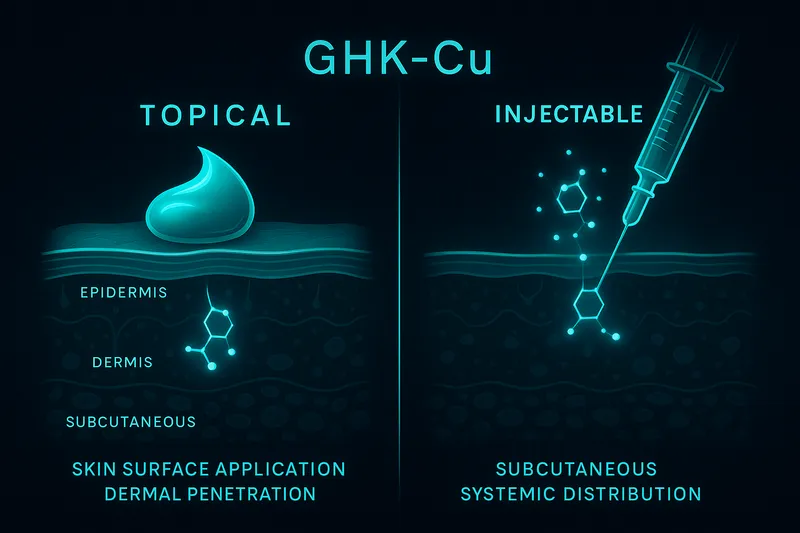
The two delivery routes have fundamentally different evidence profiles:
- Topical GHK-Cu has decades of published clinical trial data for skin aging, wound healing, and hair density. It is a recognized cosmetic ingredient (copper tripeptide-1) used in regulated skincare products worldwide.
- Injectable GHK-Cu has no published human clinical trials. Protocols are entirely community-developed, with doses extrapolated from cell culture bioactivity data and molecular weight calculations.
Topical concentrations deliver GHK-Cu directly to skin and follicle targets. Injectable administration is hypothesized to provide systemic distribution, but human pharmacokinetic data for this route does not exist.
For a detailed breakdown of route-specific mechanisms, absorption differences, and use-case matching, see GHK-Cu Topical vs Injectable: Route Comparison.
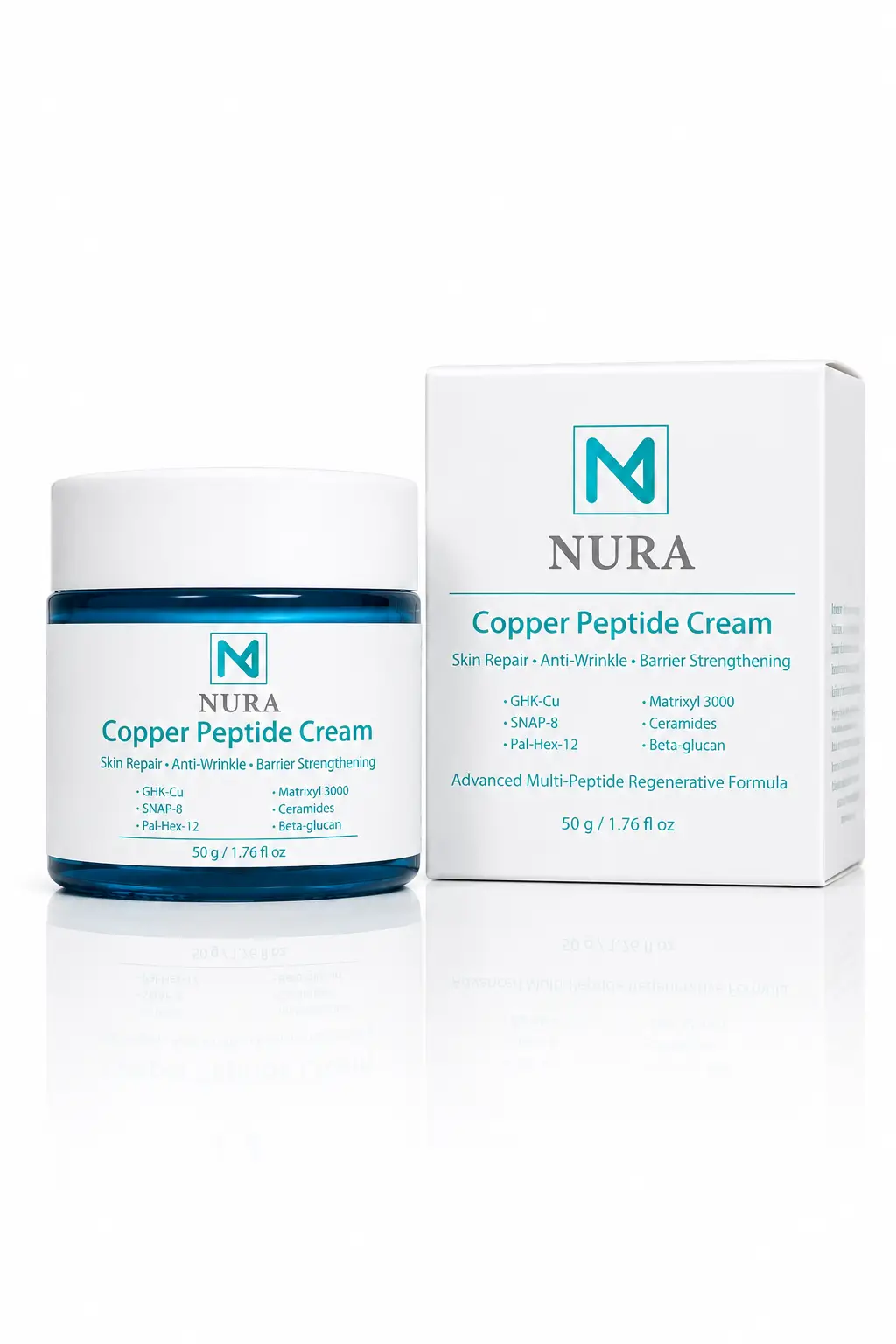
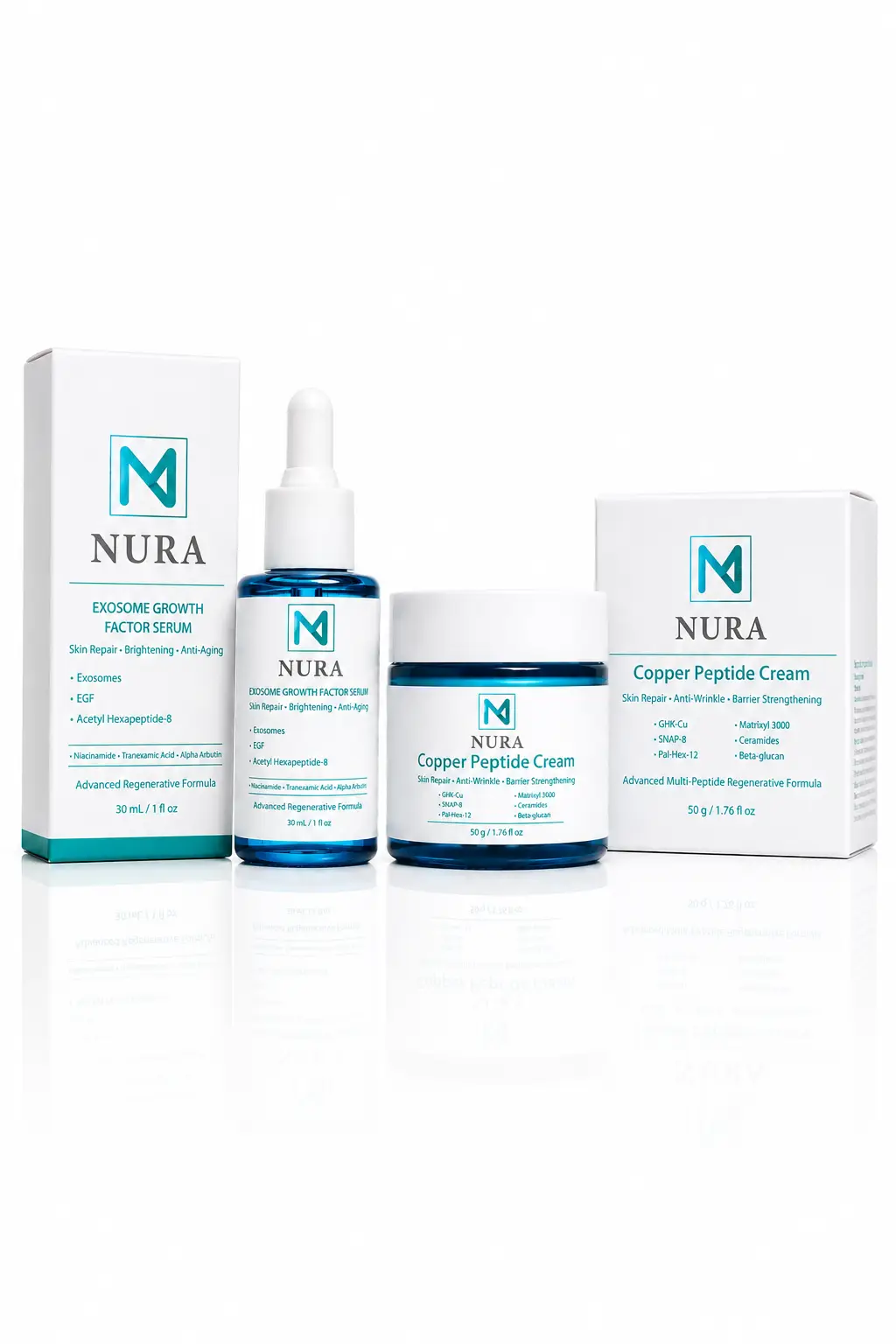
Finished formulations remove the DIY variability — copper tripeptide-1 stabilized at cosmetic concentrations, ready to apply:
The same copper peptide — for your skin
Affiliate links · cosmetic products, not intended to diagnose, treat, cure, or prevent any disease.

Where These Numbers Come From
GHK-Cu has extensive topical research but injectable protocols are community-developed.
Topical clinical data: Decades of research on wound healing (0.2-1% GHK-Cu in wound dressings showed accelerated healing and improved collagen deposition), skin aging (facial creams with 0.05-0.1% improved fine lines, firmness, and clarity), and hair growth (0.2% scalp treatments increased density and thickness) (Pickart et al., 2012).
Natural plasma levels: GHK-Cu is community-cited to occur in human plasma at ~200 ng/mL (young adults) declining to ~80 ng/mL (older adults). This decline drives interest in supplementation.
Injectable rationale: Community doses (1-2 mg daily) are derived from bioactive concentrations in cell culture (nanomolar range), molecular weight calculations from topical concentrations, and conservative starting assumptions. No human pharmacokinetic data exists for injectable use.
Gene expression: GHK-Cu affects expression of over 4,000 genes related to tissue repair, antioxidant defense, and inflammation (Campbell et al., 2012).
Ready to buy? Compare live vendor pricing and COA coverage for GHK-Cu: