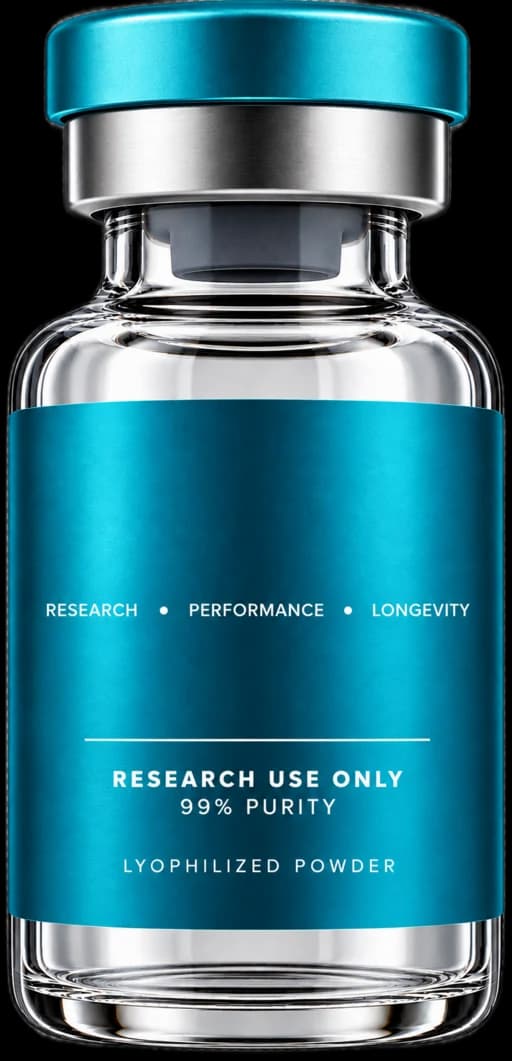
NAD+

NAD+nicotinamide adenine dinucleotideLyophilized powder

NAD+ (nicotinamide adenine dinucleotide) is a coenzyme found in every living cell, where it carries electrons in energy metabolism and is used up by enzymes such as sirtuins and PARPs. It is not a peptide; injectable NAD+ vials are sold alongside peptides as a research compound. Below: today's vial sizes, prices through our link and the vendor's COA details.

Size

$0.07/mg · In stock

Price

$35.39

List

$58.99

Buy 500 mg at LDAminos

Price shown uses code thepeptidecatalog at LDAminos's checkout (40% off list).

Volume pricing at LDAminos

  • 4+ vials10% off$31.85/ea
  • 6+ vials16% off$29.73/ea
  • 10+ vials25% off$26.54/ea

Applied in LDAminos's cart; per-vial figures include our code.

Sold by LDAminos. The Peptide Catalog does not sell peptides; we earn a commission if you buy through this link, at no extra cost to you. For laboratory research use only, not for human or veterinary use. Not FDA-approved. Nothing on this page is medical or dosing advice.

NAD+ research vial
NAD+LDAminos
Third-party testedResearch use only
Certificate of AnalysisVendor-stated: Third-party tested · 8-point panel · public COAView
  • Vendor-stated testing: Third-party tested · 8-point panel · public COA
  • Listed on our nad+ vendor comparison, ordered by our vendor rankings
  • Lyophilized powder · laboratory research use only
Research-context information only. NAD+ is a research compound. Protocols, doses, and reactions reported below come from published research and self-reported community sources. This article reports what has been documented, not what should be done. Consult a licensed physician for personal medical decisions.

Vial sizes listed by the vendor

NAD+ Vial Sizes & Prices

NAD+ vial sizes, prices and lots at LDAminos
SizeListWith our codePer mgAvailability
500 mg$58.99$35.39$0.07In stock
1000 mg$81.99$49.19$0.05In stock

Prices checked Nov 13, 2026, 3:41 PM CT on LDAminos's site, with code thepeptidecatalog applied. Vendor-stated testing: Third-party tested · 8-point panel · public COA. The lot certificate is on LDAminos's product page. Sizes not re-checked in the last 7 days are hidden. The vendor's checkout is final.

Test results

NAD+ Certificate of Analysis

LDAminos publishes its certificates publicly (vendor-stated: Third-party tested · 8-point panel · public COA). Match the lot number on the vial to its certificate.

View the NAD+ certificate on LDAminos's product page.

How to check one: how to verify a peptide COA.

NAD+ Clinical Evidence

Two parallel grades per outcome — clinical RCT depth and real-world community adoption. See the Research Overview below for citations and detail.

OutcomeClinical EvidenceCommunity Evidence
Raising NAD+ levels (NR / NMN)StrongModerate
Cognitive / neurological outcomes (MCI, Parkinson's)ModerateModerate
Cardiovascular / vascular functionPreliminaryModerate
Mitochondrial function in skeletal muscleWeakModerate

NAD+ Research Overview

Outcome-by-outcome look at what the evidence actually supports for NAD+, including human vs. animal study counts and our editorial take on each.

Raising NAD+ levels in humans

Clinical:StrongCommunity:Moderate

Multiple human RCTs (Martens 2018, Dellinger 2017, Brakedal 2022) confirm that oral NR or NRPT consistently raises blood NAD+ levels by 40-100% in healthy and clinical populations. The biochemistry is well-established. The harder question — does raising NAD+ produce clinically meaningful aging or disease outcomes — is much less settled.

6 human studies · 12 animal studies

Key findings & citations
  • Martens 2018: chronic NR safely elevates NAD+ in healthy older adults.
  • Dellinger 2017 (NRPT): ~40-90% NAD+ elevation in 60-80 year olds.
  • Brakedal 2022 (NADPARK Phase 1): NR raised NAD+ in newly-diagnosed PD patients.
  • Mecomb 2024: Acute NR raises cerebral NAD+ in vivo in healthy volunteers.

Our take

NAD+ goes up. That's the part that's settled. Whether that translates to slower aging or fewer diseases is mostly still hopeful biomarker work.

Clinical outcomes in aging / disease

Clinical:ModerateCommunity:Moderate

MCI trials (Vreugdenhil 2024) show NR raises NAD+ but clinical cognitive endpoints are inconsistent. NADPARK in Parkinson's was a Phase 1 safety/biomarker trial, not an outcomes trial. Skeletal muscle / mitochondrial respiration trials in obese men (Dollerup 2019) were null. The pattern: surrogates move, hard endpoints often don't.

4 human studies · 8 animal studies

Key findings & citations
  • MCI: NAD+ rises in MCI patients on NR but cognitive endpoints inconsistent.
  • Skeletal muscle (Dollerup 2019): no improvement in mitochondrial respiration.
  • PAD vascular function (2024): some signals, single small trial.
  • Long-COVID NR trial (2025): mixed cognitive endpoints.

Our take

Solid biochemical molecule with weak hard-outcome evidence. Reasonable for users who specifically want to raise NAD+; don't expect meaningful clinical disease modification.

What NAD+ doesn't do

Claims that current evidence does not support. Worth knowing before you set expectations.

Technical specifications

NAD+ chemical & analytical data

Also known as
NAD+, nicotinamide adenine dinucleotide
Receptor targets
NAD+ cofactor (sirtuin, PARP, CD38 substrate)
Form
Lyophilized (freeze-dried) powder in a sealed vial
Presentation
500 mg · 1000 mg
Regulatory status
Research compound (coenzyme, not a peptide). Injectable NAD+ vials are not FDA-approved.

NAD+ Reconstitution Calculator

Dilution math and unit conversions. Prefilled using a common vial size for this peptide.

Open calculator

Storage & Handling

Storage at a glance

Proper storage temperatures, shelf life, reconstitution best practices, and travel tips for lyophilized and reconstituted peptides.

Powder: Freezer
1+ year at -20°C
Reconstituted: Fridge
4 weeks max at 2-8°C
View Complete Storage Guide

Handling specifics

Educational overview on storage, labeling, and traceability considerations for lab environments. Consult primary literature and vendor documentation for specifics.

Powder storage (very stable)
  • Freezer (-20°C): 1+ year
  • Refrigerator (2-8°C): 1-3 months
  • Room temperature: 2-3 weeks (emergency only)
Reconstituted storage (fragile)
  • MUST refrigerate at 2-8°C
  • 4-week maximum shelf life
  • NEVER freeze after reconstitution
  • Use bacteriostatic water for multi-dose

8 answers

NAD+ FAQ: Buying, COA, Storage & Research

What is NAD+ and why is it important?
NAD+ (Nicotinamide Adenine Dinucleotide) is a coenzyme found in every cell of the body. It's essential for energy production (ATP synthesis), DNA repair, sirtuin activation, and hundreds of metabolic reactions. NAD+ levels naturally decline 50%+ by middle age, which is linked to aging and age-related diseases. Replenishing NAD+ is a major focus of longevity research.
How is injectable NAD+ different from oral supplements like NMN or NR?
Injectable NAD+ delivers the coenzyme directly to bloodstream and cells, bypassing digestive breakdown and liver metabolism. Oral precursors (NMN, NR, niacin) must be converted to NAD+ through multiple enzymatic steps, with variable efficiency. IV/subcutaneous NAD+ provides rapid, complete cellular uptake — though it's more expensive and requires injection.
What are the benefits of NAD+ therapy?
Research and clinical reports suggest benefits including: increased energy and reduced fatigue, improved mental clarity and focus, enhanced athletic performance and recovery, support for healthy aging, potential neuroprotection, and improved metabolic function. NAD+ activates sirtuins (SIRT1-7) which regulate DNA repair, inflammation, and longevity pathways.
Why do NAD+ levels decline with age?
Several factors cause age-related NAD+ decline: increased consumption by PARP enzymes (DNA repair), CD38 enzyme activity (which breaks down NAD+), reduced production of NAD+ precursors, and chronic inflammation. By age 50, NAD+ levels may be half of what they were at age 20. This decline correlates with mitochondrial dysfunction, cellular senescence, and age-related diseases.
What are the side effects of NAD+ injections?
IV NAD+ can cause flushing, chest tightness, nausea, and cramping during infusion — these typically resolve by slowing the drip rate. Subcutaneous injections may cause injection site reactions. Some people report temporary anxiety or restlessness. Starting with lower doses and titrating up can minimize side effects. NAD+ is generally well-tolerated when administered properly.
How long does reconstituted peptide last?
Once mixed with bacteriostatic water, peptides remain stable for up to 4 weeks when refrigerated at 2-8°C (36-46°F). Unopened powder can last 1+ year in the freezer. Get our complete Storage & Travel Guide.
Is this peptide legal to purchase?
Peptides sold "for research purposes only" are legal to purchase in the US, but are not FDA-approved for human use outside of specific medical applications. Always consult a healthcare provider before use.
New to peptides?
Take our Peptide Match tool to find the best peptide for your goals. You can also read our Complete Guide to Peptides to learn the basics.

NAD+ Studies & Sources

The following peer-reviewed studies and official resources provide additional scientific context for this peptide:

NAD+ Research Articles

Compare NAD+ to alternatives

Side-by-side mechanism, dose, half-life, and vendor pricing.

Open compare →

Compare NAD+ Vendors Before You Buy

Disclosure: we may earn affiliate commission from qualifying purchases. Educational information only — not medical advice.