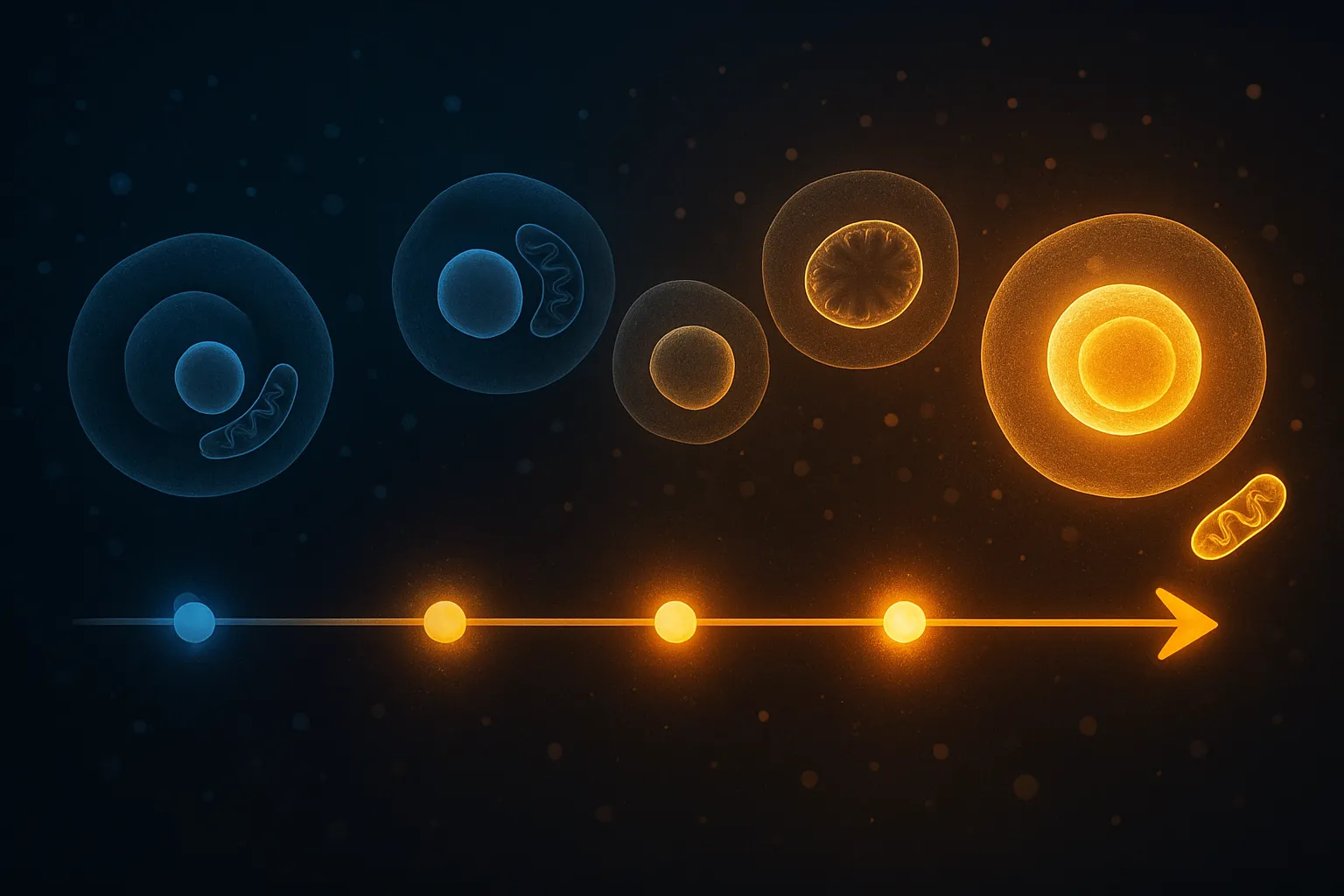
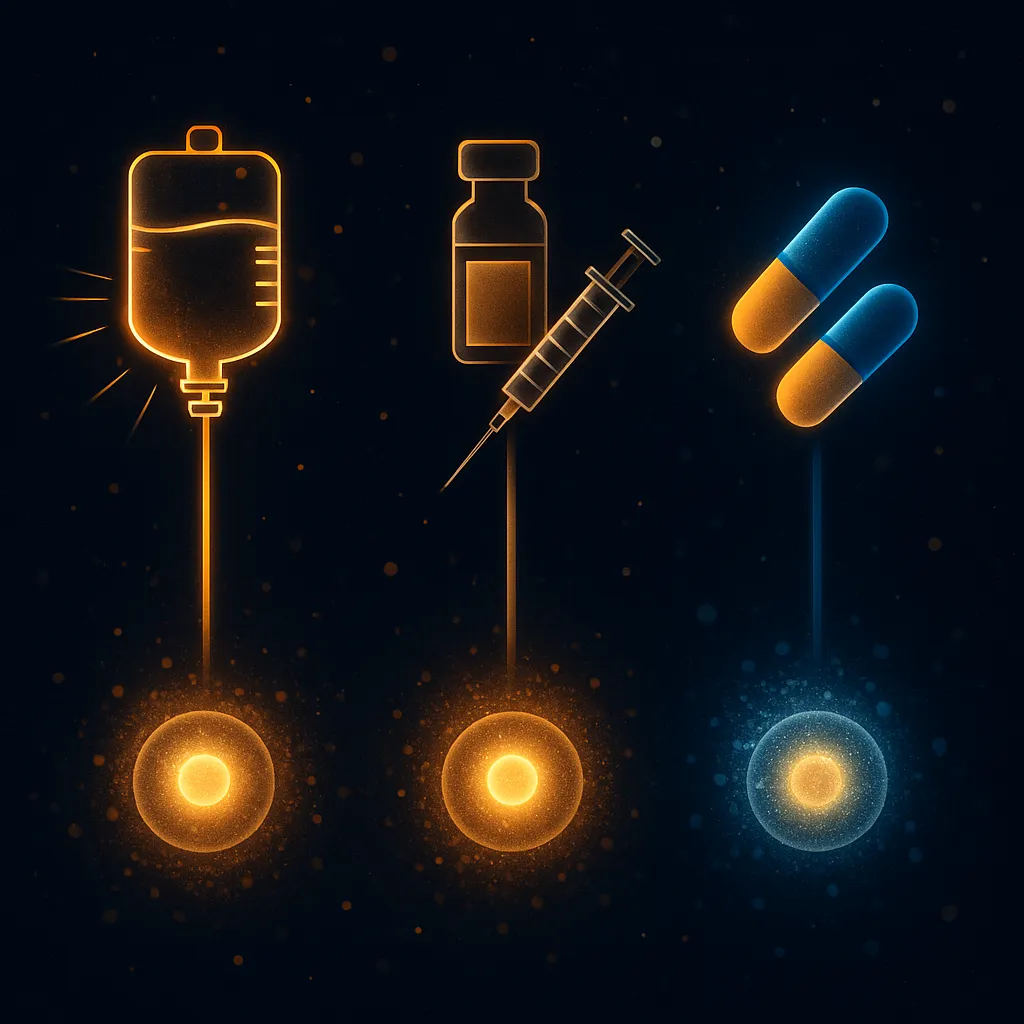
"How long does NAD+ take to work?" depends almost entirely on how you take it and what you're measuring. IV NAD+ produces effects within hours. Oral precursors may take weeks. And the biomarker shifts that actually matter — the ones you can measure in bloodwork — follow their own timeline independent of how you feel.
Research-context information only. NAD+ is a research peptide. Protocols, doses, and reactions reported below come from published research and self-reported community sources. This article reports what has been documented, not what should be done. Consult a licensed physician for personal medical decisions.
This guide consolidates the available human trial data, pharmacokinetic studies, and clinical practice observations into a realistic timeline for each administration route. No hype, just data and reasonable expectations.
Managing Expectations: What the Data Actually Shows
NAD+ supplementation has more human data than most peptides — multiple randomized controlled trials with measurable endpoints. But expectations still need calibrating:
1. Route matters enormously. IV NAD+ raises plasma levels 398% within hours (Grant et al., 2019). Oral NMN takes weeks to produce measurable tissue-level changes (Yoshino et al., 2021). Comparing timelines across routes without accounting for this is meaningless.
2. Subjective effects ≠ cellular effects. The energy and clarity people report from IV NAD+ may partly reflect acute metabolic shifts rather than deep cellular repair. The structural benefits — DNA repair, mitochondrial biogenesis, sirtuin-mediated gene regulation — happen on a slower timescale that you can't feel.
3. Age and baseline NAD+ levels determine the magnitude of response. Someone who is 25 with adequate NAD+ levels will experience less benefit than someone who is 55 with significant NAD+ depletion. The decline is roughly 50% between ages 40-60 (Massudi et al., 2012), so the older you are, the more room for improvement.
4. NAD+ supplementation is not a one-time fix. Unlike healing peptides (like BPC-157) where you complete a protocol and the healed tissue persists, NAD+ levels begin declining again once supplementation stops. This is an ongoing maintenance strategy, not a course of treatment.
Common side effects: flushing, nausea, chest tightness (rate-dependent)
Clinical observation
Hours 4-24
Energy surge, mental clarity commonly reported
Clinical observation
Days 1-7
Sustained energy, improved sleep quality reported
Clinical observation
Days 7-14
Acute effects begin fading as plasma levels normalize
Pharmacokinetics
Loading phase (3-5 daily IVs)
Cumulative tissue saturation; more sustained response
Clinical protocols
IV NAD+ provides the fastest, most dramatic onset. The pharmacokinetic study by Grant et al. showed that a single 6-hour infusion of 750mg NAD+ raised plasma NAD+ nearly 400%. However, plasma levels returned toward baseline within 24-48 hours, indicating that tissue uptake and metabolic conversion are rapid (Grant et al., 2019).
Subcutaneous Injection Timeline
Timeframe
What Happens
Days 1-3
Injection site stinging (5-15 min), mild flushing; NAD+ absorbing into tissue
Week 1
Early energy improvements possible; body adjusting to elevated NAD+
Weeks 2-3
Most users report consistent energy, improved sleep, better recovery
Sustained metabolic, cardiovascular, and performance benefits
Multiple trials
Oral precursors have the slowest onset but the strongest clinical trial data. Both NMN and NR have been studied in multi-week RCTs with objective endpoints.
Most SC NAD+ protocols start at 50mg 3x/week and titrate upward. During this phase:
Injection site reactions are the dominant experience — stinging, burning, and occasional local redness lasting 5-15 minutes per injection. This is the most commonly reported side effect of SC NAD+ and occurs in the majority of users.
Early energy shifts may occur, particularly in individuals with significant baseline NAD+ depletion. These are subtle — not the dramatic "rush" of IV infusion.
Sleep changes are sometimes reported early, often improved sleep onset or depth. NAD+ influences circadian rhythm through NAMPT-mediated biosynthesis (Ramsey et al., 2009).
Dose titration is key. Most protocols increase from 50mg to 100mg during weeks 2-3 as injection site tolerance improves.
Weeks 3-4: Building Phase
At 100-200mg 3x/week, tissue NAD+ levels are accumulating:
Consistent energy improvements — not a stimulant feeling, more like the absence of afternoon fatigue. Users often describe it as "feeling 5 years younger" in terms of baseline energy.
Recovery from exercise may improve noticeably. NAD+ supports mitochondrial repair and biogenesis following exercise stress.
Mental clarity improvements reported by many users, consistent with NAD+'s role in neuronal energy metabolism.
Sleep quality tends to stabilize — deeper sleep, less nighttime waking.
Weeks 5-8: Optimization Phase
This is where the deeper cellular benefits are building:
Physical performance improvements — better endurance, faster recovery, improved exercise tolerance. Consistent with NMN exercise data showing dose-dependent aerobic gains (Liao et al., 2021).
Skin quality — some users report improved skin appearance, consistent with NAD+'s role in SIRT1-mediated cellular repair and reduced oxidative stress.
Injection site tolerance typically well-established by this point.
Weeks 9-12: Full Protocol
Peak benefits from injectable protocol. Mitochondrial biogenesis, DNA repair capacity, and sirtuin activity are operating at elevated levels.
Biomarker improvements should be clearly measurable — retest hs-CRP, fasting glucose/insulin, and NAD+-specific markers.
Cycling decision: most protocols recommend 8-12 weeks on, then 4 weeks off (bridging with oral NMN/NR) to prevent receptor adaptation.
Week-by-Week Timeline: Oral NMN/NR
Weeks 1-2: Loading Phase
NMN at 250-500mg/day or NR at 300-1000mg/day:
Blood NAD+ metabolites begin rising within the first week. Martens et al. demonstrated measurable increases in whole-blood NAD+ within 2 weeks of NR supplementation (Martens et al., 2018).
Minimal subjective effects for most people. Oral precursors work through indirect NAD+ synthesis — the body must convert NMN or NR to NAD+ through enzymatic pathways, and tissue saturation takes time.
GI tolerance is generally good at standard doses. Mild GI discomfort is occasionally reported.
Weeks 3-4: Early Response
First subjective improvements for many users: improved morning energy, better exercise recovery, improved sleep quality.
Blood NAD+ levels are significantly elevated — Martens showed ~60% increase in whole-blood NAD+ by 6 weeks with NR 1000mg/day.
Circadian rhythm improvements may manifest as more consistent wake times and better sleep onset.
Weeks 5-8: Active Benefits
Insulin sensitivity improving — this is the window where Yoshino et al. measured significant improvement in muscle insulin signaling with NMN 250mg/day (Yoshino et al., 2021).
Aerobic capacity gains — Liao et al. demonstrated dose-dependent improvement in ventilatory threshold at 6 weeks (Liao et al., 2021).
Blood pressure — Martens found ~10 mmHg systolic reduction in the NR group by 6 weeks.
Sustained energy and cognitive improvements become the baseline rather than an acute effect.
Mitochondrial biogenesis — ongoing creation of new, functional mitochondria through PGC-1α pathway activation.
Cumulative DNA repair — PARP-mediated genomic maintenance operating at enhanced capacity.
Oral precursors can be continued long-term without cycling, based on published trial protocols lasting 6-12 weeks without adverse effects.
Biomarker Timeline: When Labs Change
Biomarker
Earliest Change
Stable Change
Recommended Retest
Whole-blood NAD+
1-2 weeks
4-6 weeks
Week 6
hs-CRP
3-4 weeks
6-8 weeks
Week 8
Fasting glucose
4-6 weeks
8-12 weeks
Week 10
Fasting insulin
6-8 weeks
10-12 weeks
Week 10
HbA1c
8-12 weeks
12+ weeks
Week 12
Blood pressure
4-6 weeks
6-8 weeks
Week 6-8
Triglycerides
6-8 weeks
10-12 weeks
Week 12
Lactate (fasting)
4-6 weeks
8 weeks
Week 8
For a complete guide to which labs to run and optimal ranges, see our NAD+ Bloodwork Guide.
Bac Water Made for Peptides50% off
Don't risk a $300 peptide on generic bac water.
Most cloudy reconstitutions trace back to one thing — and it isn't the peptide. Sterile, non-pyrogenic, 0.9% benzyl alcohol — formulated for peptide reconstitution, not repackaged from generic stock.
✓ 0.9% benzyl alcohol✓ Made for peptides✓ 30 mL multi-dose
The most important variable. A 30-year-old with moderate NAD+ levels will see less dramatic improvement than a 55-year-old with significant depletion. The ~50% decline between ages 40-60 means middle-aged and older individuals have the most room for improvement and typically report the most dramatic subjective benefits.
Route and Dose
IV > SC injection > sublingual/nasal > oral precursors in terms of onset speed and peak NAD+ levels. However, oral precursors have the strongest long-term clinical trial evidence. The ideal approach combines routes — injectable for rapid loading, oral for sustained maintenance. See our NAD+ Dosing Guide for detailed protocols.
Consistency
NAD+ levels rebound toward baseline when supplementation stops. Unlike a healing protocol where tissue repair is permanent, NAD+ maintenance requires ongoing input. Inconsistent dosing produces inconsistent results. The published trials showing benefits used daily dosing for 6-12 weeks.
Foundational Health
Sleep, exercise, nutrition, and stress management all affect NAD+ metabolism. Exercise increases NAMPT expression (endogenous NAD+ synthesis). Sleep disruption impairs circadian NAD+ oscillations. Chronic inflammation increases CD38 expression (the enzyme that degrades NAD+). NAD+ supplementation works best when these foundations are solid.
Stacking with Complementary Compounds
NAD+ stacks commonly include:
SS-31 — stabilizes mitochondrial membranes that NAD+-fueled ETC operates on
Epitalon — telomerase activation addresses a different aging mechanism
Resveratrol — SIRT1 activator that works synergistically with NAD+ (more substrate + more activation = more output)
How to Track Progress
Subjective Tracking (Daily/Weekly)
Energy levels — rate 1-10 at the same time daily (morning and afternoon)
Sleep quality — track sleep onset time, wake time, perceived depth, night wakings
Cognitive function — mental clarity, focus duration, word recall
Exercise performance — heart rate at standard workload, recovery time, perceived exertion
Skin/appearance — photograph monthly under consistent lighting
Biomarker Tracking (See Bloodwork Guide)
Run baseline labs before starting, retest at weeks 6-8 (mid-protocol) and weeks 10-12 (end of cycle). Key markers: hs-CRP, fasting glucose, fasting insulin, triglycerides, liver enzymes. See our NAD+ Bloodwork Guide for the complete testing protocol and optimal ranges.
What Not to Measure
Plasma NAD+ levels immediately after injection/infusion — this measures acute exposure, not tissue saturation
Daily fluctuations in any subjective metric — NAD+ works on a metabolic timescale, not an acute one
Body weight alone — NAD+ is not a weight loss intervention; metabolic improvements matter more
Common Mistakes That Delay Results
Expecting IV-Level Results from Oral NMN
IV NAD+ produces dramatic, rapid effects because it delivers hundreds of milligrams directly into the bloodstream. Oral NMN at 250-500mg/day works through a fundamentally different pathway — gradual tissue accumulation. Expecting week-1 oral results to match an IV session sets unrealistic expectations and leads people to abandon effective protocols too early.
Underdosing
Published trials showing benefits used: NMN 250-1000mg/day, NR 300-1000mg/day, SC NAD+ 100-200mg 3x/week. Taking 100mg/day of NMN because it's cheaper may fall below the threshold for meaningful NAD+ elevation. The aerobic capacity study showed dose-dependent results — 1200mg/day NMN outperformed 300mg/day (Liao et al., 2021).
Stopping Too Early
Metabolic benefits require 6-12 weeks. Insulin sensitivity improvements in the Yoshino trial were measured at 10 weeks. Blood pressure changes in the Martens trial appeared by 6 weeks. Stopping oral supplementation at 2-3 weeks because you "don't feel anything" means quitting before the clinical evidence says benefits manifest.
Poor Timing
Morning dosing is preferred for injectable and oral NAD+ — it aligns with circadian NAD+ biosynthesis rhythms and avoids potential sleep disruption from energizing effects. Late-afternoon or evening dosing can interfere with sleep onset in some individuals.
Ignoring the Reconstitution Basics
For injectable NAD+, improper reconstitution or storage degrades the molecule. NAD+ is less stable in solution than most peptides. See our NAD+ Reconstitution Guide for proper technique and storage timelines.
Letting Injection Discomfort Break the Routine
Subcutaneous NAD+ can sting because the reconstituted solution is acidic, and community reports describe people stretching intervals or skipping subQ doses when the injection is uncomfortable. That undercuts the consistency the timelines above depend on — the metabolic markers move at 6-12 weeks only with regular dosing. Buffered (pH-adjusted) NAD+ is reported to reduce the sting, which makes a steady schedule easier to hold. It's the same molecule and dose either way; the side-effects guide covers the acidity and buffering in full.
When NAD+ Supplementation May Not Help
Young, healthy individuals with adequate NAD+ levels — if your NAD+ isn't depleted, there's less room for improvement. The benefits are most dramatic in individuals over 40 or with conditions that accelerate NAD+ depletion (chronic inflammation, metabolic syndrome, high alcohol intake).
As a substitute for medical treatment — NAD+ is not a treatment for diabetes, Alzheimer's, or cardiovascular disease. It supports metabolic and cellular health, but it's not a replacement for prescribed medications for diagnosed conditions.
For acute performance enhancement — NAD+ is not a stimulant or ergogenic aid in the traditional sense. It supports metabolic infrastructure over weeks to months. If you need acute energy, NAD+ IV is the closest option, but it's not comparable to caffeine or pre-workout supplements.
When foundational health is neglected — NAD+ supports cellular machinery that depends on adequate nutrition, sleep, and exercise. It cannot compensate for chronic sleep deprivation, severe caloric restriction, or sedentary lifestyle.
Frequently Asked Questions
How fast does NAD+ work?
IV NAD+ produces noticeable effects (energy, mental clarity) within hours of the first infusion. Subcutaneous injection typically shows effects within 1-2 weeks. Oral NMN/NR precursors usually require 2-4 weeks of daily use for noticeable changes, with metabolic and biomarker shifts measurable at 6-12 weeks.
When will I feel a difference from NMN supplementation?
Most NMN users report initial energy and sleep improvements between weeks 2-4 at doses of 250-500mg/day. Metabolic improvements (fasting glucose, insulin sensitivity) are typically measurable at 6-10 weeks. Physical performance gains (aerobic capacity) have been demonstrated at 6 weeks in clinical trials.
How long do NAD+ IV effects last?
Acute effects from a single NAD+ IV infusion (energy, mental clarity) typically last 7-14 days. Plasma NAD+ elevation peaks during infusion and normalizes within 24-48 hours. For sustained benefits, maintenance infusions every 2-4 weeks are common, often combined with oral precursors between sessions.
Is 2 weeks enough time for NAD+ supplementation?
For IV or subcutaneous NAD+, 2 weeks may produce early subjective improvements. For oral NMN/NR, 2 weeks is typically too short for meaningful results — published trials run 6-12 weeks. Biomarker changes require at least 4-6 weeks to manifest.
Do NAD+ results last after stopping?
The molecular benefits (improved mitochondrial function, DNA repair) persist as long as NAD+ levels remain elevated. Once supplementation stops, NAD+ levels gradually return to baseline over days to weeks. This is why many protocols use ongoing maintenance dosing or oral precursor bridging between injection cycles.
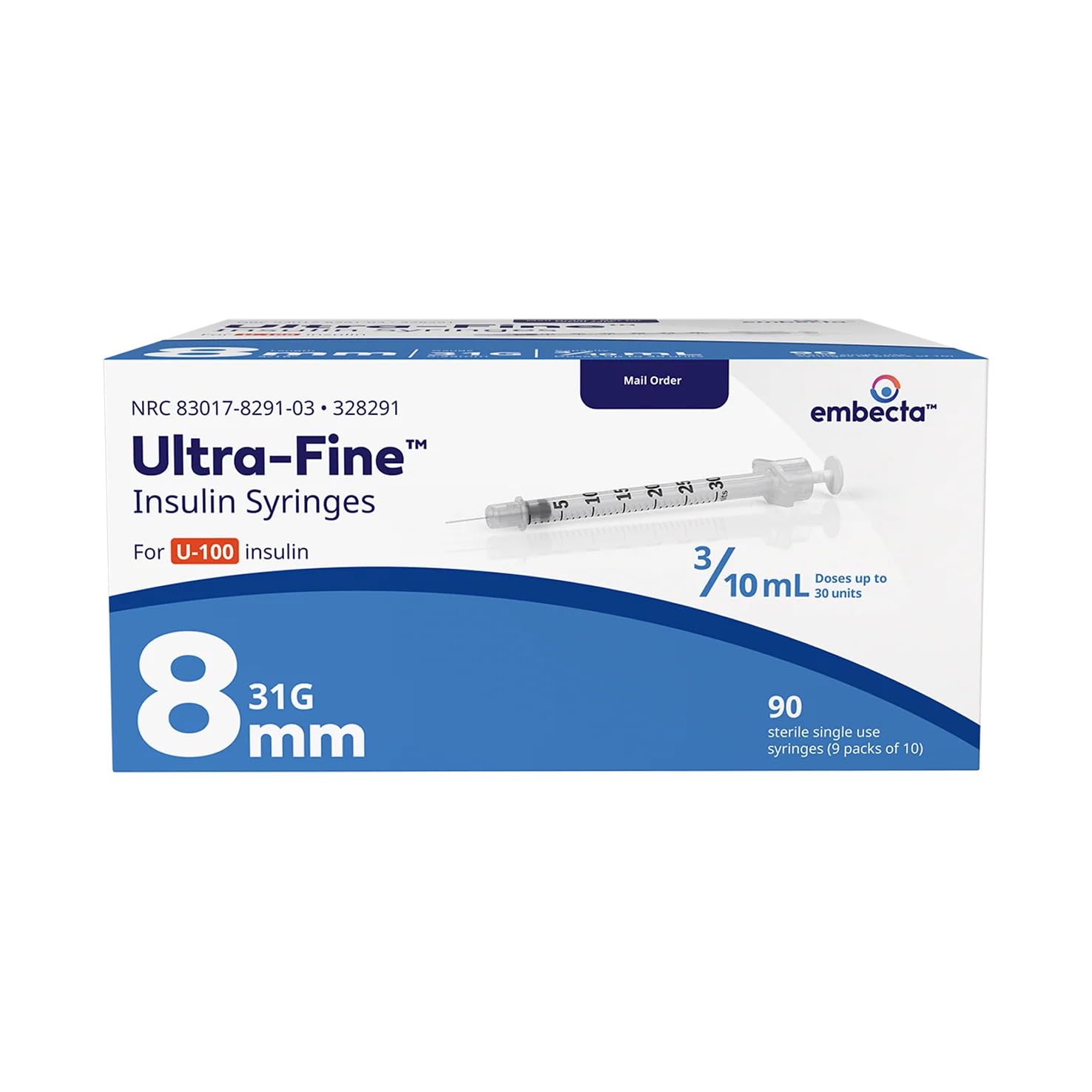
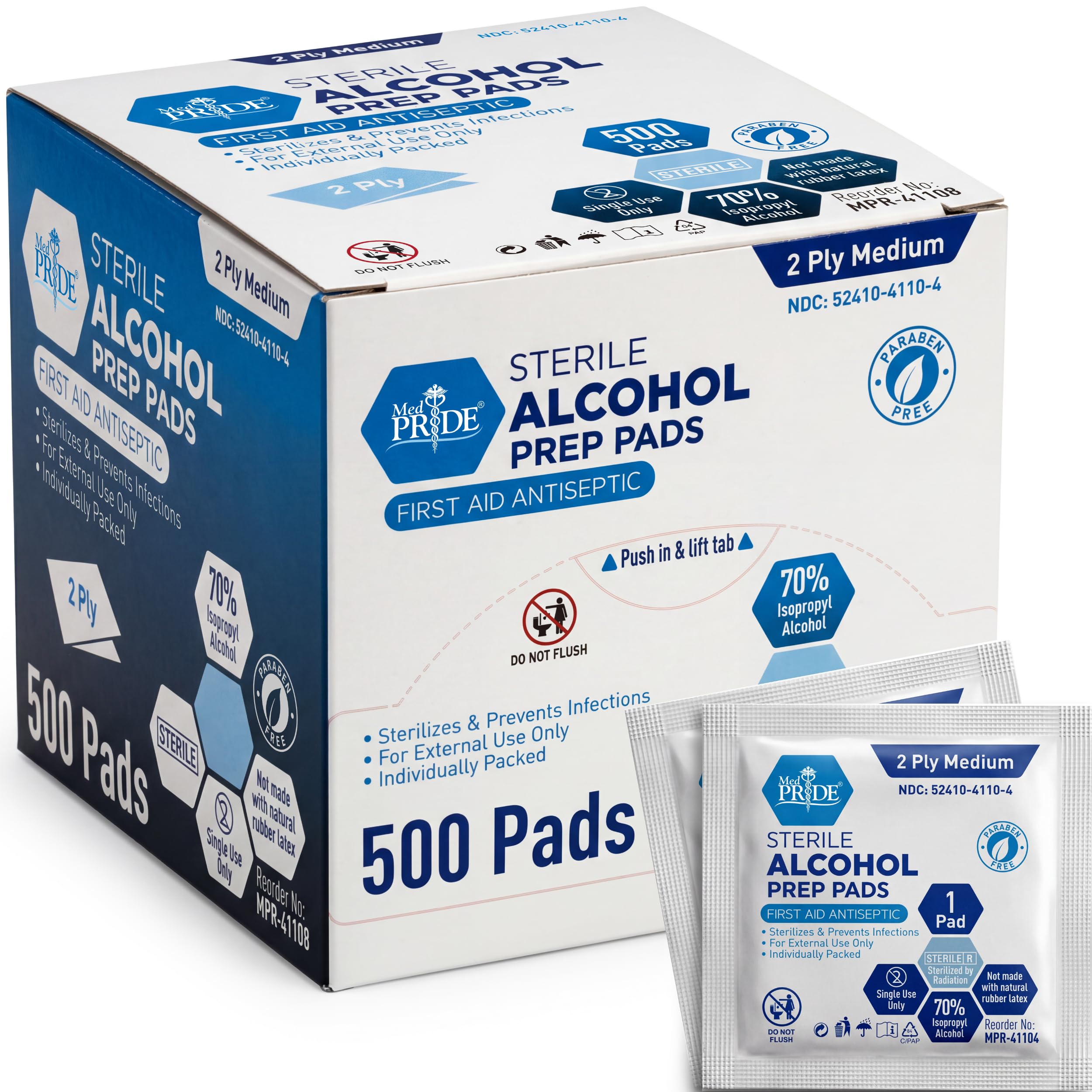
Research Supplies for NAD+
Hand-picked storage, injection, and recovery supplies paired with NAD+ protocols.
Massudi H, et al. "Age-associated changes in oxidative stress and NAD+ metabolism in human tissue." PLoS One. 2012;7(7):e42357. PubMed
Grant R, et al. "A pilot study investigating changes in the human plasma and urine NAD+ metabolome during a 6 hour intravenous infusion of NAD+." Front Aging Neurosci. 2019;11:257. PubMed
Yoshino M, et al. "Nicotinamide mononucleotide increases muscle insulin sensitivity in prediabetic women." Science. 2021;372(6547):1224-1229. PubMed
Martens CR, et al. "Chronic nicotinamide riboside supplementation is well-tolerated and elevates NAD+ in healthy middle-aged and older adults." Nat Commun. 2018;9(1):1286. PubMed
Liao B, et al. "Nicotinamide mononucleotide supplementation enhances aerobic capacity in amateur runners." J Int Soc Sports Nutr. 2021;18(1):54. PubMed
Ramsey KM, et al. "Circadian clock feedback cycle through NAMPT-mediated NAD+ biosynthesis." Science. 2009;324(5927):651-654. PubMed
This article is for educational and research purposes only. It is not medical advice. NAD+ supplementation is not FDA-approved for any anti-aging indication. All timelines described are based on published human trials and clinical observations — individual results vary.