guidesApril 25, 2026·7 min read

BPC-157 Dosage Chart: 500mcg/Day Protocol

SubQ vs IM makes a bigger difference than most realize. Complete protocol with timing, injection site strategy, and TB-500 stacking.

BPC-157 Dosing: 500mcg/Day Protocol

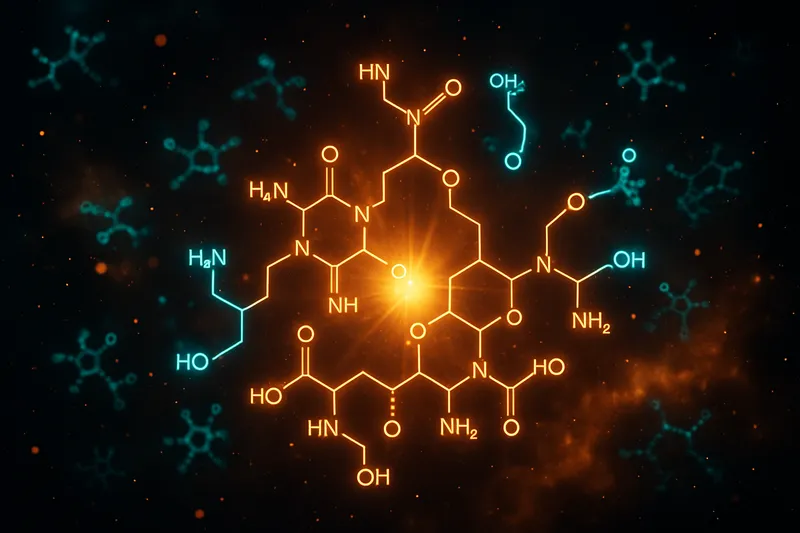
BPC-157 (Body Protection Compound-157) is a 15-amino-acid synthetic peptide derived from a protein in human gastric juice. It's one of the most researched healing peptides, with hundreds of animal studies on tissue repair, gut healing, tendon recovery, and neuroprotection. No human clinical trials exist. This is not medical advice.

Research-context information only. BPC-157 is a research peptide. Protocols, doses, and reactions reported below come from published research and self-reported community sources. This article reports what has been documented, not what should be done. Consult a licensed physician for personal medical decisions.

BPC-157 Dosing Table

Match your vial size below — reconstitution and dose math update automatically.

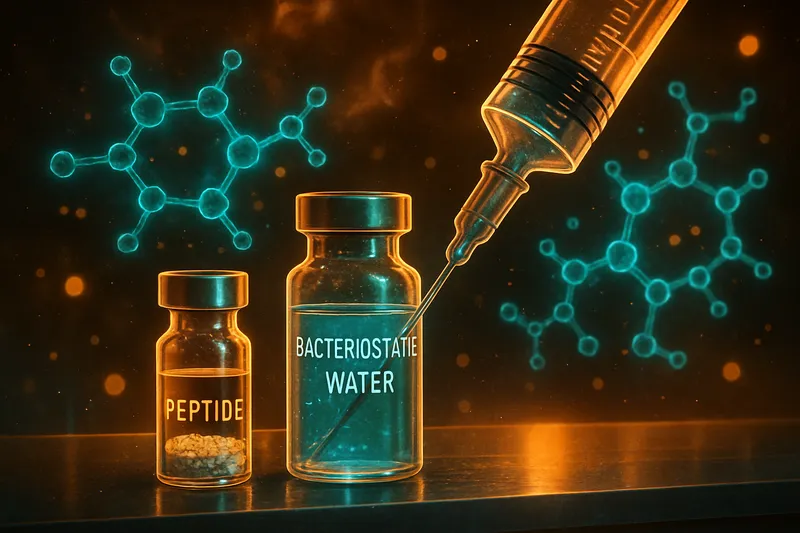
Reconstitute: add 2 mL of bacteriostatic water to the 10 mg vial. Resulting concentration: 5 mg/mL.
250 mcg5 units · 0.05 mL
Daily SubQ
Maintenance
500 mcg10 units · 0.1 mL
Daily SubQ
Standard
750 mcg15 units · 0.15 mL
Daily SubQ
1 mg20 units · 0.2 mL
Daily SubQ
Loading dose (rare)

Math assumes U-100 insulin syringes (1 mL = 100 units). Verify your syringe matches before injecting. Round half-units to the nearest visible mark.

Quick Reference: Standard Protocol

Parameter Standard Protocol
Dose 500 mcg/day
Route Subcutaneous injection (near injury site or abdomen)
Timing AM and/or PM
Frequency Every day
Cycle 8 weeks on, 8 weeks off
Vial size 10 mg
Reconstitution 2 mL bacteriostatic water → 5,000 mcg/mL
Syringe math See conversion tables below
Storage Refrigerate, use within 28 days

Community-reported protocols most commonly describe 500 mcg once daily for 8 weeks, then 8 weeks off. Some users split the dose AM/PM (250 mcg twice daily) for more consistent tissue levels, but the total daily dose stays at 500 mcg.

Cycling: 8 Weeks On, 8 Weeks Off

Community protocols describe 500 mcg daily for 8 weeks straight, then 8 weeks off before repeating. This aligns with the tissue repair timeline seen in animal studies -- rapid angiogenesis and growth factor activity in weeks 1-2, followed by remodeling through week 8 (Sikiric et al., 2006).

Community protocols describe no loading phase — dosing begins at the full 500 mcg on day one. BPC-157 is dosed every day (no weekly breaks) for the full 8-week cycle.

Routes of Administration

Subcutaneous injection (most common): For localized injuries, community protocols describe injecting within a few inches of the injury site. For systemic issues, the abdomen or love handle area is commonly used. BPC-157 distributes systemically regardless of injection site. Typical volume: 0.1-0.2 mL with a 29-31 gauge insulin syringe.

Oral: BPC-157 is uniquely stable in stomach acid. Oral dosing is viable especially for GI-specific issues -- ulcers, IBD, NSAID-induced gut damage (Sikiric, 1999). Bioavailability is lower than injection, so some protocols use higher oral doses.

Intramuscular: Used when targeting a specific muscle injury -- direct injection into the muscle belly. Less common than SC (Novinscak et al., 2008).

Reconstitution Quick Reference
BPC-157 Reconstitution Guide

Vial BAC Water Concentration 500 mcg Dose
10 mg 2 mL 5,000 mcg/mL 10 units

Math: 10,000 mcg / 2 mL = 5,000 mcg/mL. For 500 mcg: 500 / 5,000 = 0.1 mL = 10 units. One vial lasts 20 days.

Community protocols describe gentle swirling — not shaking — to avoid degradation, with storage at 2–8°C and use within 28 days. For step-by-step instructions, dilution charts, and storage details, see the full BPC-157 Reconstitution Guide.

Dosing a BPC-157 / TB-500 Blend Vial

Many vendors sell pre-mixed blend vials (e.g., 10 mg BPC-157 + 10 mg TB-500). Both peptides are already combined -- every unit you draw contains equal parts of each.

Reconstitution (10 mg/10 mg blend with 2 mL BAC water -- 5,000 mcg/mL per peptide):

Units BPC-157 TB-500 Total Peptide Use Case
5 units 250 mcg 250 mcg 500 mcg Conservative start
7.5 units 375 mcg 375 mcg 750 mcg Mid-range
10 units 500 mcg 500 mcg 1,000 mcg Standard protocol

For a 5 mg/5 mg blend with 2 mL BAC water (2,500 mcg/mL per peptide), double the units above for the same dose.

Top BPC-157 Vendors

Ranked by price, COA availability, and reputation

1
Ascension PeptidesCOA
10/10
10mg$4.90/mg
2
Ion PeptideCOA
9.8/10
$4.80/mg
3
EZ PeptidesCOA
9.7/10
$4.40/mg

Affiliate disclosure: vendor links in this article are affiliate links — The Peptide Catalog may earn a commission if you buy through them, at no additional cost to you.

Ready to buy? Compare verified vendors on our best BPC-157 sources page, or browse all coupon codes for up to 50% off.

Where These Numbers Come From

The community doses are extrapolated from a large body of animal research.

Animal study doses: Nearly all BPC-157 research uses rats at 10 mcg/kg (the standard research dose), with some studies going up to 50 mcg/kg. This dose has been used across hundreds of studies (Sikiric et al., 2006; Krivic et al., 2006).

Allometric scaling: Using the FDA's standard body surface area conversion (rat dose x 0.162), the human equivalent range is roughly 110-560 mcg/day -- which is where the community's 250-500 mcg/day window comes from.

Wide therapeutic window: Animal studies showed activity even at ultra-low doses (10 ng/kg), suggesting BPC-157 is active across a broad dose range (Krivic et al., 2006).

Stacking Protocols

Stack Components Purpose
Gold Standard Healing BPC-157 500 mcg + TB-500 500 mcg/day Angiogenesis + cell migration/actin remodeling
Healing + Recovery BPC-157 500 mcg + GHK-Cu 1.7 mg Tissue repair + collagen synthesis/matrix remodeling
Full-Length TB4 BPC-157 500 mcg + Thymosin Beta-4 Growth factors + additional signaling sequences

See our BPC-157 vs TB-500 comparison for a detailed breakdown.

Stacking tips: Community protocols describe injecting at separate sites when using multiple peptides, and introducing one peptide at a time to assess individual response.

Side Effects & Safety

  • No lethal dose found -- toxicology studies couldn't establish an LD50 (Sikiric et al., 2006)
  • No organ toxicity in chronic dosing
  • No hormonal effects -- doesn't affect testosterone, estrogen, cortisol, or GH
  • Mild nausea -- mostly with oral dosing
  • Brief lightheadedness -- occasionally after injection
  • Injection site redness -- standard for SC peptides
  • Angiogenesis concern -- promotes new blood vessel growth, which raises a theoretical question about existing tumors. No study has shown BPC-157 promoting tumor growth, but the concern is noted in reviews (Sikiric et al., 2014)
  • FDA status -- added to restricted compounding list in 2024; returning to legal compounding in 2026

mg to Units Conversion

On a standard 100-unit insulin syringe, each "unit" equals 0.01 mL (so 100 units = 1 mL). Once BPC-157 is reconstituted, the conversion from a target dose to syringe units depends on the chosen dilution.

The two reconstitution ratios most often described in community protocols are below.

Reconstitution A: 10 mg vial + 2 mL BAC water (5 mg/mL) — the standard dilution from the Quick Reference above.

Dose (mcg) Volume (mL) Units (insulin syringe)
250 mcg 0.05 mL 5 units
500 mcg 0.1 mL 10 units
750 mcg 0.15 mL 15 units
1000 mcg 0.2 mL 20 units

Reconstitution B: 10 mg vial + 3 mL BAC water (3.33 mg/mL) — more BAC water for larger, easier-to-measure draws.

Dose (mcg) Volume (mL) Units (insulin syringe)
250 mcg 0.075 mL 7.5 units
500 mcg 0.15 mL 15 units
750 mcg 0.225 mL 22.5 units
1000 mcg 0.3 mL 30 units

These conversions reflect the dilutions documented in community reconstitution protocols. They report how the math is described, not a recommended dosing schedule.

Frequently Asked Questions

What is the standard BPC-157 dose?
Community protocols most commonly document 500 mcg per day via subcutaneous injection, cycled 8 weeks on / 8 weeks off. A 10 mg vial reconstituted with 2 mL bacteriostatic water yields 5,000 mcg/mL; at that concentration, a 500 mcg dose corresponds to 10 units on an insulin syringe. See the conversion tables in the dosing guide for full dilution math.
Can BPC-157 be taken orally?
Yes -- BPC-157 is one of the few peptides stable in stomach acid, so it maintains biological activity when taken orally. Oral dosing is especially referenced for gut-related issues. Bioavailability is lower than injection, so oral protocols sometimes use slightly higher doses.
How long should a BPC-157 cycle last?
The standard cycle is 8 weeks on, 8 weeks off. This allows the full tissue repair timeline to complete before cycling off.
What injection site do BPC-157 protocols describe?
Animal studies show systemic effects regardless of injection site. For localized injuries (tendon, joint, muscle), community protocols most commonly describe subcutaneous injection near the injury site.
How is BPC-157 reconstituted?
Protocols describe adding 2 mL of bacteriostatic water to a 10 mg vial for a concentration of 5,000 mcg/mL. A 500 mcg dose is 10 units on an insulin syringe. Refrigerated storage, used within 28 days, is the documented approach.
Can BPC-157 and TB-500 be taken together?
Yes -- this is the most popular healing peptide stack. They work through different mechanisms (BPC-157 drives angiogenesis and growth factors; TB-500 handles cell migration and actin remodeling) and are considered complementary.

Available in Blends

30ml bacteriostatic water vial — 0.9% benzyl alcohol multi-dose
Bac Water Made for Peptides
Don't risk a $300 peptide on generic bac water.
Most cloudy reconstitutions trace back to one thing — and it isn't the peptide. Sterile, non-pyrogenic, 0.9% benzyl alcohol — formulated for peptide reconstitution, not repackaged from generic stock.
0.9% benzyl alcohol Made for peptides 30 mL multi-dose
See why our bac water doesn't ruin peptides
30ml from $18.75 · Ships fast · Code thepeptidecatalog

References

Citation Topic PMID
Sikiric et al., J Pharmacol Sci (2006) BPC-157 pharmacological overview, no LD50, multi-organ effects 20166993
Sikiric et al., Curr Pharm Des (2014) Nitric oxide system interaction, vascular effects 23755725
Sikiric et al. (2016) Dopaminergic system modulation 27138887
Chang et al., J Appl Physiol (2011) FAK-paxillin pathway in tendon fibroblasts 21030672
Staresinic et al., J Orthop Res (2003) Achilles tendon healing, biomechanical outcomes 14554208
Krivic et al. (2006) Dose-range activity in tendon healing 16583442
Seiwerth et al. (2014) EGF receptor, wound healing 23782145
Novinscak et al. (2008) Muscle crush injury, IM injection 18668315

For educational and research purposes only. This is not medical advice. BPC-157 is not FDA-approved for any indication.