The retatrutide + cagrilintide stack is the most aggressive metabolic peptide combination community sources currently describe — a triple-agonist GLP-1/GIP/glucagon backbone (retatrutide) layered with a long-acting amylin analog (cagrilintide). Each compound has its own Phase 2 and Phase 3 dataset; the combination has none. Everything below is reported from per-compound clinical literature and self-organized community protocols.
Research-context information only. Retatrutide and cagrilintide are both investigational drugs not approved by the FDA. Protocols, doses, and reactions reported below come from published clinical trials (each compound studied separately and one combination not involving retatrutide) and self-reported community sources. No clinical trial has formally tested the retatrutide + cagrilintide combination as of May 2026. This article reports what has been documented, not what should be done. Possession or use of investigational drugs outside an authorized clinical trial may be illegal in your jurisdiction. Consult a licensed physician for personal medical decisions.
The core question this guide answers: how community references stage the stack — when cagrilintide gets added, how it's titrated alongside retatrutide, and how the two are reportedly injected to keep the gastrointestinal burden manageable.
Retatrutide + Cagrilintide Blend Dosing Table
Match your vial size below — reconstitution and dose math update automatically.
Vials are labeled "20/4" — 20 mg retatrutide + 4 mg cagrilintide (24 mg total, 5:1). Each combined dose below splits at that same 5:1 ratio.
| Dose | Syringe units | mL volume | Schedule |
|---|---|---|---|
| 0.6 mg blend | 8 units | 0.08 mL | Weekly SubQStart (0.5 mg reta + 0.1 mg cagri) |
| 1.2 mg blend | 15 units | 0.15 mL | Weekly SubQMaintenance (1 mg reta + 0.2 mg cagri) |
| 2.4 mg blend | 30 units | 0.3 mL | Weekly SubQUpper maintenance (2 mg reta + 0.4 mg cagri) |
| 3.6 mg blend | 45 units | 0.45 mL | Weekly SubQCommunity ceiling (3 mg reta + 0.6 mg cagri) |
| 4.8 mg blend | 60 units | 0.6 mL | Weekly SubQAdvanced (4 mg reta + 0.8 mg cagri) |
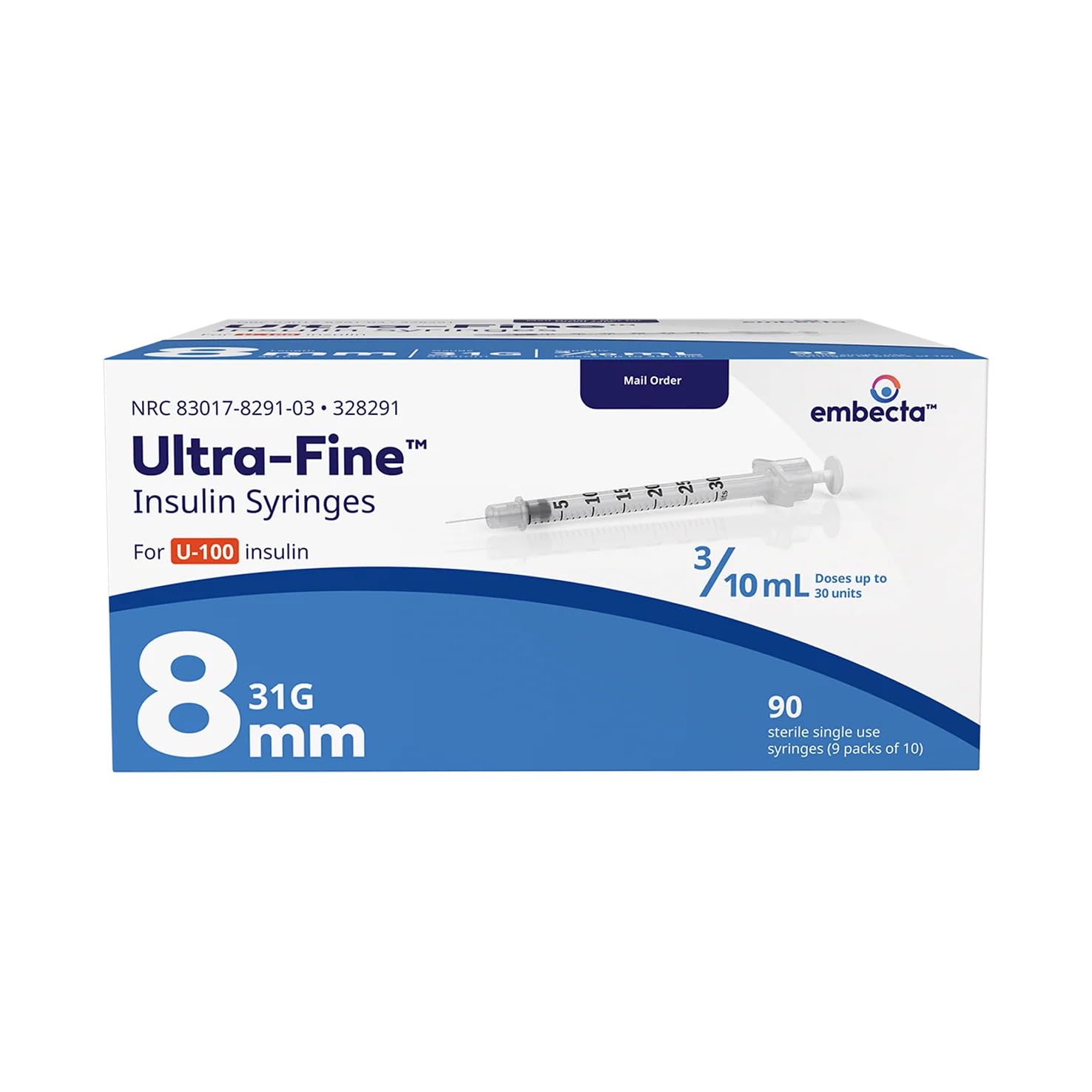
Math assumes U-100 insulin syringes (1 mL = 100 units). Verify your syringe matches before injecting. Round half-units to the nearest visible mark.
Vials are labeled "12.5/2.5" — 12.5 mg retatrutide + 2.5 mg cagrilintide (15 mg total, 5:1). Each combined dose below splits at that same 5:1 ratio.
| Dose | Syringe units | mL volume | Schedule |
|---|---|---|---|
| 0.6 mg blend | 8 units | 0.08 mL | Weekly SubQStart (0.5 mg reta + 0.1 mg cagri) |
| 1.2 mg blend | 16 units | 0.16 mL | Weekly SubQMaintenance (1 mg reta + 0.2 mg cagri) |
| 2.4 mg blend | 32 units | 0.32 mL | Weekly SubQUpper maintenance (2 mg reta + 0.4 mg cagri) |
| 3.6 mg blend | 48 units | 0.48 mL | Weekly SubQCommunity ceiling (3 mg reta + 0.6 mg cagri) |
| 4.8 mg blend | 64 units | 0.64 mL | Weekly SubQAdvanced (4 mg reta + 0.8 mg cagri) |
Math assumes U-100 insulin syringes (1 mL = 100 units). Verify your syringe matches before injecting. Round half-units to the nearest visible mark.
Quick Reference: Reported Stack Protocol
| Parameter | Retatrutide | Cagrilintide |
|---|---|---|
| Maintenance dose (community) | 2-4 mg/week | 1.7-2.4 mg/week |
| Trial peak dose | 12 mg/week (Phase 2) | 2.4 mg/week (Phase 3) |
| Route | Subcutaneous | Subcutaneous |
| Frequency | Once weekly (or split 2-3x/week) | Once weekly |
| Titration cadence | 4 weeks per step | 4 weeks per step |
| When added in community sequencing | Started first | Added once retatrutide stable at ~2 mg/week |
| Pre-mixed vial options | 12.5 mg / 2.5 mg blend or 20 mg / 4 mg blend (5:1 ratio) | — |
Community-reported sequencing: Protocols commonly begin with retatrutide alone. Once retatrutide is tolerated at the 2 mg/week step — typically 8–12 weeks in — community references describe introducing cagrilintide at 0.25 mg/week and following a separate 4-week titration to maintenance.
Why Stack Sequencing Matters
Both retatrutide and cagrilintide slow gastric emptying — but through entirely different signaling pathways. Retatrutide does it via GLP-1 receptor activation in the gut and CNS; cagrilintide does it via the amylin receptor (AMY1R/AMY3R heterodimers) in the area postrema. Activating both at full dose simultaneously, with no titration runway, is what community sources describe as the failure mode that drives discontinuation.
The reported sequencing solution: get one pathway saturated and stable first, then layer the second on a fresh titration. This is also the structure Novo Nordisk's own investigational semaglutide+cagrilintide combination used in REDEFINE 1 (Garvey et al., NEJM 2025) — both components stepped in parallel through a 16-week ramp rather than introduced together at maintenance.
Component Titration Schedules (As Reported in Trial and Community Sources)
Retatrutide Titration
The Jastreboff et al. Phase 2 trial (NEJM 2023) used a structured ramp to 12 mg/week — but at trial doses of 8 mg and 12 mg, dropout from gastrointestinal events was substantial. Community-reported retatrutide protocols deliberately stay below trial peak:
| Week | Reported retatrutide dose |
|---|---|
| 1-4 | 0.25-0.5 mg/week |
| 5-8 | 1 mg/week |
| 9-12 | 2 mg/week (stable point before adding cagrilintide) |
| 13-16 | 3 mg/week (optional) |
| 17+ | 4 mg/week (community ceiling) |
Self-reported maintenance doses cluster at 2-4 mg/week. The 12 mg trial dose is rarely described in community references because the GI burden was the rate-limiting factor in the trial.
Cagrilintide Titration (Once Retatrutide Stable)
Cagrilintide titration described in community sources mirrors the REDEFINE 1 schedule (Garvey et al., 2025):
| Week (after retatrutide stable) | Reported cagrilintide dose |
|---|---|
| 1-4 | 0.25 mg/week |
| 5-8 | 0.5 mg/week |
| 9-12 | 1.0 mg/week |
| 13-16 | 1.7 mg/week |
| 17+ | 2.4 mg/week (Phase 3 maintenance dose) |
The Lau et al. Phase 2 dose-finding trial (Lancet 2021) showed clear dose-response from 0.3 mg up to 4.5 mg/week, but 2.4 mg is the dose Novo Nordisk advanced into Phase 3 and is the most commonly self-reported community ceiling.
Same-Day vs Split-Day Injection (Community-Reported Patterns)
Community sources describe two patterns for combining the weekly injections.
Same-day, different sites (most common): Both injections delivered the same day each week, at separate subcutaneous sites — typically retatrutide in the abdomen and cagrilintide in the thigh, or rotated weekly. Reported rationale: peak GI effect is concentrated to a single day rather than smeared across the week.
Split-day (community variant): Retatrutide on day 1, cagrilintide on day 4. Reported rationale: less compounded peak nausea, smoother appetite suppression curve. Reported tradeoff: two "shot days" per week instead of one.
Neither pattern has been studied in a published trial. Both are derived from how community users have organized the schedule themselves. The REDEFINE 1 trial used a co-administered single-injection product, which is not the same as either of these patterns.
Pre-Mixed Blend Vials: 12.5/2.5 vs 20/4
Some research vendors stock pre-mixed retatrutide + cagrilintide vials at a fixed ratio. As of May 2026, two configurations are common:
| Config | Retatrutide | Cagrilintide | Total mass | Ratio | Typical use case |
|---|---|---|---|---|---|
| Smaller vial | 12.5 mg | 2.5 mg | 15 mg | 5:1 | Shorter protocols, single titration cycle |
| Larger vial | 20 mg | 4 mg | 24 mg | 5:1 | Longer protocols, fewer reconstitutions |
Both maintain the same 5:1 mass ratio of retatrutide to cagrilintide. At 4 mg retatrutide / 0.8 mg cagrilintide per week (the upper end of community-reported maintenance for both), the smaller vial provides roughly 3 weeks at maintenance and the larger vial roughly 5 weeks. Pre-mixed vials lock the ratio — they cannot be used during the staged titration described above without overdosing one component or underdosing the other.
For staged titration, separate retatrutide and cagrilintide vials are what most community sources describe using. Pre-mixed vials are reportedly used once both components have already been titrated to a steady ratio.